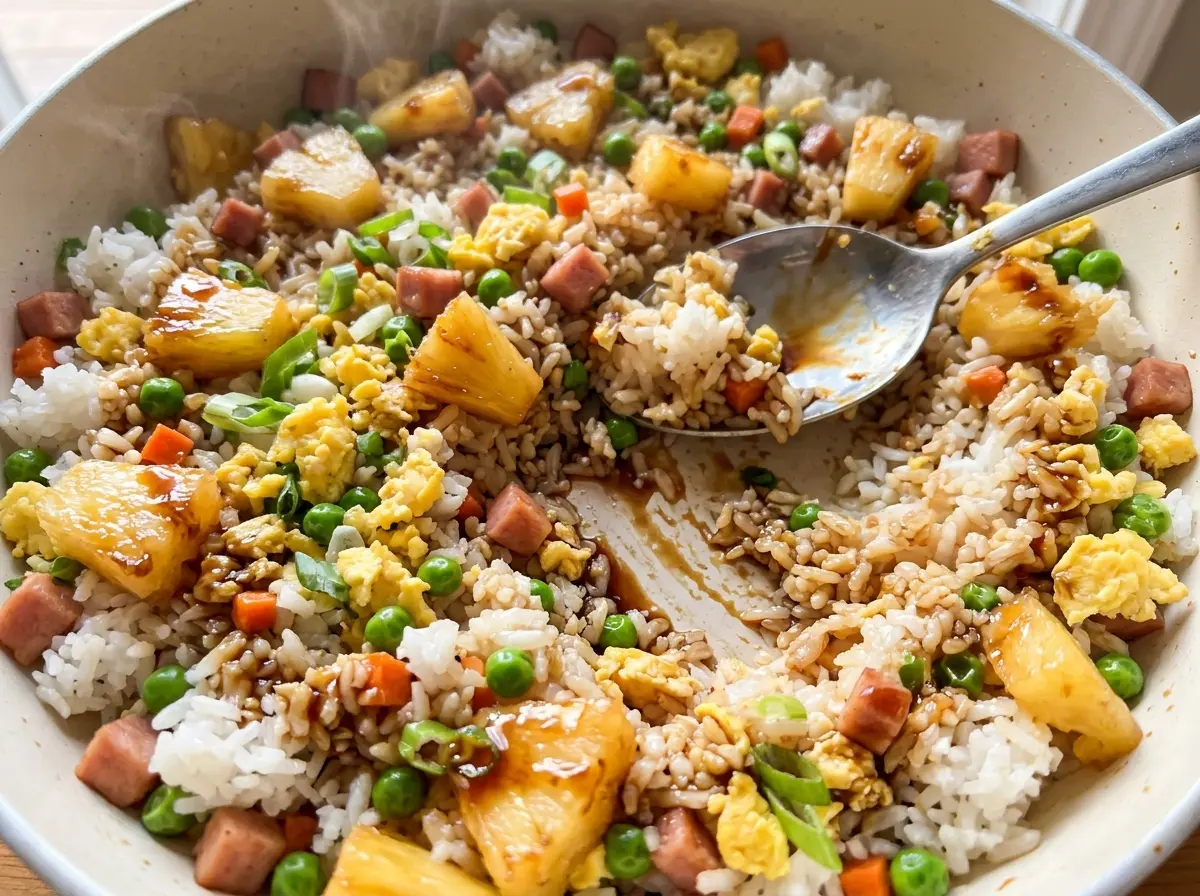
When cold rice hits a hot skillet, you want the grains to tumble apart instead of packing into one damp layer. I used to blame the pineapple when fried rice turned soft, but the extra juice clinging to the fruit was usually the culprit. Draining and patting the pineapple dry lets it warm in the pan without making the rice soggy. That little bit of prep is what keeps Hawaiian Pineapple Rice tasting like fried rice, not a sweet, heavy rice bowl.
The rest comes together in the same skillet: ham and red bell pepper get a quick sauté, garlic goes in briefly, and the eggs cook in the open center before the rice joins them. Cold long-grain rice holds its shape as you toss everything together, while soy sauce brings the savory balance that pineapple needs. A final touch of green onion and toasted sesame oil gives the warm, savory rice a fresh finish.
Kitchen Note
Let the eggs set completely before you stir them into the rest of the skillet. If you start tossing too soon, they break into tiny bits instead of forming soft, distinct curds.
Save Hawaiian Pineapple Rice for a quick skillet meal with savory ham, warm pineapple, and separate, tender grains.
Cold Rice and Dry Pineapple Keep This Skillet From Turning Gummy
Fried rice needs room for moisture to escape. Rice that has cooled is firmer than freshly cooked rice, so the grains are less likely to smear together as you toss them in the skillet. Long-grain white rice helps, too: its cooked grains stay more separate than the stickier rice varieties that are better suited to clumping.
Pineapple brings its own juice, and the skillet is already handling eggs, vegetables, and rice. If the fruit goes in wet, that liquid can soften the rice before the pan has a chance to heat everything through. Drain the chunks well and pat their surfaces dry; you want the pineapple itself in the skillet, not a puddle of juice. This also lets the pieces warm without overwhelming the savory notes from the ham and soy sauce.
These small choices matter more than trying to stir faster or crank the heat higher. Start with cold rice and dry fruit, then toss the mixture often enough to heat it evenly. The result is a skillet where each grain stays distinct and the pineapple still has its own juicy bite.
Why Long-Grain Rice and Toasted Sesame Oil Matter Here
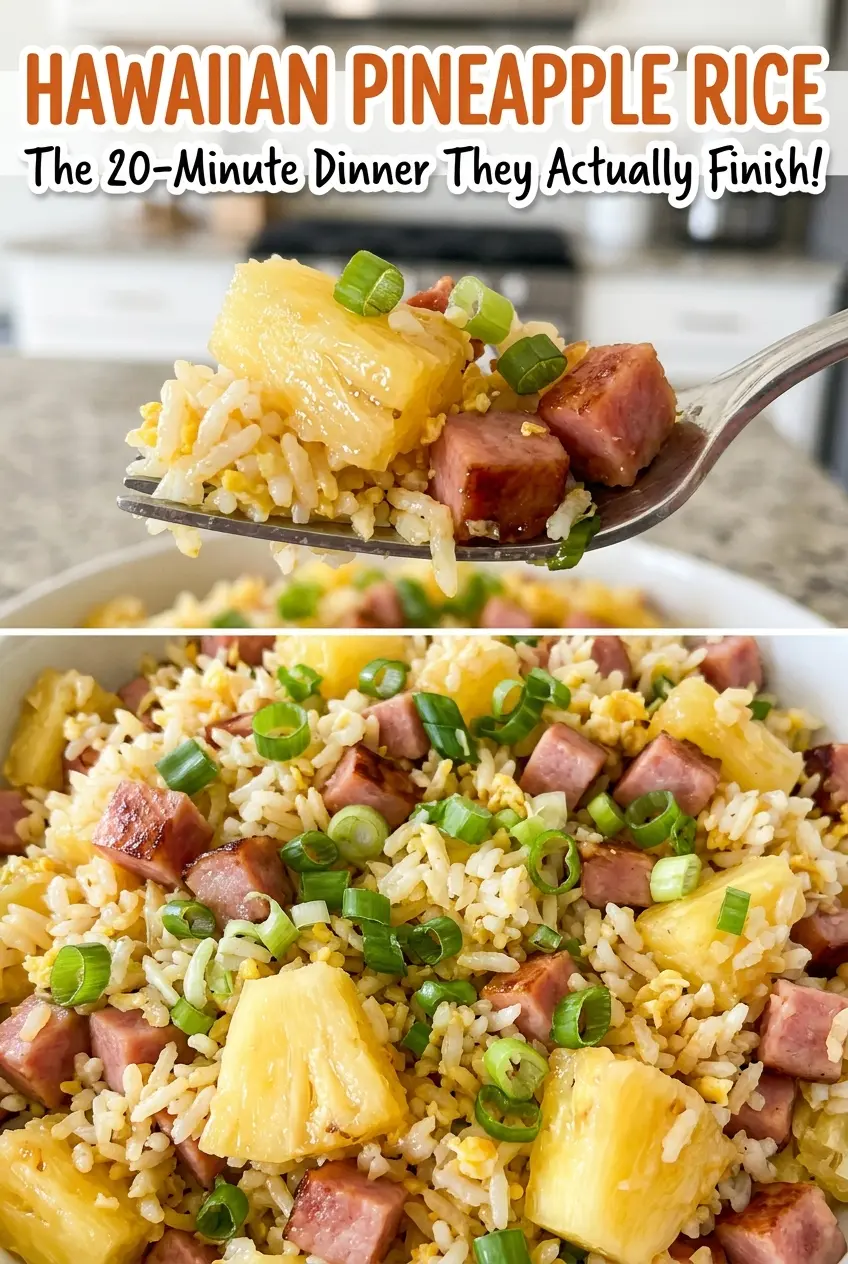
- Long-grain white rice — Its separate, firm grains suit a quick toss in the skillet. Shorter, stickier rice changes the texture and tends to clump more. Cold cooked rice is the right starting point here; the rice itself doesn’t need to be an expensive brand.
- Pineapple chunks — The fruit gives the dish its sweet-tart contrast. Canned chunks are convenient and work well when drained and patted dry; fresh pineapple works too, cut into bite-size pieces and dried before it goes into the pan. Very ripe fruit will taste sweeter.
- Cooked ham — Ham contributes savory flavor and a little saltiness alongside the pineapple. Dicing it into small, even pieces helps it warm quickly with the pepper. A basic cooked ham is fine; there’s no need to buy a specialty cut for this skillet.
- Red bell pepper and garlic — The pepper adds a mild sweetness and a little texture, while garlic gives the base a savory aroma. Mince the garlic before you start cooking so it can go into the pan as soon as the pepper has begun to soften.
- Eggs — The eggs add tender curds and make the skillet feel more substantial. Lightly beating them first helps the whites and yolks scramble evenly. There isn’t a direct ingredient in this dish that replaces their texture.
- Soy sauce and black pepper — Soy sauce seasons the rice and ties the sweet pineapple to the ham. A familiar everyday soy sauce is all you need; its saltiness varies by brand, so taste the finished dish before adding anything else.
- Neutral oil, green onions, and toasted sesame oil — Neutral oil handles the skillet cooking without competing with the other ingredients. Green onions bring a fresh finish, and toasted sesame oil is there for its aroma; keep it for the final stir rather than using it as the main cooking oil.
The 30-Second Garlic Window and the Egg-First Scramble
Soften the Ham and Pepper
Heat 1 tablespoon of neutral oil in a 12-inch skillet over medium-high heat. Add the diced ham and red bell pepper, stirring for 3 to 4 minutes. Watch the pepper: it should begin to soften while still holding its shape. Keep the pieces moving so they cook evenly across the skillet.
Give the Garlic a Short Turn, Then Scramble
Stir in the minced garlic and cook for 30 seconds. It should smell fragrant, not browned; garlic left too long in a hot skillet can turn bitter. Push the ham and pepper to the sides, add the remaining 1 tablespoon of neutral oil to the center, and pour in the lightly beaten eggs. Scramble until fully set before bringing the mixture together.
Toss Until the Rice Is Hot
Add the cold cooked rice, pineapple, soy sauce, and black pepper. Toss frequently for 3 to 5 minutes, working around the skillet so the ingredients heat evenly rather than sitting in one spot. The rice should be hot throughout, and the pineapple should feel warmed when you bite into a piece. If the rice still feels cool in the center, keep tossing until the heat reaches the whole skillet.
Finish with Green Onion and Sesame Oil
Stir in the sliced green onions and toasted sesame oil, then serve. The green onion should stay bright and the sesame oil should be noticeable as a fragrant finish, not dominate the other flavors. Stir just enough to distribute them through the rice. The finished skillet should have warm, separate grains, tender egg, and pineapple pieces still intact.
Two Simple Ways to Adapt the Skillet
Make It Vegetarian by Leaving Out the Ham
Omit the ham and cook the red bell pepper in the first portion of neutral oil. Continue with the garlic, eggs, rice, pineapple, and seasonings as usual. The skillet will lose the ham’s salty, savory bite, but the eggs still give it a satisfying texture.
Make an Egg-Free Version
Leave out the eggs and use the second portion of neutral oil to coat the center of the skillet before adding the rice. The rice will have no egg curds and a lighter, less rich texture; the ham and pineapple still provide the main savory-sweet contrast.
Storage and Reheating
- Refrigerator: Transfer leftovers to a shallow airtight container and refrigerate within 2 hours. Keep for 3 to 4 days; the rice will firm up and the pineapple will soften.
- Freezer: Freeze airtight portions for up to 2 months for best texture. Thaw overnight in the refrigerator; the pineapple may be softer after freezing.
- Reheating: Reheat in a skillet, stirring until steaming hot throughout and 165°F. Avoid reheating the same portion repeatedly, since the rice dries out with each round of heating.
Questions That Come Up Once the Skillet Is Hot
Hawaiian Pineapple Rice
Ingredients
Equipment
Method
- Heat 1 tablespoon neutral oil in a 12-inch skillet over medium-high heat.
- Add the ham and bell pepper and cook, stirring, for 3 to 4 minutes, until the pepper begins to soften.
- Stir in the garlic and cook for 30 seconds.
- Push the ham and pepper to the sides of the skillet.
- Add the remaining 1 tablespoon neutral oil to the center, pour in the eggs, and scramble until fully set.
- Add the rice, pineapple, soy sauce, and black pepper.
- Cook, tossing frequently, for 3 to 5 minutes, until the rice is hot throughout and the pineapple is warmed.
- Stir in the green onions and sesame oil, then serve.