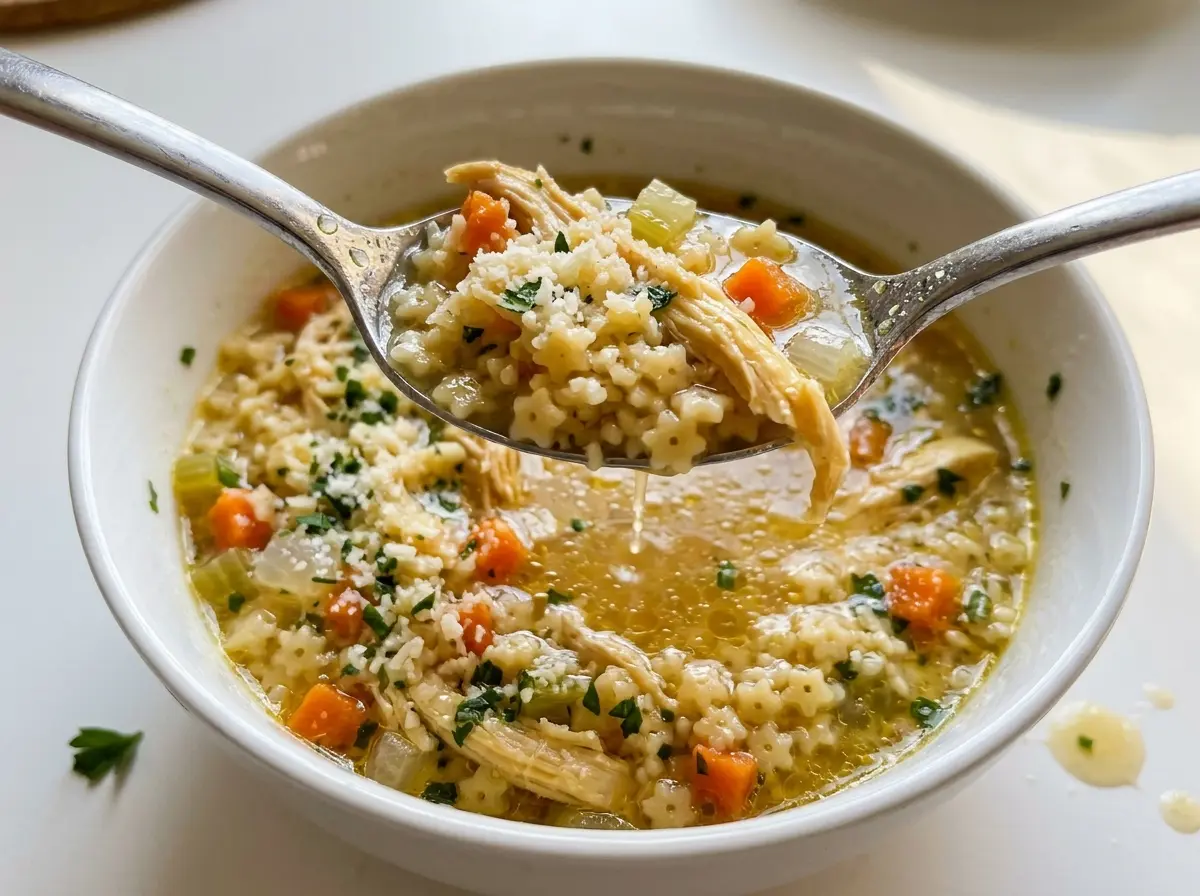
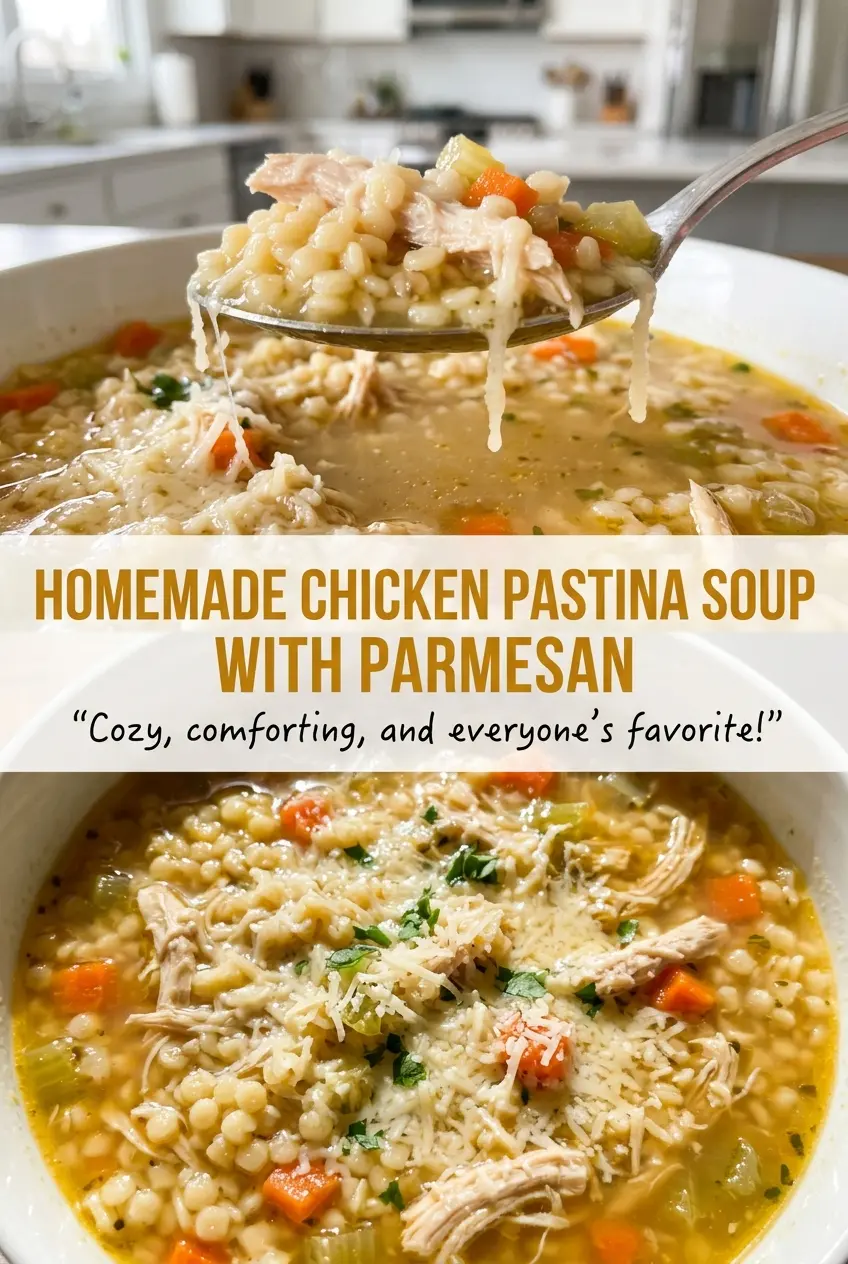
Once the vegetables have softened, garlic hits the warm oil and the whole pot turns fragrant. The chicken simmers right in the broth, then comes out while the tiny pastina cooks; that’s how I get tender chicken and pasta that doesn’t sit in the pot longer than it needs to. Homemade Chicken Pastina Soup with Parmesan is a cozy, broth-forward bowl with soft vegetables and a savory finish.
I keep the steps simple and pay attention to the order. The chicken has time to cook gently, while the pastina goes into the broth after the chicken is removed. At the end, shredded chicken, finely grated Parmesan, and parsley go back in together. The cheese melts into the hot soup, leaving the broth savory without turning it into a thick sauce.
Kitchen Note
Finely grated Parmesan melts into the hot broth more evenly than coarse shreds. I keep stirring as it goes in, so the cheese disperses through the soup instead of settling in one spot.
Save this Homemade Chicken Pastina Soup with Parmesan for a comforting bowl of tender chicken, tiny pasta, and savory broth.
Why Parmesan Keeps This Soup Brothy, Not Creamy
Parmesan brings plenty of savory depth, but this isn’t a cream-based soup. The broth stays light enough to sip, while the finely grated cheese melts through it and gives each spoonful a fuller, saltier taste. That distinction matters: adding more cheese won’t turn the broth into a smooth, thick sauce. It will make the soup saltier and can leave more cheese settled at the bottom.
The vegetables and chicken build the foundation before Parmesan ever reaches the pot. Low-sodium broth gives you room for the measured kosher salt and the cheese without starting with an overly salty base. The cheese belongs at the finish, once the pastina is tender and the chicken is back in the pot. That timing lets it melt into the hot broth and keeps the soup’s texture clear and spoonable rather than heavy.
Think of Parmesan here as a finishing ingredient, not a thickener. Its job is to round out the chicken broth and add a savory note that pairs with the parsley, while the tiny pasta gives the soup its soft, comforting body.
What the Chicken, Pastina, and Parmesan Each Bring
- Boneless, skinless chicken thighs — Thighs stay tender through a gentle simmer and shred easily back into the soup. Boneless, skinless chicken breast can stand in at the same weight, but it’s leaner, so use the thermometer cue rather than relying on the clock alone.
- Low-sodium chicken broth — It carries the chicken and vegetable flavor without making the finished soup too salty once Parmesan is stirred in. A low-cost broth works well here; the vegetables, bay leaf, and chicken add plenty of character as they simmer.
- Pastina — The tiny shape fits the soup’s soft texture and cooks quickly in the broth. Another very small pasta can work, but its cooking time and how much broth it absorbs may differ, so judge it by tenderness rather than expecting the same timing.
- Finely grated Parmesan — It melts into hot broth more readily than large shreds and adds a salty, savory finish. A wedge grated finely at home has a fresh, distinct taste, but finely grated packaged Parmesan is convenient for a weeknight pot.
- Yellow onion, carrots, and celery — This trio builds the vegetable base; dicing them evenly helps them soften at a similar pace. Fresh vegetables matter most for a pleasant texture, while ordinary grocery-store produce is perfectly suited to soup.
- Garlic, bay leaf, and parsley — Garlic adds aroma early, the bay leaf quietly seasons the simmering broth, and parsley brings a fresh note at the end. Dried parsley won’t give the same fresh finish, so if fresh parsley isn’t available, leaving it out is better than expecting the same result.
Building the Broth Before the Pastina Goes In
Soften the vegetables without browning them
Heat the olive oil in a 6-quart pot over medium heat, then add the diced onion, carrots, and celery. Cook for 6–8 minutes, stirring occasionally, until the vegetables have softened. They should look relaxed and glossy, not deeply browned; if they start catching on the bottom, stir and keep the heat at medium. This gentle start gives the broth a rounded vegetable base.
Simmer the chicken gently in the broth
Stir in the minced garlic and cook for 30 seconds, just until fragrant. Add the chicken thighs, low-sodium broth, bay leaf, kosher salt, and black pepper, then bring the pot to a boil. Reduce the heat to maintain a gentle simmer and cook uncovered for 18–22 minutes. Check the thickest part of a thigh with an instant-read thermometer; it should reach 165°F.
Give the pastina its own cooking window
Transfer the chicken to a cutting board and remove and discard the bay leaf. Keep the broth at a simmer, add the pastina, and cook for 5–7 minutes, stirring often, until tender. Small pasta can settle or clump if left alone, so scrape the bottom and sides as you stir. Taste a piece near the end of the cooking window to check its texture.
Shred and finish while the soup is hot
Shred the chicken on the cutting board, then return it to the pot. Stir in the finely grated Parmesan and chopped parsley until the cheese has melted through the broth. The finished soup should look glossy, with the chicken and pasta distributed through it rather than piled in one place. Serve while hot.
Simple Changes for a Different Bowl
A dairy-free bowl without Parmesan
Omit the Parmesan and use a dairy-free low-sodium chicken broth if dairy needs are the reason for the change. The soup will stay broth-based, but it will lose the salty, savory finish the cheese brings.
A milder, pepper-free broth
Leave out the black pepper for a gentler-tasting bowl. The chicken, vegetables, and Parmesan still give the broth plenty of savory character, but you won’t get pepper’s warm bite.
Storage and Reheating
- Refrigerator: Refrigerate leftovers within 2 hours and keep them for 3–4 days. The pastina will continue to absorb broth, so the soup will be thicker after chilling.
- Freezer: Freeze in airtight containers for up to 2–3 months for best quality. The chicken and broth freeze well, though the pastina will soften further as it thaws.
- Reheating: Warm gently on the stovetop or in the microwave, stirring so the soup heats evenly, until it reaches 165°F. Avoid a prolonged hard boil, which can make the chicken less tender.
Questions That Come Up While Making Chicken Pastina Soup
Homemade Chicken Pastina Soup with Parmesan
Ingredients
Method
- Heat the olive oil in a 6-quart pot over medium heat.
- Add the onion, carrots, and celery and cook for 6–8 minutes, stirring occasionally, until softened.
- Stir in the garlic and cook for 30 seconds, until fragrant.
- Add the chicken, broth, bay leaf, salt, and pepper; bring to a boil.
- Reduce the heat to maintain a gentle simmer and cook uncovered for 18–22 minutes, until the chicken reaches 165°F in the thickest part.
- Transfer the chicken to a cutting board.
- Remove and discard the bay leaf.
- Keep the broth at a simmer, add the pastina, and cook for 5–7 minutes, stirring often, until tender.
- Shred the chicken and return it to the pot.
- Stir in the Parmesan and parsley until the cheese is melted.
- Serve.