As soon as the glaze is stirred, it turns glossy and smooth, ready to spread over the salmon without a saucepan or extra fuss. I make this Honey Mustard Baked Salmon when I want a hands-off dinner that still has a bright, savory finish. The oven does the cooking, and the glaze brings just enough sweetness to balance the mustard.
Mixing the glaze before it touches the fish gives the lemon and garlic a chance to spread evenly through every spoonful. I bake the fillet in a 9×13-inch dish, then let it rest briefly so it stays tender when I serve it. The finished salmon has a moist center and a tangy-sweet coating that doesn’t overwhelm the fish.
Kitchen Note
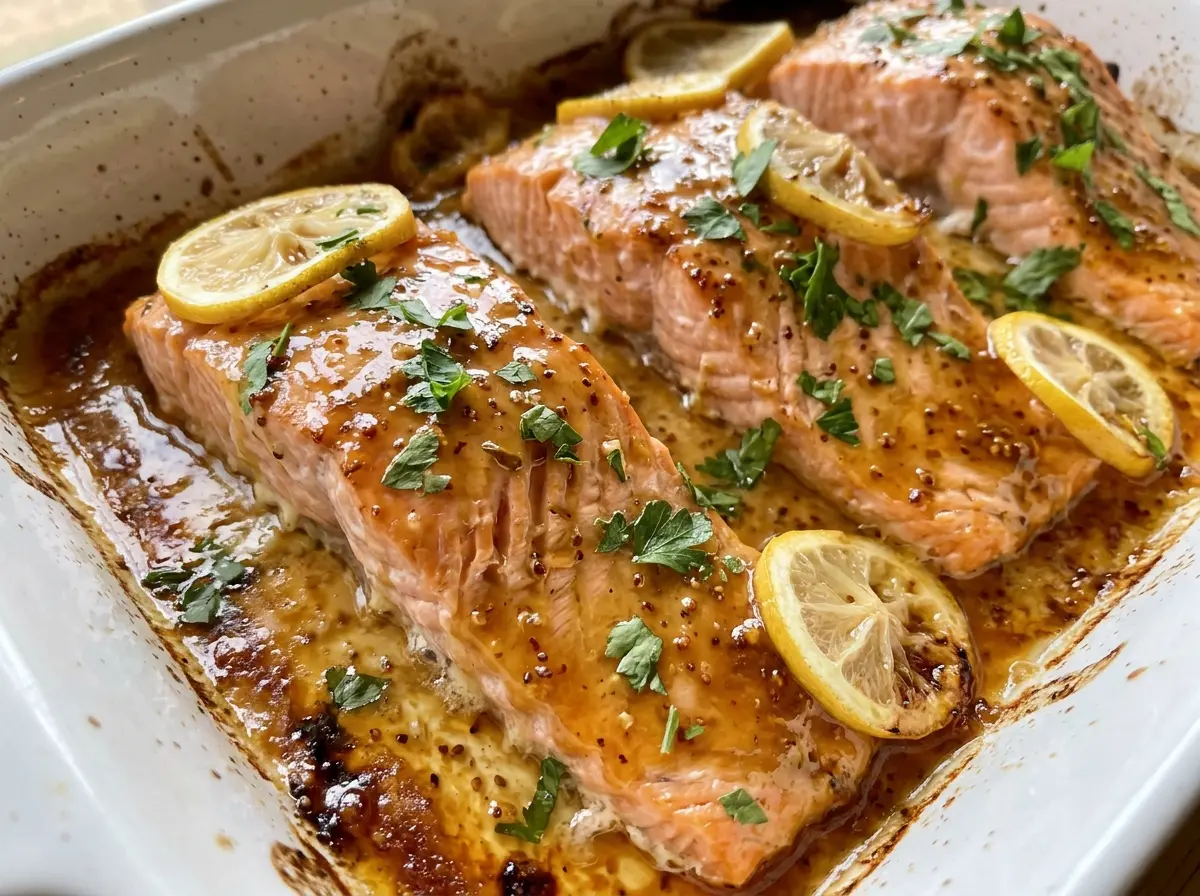
Spread the glaze across the top of the salmon in an even layer, but don’t worry about coating the sides. That keeps the flavor where you want it and avoids a puddle of glaze collecting around the fish.
Save this Honey Mustard Baked Salmon for a weeknight when you want a glossy, tangy-sweet glaze with very little hands-on prep.
Why This Honey Mustard Glaze Needs No Stovetop Reduction
Some glazes need to simmer before they’ll cling to food, but this one comes together in a bowl and goes straight onto the salmon. Dijon gives the mixture body and a savory bite, while honey softens that sharpness. Lemon juice keeps the sweetness from taking over, and the garlic gives the glaze a warm, aromatic edge.
Because the glaze is spread over the fish before baking, its flavors mingle with the salmon as it cooks. There’s no separate pan to wash and no thick syrup to manage over direct heat. Stir until the honey is fully blended into the mustard and lemon juice, then spread the mixture over the top of the fillet. If the glaze looks streaky in the bowl, keep stirring until it’s uniform; that makes it easier to distribute in one even layer.
The balance here is meant to complement the salmon, not hide it. Dijon stays noticeable after baking, but the honey rounds off its sharper edges. Lemon adds a clean finish that helps each bite taste bright rather than heavy.
What Each Ingredient Brings to the Honey Mustard Glaze

- Dijon mustard — Dijon supplies the sharp, savory backbone and helps the glaze hold together. A familiar grocery-store Dijon works well; a specialty jar isn’t necessary. Other mustard styles have a different level of sharpness and texture, so they won’t give quite the same result.
- Honey — Honey rounds out the mustard and gives the glaze its gentle sweetness. The flavor of the honey comes through, but there’s no need to use an expensive variety. Stir it thoroughly into the mustard so it doesn’t sit in a sticky lump in the bowl.
- Lemon juice — The acidity brightens the glaze and balances the honey. Freshly squeezed juice gives a lively citrus note, while bottled lemon juice is a practical option when that’s what you have. Measure it carefully; too much liquid can make the glaze runnier.
- Garlic — Minced garlic adds a savory note that keeps the glaze from tasting one-dimensional. Mince it finely so the pieces spread through the mixture instead of clumping together. A fresh clove gives a more direct garlic flavor than dried seasoning.
- Salmon fillet — A fillet with fairly even thickness cooks more evenly from end to end. The thickest part is the best place to check for doneness, since the thinner edges will cook sooner. Choose salmon that looks moist and smells clean, without a strong fishy odor.
- Olive oil, kosher salt, and black pepper — The oil is for greasing the baking dish, not for pouring over the fish. Kosher salt and black pepper season the salmon before the glaze goes on; freshly ground pepper has a stronger aroma, but standard ground pepper works too.
From Mixing the Glaze to Resting the Salmon
Stir Together the Glaze
Heat the oven to 400°F while you stir the Dijon mustard, honey, lemon juice, and minced garlic together in a small bowl. Keep stirring until the honey is incorporated and there are no obvious streaks of mustard or honey. The mixture should look smooth and evenly flecked with garlic. This quick mix is all the glaze needs before it goes onto the fish.
Season the Fillet in Its Baking Dish
Grease a 9×13-inch baking dish with the olive oil, then place the salmon fillet in the dish. Season it with the kosher salt and black pepper before adding the glaze. Keep the fish lying flat in the dish so the glaze can be spread across the top. If the fillet is thicker at one end, use that area as your doneness check later.
Spread the Glaze Over the Top
Spoon or spread the prepared glaze over the salmon, covering the top in an even layer. A thin, continuous coating is easier to distribute than one thick mound in the center. The glaze doesn’t have to reach the edges of the baking dish. Keep it on the fish rather than stirring it around the dish.
Bake Until the Center Is Done, Then Rest
Bake for 12 to 16 minutes, until the thickest part reaches 145°F and the salmon flakes easily with a fork. The exact time within that range depends on the thickness of the fillet, so use the temperature and texture cues rather than relying on the clock alone. If the center still looks translucent or resists a fork, give it a little more time and check again. Rest the salmon for 3 minutes before serving.
Two Simple Ways to Adapt the Honey Mustard Balance
A Less-Sweet, Sharper Glaze
For a more mustard-forward finish, use a little less honey while keeping the Dijon, lemon juice, and garlic. The glaze will taste sharper and won’t be quite as sweet or thick, but it still works as a coating for the salmon.
A Gluten-Free Version
Use gluten-free Dijon mustard in place of regular Dijon, keeping the same amount. The glaze will retain its savory mustard flavor, and the method stays the same.
Storage and Reheating
- Refrigerator: Store leftover salmon in an airtight container for 3 to 4 days. The glaze may lose some of its fresh gloss, and the fish will firm up as it chills.
- Freezer: Cooked salmon freezes for about 2 to 3 months. Wrap it tightly or seal it in a freezer-safe container; thaw it overnight in the refrigerator for a better texture.
- Reheating: Warm portions gently in a covered baking dish in a low oven, just until heated through; leftovers should reach 165°F. Avoid high heat or a long reheat, which can dry out the salmon.
Questions That Come Up When Baking Honey Mustard Salmon
Honey Mustard Baked Salmon
Ingredients
Equipment
Method
- Heat the oven to 400°F.
- Stir the Dijon mustard, honey, lemon juice, and garlic together in a small bowl.
- Grease a 9x13-inch baking dish with the olive oil.
- Place the salmon in the dish.
- Season the salmon with the salt and pepper.
- Spread the glaze over the salmon.
- Bake for 12 to 16 minutes, until the thickest part reaches 145°F and flakes easily with a fork.
- Rest the salmon for 3 minutes before serving.