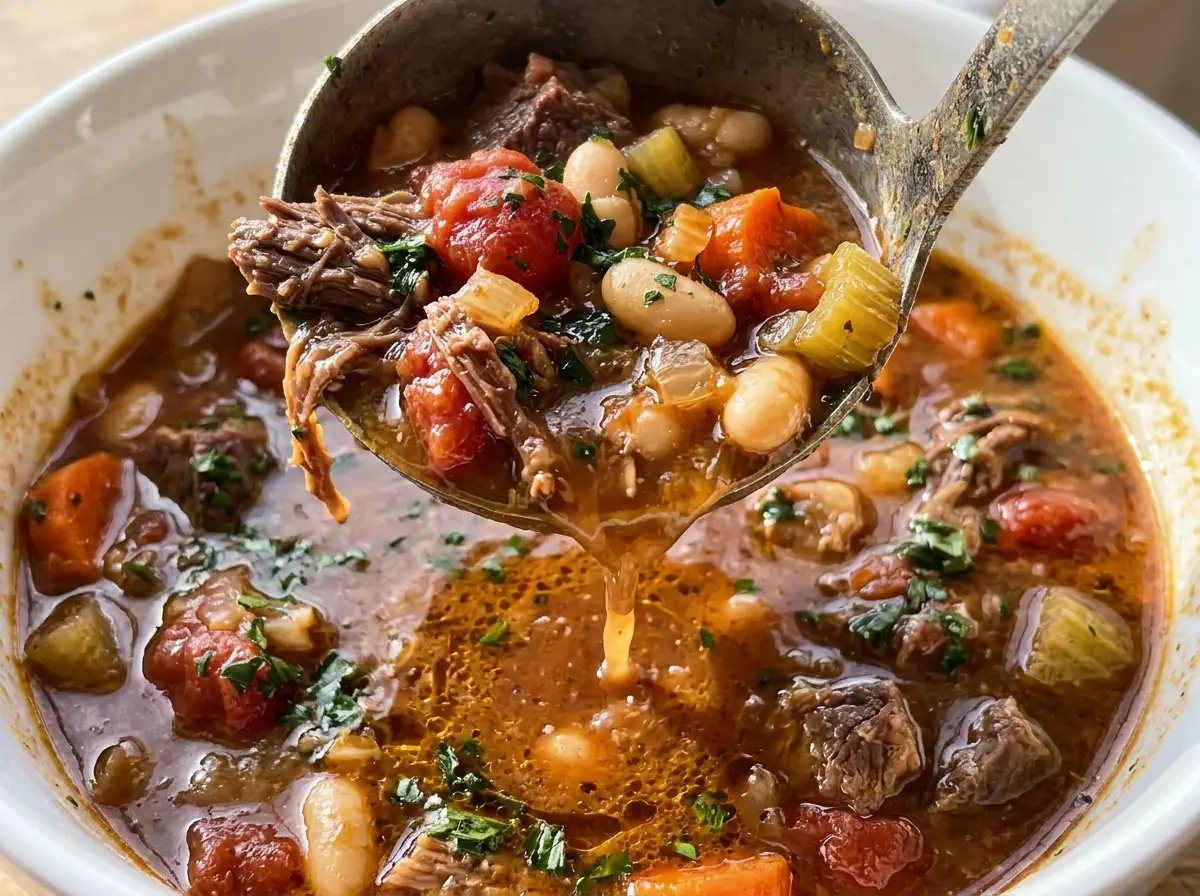
When the lid comes off a long-braised stew, the beef should give way to a fork without falling into dry shreds. I learned to give the chuck room in the pot first: crowded pieces steam instead of browning, and those browned edges are what make the tomato broth taste deep rather than flat. This Italian beef stew with tomatoes and cannellini beans takes a little patience, but most of that time is hands-off in the oven.
The broth gets its body from crushed tomatoes and the slow-cooked beef, not a flour thickener. Red wine loosens the browned bits from the bottom of the Dutch oven, while the onion, carrots, and celery soften into the base. Cannellini beans go in near the end, so they warm through without spending the whole braise in the oven. The finished stew is hearty, tomato-rich, and full of tender beef.
Kitchen Note
The stew is still bubbling when it comes out of the oven, so give it the full 10-minute rest before serving. I remove the bay leaf first, then let the broth settle before ladling.
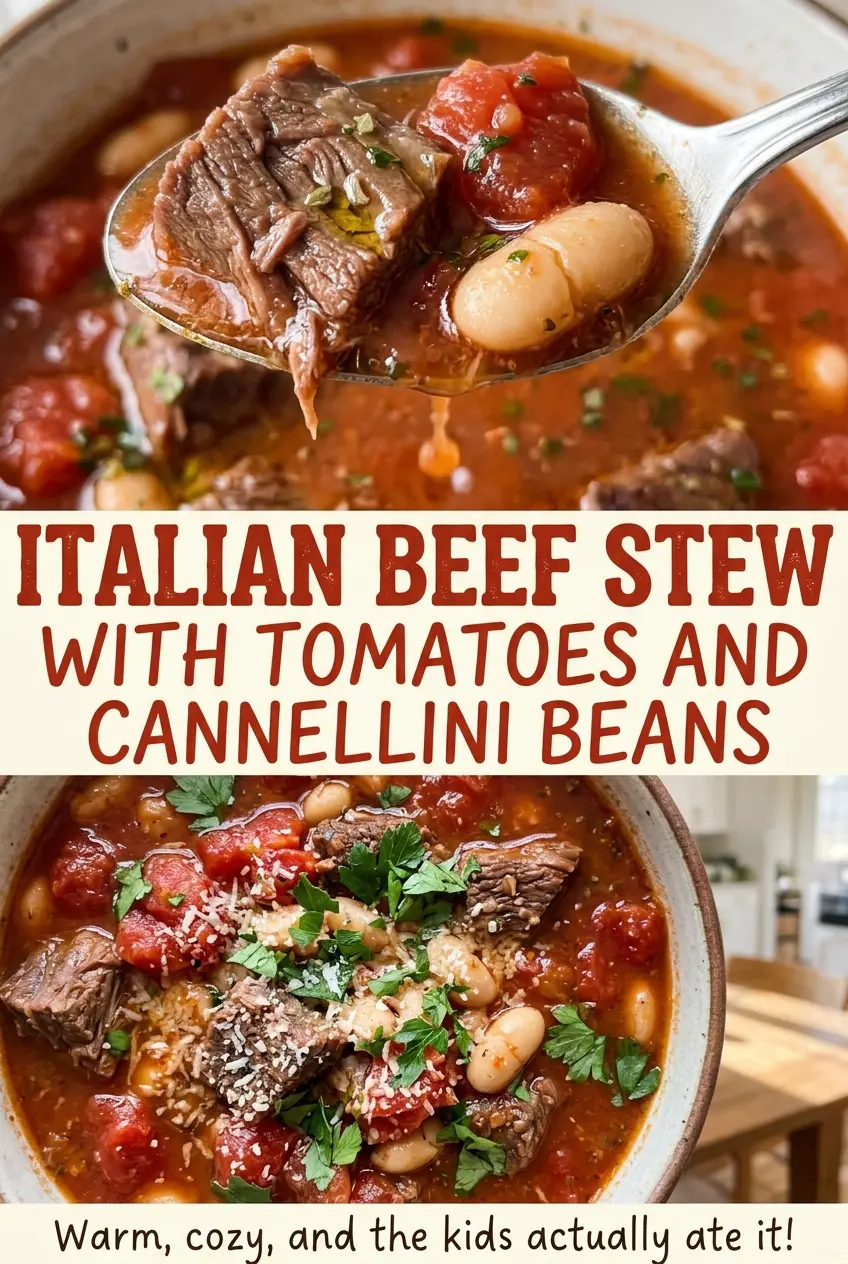
Save this Italian beef stew for a cozy dinner, with tender chuck, a rich tomato broth, and cannellini beans.
Why This Tomato Broth Gets Its Body Without a Flour Thickener
A stew can look watery when the liquid goes into the pot, then turn rich and cohesive after a long covered braise. Here, crushed tomatoes provide a naturally thick base, while beef chuck softens as it cooks and contributes gelatin to the broth. That combination gives the stew substance without a separate roux or slurry, so there’s no extra thickening step to manage.
The texture depends on letting the beef cook long enough to become fork-tender. If you stop while the cubes still feel firm, the broth won’t have had the same chance to develop around them. The tomato base is also deliberately balanced with beef broth and red wine rather than made into a dense tomato sauce. You’ll get a spoonable stew with enough liquid to surround the beef and beans, not a pot of meat coated in paste.
This approach is useful when you want a substantial braise but don’t want the sauce to feel heavy. Keep the lid on during the oven time; the covered pot holds the moisture that lets the chuck turn tender and the flavors come together steadily.
What the Beef, Tomatoes, and Beans Each Bring to the Pot
- Beef chuck — Its marbling and connective tissue suit a long braise better than a lean cut, which can dry out before the broth develops. Cut the pieces evenly so they cook at a similar pace; there’s no need to buy a premium steak cut for this pot.
- Crushed tomatoes — Canned crushed tomatoes give the stew an even tomato texture and dependable body. A standard can works well here; fresh tomatoes vary in water content and won’t produce the same consistent base.
- Tomato paste — A short cook in the pot deepens its concentrated tomato flavor before the liquids go in. Use ordinary tomato paste rather than tomato sauce, which is thinner and already seasoned.
- Dry red wine — It brings acidity and depth, and it loosens the browned bits during deglazing. An expensive bottle isn’t needed. To leave out the wine, replace it with an equal amount of the beef broth already in the ingredient list; the finished stew will taste a little less layered.
- Beef broth — This supplies the savory liquid for the covered braise. A familiar grocery-store broth is fine; if you’re sensitive to salt, choose a lower-sodium version and keep the recipe’s measured kosher salt unchanged.
- Cannellini beans — Their creamy centers soften the stew’s texture without falling apart when they’re added near the end. Drain and rinse canned beans so the canning liquid doesn’t carry into the broth.
- Onion, carrots, celery, and garlic — These make the aromatic base that rounds out the tomato and beef. Fresh, firm vegetables are the best choice, but there’s no need to seek out specialty varieties.
- Italian seasoning — A dried herb blend distributes its flavor through the braising liquid. Use a fresh-smelling jar; if the herbs have lost their aroma, they won’t contribute much after the long cook.
Building the Beef Stew in Layers Before the Oven Braise
Brown the Chuck in Uncrowded Batches
Heat the oven to 325°F, pat the beef dry, and season it with kosher salt and black pepper. Warm the olive oil in a 6-quart Dutch oven over medium-high heat, then brown the beef in batches, turning it so several sides take on color; each batch takes about 4 to 5 minutes. If the pieces are packed tightly, they’ll release moisture and steam instead of browning. Transfer each browned batch to a plate.
Soften the Vegetables and Cook the Tomato Paste
Add the chopped onion, carrots, and celery to the same pot. Cook, stirring occasionally, until softened, about 5 minutes; the vegetables should lose their raw firmness without taking on deep color. Stir in the minced garlic, tomato paste, and Italian seasoning, then cook for 1 minute. Keep the mixture moving so the garlic and paste don’t scorch on the pot’s hot surface.
Deglaze and Make the Braising Liquid
Pour in the dry red wine and scrape the browned bits from the bottom of the pot as it simmers. Let it reduce slightly, about 3 minutes; don’t rush past this stage while liquid is still pooling around the base. Stir in the crushed tomatoes, beef broth, and bay leaf, then return the beef and any juices from the plate. Bring the pot to a simmer before covering it.
Braise Until Tender, Then Warm the Beans
Transfer the covered Dutch oven to the oven and bake until the beef is fork-tender, 2 to 2 1/2 hours. The cubes should yield easily when pressed with a fork; if they still resist, they need more time in the covered pot. Stir in the drained, rinsed cannellini beans, cover again, and bake for about 15 minutes, until the beans are heated through. Remove the bay leaf and let the stew rest for 10 minutes before serving.
Easy Changes for a Wine-Free or Bean-Free Beef Stew
Skip the wine with an extra cup of broth
Use an additional cup of beef broth in place of the dry red wine. The stew will still braise well, though it will have less acidity and a simpler, more savory flavor.
Leave out the cannellini beans
For a bean-free version, omit the cannellini beans and keep the rest of the stew unchanged. The result is more focused on the beef, with a less substantial finish to the broth.
Storage and Reheating
- Refrigerator: Cool promptly and refrigerate in a covered container within 2 hours. Keep for 3 to 4 days; the beans may soften a little as they sit.
- Freezer: Freeze in airtight containers for up to 2 to 3 months. The beef freezes well, though the beans may be softer after thawing.
- Reheating: Thaw overnight in the refrigerator if frozen, then warm gently in a covered pot on the stovetop, stirring occasionally, until the stew reaches 165°F. Avoid a hard boil, which can break up the beans and make the beef seem dry.
Questions That Come Up When Making This Beef Stew
Italian Beef Stew with Tomatoes and Cannellini Beans
Ingredients
Equipment
Method
- Heat the oven to 325°F.
- Pat the beef dry, then season it with the salt and pepper.
- Heat the olive oil in a 6-quart Dutch oven over medium-high heat.
- Brown the beef in batches, turning to brown several sides, about 4 to 5 minutes per batch; transfer the beef to a plate.
- Add the onion, carrots, and celery to the pot and cook, stirring occasionally, until softened, about 5 minutes.
- Stir in the garlic, tomato paste, and Italian seasoning and cook for 1 minute.
- Pour in the red wine and scrape up the browned bits from the bottom of the pot.
- Simmer until reduced slightly, about 3 minutes.
- Stir in the crushed tomatoes, beef broth, bay leaf, and browned beef with any accumulated juices.
- Bring to a simmer, cover, and bake until the beef is fork-tender, 2 to 2 1/2 hours.
- Stir in the cannellini beans, cover, and bake until the beans are heated through, about 15 minutes.
- Remove the bay leaf and let the stew rest for 10 minutes before serving.