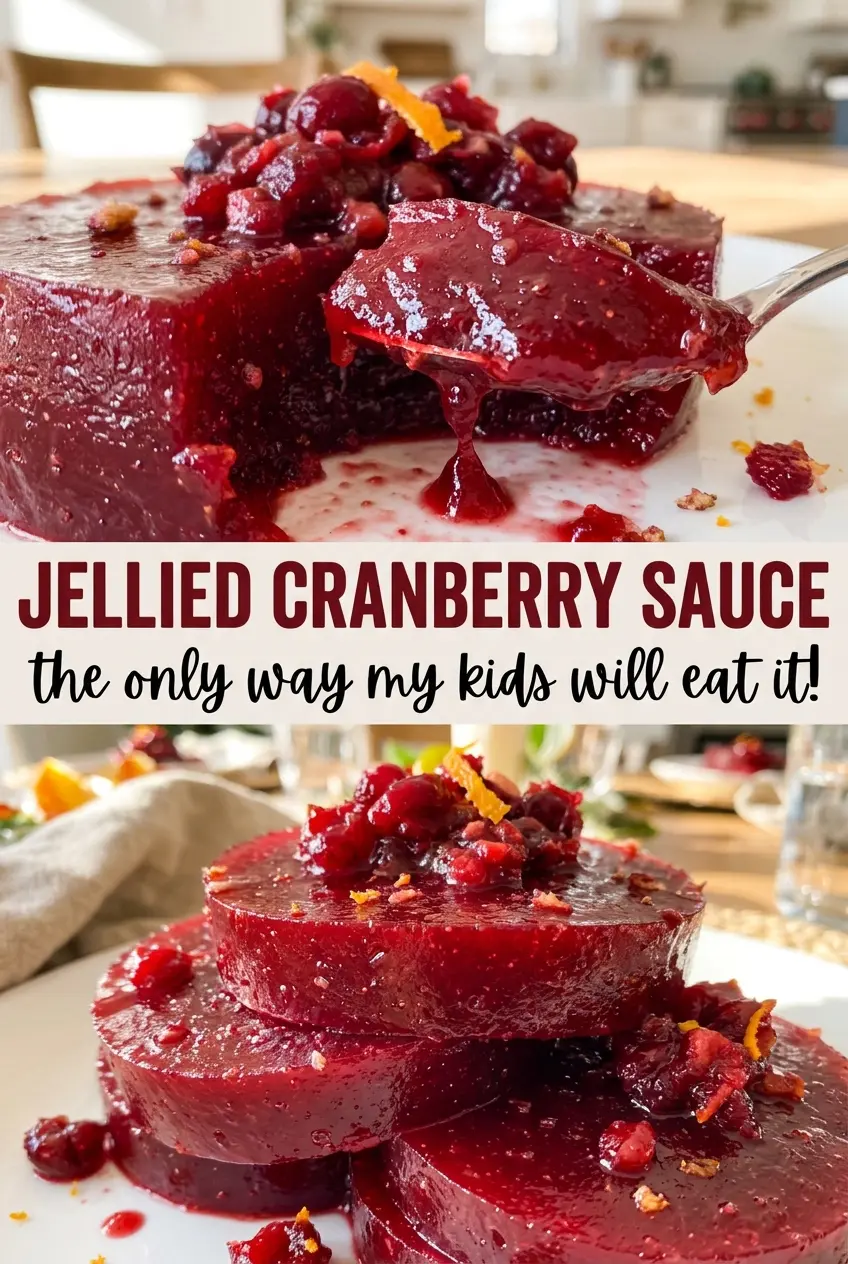
The berries start popping before you expect them to, and the syrup turns cloudy as their color bleeds into the pan. Keep the simmer steady and the cranberries soften into the thick, tart base for this jellied cranberry sauce. I like this version because it sets in a mold without gelatin, then slices into neat, glossy portions for the table.
The balance is simple: water gives the berries room to cook, and sugar softens their sharp tartness. Once the berries have burst, straining removes the skins and seeds, leaving a smooth sauce that can set cleanly in a mold. Fresh and frozen cranberries both work, which makes this an easy one to pull together whenever a bag of cranberries is on hand.
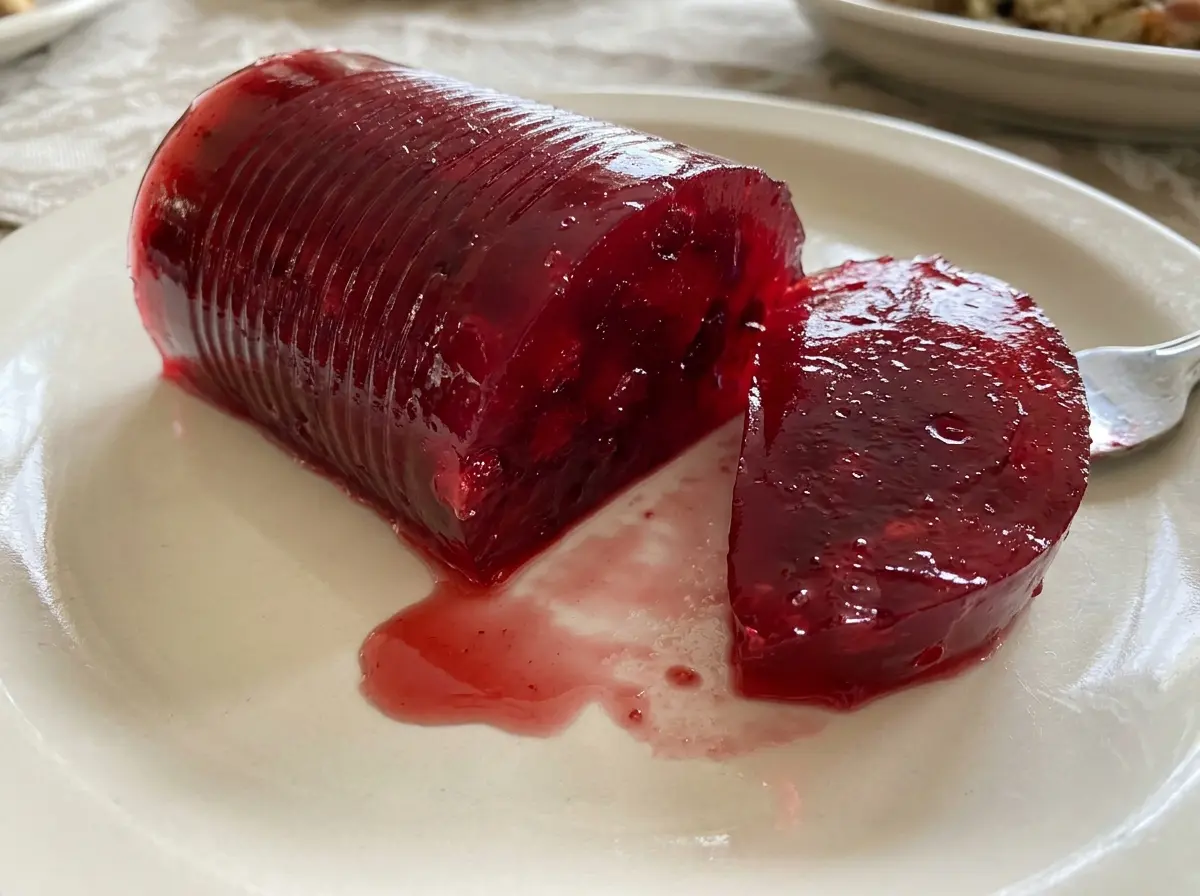
Give it the full chill before unmolding. The sauce should feel firm all the way through, not just around the edges, and the finished jelly has a bright cranberry tang with a clean, smooth cut.
Kitchen Note
If your mold has ridges, take an extra moment to spread the oil into each groove. A light, even coating there helps the jelly release with its pattern intact.
Save this jellied cranberry sauce for a smooth, sliceable centerpiece made with fresh or frozen cranberries.
Why Cranberries Set Without Gelatin
Cranberries bring their own natural pectin, which is why this sauce can firm up without a packet of gelatin or another thickener. Cooking the berries until they burst releases their juices and helps the mixture thicken; chilling gives it time to become a sliceable jelly. You’re looking for a sauce that has some body before it goes into the mold, not a thin, watery liquid.
Straining is part of what makes this version distinctly jellied. The skins and seeds stay behind, while the smooth cranberry pulp and syrup pass through the fine-mesh sieve. If you skip that step, the result will be more like a chunky cranberry sauce than a uniform mold. Keep the proportions of water, sugar, and fruit intact, too; changing them can affect both the tart-sweet balance and how firmly the sauce sets.
The timing cue matters more than watching the clock alone. The cranberries need to burst and the liquid needs to look thickened before you strain it. A full chill then lets the set develop, so don’t judge the final texture while the sauce is still warm.
What Makes the Smooth Cranberry Set Work
- Cranberries — Fresh or frozen berries both work here. Choose berries that look sound and aren’t crushed or shriveled; frozen cranberries are a handy option when fresh ones aren’t available. The fruit supplies the tartness, color, and natural pectin that help the sauce set.
- Granulated sugar — Sugar tempers the cranberries’ sharp flavor and dissolves into the syrup as it boils. Keep it granulated for this method; liquid sweeteners can change the mixture’s proportions, and sugar substitutes may not give the same taste or set.
- Water — Water forms the syrup and gives the berries enough liquid to cook and burst. It doesn’t bring extra flavor, so there’s no need for anything fancy. Replacing it with juice would change the sweetness and the balance of the finished sauce.
- Neutral oil — A small amount coats the mold so the chilled jelly can release. Canola oil is a suitable neutral choice; use an oil without a strong flavor that could compete with the cranberry.
From Boiling Berries to a Clean Molded Slice
Coat the Mold and Dissolve the Sugar
Lightly coat the inside of a 3-cup mold with neutral oil, including any ridges or small details. In a medium saucepan, combine the water and granulated sugar over medium-high heat. Stir as the mixture comes to a boil, watching for the sugar to dissolve so the syrup looks clear rather than grainy. Prepare a heatproof bowl and fine-mesh sieve before the fruit is done cooking.
Simmer Until the Berries Burst
Stir the cranberries into the boiling syrup and bring the mixture back to a boil. Reduce the heat to maintain a steady simmer for 10 to 15 minutes. The berries should burst, and the liquid should look thicker than it did at the start. If the berries are still mostly whole or the liquid looks thin, keep your attention on those cues within the simmering time.
Strain Away the Skins and Seeds
Set the fine-mesh sieve over the heatproof bowl and carefully pour in the hot cranberry mixture. Press the fruit through with a spoon, working the softened berries against the mesh to pass the pulp into the bowl. The skins and seeds stay in the sieve; discard them rather than tipping them back into the smooth sauce. Take care with the hot mixture as you work.
Chill Until Firm, Then Unmold
Pour the strained sauce into the oiled mold and let it cool to room temperature. Cover it and refrigerate for at least 6 hours, until it’s fully set. To release it, dip the bottom of the mold in warm water for 5 to 10 seconds, then run a thin knife around the edge. Invert the mold onto a serving plate; if it resists, use another brief dip in warm water rather than pulling at the jelly.
Three Small Changes That Suit This Cranberry Jelly
Use Frozen Cranberries
Frozen cranberries are an easy choice when fresh berries aren’t in season or you want to keep a bag on hand. Use them in place of fresh cranberries and cook until the berries have burst and the liquid looks thickened. The finished sauce keeps the same tart cranberry character.
Choose a Ring-Shaped 3-Cup Mold
A ring-shaped mold with the same 3-cup capacity gives the sauce a different outline while keeping the batch size and method unchanged. Oil the full interior, including the center tube, so the finished jelly releases cleanly. The result is still smooth and sliceable, with a decorative ring shape.
Make It with Vegan-Certified Sugar
For a vegan version that avoids sugar processed with animal-derived bone char, replace the granulated sugar with the same amount of vegan-certified granulated sugar. The sweet-tart flavor and texture stay close to the original as long as you use a granulated sugar rather than a liquid sweetener.
Make-Ahead and Serving
- Refrigerator: Keep the covered sauce chilled and use it within 3 to 4 days. The molded jelly may soften slightly after it’s released from the mold.
- Freezer: Freezing isn’t my first choice for this molded version; ice crystals can weaken the set and leave moisture as it thaws.
- Serving: This sauce is served cold, so it doesn’t need reheating. Keep it refrigerated until serving, and don’t leave it at room temperature for more than 2 hours.
Questions That Come Up with Jellied Cranberry Sauce
Jellied Cranberry Sauce
Ingredients
Equipment
Method
- Lightly coat the inside of a 3-cup mold with the neutral oil.
- Combine the water and granulated sugar in a medium saucepan and bring to a boil over medium-high heat, stirring until the sugar dissolves.
- Stir in the cranberries and return the mixture to a boil.
- Reduce the heat to maintain a steady simmer for 10 to 15 minutes, until the berries have burst and the liquid looks thickened.
- Set a fine-mesh sieve over a heatproof bowl and press the cranberry mixture through it with a spoon.
- Discard the skins and seeds.
- Pour the strained sauce into the prepared mold and cool to room temperature.
- Cover the mold and refrigerate for at least 6 hours, until fully set.
- To unmold, dip the bottom of the mold in warm water for 5 to 10 seconds.
- Run a thin knife around the edge, then invert the mold onto a serving plate.