
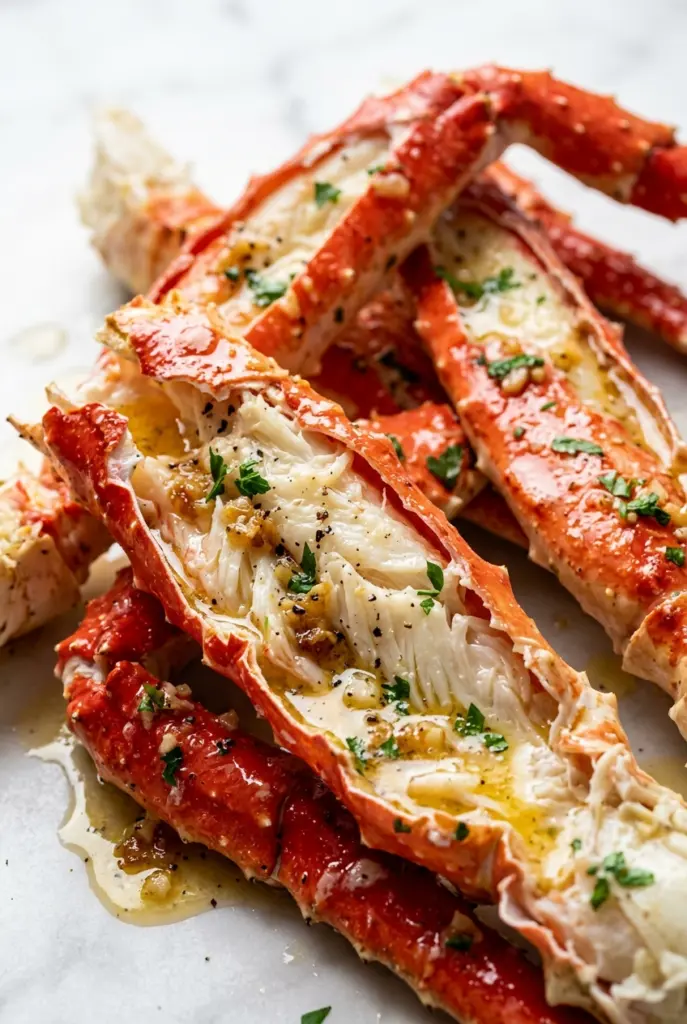
King Crab Legs with Garlic Butter
Sweet king crab meat and hot garlic butter is one of those combinations that never gets old. The crab stays tender and clean-tasting, while the butter turns rich with garlic,…
Tip: save now, cook later.Sweet king crab meat and hot garlic butter is one of those combinations that never gets old. The crab stays tender and clean-tasting, while the butter turns rich with garlic, lemon, and a little Old Bay, so every bite lands with more depth than plain melted butter ever could. This version keeps the flavor bold without burying the crab, which matters because king crab is already carrying the meal.
What makes this work is restraint in the pan. Garlic only needs a minute or two to perfume the butter; push it past pale gold and it turns sharp, then bitter, and that bitterness hangs over the whole dish. The crab itself just needs to be heated through, not cooked from scratch. If it spends too long in the skillet or steamer, the meat tightens and the texture goes from luxurious to stringy.
Below, I’ll show you the cleanest way to crack and warm the legs so the meat slips out in long pieces, plus a few smart swaps if you don’t have every ingredient on hand.
The garlic butter coated the crab without drowning it, and the legs were hot all the way through in just a few minutes. Cutting the shells first made serving so much easier, and the lemon at the end kept it from feeling heavy.
Save these garlic butter king crab legs for the night you want a special dinner with almost no hands-on cooking.
The mistake that dries out king crab legs before they hit the plate
King crab legs are usually already cooked when you buy them, which is why the goal here is gentle reheating, not aggressive cooking. The biggest mistake is treating them like raw seafood and leaving them in a hot pan until the shells feel scorching. That turns the meat chewy and strips out the sweetness that makes crab worth buying in the first place.
The shell cut matters more than most people think. If you slice the underside before heating, the butter can slip into the cracks and the meat comes out in long, clean pieces instead of fighting you at the table. Steam or cover just long enough to warm the thickest section, then pull them immediately. You want hot crab with glossy butter clinging to the surface, not overcooked crab sitting in a puddle.
What each ingredient is actually doing in this dish
- King crab legs — This is the main event, so buy the best legs you can find. Steamed or thawed frozen legs both work; just thaw fully in the refrigerator so they heat evenly instead of being icy in the center and overdone at the tips.
- Unsalted butter — Butter carries the garlic, lemon, and seasoning into every crack of the shell. Unsalted gives you control, which matters because crab and Old Bay already bring salt to the party.
- Fresh garlic — Fresh cloves give the butter its backbone. Jarred garlic can work in a pinch, but it cooks unevenly and tastes flatter, so keep the heat low and cook it only until fragrant and just barely golden.
- Lemon juice — A little acid keeps the butter from feeling heavy and makes the crab taste sweeter. Bottled lemon juice works if that’s what you have, but fresh juice has a cleaner finish.
- Old Bay seasoning — This brings the seafood-house flavor that plain salt can’t replicate. It also gives the butter a little color and depth, so use enough to taste the seasoning without making the sauce gritty.
- Fresh parsley — Parsley is the finish that keeps the dish looking fresh and tasting bright. Add it at the end so it stays green and doesn’t fade into the butter.
Heating the crab without overcooking the meat
Building the garlic butter
Melt the butter over medium heat, then add the minced garlic and stir it constantly. The garlic should smell warm and nutty within a minute or two and take on the faintest golden edge. If it starts browning quickly, the pan is too hot and the butter will pick up a bitter note that follows the crab around. Pull the pan off the heat for a few seconds if needed; garlic forgives low heat, not high heat.
Seasoning the sauce
Stir in the lemon juice, red pepper flakes, and Old Bay once the garlic is ready. The mixture should look glossy and smell bright, spicy, and savory all at once. Taste the butter now, before the crab goes in, because this is your chance to balance it. If it tastes flat, it probably needs a little more lemon; if it tastes thin, it needs a touch more Old Bay.
Warming the crab legs
Add the crab legs to the pan and turn them until every surface is coated, or brush the butter over them if your pan is crowded. Cover and heat just until the legs are hot through, usually 5 to 7 minutes depending on size. You’re looking for steaming shells and crab that releases easily when you crack it open. If the meat looks dry or curled tightly against the shell, it’s gone too far.
Finishing for the table
Move the crab to a platter and pour the remaining butter over the top, then shower it with parsley and serve it with lemon wedges. That final butter hit matters because the sauce in the pan is where the garlic and seasoning concentrated. Let people crack the shells over a wide bowl or newspaper-lined tray so the meal stays fun instead of messy in a frustrating way.
How to adapt these crab legs when you need a different approach
Dairy-Free Garlic Crab
Swap the butter for a good plant-based butter with a clean flavor and the same fat content. Olive oil works too, but you’ll lose some of the richness and the sauce won’t cling quite as well to the shells.
Less Heat, Same Flavor
Leave out the red pepper flakes and keep the Old Bay. The crab still tastes full and savory, but the finish stays softer and more kid-friendly.
No Old Bay on Hand
Use a mix of paprika, a pinch of celery salt, and black pepper. It won’t taste identical, but it gives you the same savory seafood direction instead of plain garlic butter.
Storage and Reheating
- Refrigerator: Store leftover crab meat for up to 2 days in an airtight container. The texture softens a bit, so eat it sooner rather than later.
- Freezer: I don’t recommend freezing the cooked crab legs again. The meat gets watery and loses that sweet, delicate bite after thawing.
- Reheating: Rewarm gently with a splash of water or extra butter in a covered pan over low heat, or steam briefly until just hot. High heat is the mistake that turns the meat rubbery.
Answers to the questions worth asking
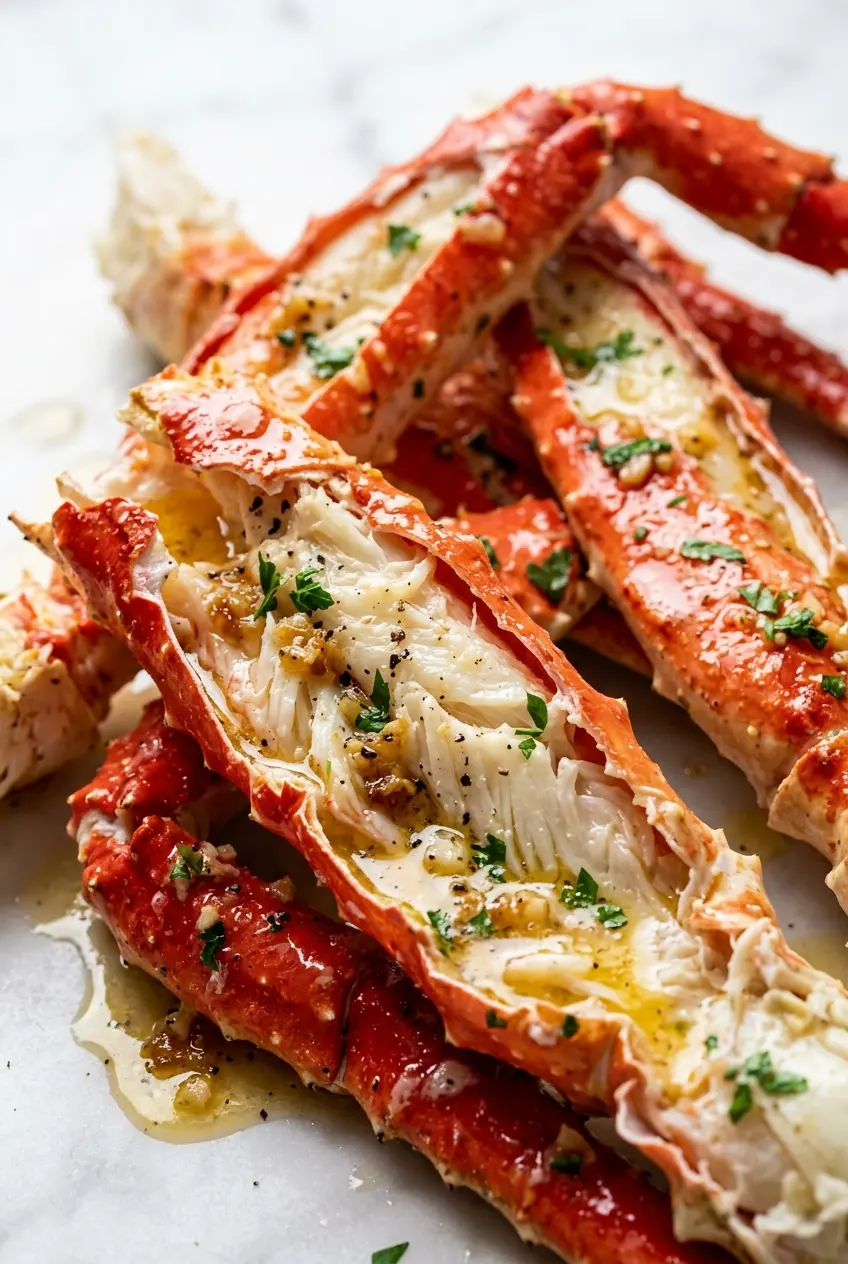
King Crab Legs with Garlic Butter
Ingredients
Equipment
Method
- Rinse the crab legs under cold water and pat dry with a clean towel so the butter clings evenly. If frozen, thaw overnight in the refrigerator.
- Using kitchen shears, cut along the underside of each crab leg shell to make cracking easier later. Keep cuts shallow so you don’t pierce the meat.
- Melt unsalted butter in a large skillet or saucepan over medium heat until fully liquid. Keep it at a steady simmer so it doesn’t separate.
- Add fresh garlic cloves (minced) and cook for 1–2 minutes until fragrant and just turning golden—do not brown. Scrape the pan so the garlic toasts without burning.
- Stir in lemon juice, red pepper flakes, and Old Bay seasoning until combined and speckled. Taste and season lightly with kosher salt if needed.
- Add the crab legs to the pan and toss to coat, or brush the garlic butter generously over each leg. Make sure butter gets into the cut seams of the shells.
- Cover and steam/heat for 5–7 minutes until warmed through and glistening. Look for a hot, steamy surface and meat that flakes easily.
- Transfer to a serving platter, pour remaining garlic butter over the top, and finish with fresh parsley and lemon wedges. Serve immediately with extra lemon if you like more brightness.