
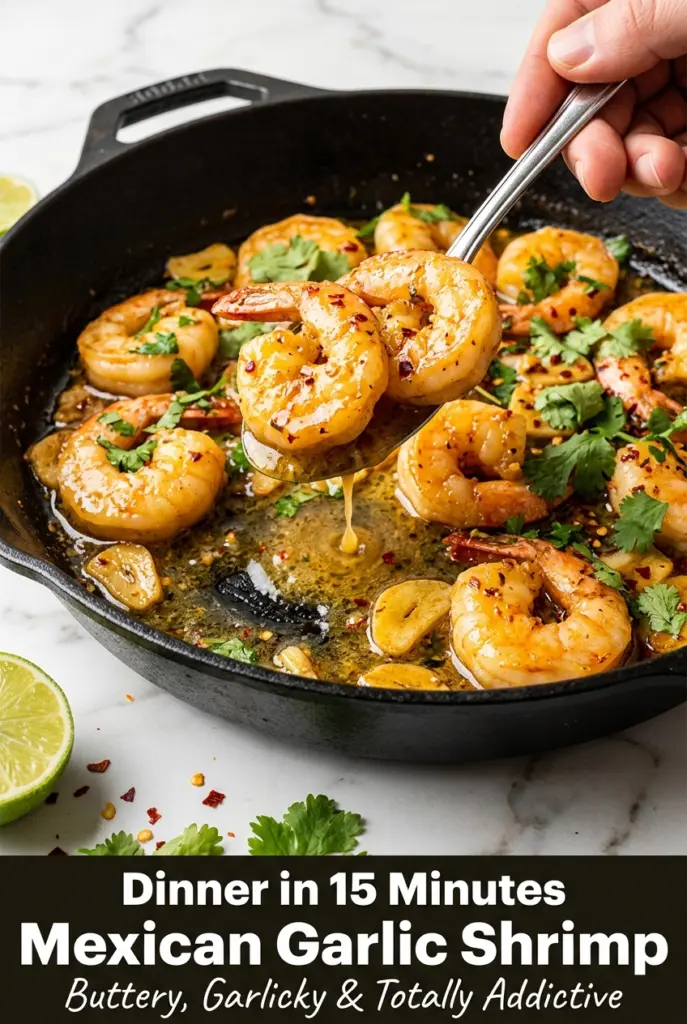
Mexican Garlic Shrimp (Camarones al Mojo de Ajo)
Plump shrimp bathed in butter, olive oil, and a big hit of garlic is the kind of dinner that disappears fast, especially when the sauce turns golden instead of greasy…
Tip: save now, cook later.Plump shrimp bathed in butter, olive oil, and a big hit of garlic is the kind of dinner that disappears fast, especially when the sauce turns golden instead of greasy and the shrimp stay juicy instead of tight and rubbery. Camarones al Mojo de Ajo lands right in that sweet spot: bold, fast, and built around a sauce you’ll want to mop up with rice or warm tortillas.
The trick here is giving the garlic time to mellow and perfume the fat before the shrimp ever hit the pan. Thin slices cook more evenly than minced garlic, so you get that toasted, almost sweet garlic flavor without the bitter edge that happens when tiny pieces scorch. The guajillo chile adds a gentle smoky warmth, and the lime goes in at the end so it stays bright instead of tasting flat.
Below, I’ll walk through the part that matters most: how to keep the garlic golden, not burned, and how to pull the shrimp off the heat the second they turn opaque. There’s also a simple way to adjust the heat and a few smart swaps if you don’t have guajillo chiles on hand.
The garlic turned perfectly golden and the sauce coated every shrimp without getting watery. I served it with tortillas and my husband kept saying the lime at the end made it taste restaurant-level.
Camarones al Mojo de Ajo is at its best when the garlic turns golden and the lime hits the pan at the very end.
Save this garlicky shrimp skillet for a fast dinner with buttery mojo sauce
Why the Garlic Has to Turn Golden Before the Shrimp Go In
Most shrimp skitters into the pan too soon, before the garlic has had a chance to do its job. That’s when the sauce tastes raw or sharp instead of round and buttery. Here, the garlic cooks first in a mix of butter and olive oil, which lowers the chance of burning and gives you a deeper, sweeter base.
The other mistake is crowding the skillet. If the shrimp pile up, they steam and dump water into the sauce, and you lose that glossy coating everyone wants. A single layer over medium-high heat gives the shrimp a quick sear on the outside while keeping the center tender. Pull them as soon as they curl into a loose C-shape; if they tighten into a hard O, they’ve gone too far.
What Each Ingredient Is Actually Doing in This Dish
- Large shrimp — Big shrimp hold up better to the quick sear and stay juicy while the sauce finishes. Smaller shrimp can work, but they cook fast enough that you’ll need to shorten the timing by a minute or so.
- Butter and olive oil — Butter gives the sauce its rich, silky finish, while olive oil keeps the garlic from browning too aggressively. Using both is the easiest way to get flavor without burning the fat.
- Thinly sliced garlic — Sliced garlic infuses the oil cleanly and stays sweet when cooked gently. Minced garlic burns faster and can turn the whole skillet bitter before the shrimp are done.
- Guajillo chiles — These bring a soft smoky note and a warm brick-red color without much heat. If you can’t find them, chili flakes work, but the sauce will taste sharper and less rounded.
- Lime juice — Fresh lime wakes up the butter and keeps the sauce from tasting heavy. Bottled juice works in a pinch, but the bright finish won’t be as clean.
The 10 Minutes That Decide the Sauce
Blooming the Garlic and Chiles
Melt the butter with the olive oil over medium heat, then add the sliced garlic and guajillo chiles. Stir gently and watch the garlic closely; it should turn pale gold at the edges and smell nutty, not dark brown or bitter. If the pan runs hot, lift it off the burner for a few seconds instead of pushing through the heat. That small pause keeps the garlic from going from fragrant to burned in a flash.
Seared Shrimp, Not Steamed Shrimp
Add the shrimp in one layer and let them sit long enough to pick up a little color before turning. They should look opaque around the edges and still slightly translucent in the center when you flip them. If a pile of liquid starts collecting in the pan, the heat is too low or the pan is overcrowded. Work quickly and resist the urge to stir constantly; shrimp need brief contact with the hot skillet to caramelize a little.
The Lime Finish
Squeeze in the lime juice off the heat or just as you’re pulling the pan away from the burner. The sauce will sizzle and loosen, then cling to the shrimp in a glossy coat. Add the herbs at the end so they stay fresh and green instead of collapsing into the butter. If the sauce looks broken, it usually means it boiled after the lime went in; taking it off the heat keeps it smooth.
Three Ways to Adjust Camarones al Mojo de Ajo Without Losing the Point
Dairy-Free Version
Replace the butter with more olive oil or use a plant-based butter that holds up well to heat. You’ll lose a little of the sauce’s richness, but the garlic and lime still carry the dish, and the texture stays glossy instead of greasy.
Spicier Coastal-Style Shrimp
Keep the red pepper flakes and add a second guajillo if you want more back-end warmth without turning the sauce harsh. Guajillo brings color and depth, while flakes add sharper heat, so using both gives you a fuller, layered burn.
Low-Carb Serving Idea
Serve the shrimp over cauliflower rice, zucchini noodles, or a bed of sautéed greens instead of regular rice. The sauce is bold enough to season the vegetables, but skip watery sides or they’ll dilute the garlic butter.
Gluten-Free Meal
The shrimp itself is naturally gluten-free, so the main job is choosing the right side. Rice, corn tortillas, or roasted potatoes all work well and let the mojo sauce stay in the spotlight.
Storage and Reheating
- Refrigerator: Store leftovers in an airtight container for up to 2 days. The shrimp will firm up a bit, and the garlic sauce may thicken as it cools.
- Freezer: I don’t recommend freezing this one. Shrimp turn rubbery after thawing, and the garlic butter sauce loses its clean texture.
- Reheating: Warm gently in a skillet over low heat with a splash of water or stock, just until the shrimp are heated through. High heat is the fastest way to overcook them and turn the sauce oily.
Questions I Get Asked About This Recipe
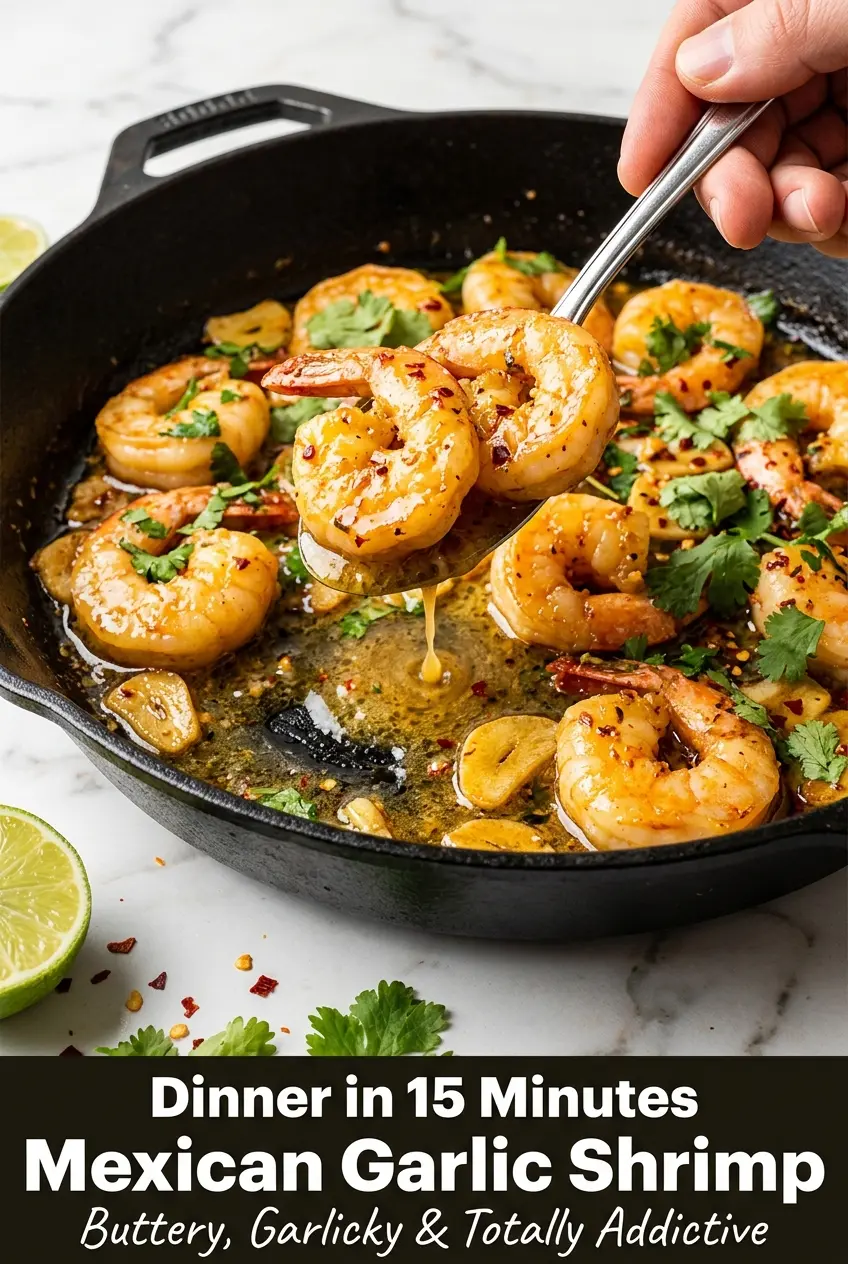
Mexican Garlic Shrimp (Camarones al Mojo de Ajo)
Ingredients
Equipment
Method
- Pat the shrimp dry with paper towels and toss with salt, black pepper, smoked paprika, and cumin until evenly coated. Set aside while you heat the skillet.
- In a large skillet over medium heat, melt the butter with the olive oil. Add the sliced garlic and dried guajillo chiles and cook for 3–4 minutes, stirring gently, until the garlic turns golden and fragrant—watch closely so it doesn't burn.
- Remove the guajillo chiles from the pan and discard (or leave in for extra smoky depth), then add the red pepper flakes if using. Keep the pan hot for the shrimp.
- Increase heat to medium-high, then add the seasoned shrimp in a single layer and cook for 1–2 minutes per side until pink, curled, and slightly caramelized at the edges.
- Squeeze the lime juice directly into the pan and stir to combine until the sauce sizzles and coats the shrimp.
- Remove from heat and scatter over the parsley and cilantro, then stir lightly to distribute the herbs.
- Serve immediately over white rice or with warm flour tortillas, topped with extra cilantro and with lime wedges on the side.