The mushrooms start releasing their liquid almost as soon as they hit the skillet, and the sauce won’t come together until that moisture cooks off. I give them time to brown before adding the flour, which keeps the creamy sauce from getting watery. That’s the part that makes Leftover Turkey Tetrazzini a good use for cooked turkey: the pieces end up tucked into a saucy pasta bake instead of drying out in a second round of cooking.
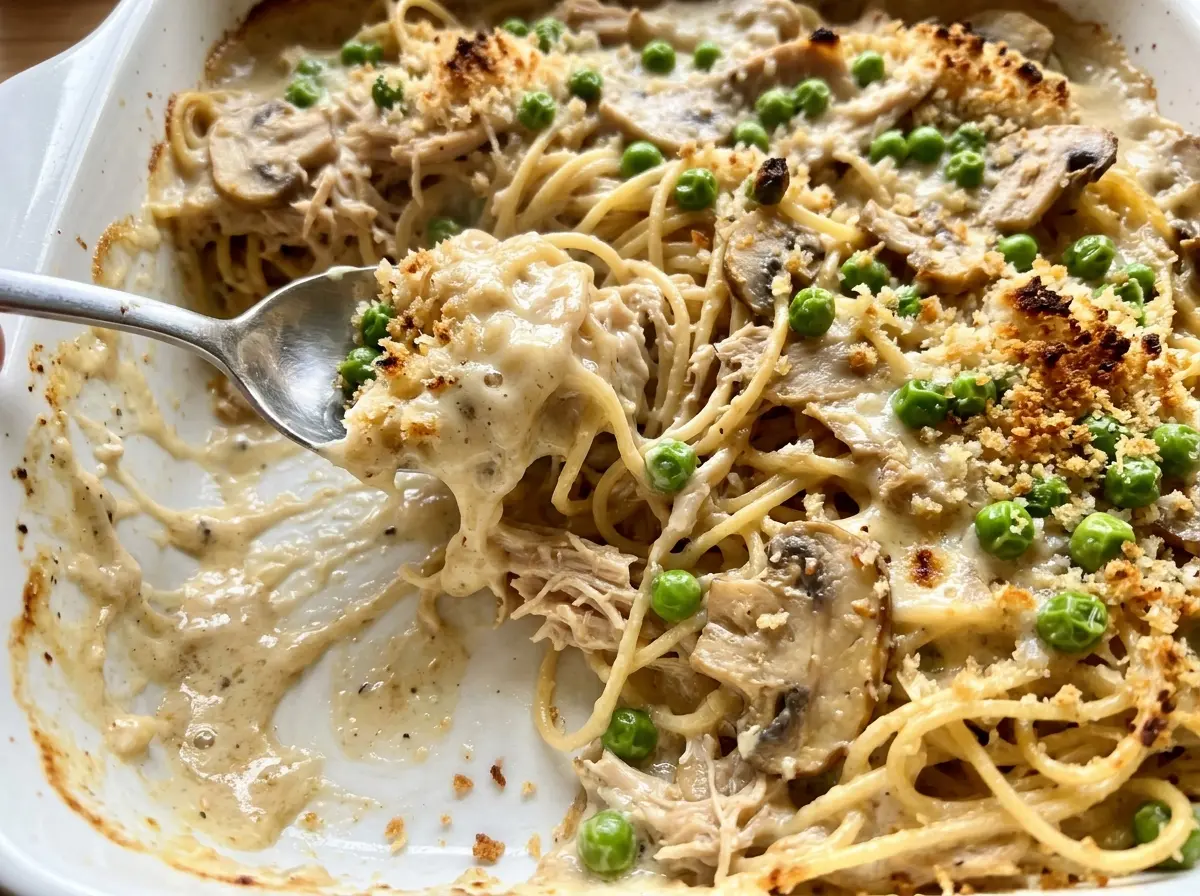
I like the contrast here: tender spaghetti and turkey underneath, with a buttery panko topping that turns golden in the oven. The peas bring little sweet bites through the creamy sauce, while Parmesan adds a savory edge. It’s filling without being fussy, and the 9×13-inch dish makes enough to serve eight. Once it comes out of the oven, the top is crisp and the middle is creamy, with the turkey and pasta coated in sauce.
Kitchen Note
Give the casserole the full 10-minute rest after it comes out of the oven. The sauce settles around the pasta, so it serves in creamy portions instead of running across the plate.
Save this Leftover Turkey Tetrazzini for a creamy way to use cooked turkey, finished with a crisp, buttery Parmesan-panko top.
Why the Sauce Should Be Thick Before It Goes Into the Oven
A casserole keeps cooking after the sauce leaves the skillet. The pasta takes up some of that liquid as everything heats together, so a sauce that looks a little loose in the pan can turn out just right after baking. I bring mine to the point where it coats a spoon before pouring it over the spaghetti. That gives the pasta enough sauce to stay creamy without leaving a pool at the bottom of the baking dish.
Flour gives the sauce body, but it needs a little time in the butter before the liquids go in. After that, adding the broth and cream gradually helps them blend smoothly with the flour instead of leaving little clumps. Parmesan melts into the sauce and gives it a savory finish, while the extra cheese on top joins the panko to make a crisp lid. The result is a casserole that holds together when served but still feels creamy between the strands of pasta.
What Gives the Turkey Filling Its Creamy, Savory Balance
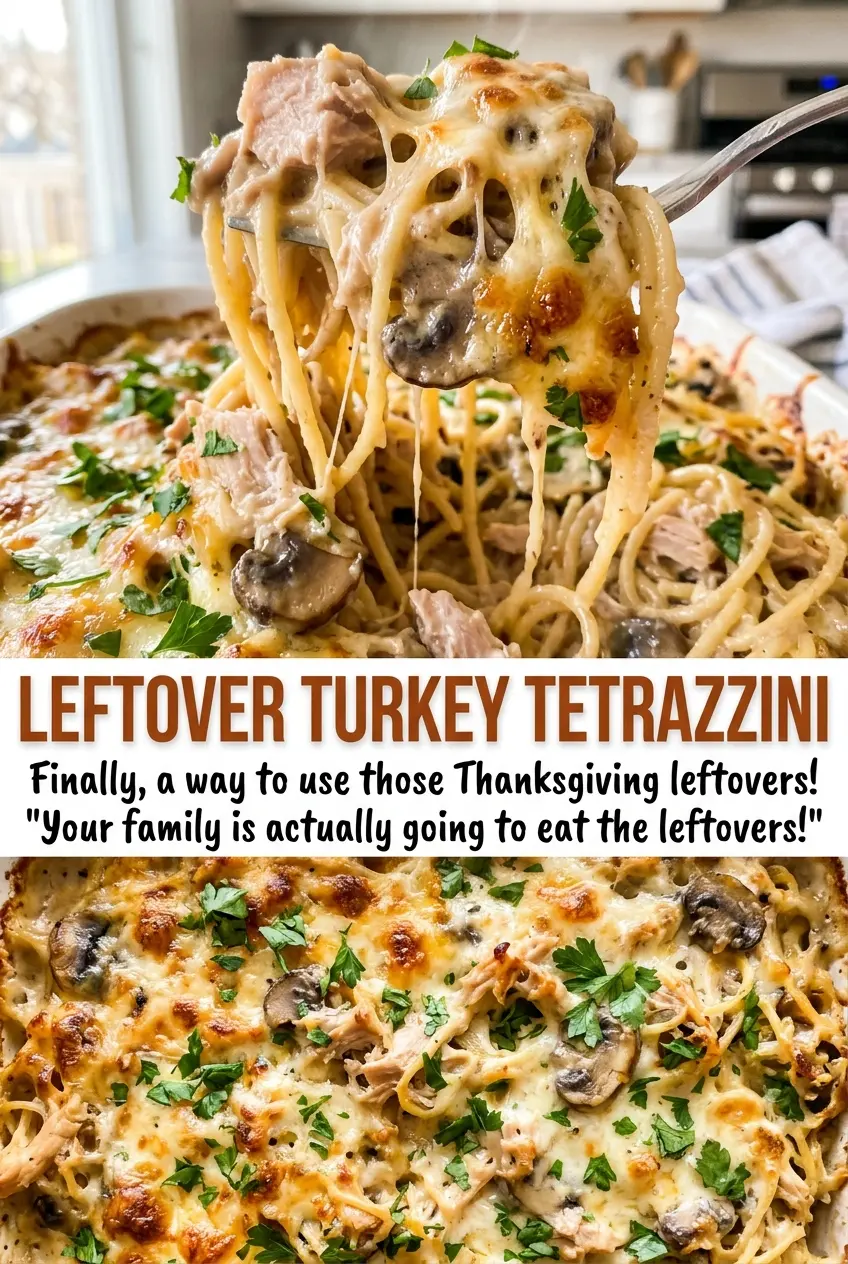
- Spaghetti — Its long strands distribute the turkey and peas through each serving. Regular dried spaghetti is a good fit here; cook it just shy of al dente so it can finish in the casserole.
- Cooked turkey — Bite-size pieces tuck easily through the pasta and warm in the sauce. Both white and dark meat work, and this is a practical place to use already-cooked turkey without needing to brown it again.
- Cremini mushrooms — They bring an earthy, savory note that gives the cream sauce more depth. Choose firm mushrooms and slice them evenly so they cook at the same pace; there’s no need to seek out specialty mushrooms.
- Heavy cream and chicken broth — Cream gives the sauce its rich body, while low-sodium broth keeps it savory without making the finished dish too salty. The low-sodium version also leaves room for the salt and Parmesan added later.
- Parmesan — Grated Parmesan seasons the sauce and gives the topping a savory bite. A fine, even grate disperses smoothly through the sauce and mixes readily with the panko.
- Panko — These airy crumbs make a crisp top rather than a dense layer. Stirring them with the melted butter helps them brown evenly across the casserole.
- Frozen peas — Thaw them before mixing them in, so they don’t bring extra icy moisture into the filling. Their mild sweetness gives the creamy sauce a bit of contrast.
Building the Sauce and a Golden Topping Without Overcooking the Pasta
Get the Spaghetti and Filling Ready
Heat the oven to 375°F and coat a 9×13-inch baking dish with cooking spray. Boil the spaghetti according to the package timing, stopping just shy of al dente, then drain it well. Combine the drained pasta with the bite-size cooked turkey and thawed peas in a large bowl. If the pasta is fully soft before it goes into the dish, it can lose its shape during the bake.
Cook the Mushrooms Before Thickening the Sauce
Set aside 1 tablespoon of butter for the topping, then melt the remaining butter in a large skillet over medium heat. Add the sliced mushrooms and chopped onion; cook for 8 to 10 minutes, stirring occasionally, until the mushrooms are browned and their liquid has evaporated. Stir in the garlic and cook for 30 seconds, then add the flour and stir for 1 minute. Gradually whisk in the chicken broth and heavy cream, bring the sauce to a gentle simmer, and cook for 3 to 5 minutes, stirring, until it coats a spoon; stir in the salt, pepper, and half of the Parmesan.
Top the Casserole and Bake Until Golden
Pour the sauce over the spaghetti mixture and stir until the pasta, turkey, and peas are coated, then transfer everything to the prepared baking dish. Melt the reserved butter and stir it with the panko and remaining Parmesan, then scatter the mixture evenly over the casserole. Bake uncovered for 30 to 35 minutes, until the topping is golden and the center reaches 165°F. Let it stand for 10 minutes before serving.
Three Practical Ways to Adapt This Turkey Tetrazzini
Make a gluten-free version
Use gluten-free spaghetti, a cup-for-cup gluten-free flour blend, and gluten-free panko. Choose gluten-free chicken broth and cooking spray as well. The sauce may have a slightly different texture depending on the flour blend, but it still thickens in the skillet before baking.
Scale it down for four
Halve each ingredient and use a smaller oven-safe baking dish. Keep the oven at 375°F, but start checking before the full-size bake time is up; the smaller casserole is ready when its topping is golden and its center is hot through.
Bake individual portions
Divide the coated pasta mixture among oven-safe individual dishes and share the panko topping evenly over each one. Smaller portions heat faster than a full casserole, so check them early and pull them once the topping is golden and the centers are hot.
Storage and Reheating
- Refrigerator: Store covered in an airtight container for 3 to 4 days. The panko topping softens as it sits.
- Freezer: Freeze cooled portions in airtight containers for up to 2 months. The pasta may soften a little after thawing, but the creamy filling holds up well.
- Reheating: Thaw frozen portions in the refrigerator, then reheat covered in a 350°F oven until hot throughout. Uncover near the end to bring back some crunch; reheating uncovered the whole time can dry the pasta at the edges.
Questions That Come Up When Making Turkey Tetrazzini
Leftover Turkey Tetrazzini
Ingredients
Equipment
Method
- Heat the oven to 375°F.
- Coat a 9x13-inch baking dish with cooking spray.
- Cook the spaghetti in boiling water until just shy of al dente, following the package timing.
- Drain the spaghetti.
- Combine the drained spaghetti, turkey, and peas in a large bowl.
- Set aside 1 tablespoon of the butter for the topping.
- Melt the remaining 4 tablespoons of butter in a large skillet over medium heat.
- Add the mushrooms and onion and cook for 8 to 10 minutes, stirring occasionally, until the mushrooms are browned and their liquid has evaporated.
- Add the garlic and cook for 30 seconds.
- Stir in the flour and cook for 1 minute.
- Gradually whisk in the broth and heavy cream.
- Bring the sauce to a gentle simmer and cook for 3 to 5 minutes, stirring, until it thickens enough to coat a spoon.
- Stir in the salt, pepper, and 1/2 cup of the Parmesan.
- Pour the sauce over the spaghetti mixture and stir to coat.
- Transfer the mixture to the prepared baking dish.
- Melt the reserved 1 tablespoon butter.
- Stir the melted butter together with the panko and remaining 1/4 cup Parmesan.
- Sprinkle the topping evenly over the casserole.
- Bake uncovered for 30 to 35 minutes, until the topping is golden and the center reaches 165°F.
- Let rest for 10 minutes before serving.