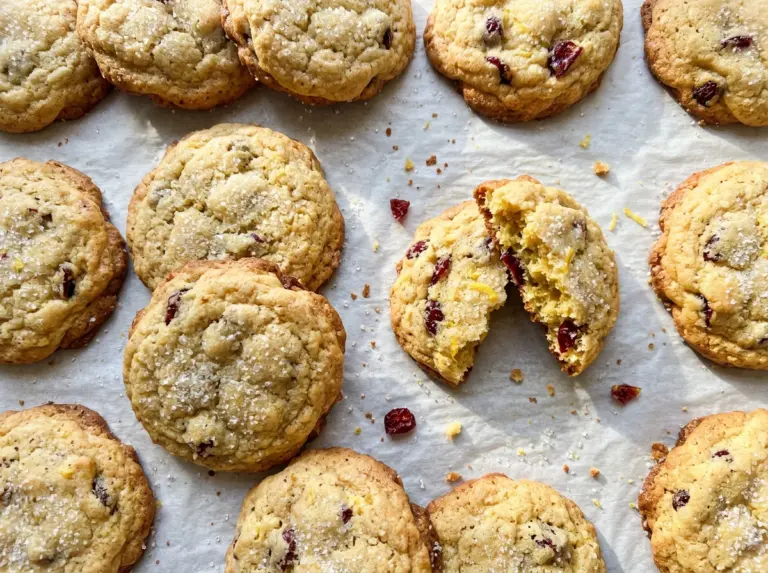
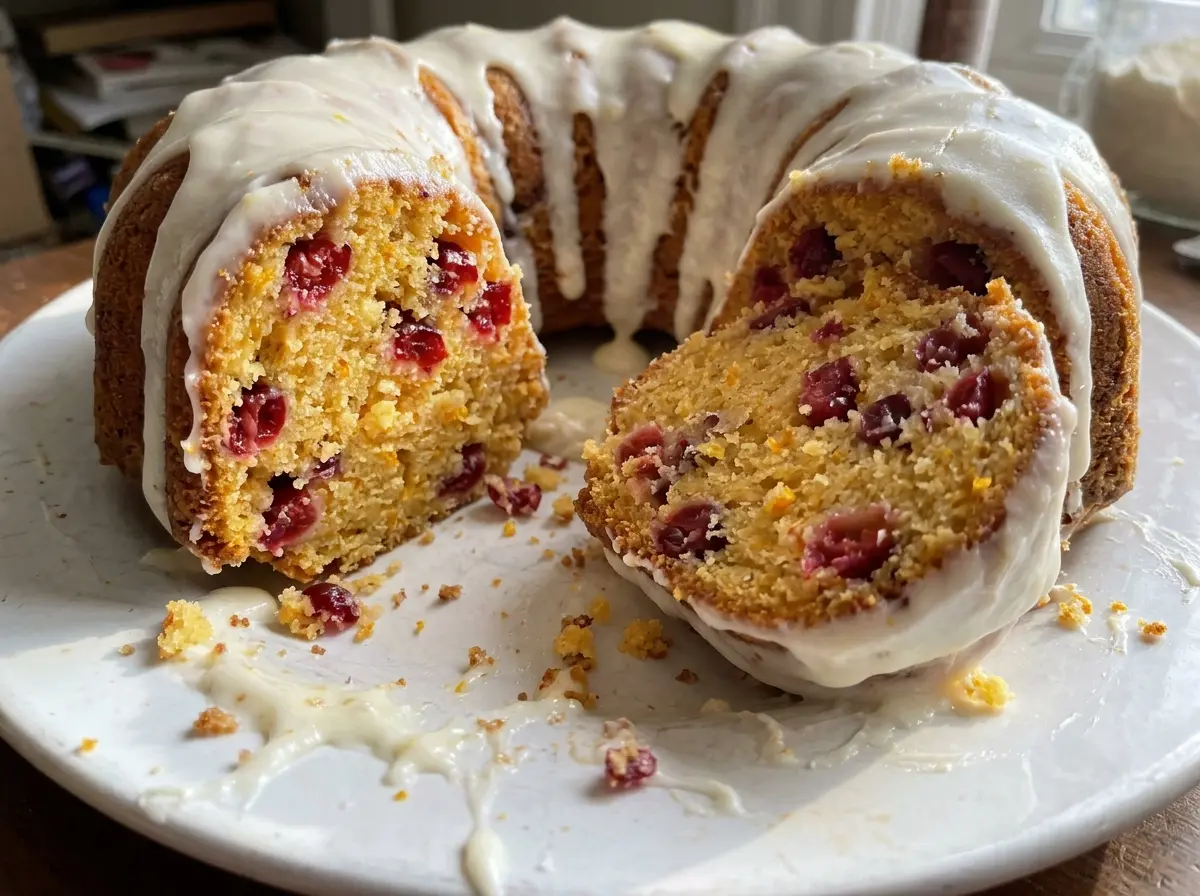
When the Bundt pan comes out of the oven, the cranberries have softened into bright, tart pockets against a golden, orange-scented crumb. That contrast is what makes this cranberry orange Bundt cake worth baking: the fruit keeps each slice from feeling too sweet, while cream cheese icing brings a tangy finish. It’s a generous cake that still cuts neatly for an afternoon coffee.
The crumb gets its tenderness from sour cream, and orange juice keeps the batter lively without taking over the flavor. I mix the wet and dry ingredients in turns, stopping as soon as the flour disappears. That small bit of restraint helps the cake stay soft instead of turning heavy.
Fresh orange zest gives the cake its unmistakable fragrance, and the cranberries bring a pleasant sharpness to every slice. Once the icing sets, the glossy ribbons settle into the curves of the Bundt and make this cake just as lovely to bring to the table as it is to slice.
Kitchen Note
When I use frozen cranberries, I keep them unthawed right up to folding them into the batter. They go in cold, without thawing juice tinting the batter.
Save this cranberry orange Bundt cake for its tart berry pockets, tender orange-scented crumb, and cream cheese icing.
Why These Cranberries Get a Light Flour Coat Before They Meet the Batter
Cranberries are heavier than this soft cake batter, so a quick toss with flour helps keep them from collecting in one spot. The coating gives the berries a little grip as you fold them in, which helps spread their tartness through the cake instead of leaving a dense band of fruit at one end.
Use a tablespoon of the flour already measured for the cake; adding extra flour would change the balance of the batter. Toss the berries until they’re lightly coated, not buried in a thick layer. That little distinction matters: too much flour can leave pale pockets around the fruit, while a light dusting helps the cranberries stay distinct without weighing down the crumb.
It’s especially useful in a Bundt cake because the pan’s shape makes an even distribution noticeable in every slice. The fruit stays bright and pleasantly sharp against the orange cake, rather than taking over a few bites and disappearing from the next ones.
What the Orange, Sour Cream, and Cranberries Each Bring to This Bundt

- Fresh orange zest and juice — The zest supplies aromatic citrus oils, while the juice adds moisture and a gentle tang. A fresh orange gives you both ingredients in one place; juice alone won’t replace the fragrance of the zest.
- Sour cream — It gives the crumb moisture and a soft, close texture, while its acidity complements the cranberries. Use plain sour cream, not a sweetened or flavored version; there isn’t a direct swap that gives the same result.
- Cranberries — Their sharp, fruity bite keeps the cake from tasting one-note sweet. Choose firm fresh berries when buying them; frozen berries work too. Dried cranberries behave differently in the batter, so they aren’t a like-for-like replacement.
- Unsalted butter — Softened butter can hold air when beaten with sugar, helping build the cake’s texture. A standard grocery-store butter works well here; it doesn’t need to be a specialty brand.
- Eggs — Room-temperature eggs blend into the creamed butter more smoothly than cold ones. Add them one at a time so the batter has a chance to incorporate each before the next goes in.
- Cream cheese — It gives the icing its tang and body. Plain cream cheese softened until smooth is the right choice; whipped or flavored cream cheese won’t give the same thick, pourable finish.
Build the Batter Gently, Then Give the Bundt Time to Set
Prepare the pan and dry mixture
Heat the oven to 350°F and thoroughly coat a 12-cup Bundt pan with nonstick baking spray with flour, including its grooves. Toss the cranberries with a tablespoon of the measured flour and set them aside. Whisk the remaining flour with the baking powder, baking soda, and kosher salt. Having the dry mixture ready makes it easier to alternate additions without overworking the batter.
Cream the butter and sugar, then add the eggs
Beat the softened butter and granulated sugar with an electric mixer on medium for 3 to 4 minutes, until light and fluffy. If the mixture still looks dense and heavy, keep beating until it visibly lightens. Add the eggs one at a time, then mix in the orange zest and vanilla. Adding the eggs gradually helps the mixture stay cohesive.
Alternate the flour and sour cream mixtures
Stir the orange juice into the sour cream until smooth. On low speed, add the flour mixture and sour cream mixture in turns, beginning and ending with flour, and stop as soon as the batter is combined. Don’t keep mixing to chase every small streak; excess mixing after the flour goes in can make the cake tough. Fold in the cranberries and spread the batter evenly in the prepared pan.
Bake, cool, and finish with icing
Bake for 55 to 65 minutes, until the cake is golden. Test the cake itself rather than a cranberry: a tester should come out clean or with a few moist crumbs. Cool it in the pan for 15 minutes, then invert it onto a wire rack and let it cool completely. Beat the softened cream cheese until smooth, then beat in the powdered sugar and milk until the icing is thick but pourable; drizzle it over the cooled cake and let it set.
Three Simple Ways to Change the Cake Without Losing Its Balance
Spread the orange aroma through the sugar
Rub the orange zest into the granulated sugar before creaming it with the butter, then continue with the rest of the batter method. This releases the zest’s aromatic oils into the sugar for a more even orange fragrance throughout the cake.
Make the berry pieces smaller
For smaller, more frequent tart bites, roughly chop half of the fresh cranberries and leave the rest whole before tossing them with flour. You’ll get a more scattered cranberry texture, though the cut berries may tint nearby batter slightly.
Leave off the cream cheese icing
Serve the cake without icing when you want the cranberries and orange to stand out more clearly. The cake will taste less rich and less tangy, and you can slice it as soon as it has cooled.
Storage and Serving
- Refrigerator: Cover the iced cake and refrigerate it for up to 4 days. The crumb and icing will feel firmer when cold.
- Freezer: Freeze the cake without icing, wrapped tightly, for up to 2 months. Thaw it in the refrigerator before adding the icing.
- Serving: Let refrigerated slices sit at room temperature for about 20 minutes so the crumb softens and the icing loses its chill. Avoid microwaving iced slices, which can melt the topping.
Questions That Come Up While Baking This Cranberry Orange Bundt
Cranberry Orange Bundt Cake With Cream Cheese Icing – Homemade Recipe
Ingredients
Equipment
Method
- Heat the oven to 350°F.
- Thoroughly coat a 12-cup Bundt pan with the baking spray.
- Toss the cranberries with 1 tablespoon of the measured flour in a small bowl; set aside.
- Whisk the remaining flour with the baking powder, baking soda, and salt in a medium bowl.
- Beat the butter and granulated sugar in a large bowl with an electric mixer on medium speed for 3 to 4 minutes, until light and fluffy.
- Beat in the eggs one at a time.
- Mix in the orange zest and vanilla.
- Stir the orange juice into the sour cream until smooth.
- Add the flour mixture and sour cream mixture alternately, beginning and ending with flour; mix on low just until combined.
- Fold the cranberries into the batter.
- Spread the batter evenly in the prepared pan.
- Bake for 55 to 65 minutes, until golden and a tester inserted into the cake—not a cranberry—comes out clean or with a few moist crumbs.
- Cool the cake in the pan for 15 minutes.
- Invert the cake onto a wire rack.
- Cool completely.
- Beat the cream cheese in a medium bowl until smooth.
- Beat in the powdered sugar and milk until thick and pourable.
- Drizzle the icing over the cooled cake.
- Let the icing set before serving.