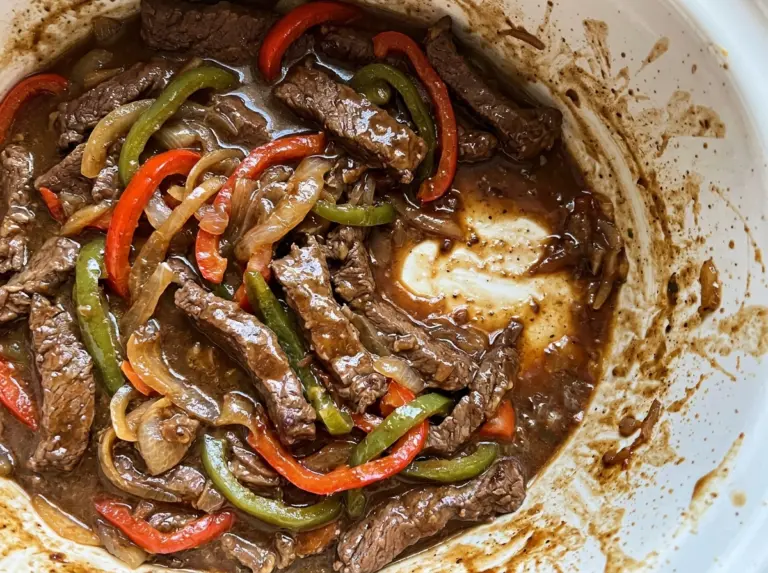
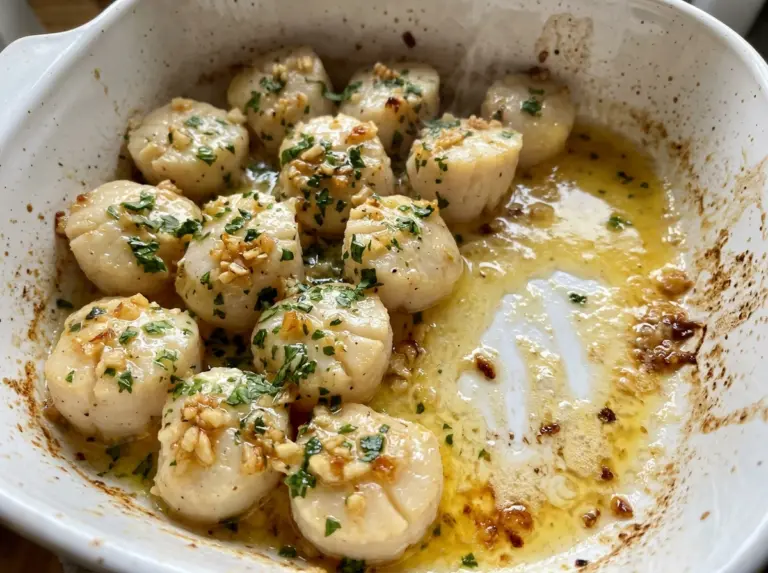
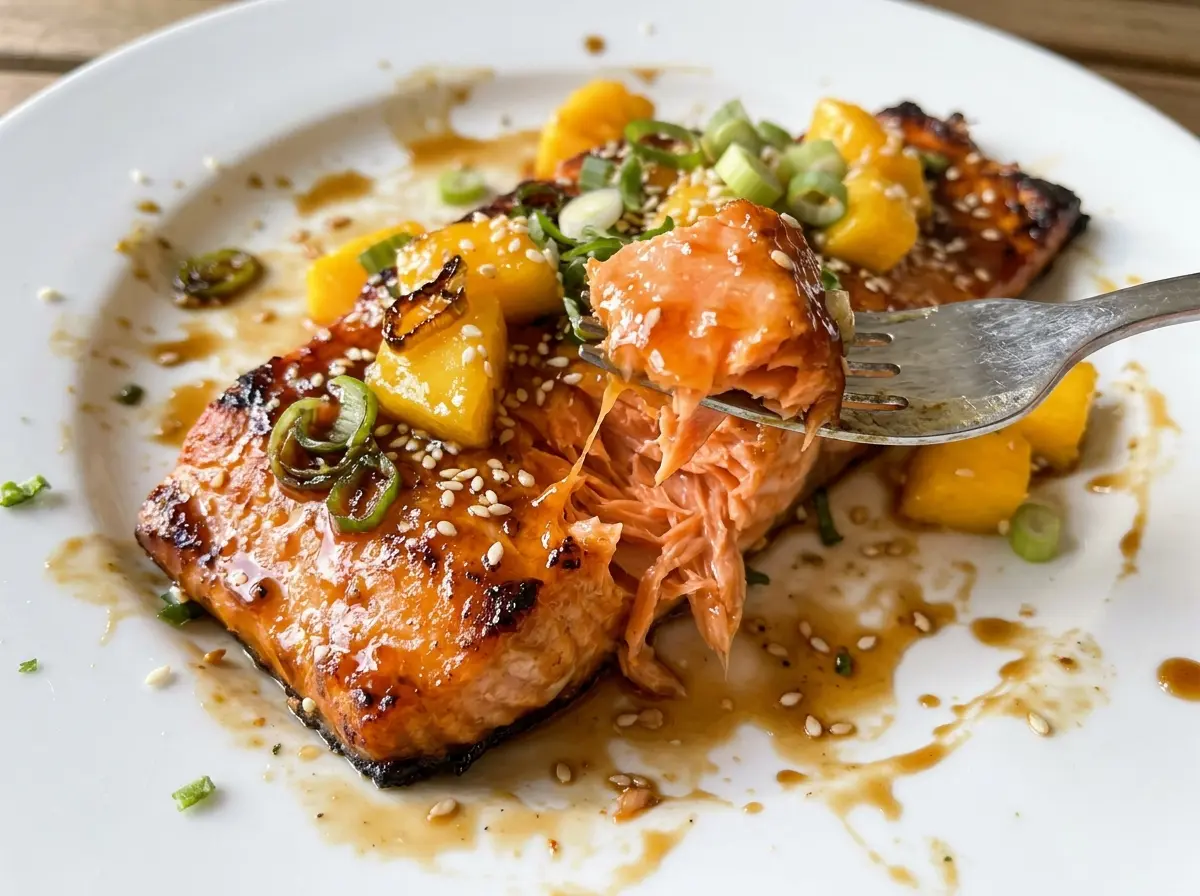
The glaze changes quickly once it hits the saucepan: first it’s a smooth mango puree, then the ginger and garlic perfume it, and finally the cornstarch gives it that shiny, brushable finish. I like that this Mango Teriyaki Salmon doesn’t ask you to choose between a quick dinner and a sauce made from scratch. The oven handles the fish while the mango simmers on the stove.
Brushing the salmon partway through baking gives the glaze time to cling without leaving it in the oven for the whole cook. The fruit brings natural sweetness, honey rounds it out, and rice vinegar keeps the soy sauce from tasting heavy. Serve the fillets with the reserved glaze, spooned over the top while it’s still glossy.
Kitchen Note
Stir the cornstarch and water together before they go anywhere near the hot sauce. Whisk the slurry in as soon as it’s combined, and keep whisking while the glaze cooks so it thickens evenly instead of forming little starchy lumps.
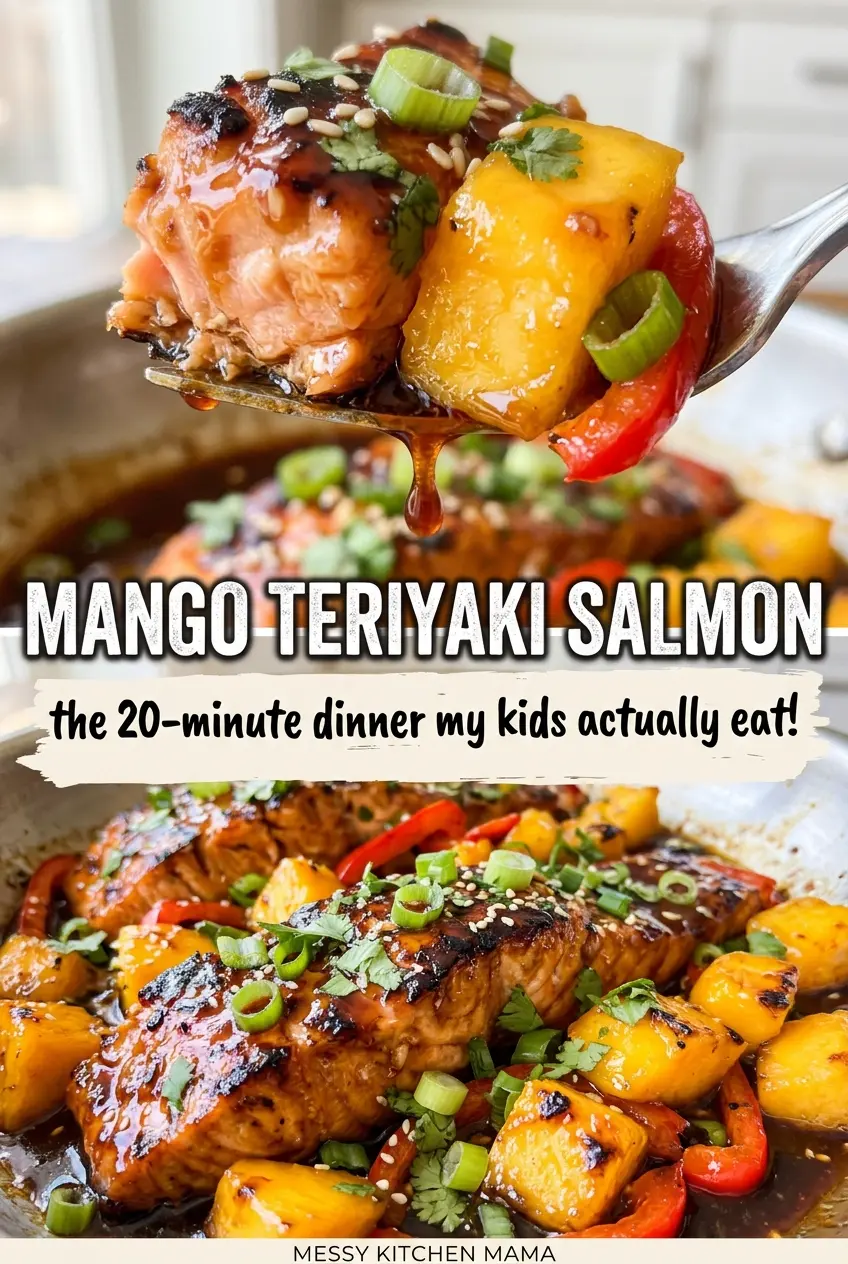
Save this Mango Teriyaki Salmon for a weeknight when you want crisp-edged salmon with a glossy, homemade mango glaze.
Why the Mango Glaze Waits Until the Salmon Is Partway Baked
Mango and honey both bring sweetness to this sauce. Put the glaze on at the beginning and it spends the entire bake exposed to oven heat, where its sugars can darken before the salmon is ready. Starting the fillets plain gives them an eight-minute head start, then the glaze gets just the remaining time to warm through and settle onto the surface.
That timing also gives you two useful textures on the finished fish. The exposed edges of the salmon bake without a coating, while the brushed top turns lacquered and lightly sticky. The sauce is thick enough to cling, but the final spoonful you serve at the table stays fresh and bright rather than baked onto the fish. Keep the remaining glaze separate until serving; it makes the mango flavor clear in every bite.
How Mango, Soy, and Salmon Balance Each Other in This Glaze
- Ripe mango — A ripe fruit blends into a smooth, naturally sweet base. If it’s firm and pale, the puree will be less sweet and may taste more tart; use a mango that yields slightly when pressed.
- Low-sodium soy sauce — It brings the savory, salty backbone without crowding out the fruit. Standard soy sauce works in a pinch, but the finished glaze will taste saltier.
- Honey and rice vinegar — Honey adds roundness and helps the glaze taste full, while rice vinegar cuts through that sweetness. Keep both in the mix; leaving out the vinegar makes the sauce taste flatter.
- Fresh ginger and garlic — Freshly grated ginger gives the sauce a clean, warm bite, and minced garlic supplies its savory aroma. Finely grate the ginger so there aren’t fibrous pieces in the smooth mango sauce.
- Cornstarch — This is what turns the blended fruit mixture into a glaze that stays on the salmon instead of running straight off. Mix it with the water first; adding dry cornstarch directly to hot sauce is likely to leave clumps.
- Skin-on salmon — The skin holds the fillets together as they bake and gives you a natural side to set against the parchment. Ask for pin bones to be removed, or run your fingers along the center line before cooking and pull out any you find.
- Neutral oil and black pepper — The oil coats the salmon flesh before baking, and pepper adds a little warmth without competing with the mango. A neutral-tasting oil keeps the fruit and ginger in the foreground.
Build the Glaze First, Then Bake the Salmon in Two Stages
Blend and thicken the mango sauce
Blend the diced mango with the soy sauce, honey, and rice vinegar until the mixture looks smooth. Pour it into a small saucepan, stir in the ginger and garlic, and bring it to a gentle simmer over medium heat. Whisk in the cornstarch slurry and cook for one to two minutes, continuing to whisk, until the sauce looks glossy and lightly thickened. Take it off the heat; a gentle simmer is enough, so don’t let it boil hard.
Set up the salmon for its first bake
Heat the oven to 400°F and line a rimmed baking sheet with parchment paper. Pat the fillets dry, rub the flesh with the neutral oil, and season with black pepper before placing them skin-side down. Dry surfaces help the fish bake cleanly rather than sitting in moisture. Keep the fillets in a single layer so heat can circulate around them.
Brush, finish, and rest
Bake the salmon for eight minutes before brushing the flesh with a quarter cup of glaze. Return it to the oven for another four to eight minutes, until the thickest part reaches 145°F; thinner fillets will be ready sooner than thicker ones. If you’re checking doneness, place the thermometer in the thickest section rather than against the pan. Rest the salmon for three minutes, then serve it with the remaining glaze.
Three Practical Ways to Adapt Mango Teriyaki Salmon
Make It Gluten-Free with Tamari
Replace the low-sodium soy sauce with the same amount of certified gluten-free, low-sodium tamari. The sauce will keep its savory balance, with a slightly deeper, rounder taste; check the tamari label because salt levels vary by brand.
Scale It Down for Two
Use two salmon fillets and halve each glaze ingredient, including the cornstarch and water. Blend and cook the sauce the same way, and keep an eye on the salmon as it bakes since a thinner piece may finish before a thicker one.
Prepare the Glaze Ahead
Blend and simmer the mango glaze a day ahead, then cool it and refrigerate it in a covered container. Warm it gently in a saucepan before brushing it onto the salmon; if it has thickened while chilled, whisk until smooth again.
Storage and Reheating
- Refrigerator: Store cooked salmon and any untouched glaze in separate airtight containers for 3 to 4 days. The fish will firm up as it chills.
- Freezer: Freeze the cooked salmon tightly wrapped for up to 2 months; the texture will be softer after thawing. Defrost it overnight in the refrigerator.
- Reheating: Warm the salmon covered in a 275°F oven until it reaches 165°F, then add glaze. High heat dries the fish before the center warms through.
Questions That Come Up While Making Mango Teriyaki Salmon
Mango Teriyaki Salmon
Ingredients
Equipment
Method
- Blend the mango, soy sauce, honey, and rice vinegar until smooth.
- Pour the mango mixture into a small saucepan, add the ginger and garlic, and bring to a gentle simmer over medium heat.
- Stir the cornstarch and water together to make a slurry.
- Whisk the slurry into the simmering sauce.
- Cook for 1 to 2 minutes, whisking, until glossy and lightly thickened; remove from the heat.
- Heat the oven to 400°F.
- Line a rimmed baking sheet with parchment paper.
- Pat the salmon dry.
- Rub the flesh with the oil and season with the pepper.
- Arrange the salmon skin-side down on the baking sheet.
- Bake for 8 minutes.
- Brush the salmon with 1/4 cup of the glaze.
- Bake for 4 to 8 minutes more, until the thickest part reaches 145°F.
- Let the salmon rest for 3 minutes, then serve with the remaining glaze.