The mixer sounds a little strained when cold goat cheese hits the beaters, and the mixture stays pebbly instead of turning creamy. Softening both cheeses first makes all the difference in this honey apricot goat cheese spread: they blend into a smooth base without needing extra ingredients or a complicated technique.
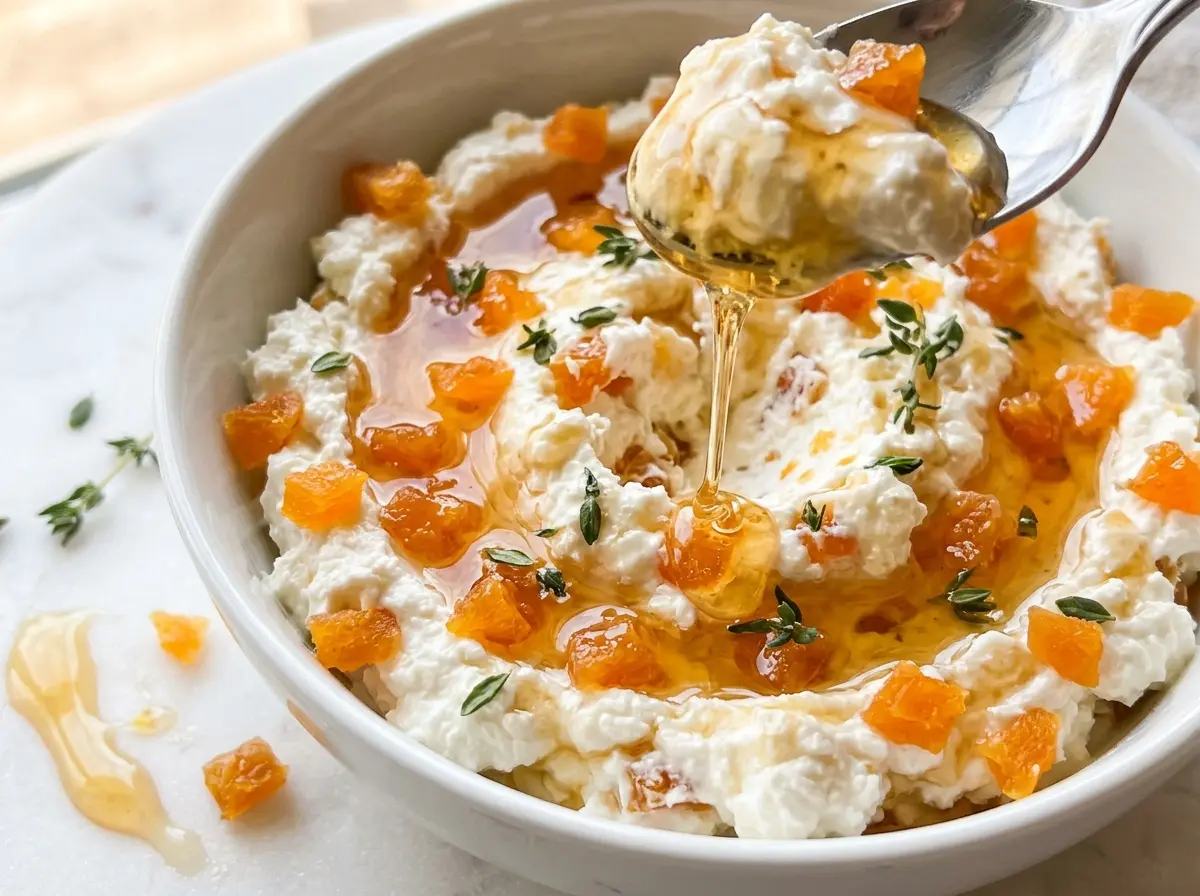
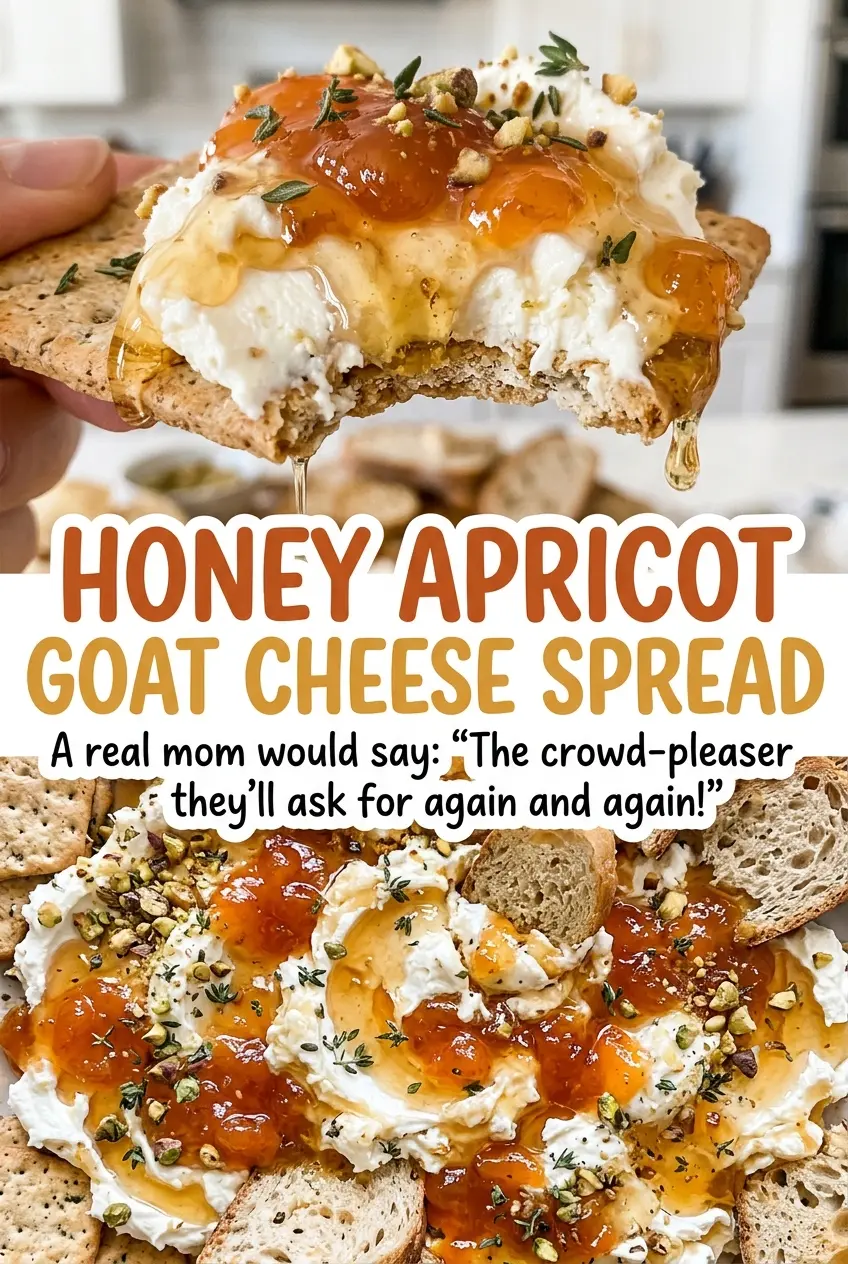
I like the contrast here. Goat cheese brings a tangy edge, cream cheese rounds it out, and the apricot-honey topping adds a soft sweetness over the top. I keep the topping separate from the cheese mixture, so each spoonful still has distinct fruit and creamy cheese instead of one blended flavor. It takes just two small bowls and an electric mixer to put together, and the finished spread looks right at home in a shallow serving bowl, with glossy apricot preserves resting over the pale cheese.
Kitchen Note
Keep the mixer at medium speed and let the softened cheeses come together until the mixture looks smooth and creamy. If you stop while it still looks lumpy, the topping won’t hide that texture.
Save this honey apricot goat cheese spread for a gathering when you want a creamy, tangy base with a glossy fruit-and-honey topping.
Why the Apricot Belongs on Top, Not in the Cheese
Goat cheese and cream cheese are both present in every bite, but they play different roles. The goat cheese gives the spread its tang; cream cheese softens that sharper character and makes the base creamy enough to spread. Mixing the apricot preserves and honey into the cheese would blur that balance and turn the whole bowl uniformly sweet. Keeping the topping separate lets you scoop through both layers.
There’s also a practical reason to finish the bowl this way: the topping stays visible. Apricot preserves bring color and fruit texture, while honey stirs into them and makes a cohesive spoonable topping. When you spread the cheese mixture evenly in a shallow bowl first, the topping has a broad, level surface to sit on. Each serving can include a little of both without needing to work the preserves through the cheese or disturb the smooth base.
What the Two Cheeses and Apricot Preserves Bring to the Bowl
- Goat cheese — Its tang is the defining flavor, so choose plain goat cheese rather than a seasoned variety. Softening it before mixing helps it blend smoothly; a substitute would change the character of the spread.
- Cream cheese — This brings a mellow, creamy counterpoint to the goat cheese and helps form a spreadable base. Let it soften along with the goat cheese so the two can beat together evenly instead of leaving firm bits behind.
- Apricot preserves — The preserves provide the fruit flavor and the topping’s glossy, spoonable texture. A smooth preserve gives a more uniform top, while one with visible fruit will leave little pieces throughout. Apricot is worth keeping here because it’s the fruit that defines this pairing.
- Honey — Stirring honey into the preserves sweetens them and helps the topping come together. A mild honey lets the apricot stay in front; there’s no need to reach for a specialty honey for this use.
Mixing the Cheese Smooth and Finishing with Apricot
Beat the softened cheeses together
Put the softened goat cheese and cream cheese in a medium bowl and beat them with an electric mixer on medium speed. Keep mixing until the texture looks smooth and creamy, rather than stopping as soon as the cheeses are combined. If you see small firm pieces, the mixture hasn’t reached that smooth stage yet. Starting with softened cheese makes this step easier and helps you avoid a lumpy base.
Spread the base in a shallow bowl
Transfer the cheese mixture to a shallow serving bowl and spread it evenly. A shallow bowl gives the topping room to cover the surface instead of piling high in one spot. Smooth the cheese out with the back of a spoon or a spatula, taking care to keep the layer level. This is the finished base, so there’s no need to mix the topping into it later.
Stir and spoon on the topping
Stir the apricot preserves and honey together in a small bowl, then spoon the mixture over the cheese spread. Stir until the honey is incorporated through the preserves so the topping doesn’t have separate streaks of honey. Spoon it over the surface rather than pouring it all into one spot. The topping should remain distinct from the creamy cheese underneath.
Two Serving Formats for the Same Apricot-and-Cheese Pairing
Make individual appetizer portions
Divide the prepared cheese mixture among small serving bowls, spread it evenly in each, and spoon the apricot-honey topping over the portions. This keeps the same creamy-and-fruity combination but gives each serving its own neat top. Use the same ingredients and keep the cheese and topping as separate layers.
Serve the topping alongside the spread
For a more flexible presentation, put the cheese mixture in its shallow serving bowl and keep the stirred apricot preserves and honey in a separate small bowl. Guests can add as much topping as they like to each scoop. The cheese stays visibly plain until served, while the topping remains easy to portion.
Storage and Reheating
- Refrigerator: Store the finished spread in an airtight container for 3 to 4 days. The cheese base will firm up when chilled.
- Freezer: Freezing isn’t a good fit; the cream cheese and goat cheese can lose their smooth texture as they thaw.
- Reheating: This is a cold spread, so reheating isn’t needed. Don’t microwave it; warming can soften the cheese unevenly and make the topping run.
Questions That Come Up While Making This Cheese Spread
Honey Apricot Goat Cheese Spread
Ingredients
Equipment
Method
- Beat the goat cheese and cream cheese in a medium bowl with an electric mixer on medium speed until smooth and creamy.
- Transfer the cheese mixture to a shallow serving bowl.
- Spread the cheese mixture evenly.
- Stir the apricot preserves and honey together in a small bowl.
- Spoon the mixture over the cheese spread.