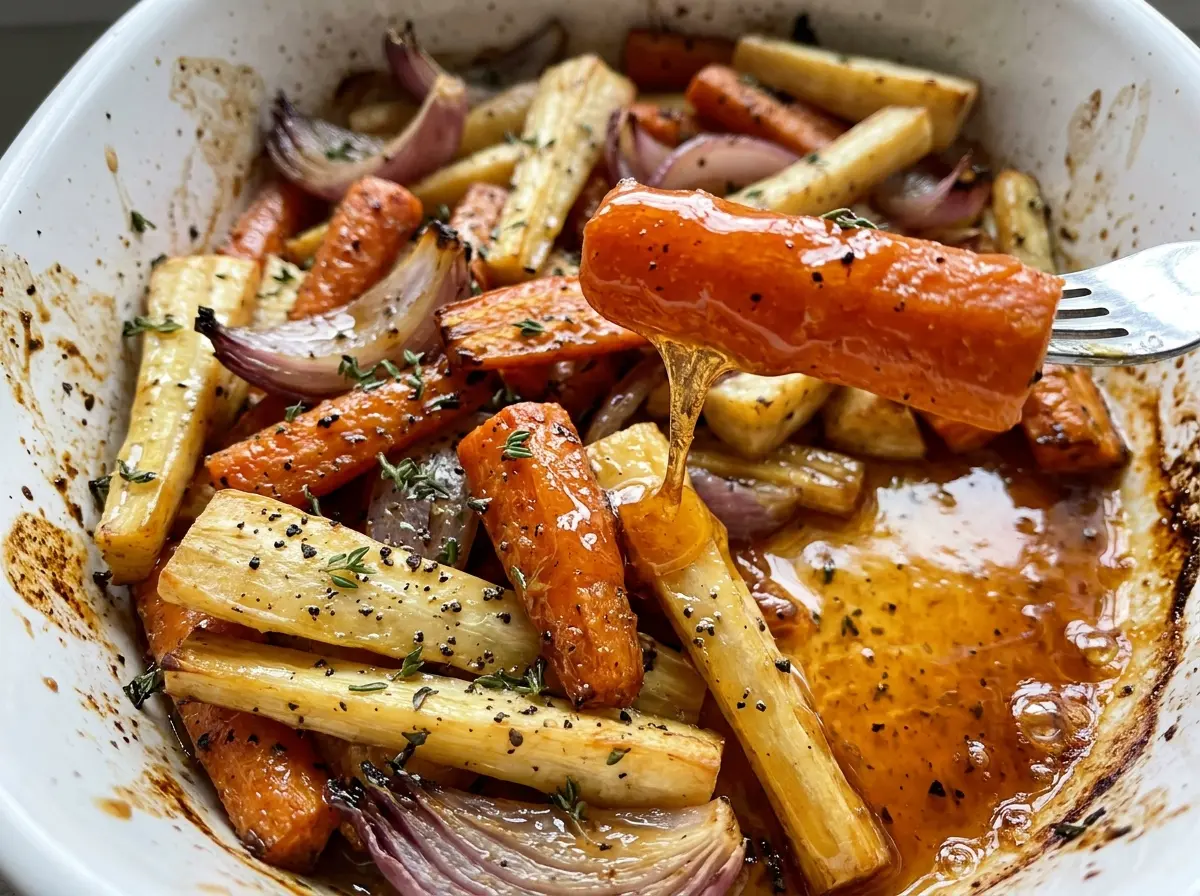
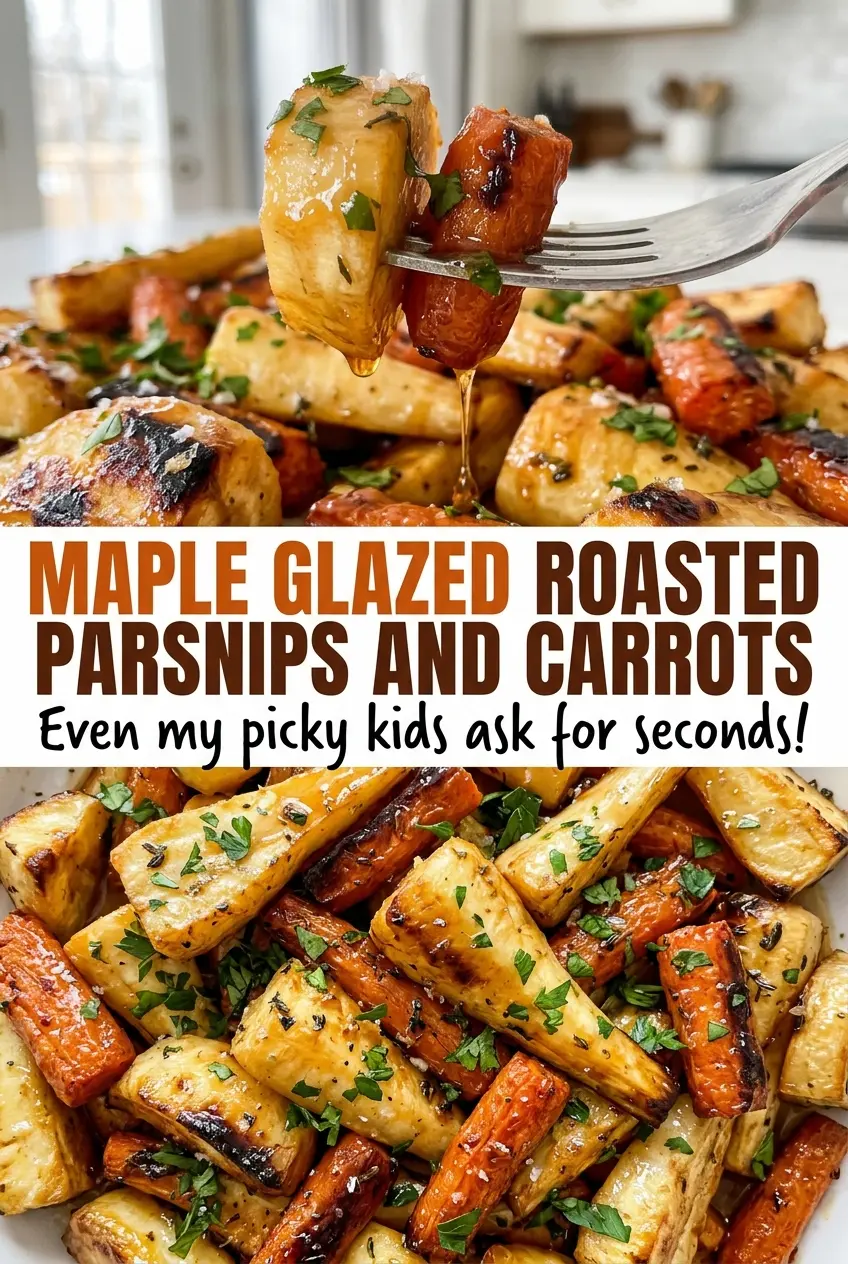
At the edge of the pan, the carrots turn glossy and golden while the parsnips soften into tender, earthy-sweet sticks. The best bites have a browned edge and a soft center, not the limp texture that comes from piling root vegetables too close together. Maple Glazed Roasted Parsnips and Carrots brings those two vegetables together with a simple maple finish that suits a weeknight dinner just as well as a holiday table.
Carrots bring familiar sweetness, while parsnips add a deeper, almost nutty note. Cutting both into the same size sticks lets them roast side by side without one turning tender long before the other. A little dried thyme keeps the sweetness from feeling one-note, and the maple syrup gives the browned edges a light, glossy coating.
Kitchen Note
Give the vegetables their full five-minute rest on the pan before serving. It’s a small pause, but it keeps you from rushing them straight from the oven to the table.
Save these maple glazed roasted parsnips and carrots for a side with browned edges, tender centers, and a light maple finish.
The Crowded-Pan Mistake That Leaves Root Vegetables Pale
Root vegetables release moisture as they roast. If they’re packed tightly together, that moisture hangs around the vegetables instead of escaping, and the pieces soften before their edges have a chance to brown. A crowded pan can leave you with tender vegetables, but not the roasted texture this dish is meant to have.
An 18×13-inch rimmed baking sheet gives the carrots and parsnips room to sit in a single layer. A little space between the sticks is useful; you should be able to see parchment between most of them. If the vegetables are stacked or pressed into a dense layer, divide them between pans rather than forcing everything onto one crowded tray. Keep the pieces spread out after turning them, too.
This is also why the cut matters beyond appearance. Sticks of similar thickness roast at a similar pace, so you’re not waiting for a thick piece to soften while a thin one darkens. The vegetables should have enough room for hot air to move around them, and the edges should be able to make contact with the hot pan. That open arrangement is what gives you browned spots alongside tender centers.
What Each Root Vegetable Brings to the Maple Glaze
- Carrots — They add a clean, familiar sweetness and hold their shape well when cut into sticks. Ordinary supermarket carrots work nicely; peel them and trim away any dry ends. If you’re short on parsnips, replacing some of them with carrots keeps the tray in the same family of flavors, though the result will taste sweeter and less earthy.
- Parsnips — Their deeper, slightly nutty sweetness gives the dish contrast. Choose firm parsnips without limp or shriveled spots; very large ones can have a woody center. Peel them and cut them to match the carrots so they roast at the same pace. Carrots can stand in for parsnips, but they won’t bring the same earthy note.
- Olive oil — The oil coats the vegetables so the seasonings cling and the exposed surfaces roast rather than dry out. A basic olive oil is perfectly good here; a neutral vegetable oil works in the same amount if you want a less noticeable oil flavor. Toss until the sticks look lightly coated before spreading them on the sheet.
- Dried thyme — Dried thyme brings a steady herbal flavor that stands up to the roots’ sweetness. The inexpensive jar is fine as long as it still smells fragrant when you crush a little between your fingers. Fresh thyme can replace it; use about three times as much by volume for a brighter, greener herbal note.
- Pure maple syrup — Pure syrup gives the vegetables their distinct woodsy sweetness and a light glaze. Grade A maple syrup from the grocery store works well; pancake syrup has a different flavor and may make the finish taste more candy-sweet. Honey can replace it in the same amount, though the flavor will be more floral and less recognizably maple.
Roast the Vegetables in Two Distinct Passes
Cut and Coat the Sticks Evenly
Heat the oven to 425°F and line an 18×13-inch rimmed baking sheet with parchment paper. Peel the carrots and parsnips, then cut each into 3/4-inch sticks. Toss them in a large bowl with the olive oil, kosher salt, black pepper, and dried thyme until the seasoning is distributed. Spread them in a single layer on the prepared pan.
Let the First Roast Build Color
Roast the vegetables for 20 minutes before turning them. At this point, the sticks should be starting to soften, though they may not yet have much color. Turn them so more surfaces meet the hot pan. If a few pieces look paler than the rest, don’t worry; the second roast gives them more time to brown.
Coat with Maple for the Finish
Drizzle the pure maple syrup over the vegetables and toss them to coat. Return the pan to the oven for 10–15 minutes, until the vegetables are fork-tender and browned at the edges. Check a thicker stick with a fork; it should go in without resistance. The edges should look browned, not scorched.
Rest on the Pan Before Serving
Take the pan out of the oven and let the vegetables rest on it for 5 minutes. The sticks will be hot and tender, so use a spatula to transfer them if you don’t want to break them with tongs. Serve them while they’re warm, with the browned edges visible rather than tucked beneath a pile.
Two Small Changes for a Different Take on the Roast
A Lower-Sugar, Maple-Free Version
Leave out the maple syrup for a less sweet, more savory tray. Roast the vegetables for 20 minutes, turn them, then continue roasting until fork-tender and browned at the edges; the finish won’t be glossy, but the carrots and parsnips will still have their natural sweetness.
A Thyme-Free Roast
Skip the dried thyme for a simpler combination of roasted roots and maple. The vegetables’ sweetness comes forward more clearly, without the herbal background. Keep the rest of the method the same.
Storage and Reheating
- Refrigerator: Refrigerate leftovers in an airtight container within 2 hours and use them within 3–4 days. The vegetables soften as they sit, so the edges won’t stay as crisp.
- Freezer: They can be frozen in an airtight container for up to 2 months. Thaw in the refrigerator; expect a softer texture after freezing.
- Reheating: Spread the vegetables on a baking sheet and warm them in a 400°F oven until hot throughout. Avoid crowding them, which makes the edges softer rather than restoring their roasted texture.
The Questions That Come Up Before This Pan Goes in the Oven
Maple Glazed Roasted Parsnips and Carrots
Ingredients
Equipment
Method
- Heat the oven to 425°F.
- Line an 18x13-inch rimmed baking sheet with parchment paper.
- In a large bowl, toss the carrots and parsnips with the olive oil, salt, pepper, and thyme.
- Spread the vegetables in a single layer on the baking sheet.
- Roast for 20 minutes.
- Turn the vegetables.
- Drizzle the maple syrup over the vegetables.
- Toss the vegetables to coat.
- Roast for 10–15 minutes more, until fork-tender and browned at the edges.
- Let the vegetables rest on the pan for 5 minutes before serving.