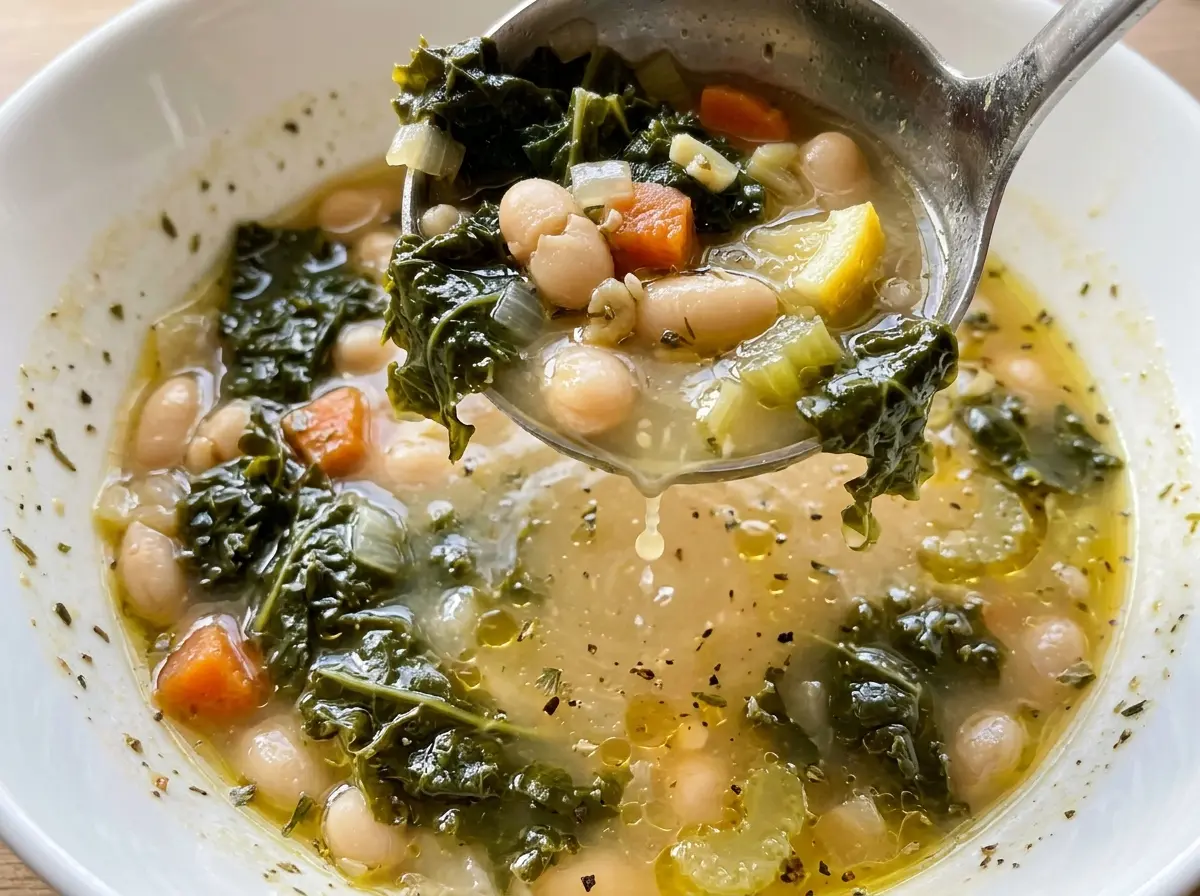
The first spoonful tells you whether the vegetables had enough time in the pot: when the onion, carrots, and celery soften gently, the broth tastes rounded instead of sharp. I make this Mediterranean white bean soup with kale and lemon when I want a substantial pot that still feels bright, with tender beans and greens in every bowl.
The soup gets its character from simple ingredients working together, not from a long list of add-ins. Cannellini beans bring a mellow, creamy texture, kale makes the broth feel hearty, and fresh lemon keeps the finish lively. It’s a satisfying meal on its own, with enough broth to make every spoonful feel like soup rather than a bowl of beans.
Keep the vegetables tender, give the beans time to simmer, and finish with lemon after the kale has softened. The result is savory, gently thick, and bright at the edges.
Kitchen Note
I use a 6-quart Dutch oven for this batch. There’s room to stir the kale in without crowding the pot, and the vegetables have space to soften in an even layer.
Save this Mediterranean white bean soup for a bright, hearty bowl with tender kale and lemon in every spoonful.
Why One Cup of Mashed Beans Gives This Soup Body Without Cream
A broth-based bean soup can end up thin, even when it has plenty of beans in it. Mashing a portion directly against the side of the pot solves that without turning the whole batch into purée. The softened beans release enough starch to make the broth feel fuller, while the beans left whole keep their shape and give the soup something to bite into.
About a cup is a useful middle ground: mash too little and the broth stays light; mash every bean and you lose the contrast between creamy and intact. Use the back of a spoon and press the beans against the pot wall until they break down. There’s no need for a blender or a separate bowl, and you can see the broth thicken as the mashed beans mix back in.
This small texture change also helps the kale sit naturally in the soup instead of floating on top of a watery broth. It’s a simple way to get a more substantial bowl while keeping the ingredient list plant-based and the cooking method straightforward.
Why Cannellini, Low-Sodium Broth, and a Fresh Lemon Matter
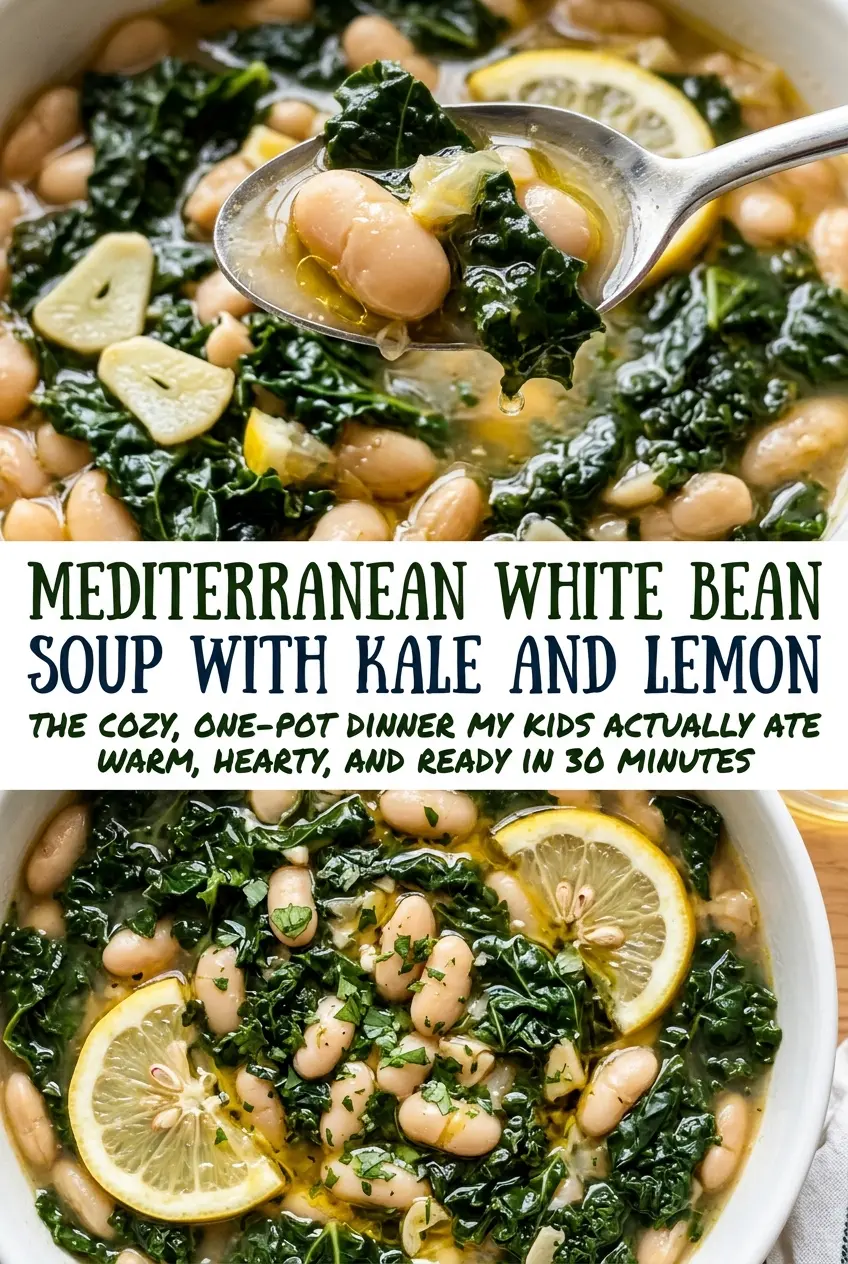
- Cannellini beans — Their tender, creamy centers help thicken the broth when mashed, while the remaining beans stay pleasantly whole. Canned beans keep this recipe practical and are already tender enough for the simmer; drain and rinse them before they go into the pot. There isn’t a direct replacement among the listed ingredients, so keep the cannellini if you want the same bean texture.
- Low-sodium vegetable broth — It supplies the soup’s savory base while leaving room to season in two stages. A basic store-brand broth works well; a premium one isn’t necessary. Using low-sodium broth matters because the soup also gets kosher salt, and different broth brands can vary in saltiness.
- Kale — The leaves add a sturdy green texture that holds up better than delicate greens during simmering. Remove the tough stems and chop the leaves so they’re easy to scoop with the beans. If you need a kale-free pot, leaving it out works; the soup will be less green and less substantial, but the broth and beans still make a complete base.
- Fresh lemon — Both the zest and juice contribute: zest brings fragrant citrus oils, while juice adds tartness. Choose a lemon with unblemished skin that feels heavy for its size. Bottled juice won’t provide the zest, so it won’t give the same finish; if fresh lemon isn’t available, leaving it out is better than expecting juice alone to do both jobs.
- Onion, carrots, celery, garlic, and thyme — These build the savory foundation before the broth goes in. Ordinary fresh vegetables and dried thyme are all you need; there’s no advantage to buying specialty produce for this soup. Dice the vegetables evenly so they soften at roughly the same pace, and mince the garlic finely so it distributes through the pot.
- Olive oil — It carries the flavor of the vegetables as they soften. A regular olive oil is fine here; save a more expensive finishing oil for dishes where its flavor stays prominent.
Build the Soup in the Order That Keeps Each Layer Clear
Soften the Vegetables Before Adding Garlic
Warm the olive oil in a 6-quart Dutch oven over medium heat, then add the diced onion, carrots, celery, and half the salt. Cook for 6 to 8 minutes, stirring occasionally, until the vegetables are softened. They should look relaxed and glossy, not browned or crisp. If the carrots still feel firm, give them the full cooking window before moving on.
Let the Garlic and Thyme Turn Fragrant
Stir in the minced garlic and dried thyme once the vegetables have softened. Cook for 30 seconds, just until you can smell the garlic and herbs. Keep stirring during this short stage so the garlic doesn’t sit against the hot pot and darken. Burnt garlic can bring a bitter edge to the broth.
Simmer the Beans in the Broth
Add the drained, rinsed cannellini beans, vegetable broth, and bay leaf. Bring the pot to a boil, then lower the heat and simmer uncovered for 15 minutes. Keep it at a steady simmer rather than a hard boil; the beans need time to flavor the broth without being knocked around. The broth should move gently across the surface.
Mash, Soften the Kale, and Finish with Lemon
Press about a cup of the beans against the side of the pot with a spoon, then stir them back through the broth. Add the chopped kale and simmer for 5 to 8 minutes, until the leaves are tender. Remove the bay leaf before stirring in the lemon zest, lemon juice, remaining salt, and black pepper. Add the lemon at the end so its fresh, tart character stands out in the finished soup.
Make This Pot Thicker, Lighter, or Lower in Sodium
For a thicker, spoon-coating broth
Mash more of the cooked beans against the pot than you do for the standard texture. The broth will turn creamier and cling more closely to the kale, though you’ll have fewer whole beans in each spoonful.
For a lighter, brothier bowl
Skip mashing the beans and keep them whole. The soup will have a clearer, thinner broth and a more distinct bean texture, with the same vegetables, kale, and lemon.
For less added sodium
Use the low-sodium vegetable broth and leave out both additions of kosher salt. The vegetables and lemon still give the soup plenty of character, though the overall seasoning will taste gentler.
Storage and Reheating
- Refrigerator: Store in a covered container for 3 to 4 days. The kale will soften more as it sits, and the broth may thicken slightly.
- Freezer: Freeze in airtight, freezer-safe containers for up to 3 months, leaving a little room at the top for expansion. The kale will be softer after thawing, but the soup freezes well.
- Reheating: Warm gently on the stovetop over medium-low heat, stirring occasionally, until the soup reaches 165°F. Avoid a hard boil, which can break up more of the beans than you intend.
Questions That Come Up While This Soup Simmeres
Mediterranean White Bean Soup with Kale and Lemon
Ingredients
Equipment
Method
- Heat the olive oil in a 6-quart Dutch oven over medium heat, then add the onion, carrots, celery, and 1/2 teaspoon of the salt. Cook for 6 to 8 minutes, stirring occasionally, until the vegetables are softened.
- Stir in the garlic and thyme and cook for 30 seconds, until fragrant.
- Add the beans, vegetable broth, and bay leaf. Bring to a boil, then reduce the heat and simmer uncovered for 15 minutes.
- Use a spoon to mash about 1 cup of the beans against the side of the pot to thicken the soup.
- Stir in the kale and simmer for 5 to 8 minutes, until tender.
- Remove the bay leaf and stir in the lemon zest, lemon juice, remaining 1/2 teaspoon salt, and black pepper.