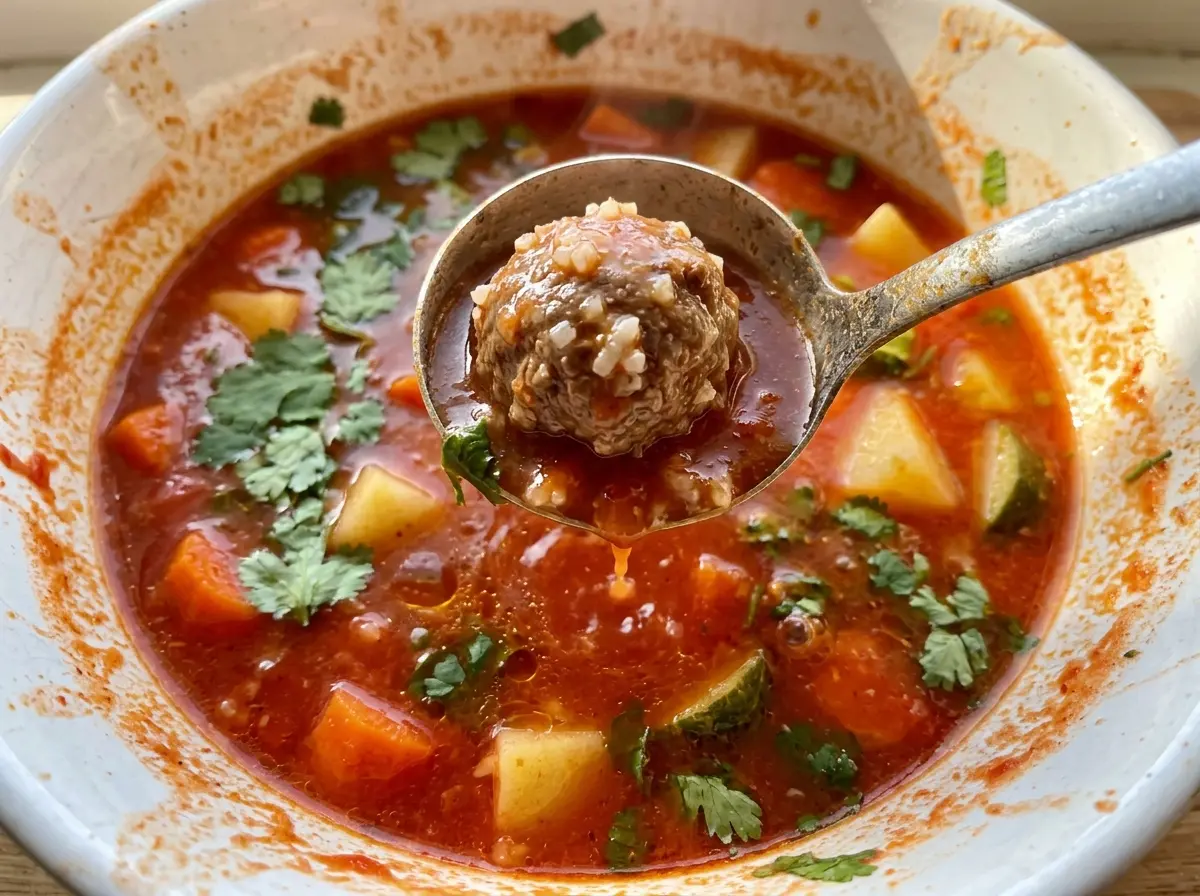
The first thing you notice is how the rice changes the meatballs: it swells as it cooks, giving each one a tender, slightly nubby center instead of the dense texture of an ordinary beef meatball. I keep the mixture simple with fresh mint, onion, and garlic, then let the meatballs finish right in the tomato-and-chicken-broth soup. That way, the broth picks up their savory flavor while the vegetables cook around them.
This Mexican beef albondigas soup is built in stages. Carrots and potatoes go into the broth first because they need more time than zucchini and green beans. The meatballs simmer before those quicker vegetables join the pot, so everything has a chance to turn tender without the zucchini losing its shape.
Use a gentle simmer, not a hard boil, once the meatballs are in. The rice cooks through inside the beef, and the finished soup has a tomato-rich broth with soft vegetables and tender meatballs in every bowl.
Kitchen Note
Mix the beef in gently and stop as soon as everything is combined. A heavy hand makes the meatballs compact, while a loose mixture gives them a more tender bite.
Save this Mexican beef albondigas soup for its tender rice meatballs and tomato-rich broth, made in one pot with vegetables that stay distinct.
Why the Rice Goes Into the Meatballs Uncooked
The rice starts out uncooked, and that’s intentional. Rinsing it first removes loose surface starch, while draining it keeps extra water from loosening the beef mixture. Once the meatballs simmer in the broth, the rice cooks inside them and absorbs some of the savory liquid as it softens.
That changes the texture of the meatball and the timing of the soup. The rice needs the full, gentle simmer to become tender, so these aren’t meatballs to drop in at the very end. Shape them to about 1 1/4 inches wide, as smaller or larger pieces won’t cook at the same rate. When you cut into one, the grains should be tender all the way through rather than firm in the center.
Long-grain white rice is a good fit because it cooks through during the simmer without turning the meatball into a paste. Brown rice takes longer to soften, and quick-cooking rice behaves differently; neither is a one-for-one swap here. Keeping the rice uncooked also lets the beef, egg, and aromatics bind around it before the meatballs meet the hot broth.
What the Rice, Mint, and Beef Each Bring to Albondigas

- Long-grain white rice — It gives the meatballs their characteristic tender center and cooks in the broth rather than in a separate pot. Rinse and drain it well so excess starch and rinse water don’t affect the mixture. Stick with long-grain white rice for the timing and texture here.
- 85% lean ground beef — This has enough fat to keep the meatballs juicy as they simmer, without leaving the soup overly greasy. A fresh pack of ground beef is fine; there’s no need for a specialty grind. The egg helps hold the mixture together around the rice.
- Fresh mint — Finely chopped mint gives the beef a bright, unmistakable albondigas flavor. Use fresh leaves rather than dried mint for the fresh herbal note and soft texture. Chop it finely so it distributes through the meat instead of collecting in a few bites.
- Diced tomatoes and low-sodium chicken broth — The tomatoes bring acidity and body, while the broth makes the cooking liquid. Low-sodium broth leaves room for the measured salt in both the meatballs and soup without making the finished pot taste overly salty. A regular can of diced tomatoes works well; drain neither the tomatoes nor their juice.
- Carrots, russet potatoes, green beans, and zucchini — These make the soup substantial, but their different cooking times matter. Cut the carrots and potatoes into even 1/2-inch pieces so they soften at a similar pace. The zucchini and green beans join later, which helps them stay tender instead of collapsing while the potatoes finish.
Building the Soup in Stages, From Meatballs to Tender Vegetables
Shape the Rice-Flecked Meatballs
Rinse and drain the long-grain rice, then mix it with the egg, finely chopped onion, garlic, mint, salt, and pepper in a large bowl. Add the beef and combine gently just until there are no loose patches of ingredients. Shape about 18 meatballs, each roughly 1 1/4 inches wide. Keep them similar in size so they cook evenly once they’re in the pot.
Soften the Onion Before Adding Garlic
Heat the olive oil in a 6-quart pot over medium heat. Add the diced onion and cook for 4 to 5 minutes, stirring now and then, until it softens; it shouldn’t brown heavily. Stir in the garlic and cook for 30 seconds, just until fragrant. Garlic can turn bitter if it sits too long on the hot pot before the liquid goes in.
Start the Broth With the Vegetables That Need Time
Stir in the diced tomatoes, chicken broth, carrots, potatoes, salt, and pepper. Bring the pot to a boil over high heat, then reduce the heat until the broth holds a gentle simmer. Look for small, steady bubbles rather than a rolling boil. A fierce boil can knock the meatballs around once they’re added.
Simmer the Meatballs, Then Finish the Vegetables
Carefully lower the meatballs into the simmering soup and cook them gently for 15 minutes. Add the green beans and zucchini, then continue simmering for 15 to 20 minutes. The vegetables should be tender, the rice inside the meatballs cooked through, and the center of each meatball should reach 160°F. If the broth starts boiling hard, lower the heat so the meatballs stay intact.
Small Changes That Keep the Soup in the Albondigas Family
A Mint-Free Pot
Leave the mint out of the meatball mixture if you prefer a more straightforward beef-and-garlic flavor. The meatballs will still hold together with the egg and rice, but they’ll lose the fresh herbal note that distinguishes this version of albondigas.
Leave Out the Zucchini
For a soup with fewer soft vegetable pieces, omit the zucchini and keep the green beans. The broth will have a slightly firmer, less vegetable-sweet finish, and the remaining vegetables still make a hearty bowl.
Rice-Free Meatballs
For meatballs without rice, leave it out of the mixture and keep the remaining meatball ingredients the same. The centers will be denser and more traditionally beefy, without the tender grains; keep the meatballs the same size and cook them until the centers reach 160°F.
Storage and Reheating
- Refrigerator: Store the cooled soup in an airtight container for up to 3 to 4 days. The rice continues to absorb broth, so leftovers will be thicker than the freshly cooked soup.
- Freezer: Freeze in airtight, freezer-safe containers for up to 2 to 3 months. The potatoes and zucchini soften after thawing, but the soup remains good to eat; expect a less distinct vegetable texture.
- Reheating: Warm a portion gently in a covered saucepan over medium-low heat, stirring carefully so the meatballs don’t break. Add a splash of chicken broth if the rice has thickened the soup, and heat until steaming throughout; avoid a hard boil, which can make the vegetables mushy.
Questions That Come Up When the Meatballs Simmer in the Soup
Mexican Beef Albondigas Soup with Rice Meatballs
Ingredients
Method
- In a large bowl, mix the rice, egg, onion, garlic, mint, salt, and pepper.
- Add the beef and mix gently just until combined.
- Shape into about 18 meatballs, each about 1 1/4 inches wide.
- Heat the olive oil in a 6-quart pot over medium heat. Add the diced onion and cook for 4 to 5 minutes, until softened.
- Stir in the garlic and cook for 30 seconds.
- Stir in the tomatoes, broth, carrots, potatoes, salt, and pepper.
- Bring to a boil over high heat, then reduce the heat to maintain a gentle simmer.
- Carefully lower the meatballs into the soup and simmer gently for 15 minutes.
- Add the green beans and zucchini and simmer for 15 to 20 minutes, until the vegetables are tender, the rice in the meatballs is cooked through, and the meatballs reach 160°F in the center.