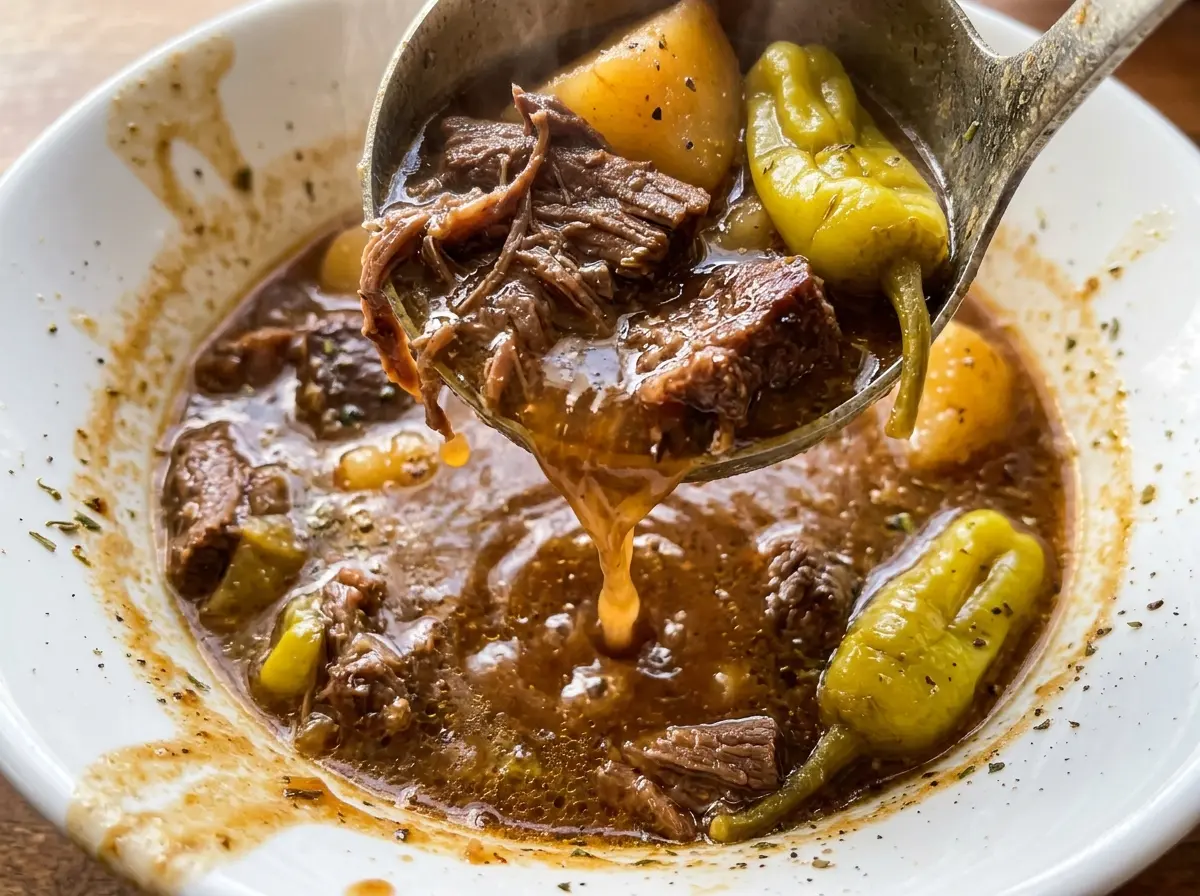
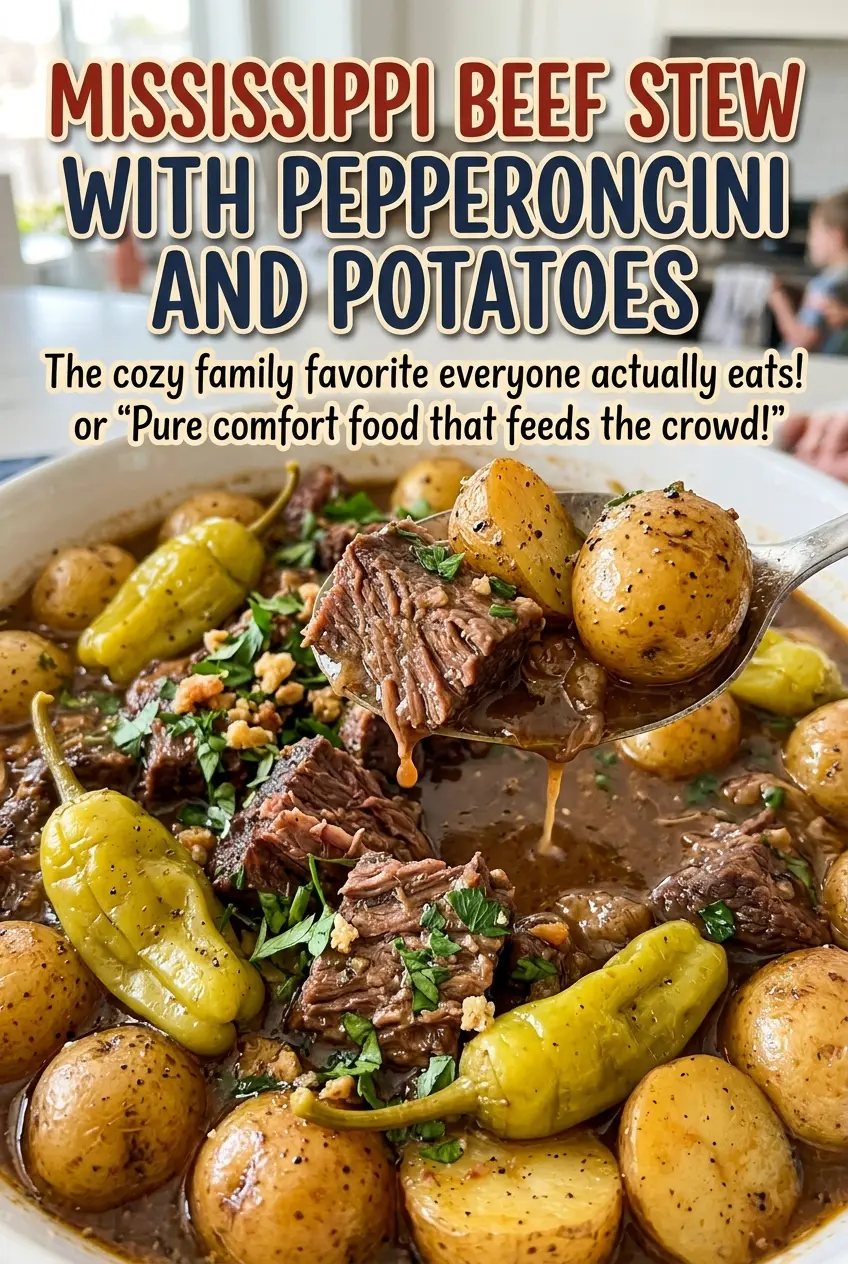
When the lid comes off a Dutch oven after a long braise, the beef should give way with a fork and the broth should smell savory with a bright, pickled-pepper edge. That’s the kind of balance I want in Mississippi Beef Stew with Pepperoncini and Potatoes: rich enough to feel like a proper stew, but not heavy or flat.
Beef chuck is a good fit for the long, covered bake because its connective tissue has time to soften as the meat cooks. The pepperoncini bring a little tang to the broth, while the potatoes and carrots make each bowl feel complete.
This is a hands-off oven stew once the pot is assembled, with one useful pause to add the vegetables partway through. The finished beef is tender, the Yukon Gold potatoes hold their shape, and the broth is deeply savory with a lively peppery finish.
Kitchen Note
Use the pepperoncini brine along with the sliced peppers. It spreads that tang through the broth, so the finished stew tastes lively rather than simply rich.
Save this Mississippi beef stew for a cozy dinner with fork-tender chuck, potatoes, and a bright pepperoncini broth.
Why the Flour Goes on the Beef Before It Hits the Pot
The flour coating does more than help the beef brown. As the stew cooks, it contributes body to the broth, so you don’t need to make a separate roux or thicken the liquid at the end. That’s especially useful in a stew like this, where the broth also carries the flavor of the seasoning mixes and pepperoncini.
For that payoff, the beef needs an even, light coating rather than patches of dry flour. Toss the cubes until each side is covered, then brown them in batches. If the pot is crowded, the beef releases moisture and steams instead of developing browned surfaces. Those browned bits left on the bottom are worth keeping; the onion and broth loosen them into the stew base.
Once the pot is covered, the flour has time to work gradually as the chuck softens. Expect a savory broth with more body than plain beef broth, not a thick paste. If you’re used to adding flour at the end, this method gives the stew time to taste cohesive instead of floury.
The Broth, Seasoning Packets, and Peppers Set the Stew’s Balance
- Beef chuck — Its marbling and connective tissue suit a slow, covered braise. For a richer alternative, use boneless short ribs cut into similarly sized cubes; expect a fattier broth.
- All-purpose flour — It clings to the beef and helps give the broth body. A 1:1 gluten-free flour blend can coat the beef, but the seasoning mixes and broth also need to be gluten-free for the whole dish to be gluten-free.
- Low-sodium beef broth — It leaves room for the seasoning packets to contribute salt. Regular beef broth works, but the finished stew will taste saltier.
- Ranch and au jus mixes — Together, they provide the stew’s distinctive seasoned, savory base. There isn’t a direct one-ingredient swap that gives the same result; use the packets you enjoy, and check their ingredients if you have a dietary restriction.
- Pepperoncini — These mild pickled peppers add a bright, tangy bite. Sliced banana peppers are the closest easy swap, though their flavor and brine may be a little different.
- Yukon Gold potatoes — Their creamy texture works well here while the pieces keep their shape. Red potatoes are a good substitute cut to the same size; russets are more likely to break down.
- Unsalted butter — It rounds out the savory broth. For a dairy-free version, replace it with vegetable oil; the stew will be a little less buttery in flavor.
- Onion, garlic, and carrots — Yellow onion and garlic build the base, while carrots add sweetness. White onion works in place of yellow, and parsnips can stand in for carrots if you want a sweeter, earthier vegetable.
The Oven Timing That Turns Chuck Tender Without Losing the Vegetables
Coat the Beef Evenly
Heat the oven to 325°F. Toss the beef cubes with the flour, kosher salt, and black pepper in a large bowl until they’re evenly coated. Break up any flour clumps with your fingers so you don’t end up with bare patches on the meat. A consistent coating helps every piece brown and gives the broth an even texture.
Brown in Batches, Not All at Once
Heat the vegetable oil in a 6-quart Dutch oven over medium-high heat. Brown the beef in batches, turning each piece to color several sides, then transfer it to a plate. Leave space around the cubes so they sear instead of releasing liquid and steaming. You’re looking for browned surfaces and a layer of browned bits on the pot’s bottom.
Build the Pepperoncini Broth
Add the chopped onion and cook for 4 minutes, stirring and scraping up the browned bits. Add the minced garlic and cook for 30 seconds; it should smell fragrant, not toasted. Stir in the beef broth, ranch seasoning, au jus mix, sliced pepperoncini, brine, and butter. Return the beef and any juices on the plate to the pot.
Braise First, Then Add the Vegetables
Cover the Dutch oven and bake for 1 hour 45 minutes. Stir in the Yukon Gold potatoes and carrots, then cover the pot again and bake for another 45 to 75 minutes. The potatoes and carrots should be tender when pierced, and a fork should slide easily into the beef. The vegetables go in later so they don’t spend the entire braise in the oven.
Let the Covered Pot Rest
Take the Dutch oven out and let the stew rest, covered, for 10 minutes before serving. Keep the lid on during this pause so the pot stays warm. The stew is ready when the beef is fork-tender and the vegetables are soft without falling apart. Spoon plenty of broth into each serving.
Three Adjustments That Change the Stew Without Losing Its Character
Make It Dairy-Free
Replace the butter with vegetable oil, and choose dairy-free versions of both seasoning mixes. The stew keeps its savory base, though the broth won’t have quite the same buttery roundness.
Dial Back the Pepperoncini Tang
Use fewer sliced pepperoncini and less brine than the full recipe. You’ll get a gentler tang and fewer pepper pieces in each spoonful, while the ranch and au jus flavors stay front and center.
Trade Yukon Golds for Sweet Potatoes
Use sweet potatoes cut into similar-sized pieces in place of the Yukon Golds. They bring a sweeter note and soften more readily, so begin checking them at the 45-minute mark of the vegetable bake.
Storage and Reheating
- Refrigerator: Store in an airtight container for 3 to 4 days. The potatoes may soften a little as they sit.
- Freezer: Freeze in airtight portions for up to 3 months. The potatoes may be softer after thawing, but the stew freezes well overall.
- Reheating: Warm gently in a saucepan over medium-low heat or in the microwave, stirring as needed, until the stew reaches 165°F. Avoid a hard boil, which can break up the potatoes.
Questions That Come Up Once the Dutch Oven Is in the Oven
Mississippi Beef Stew with Pepperoncini and Potatoes
Ingredients
Equipment
Method
- Heat the oven to 325°F.
- In a large bowl, toss the beef with the flour, salt, and pepper until evenly coated.
- Heat the oil in a 6-quart Dutch oven over medium-high heat.
- Brown the beef in batches, turning to brown several sides, then transfer it to a plate.
- Add the onion to the pot and cook for 4 minutes, stirring and scraping up browned bits.
- Add the garlic and cook for 30 seconds.
- Stir in the broth, ranch seasoning, au jus mix, pepperoncini and brine, and butter.
- Return the beef and any juices to the pot.
- Cover and bake for 1 hour 45 minutes.
- Stir in the potatoes and carrots, cover, and bake for another 45 to 75 minutes, until the vegetables are tender and the beef is fork-tender.
- Let the stew rest, covered, for 10 minutes before serving.