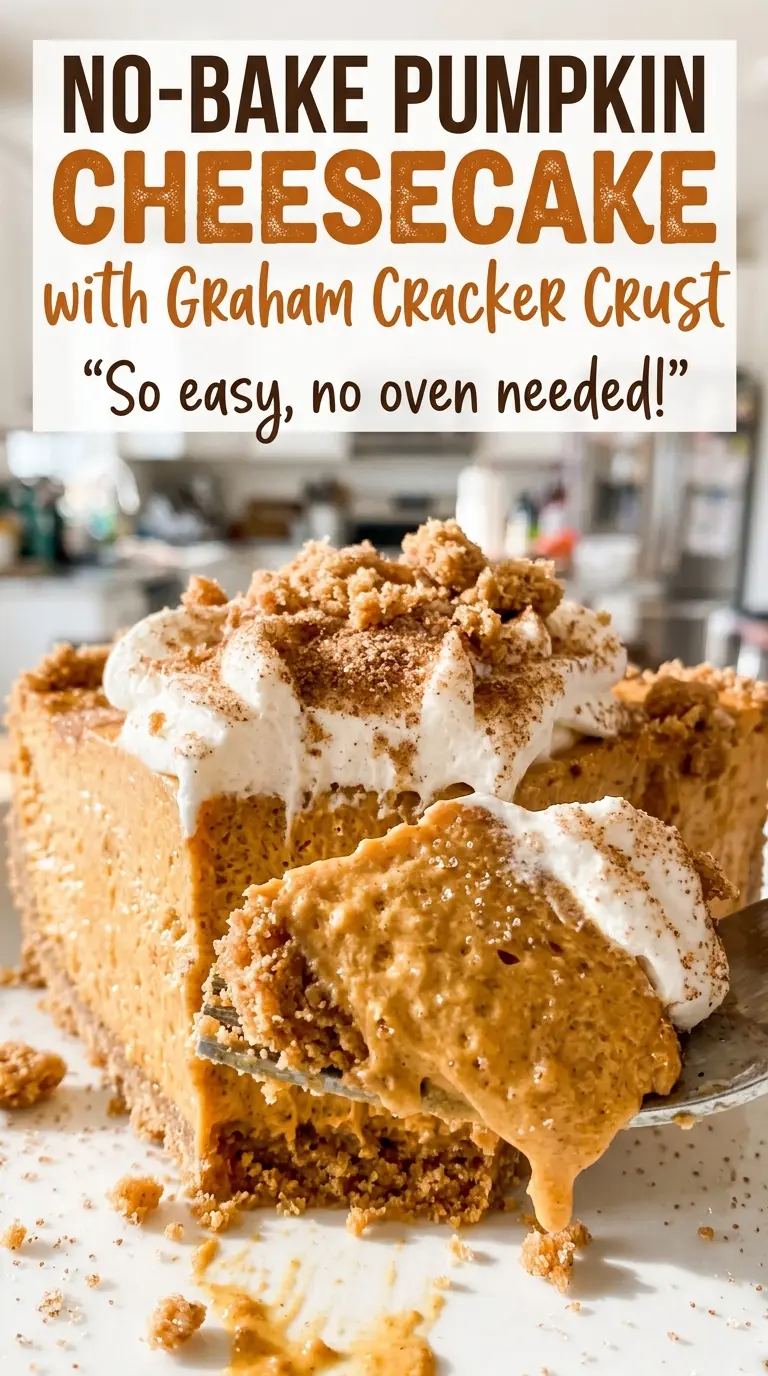
The graham cracker crumbs look almost too loose when you first stir in the butter, but press them firmly into the springform pan and they settle into a neat, sturdy base. I chill the crust before adding anything on top so it stays put when the pumpkin filling goes in. That little pause gives this no-bake pumpkin cheesecake with graham cracker crust a clean start.
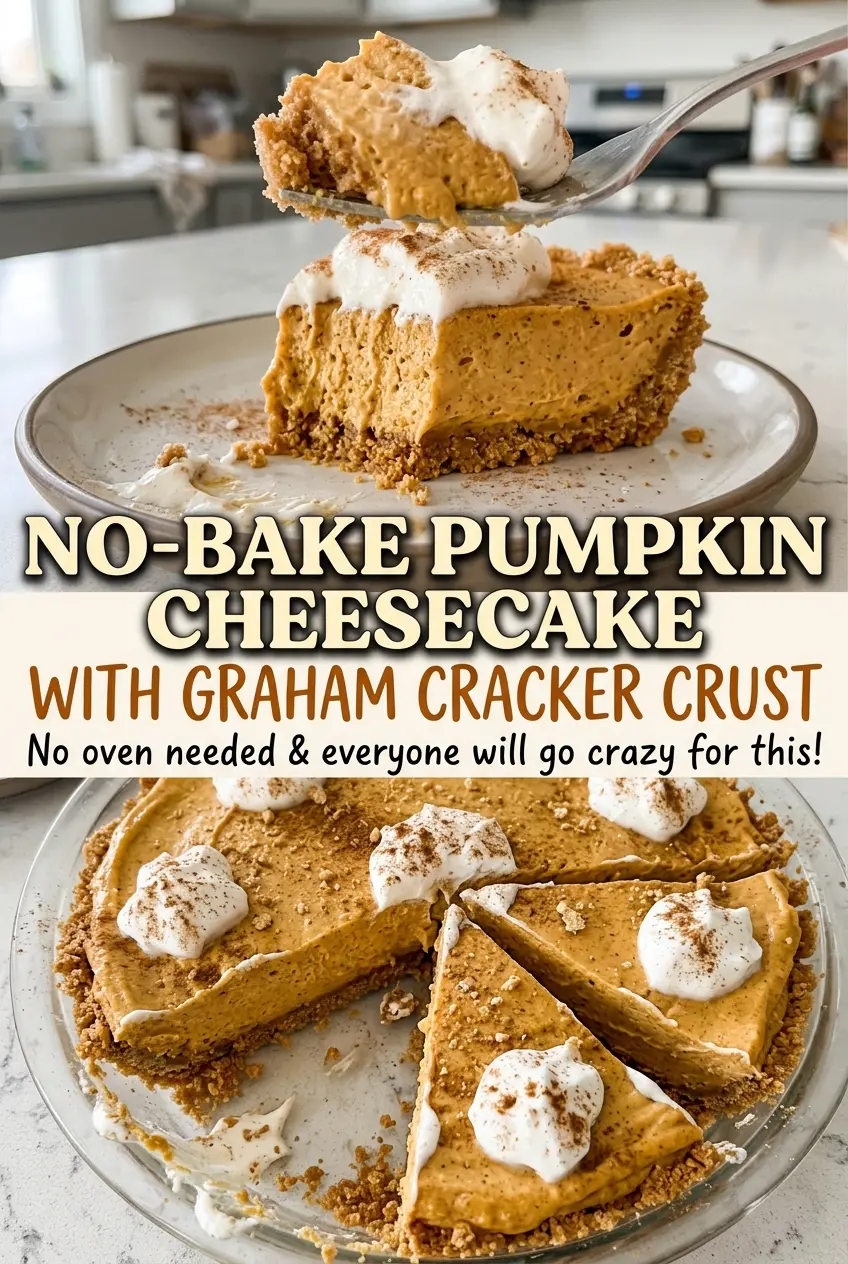
The filling gets its structure from two different things: whipped cream for a light texture and gelatin so the chilled cheesecake can hold a slice. I blend the gelatin into the pumpkin mixture while it’s still warm, then fold in the cream gently so it doesn’t lose its air. After a long chill, the filling is smooth and softly spiced, with a crumbly graham crust underneath.
Kitchen Note
Press the crust firmly into an even layer, especially where the bottom meets the sides of the pan. The 20-minute chill helps it hold together when you spread the filling over it.
Save this no-bake pumpkin cheesecake for a make-ahead dessert with a buttery graham crust and a light, softly spiced filling.
Why This No-Bake Filling Needs Gelatin to Hold a Slice
A no-bake cheesecake doesn’t get a chance to set in the oven, so the filling needs support once it’s chilled. Here, gelatin helps the pumpkin and cream cheese mixture firm up while the whipped cream keeps it from feeling dense. Leave the gelatin out and you may still have a spoonable dessert, but it won’t have the same sliceable structure.
How you combine those parts matters. The gelatin should be fully dissolved and warm—not hot—when it goes into the pumpkin mixture. Drizzle it in slowly with the mixer on low so it disperses instead of clumping in one spot. Then fold in the whipped cream by hand. That keeps more of the air in the filling, giving each slice a soft, creamy texture rather than a heavy one.
The long refrigerator rest does more than cool the cheesecake. It gives the gelatin time to set throughout the filling, including the center, so the first slice comes out with a defined edge instead of slumping against the crust.
The Ingredients That Keep Pumpkin Filling Light and Sliceable
- Graham cracker crumbs — Fine, evenly crushed crumbs make a compact base instead of a crust that breaks apart at the first cut. Store-bought crumbs are convenient; if you crush whole crackers yourself, aim for small, even pieces.
- Unsalted butter and granulated sugar — Melted butter coats the crumbs so they press together, while sugar adds a little sweetness and helps the crust taste balanced against the tangy filling. The butter needs to be melted before it’s mixed in so there aren’t dry pockets.
- Cream cheese — Let it soften before beating; cold cream cheese is more likely to leave small lumps in the filling. It provides the cheesecake’s tang and body, and there isn’t a simple substitute that keeps the same texture.
- Pumpkin puree — Use plain pumpkin puree for the pumpkin flavor and moisture. Pumpkin pie filling is already sweetened and spiced, so it won’t behave like a straight swap in this carefully balanced filling.
- Powdered sugar, pumpkin pie spice, and vanilla — Powdered sugar blends smoothly into the cream cheese, while the spice and vanilla round out the pumpkin. Granulated sugar won’t dissolve as smoothly in a chilled filling, so powdered sugar is the better choice here.
- Unflavored gelatin and cold heavy cream — Gelatin helps the filling set, and cold heavy cream whips to stiff peaks that bring lift. The cream must be cold to whip properly; a thinner cream won’t provide the same volume or structure.
Build the Crust, Then Set the Filling Without Deflating It
Press an even graham cracker base
Lightly grease the bottom and sides of a 9-inch springform pan. Stir the graham cracker crumbs and sugar together, then mix in the melted butter until the crumbs look evenly moistened. Press the mixture firmly across the bottom of the pan, keeping the layer level so the cheesecake sits evenly. Chill the crust for 20 minutes before you add the filling.
Bloom and dissolve the gelatin
Sprinkle the gelatin over the cold water in a small microwave-safe bowl and let it stand for 5 minutes. It will absorb the water and look thickened before heating. Microwave it for 5 to 10 seconds, just until it’s clear and liquid, then let it cool until warm, about 2 minutes. If it’s still hot when it goes into the filling, give it a little longer to cool.
Beat the pumpkin cream cheese mixture smooth
Beat the softened cream cheese in a large bowl until smooth, about 1 minute. Add the pumpkin puree, powdered sugar, pumpkin pie spice, and vanilla, then beat until everything is fully combined. Scrape the bowl as needed so no pockets of plain cream cheese remain along the sides. With the mixer on low, slowly drizzle in the warm gelatin and beat just until it’s evenly blended.
Whip and fold for a light texture
In a separate bowl, whip the cold heavy cream with an electric mixer until stiff peaks form, about 2 to 3 minutes. Stiff peaks should stand up when the beaters are lifted rather than falling over. Fold the whipped cream gently into the pumpkin mixture, turning the mixture over until no white streaks remain. Spread the filling evenly over the chilled crust without pressing out the air you’ve just whipped in.
Give the center time to firm
Cover the springform pan and refrigerate the cheesecake for at least 6 hours, or overnight, until firm. The center should feel set rather than soft when you gently check it. Once it’s firm, release the sides of the pan and slice to serve. If the middle still looks loose, leave it in the refrigerator longer before opening the pan.
Two Ways to Adapt This Pumpkin Cheesecake
Make the crust gluten-free
Use gluten-free graham cracker crumbs in place of the regular crumbs, keeping the same amount and preparing the crust the same way. The filling stays unchanged, and the crust will have the same buttery, pressed-crumb texture.
Layer it into individual dessert cups
Instead of pressing all the crumb mixture into a springform pan, divide it among individual cups and layer the pumpkin filling over it. Chill the cups covered until the filling is firm. You’ll get the same flavors in a casual, spoonable format, though you won’t have the neat wedges of a whole cheesecake.
Make-Ahead and Storage
- Refrigerator: Cover and refrigerate leftovers for 3 to 4 days. The crust softens gradually as it sits, but the filling stays chilled and creamy.
- Freezer: Freeze slices or the whole cheesecake, wrapped well in an airtight container, for up to 1 month for the best texture. Thaw it in the refrigerator before serving; the whipped filling may be a little less airy afterward.
- Serving: Serve it cold, straight from the refrigerator. Don’t leave the cheesecake out while you wait for it to soften; the filling is meant to be chilled and set.
Questions That Come Up Before You Chill the Pan
No-Bake Pumpkin Cheesecake with Graham Cracker Crust
Ingredients
Equipment
Method
- Lightly grease the bottom and sides of a 9-inch springform pan.
- Stir the graham cracker crumbs and sugar together.
- Mix in the melted butter until evenly moistened.
- Press the crumb mixture firmly over the bottom of the pan.
- Chill for 20 minutes.
- Sprinkle the gelatin over the cold water in a small microwave-safe bowl and let it stand for 5 minutes.
- Microwave for 5 to 10 seconds until clear and liquid.
- Cool until warm, about 2 minutes.
- Beat the cream cheese in a large bowl until smooth, about 1 minute.
- Beat in the pumpkin puree, powdered sugar, pumpkin pie spice, and vanilla until fully combined.
- With the mixer on low, slowly drizzle in the warm gelatin and beat just until evenly blended.
- In a separate bowl, whip the cold heavy cream to stiff peaks, about 2 to 3 minutes with an electric mixer.
- Fold the whipped cream gently into the pumpkin mixture until no streaks remain.
- Spread the filling evenly over the chilled crust.
- Cover and refrigerate for at least 6 hours, or overnight, until firm.
- Release the pan sides and slice to serve.