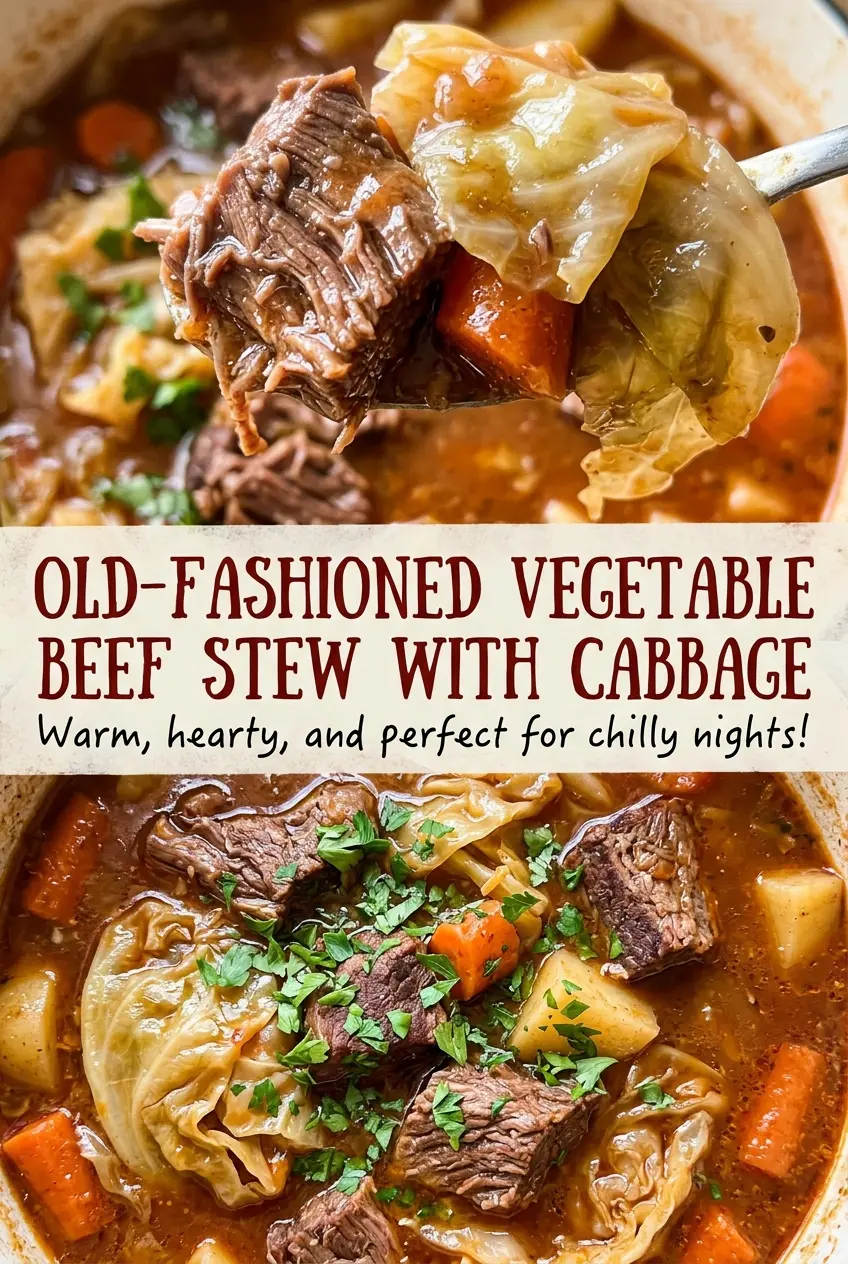
The beef should sizzle as soon as it hits the Dutch oven, not sit there quietly in a crowded pot. I brown it in batches so each piece gets color on several sides, then use those browned bits to build the broth for this old fashioned vegetable beef stew with cabbage. It takes a little patience up front, but that deep, savory base is worth it.
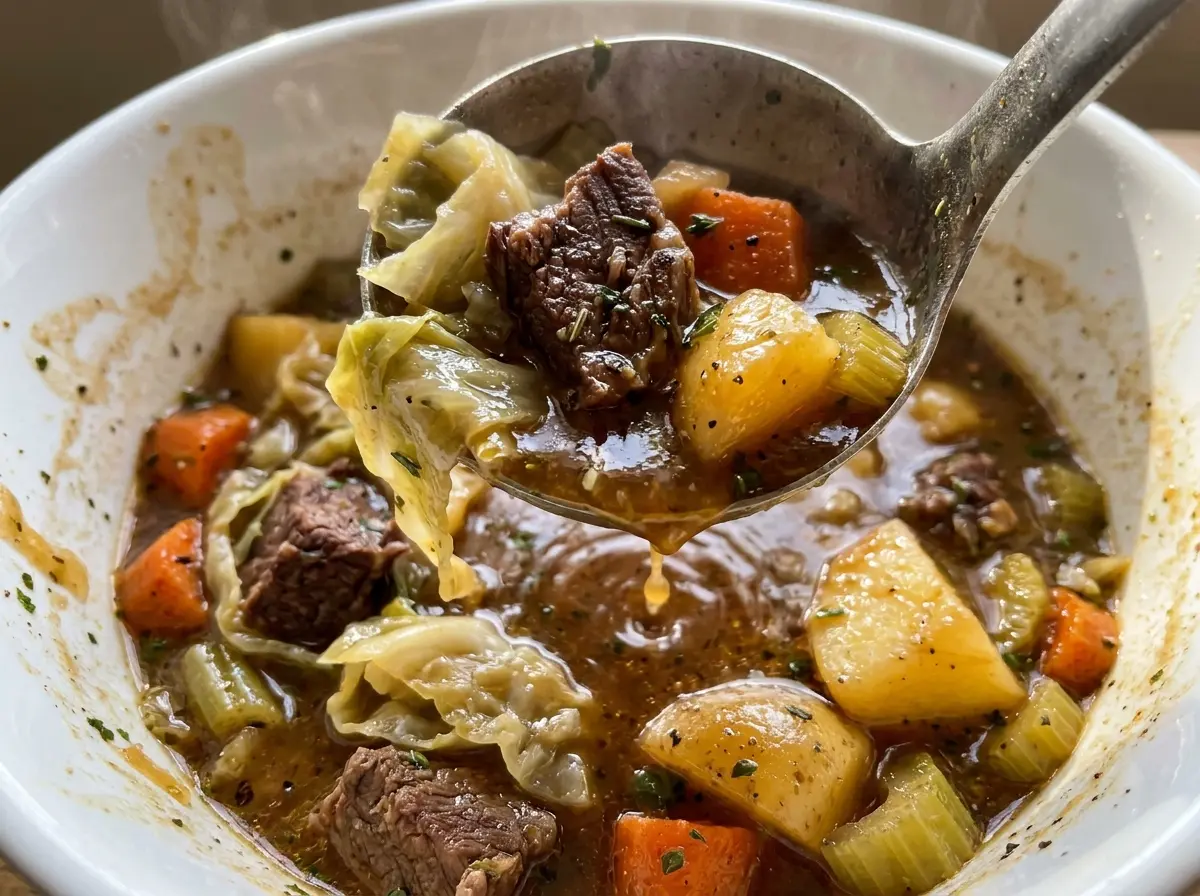
I add the vegetables in stages rather than asking them all to simmer for the same length of time. The potatoes and carrots need more time than the cabbage, which softens quickly once it hits the hot broth. After a long, gentle simmer, the chuck turns fork-tender and the cabbage is soft without disappearing into the stew. Each spoonful has beef, vegetables, and a broth with enough body to cling to them.
Kitchen Note
Give the beef room in the pot. If the pieces touch and crowd each other, they’ll release moisture instead of browning; work in batches and let the pan get hot again between them.
Save this old fashioned vegetable beef stew with cabbage for a hearty pot of fork-tender beef, soft cabbage, and a rich, slow-simmered broth.
Why the Cabbage Goes In After the Potatoes, Not With the Beef
Cabbage doesn’t need the long simmer that makes chuck tender. Add it at the beginning and it has time to lose its shape and turn overly soft before the beef and potatoes are ready. Adding it near the end gives the pieces time to become tender while keeping them recognizable in the bowl.
The order also gives the carrots, celery, and russets their own window in the broth. They simmer until nearly tender before the cabbage joins them, so the cabbage isn’t left waiting in the pot while the potatoes finish cooking. Keep the lid on during each simmer and check the vegetables near the end of their cooking window: they should be yielding to a fork, not falling apart. That staged timing is what makes the finished stew feel like a stew rather than a pot of vegetables cooked to the same softness.
The Chuck, Russets, and Cabbage That Give This Stew Its Body
- Beef chuck — Chuck has the marbling and connective tissue that make sense for a long, gentle simmer. Choose pieces with some visible marbling rather than very lean beef; lean meat is more likely to feel dry before it becomes tender. Cutting the beef into even cubes helps the pieces cook at a similar pace.
- All-purpose flour — The light coating helps the beef brown and gives the broth a little body as it simmers. Toss the beef until the flour is distributed rather than leaving thick patches on a few pieces. For a gluten-free version, the flour can be left out, though the broth will be less thick.
- Beef broth and tomato paste — Beef broth carries the browned flavor through the pot, while tomato paste adds a deeper savory note. A regular carton or can of beef broth is fine; pick one whose taste you enjoy, since it makes up most of the liquid. Stir the paste with the onion and garlic before adding the broth so it cooks briefly against the hot pot.
- Russet potatoes — Russets soften and release some starch into the broth, which helps the stew feel more substantial. Peel them and cut them evenly so the cubes become tender together. A firm potato variety won’t break down in quite the same way, so russets are the best fit for the texture here.
- Green cabbage — Cut the cored cabbage into pieces close in size so they soften evenly during their shorter simmer. A firm, fresh head holds its shape better in the pot than cabbage with limp or damaged outer leaves. It brings a gentle sweetness and a soft, leafy bite that you’d miss if you left it out.
- Worcestershire sauce, thyme, and bay leaf — These season the broth without taking it away from the beef and vegetables. Dried thyme is convenient here, and the bay leaf should be removed before serving so no one bites into it.
The Slow Simmer That Turns Chuck Into Spoon-Tender Beef
Coat and Brown the Beef in Batches
Pat the beef dry, then toss it with the flour, kosher salt, and black pepper until the pieces are evenly coated. Heat the vegetable oil in a 6-quart Dutch oven over medium-high heat. Brown the beef in batches for 5 to 7 minutes per batch, turning it to color several sides, then transfer each batch to a plate. If the beef is gray rather than browned, the pot is too crowded; leave more space between pieces.
Build the Onion and Tomato Base
Add the chopped onion to the same pot and cook over medium heat for 4 to 5 minutes, stirring and scraping up the browned bits. Those bits should loosen as the onion releases moisture and you scrape the bottom. Add the minced garlic and tomato paste, then cook for 1 minute. Stir gradually as you pour in the beef broth, scraping the bottom so the browned flavor is worked into the liquid.
Simmer Until the Chuck Is Nearly Tender
Stir in the Worcestershire sauce, dried thyme, bay leaf, browned beef, and any juices on the plate. Bring the stew to a boil, cover the pot, and reduce the heat to low. Simmer for 1 hour 15 minutes to 1 hour 30 minutes, until the beef is nearly fork-tender. Keep the simmer gentle; a hard boil can make the meat tougher instead of giving it time to soften.
Add the Vegetables in Their Stages
Stir in the carrots, celery, and potatoes, cover, and simmer for 20 to 25 minutes, until the vegetables are nearly tender. Then stir in the cabbage, cover again, and simmer for 15 to 20 minutes. The cabbage should be tender and the beef fork-tender at the end. Remove and discard the bay leaf before serving.
Two Ways to Adapt the Stew Without Adding Ingredients
A Gluten-Free, Lighter-Bodied Broth
Leave out the all-purpose flour and toss the beef with the salt and pepper before browning. The beef will still brown, but the broth won’t have the same thickness. The rest of the ingredients and the staged simmer stay the same.
A Cabbage-Free Beef and Vegetable Stew
Leave out the cabbage for a more familiar beef-and-root-vegetable bowl. Simmer the carrots, celery, and potatoes until tender, then discard the bay leaf and serve. You’ll lose the soft, lightly sweet cabbage bite, but the beef and potato broth still make a hearty stew.
Storage and Reheating
- Refrigerator: Store cooled stew in a covered container for 3 to 4 days. The potatoes and cabbage soften more as they sit.
- Freezer: Freeze in airtight containers for up to 2 to 3 months. The potatoes may become softer after thawing, but the stew is still suitable for reheating.
- Reheating: Warm it gently in a covered pot over medium-low heat, stirring occasionally, until it reaches 165°F. Avoid a hard boil, which can break up the vegetables and toughen the beef.
Questions I Get Asked About This Beef and Cabbage Stew
Old Fashioned Vegetable Beef Stew with Cabbage
Ingredients
Equipment
Method
- Pat the beef dry, then toss it with the flour, salt, and pepper until evenly coated.
- Heat the oil in a 6-quart Dutch oven over medium-high heat.
- Brown the beef in batches for 5 to 7 minutes per batch, turning to brown several sides, then transfer it to a plate.
- Add the onion to the pot and cook over medium heat for 4 to 5 minutes, stirring and scraping up browned bits.
- Add the garlic and tomato paste and cook for 1 minute.
- Gradually stir in the broth, scraping the bottom of the pot.
- Add the Worcestershire sauce, thyme, bay leaf, beef, and any accumulated juices.
- Bring the stew to a boil, cover, and reduce the heat to low.
- Simmer for 1 hour 15 minutes to 1 hour 30 minutes, until the beef is nearly fork-tender.
- Stir in the carrots, celery, and potatoes, cover, and simmer for 20 to 25 minutes, until the vegetables are nearly tender.
- Stir in the cabbage, cover, and simmer for 15 to 20 minutes, until the cabbage is tender and the beef is fork-tender.
- Discard the bay leaf before serving.