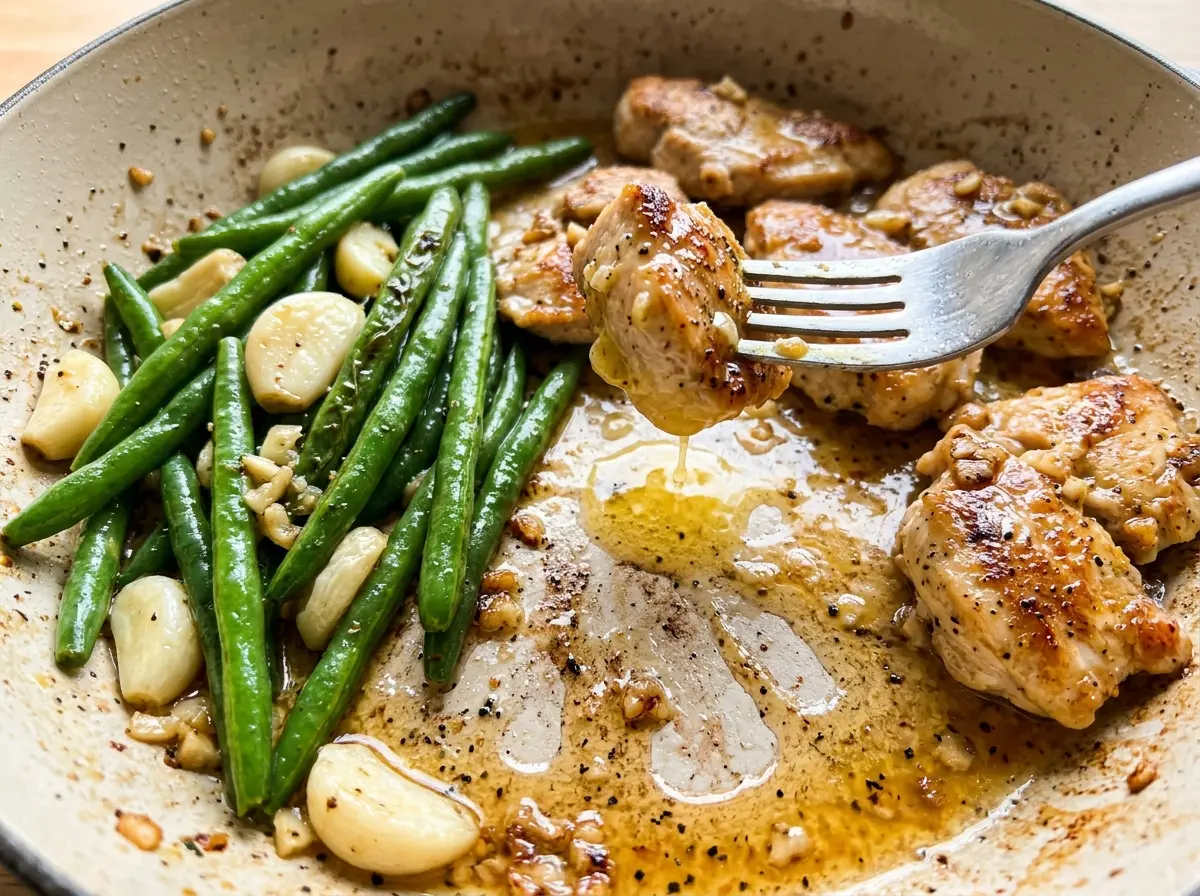
The chicken gets its color first, then the green beans cook in the same skillet while those browned bits are still on the bottom. That order makes a difference: the beans pick up the buttery pan juices, and the chicken goes back in only after the garlic and broth have joined the mix. This one-pan garlic butter chicken with green beans is a straightforward dinner for four, with no separate pot to manage.
I use boneless, skinless chicken thighs because they stay tender through the covered simmer and have time to share their flavor with the broth. A 12-inch skillet gives the chicken room to brown, and the lid helps the beans soften alongside it. The finished skillet has tender green beans and chicken with a light garlic butter sauce that’s worth spooning over every bite.
Kitchen Note
Keep the lid on once the chicken goes back into the skillet. The covered simmer gives the thighs and green beans time to cook together in the broth without letting the pan dry out.
Save this one-pan garlic butter chicken with green beans for a weeknight when you want golden chicken and tender beans from one skillet.
Why the Green Beans Go In Before the Garlic
Chicken and green beans don’t need the same kind of heat at the same time. The chicken needs a hot skillet and a few minutes of direct contact to turn golden. The beans need a little time in the butter before the broth arrives, so they begin to soften instead of just sitting in liquid. Cooking them in that order also leaves room for the garlic to go in near the end.
Garlic can turn bitter if it browns too long in a hot pan. Stirring it in after the beans gives it a brief 30-second cook before the broth cools the skillet and loosens the browned bits. Those bits dissolve into the liquid as the chicken simmers, giving the sauce a deeper taste without another pan or extra ingredients.
The sequence is useful when a skillet meal has both a quick-cooking aromatic and a vegetable that needs more time. You get golden chicken, beans that are tender rather than boiled soft, and garlic that stays fragrant. Keep the ingredients moving in their own stages, and the pan does the work of bringing them together.
What the Chicken, Beans, and Broth Each Bring to the Skillet

- Boneless, skinless chicken thighs — Thighs have enough richness to stay pleasant through the covered simmer, and their juices season the broth as they finish cooking. Choose pieces of similar size so they cook at a similar pace. Patting the surface dry before seasoning helps the outside brown rather than steam.
- Fresh green beans — Trim the stem ends so the beans are ready to eat straight from the skillet. Choose firm beans with an even green color; limp beans won’t have the same tender-but-still-structured bite. Their freshness matters more here than using a particular variety.
- Unsalted butter — Butter gives the beans and pan juices a rounded, rich taste. Unsalted butter also lets you control the seasoning alongside the low-sodium broth. For a dairy-free adaptation, olive oil can replace the butter, though the sauce will taste less creamy.
- Garlic — Freshly minced cloves bring a sharper, more fragrant garlic taste than garlic that has been sitting in a jar. Mince it before heating the skillet so it’s ready to stir in as soon as the beans have had their first cook.
- Low-sodium chicken broth — Broth loosens the browned bits and creates the liquid for the covered simmer. Low-sodium broth keeps the finished pan from becoming too salty as it reduces slightly. A broth with a clean chicken flavor works well; there’s no need for a specialty brand.
How to Sear First, Then Finish Everything Under the Lid
Dry the Thighs and Build a Golden Sear
Pat the chicken dry, then season both sides with kosher salt and black pepper. Heat the olive oil in a 12-inch skillet with a lid over medium-high heat. Lay in the thighs and sear them for 4 to 5 minutes per side, looking for a golden-brown surface before turning. If the chicken is sticking, give it a little more time; a well-browned piece should release more readily than one moved too soon.
Give the Green Beans Their Own Head Start
Transfer the seared chicken to a plate, leaving the flavorful browned bits in the skillet. Add the trimmed green beans and butter, then cook for 3 to 4 minutes, stirring occasionally. The beans should look glossy from the butter, with their color brightening as they warm. Stir now and then so they cook across the pan rather than sitting in one spot.
Stir in Garlic Before the Broth
Add the minced garlic and stir for 30 seconds, just until fragrant. Don’t wait for it to become deeply browned; garlic goes from fragrant to bitter quickly in a hot skillet. Pour in the chicken broth and scrape up the browned bits as the liquid loosens them. The broth should gather the butter, garlic, and searing flavor into a light pan sauce.
Cover and Simmer Until Both Are Tender
Return the chicken and any juices from the plate to the skillet, nestling the pieces among the beans. Cover the pan and simmer over medium-low heat for 8 to 12 minutes. Check the thickest part of a thigh with an instant-read thermometer; it should reach 165°F, and the beans should be tender. If the chicken needs more time, keep the skillet covered and check again rather than turning the heat up.
Two Smart Ways to Adapt This Skillet
Make the skillet dairy-free
Replace the butter with olive oil. The green beans will still cook in the skillet juices, but the sauce will be lighter and won’t have the rounded buttery finish. The rest of the method stays the same.
Use boneless, skinless chicken breasts
Swap in the same weight of chicken breasts, choosing pieces of similar thickness. Breast meat is leaner and less forgiving than thighs, so use the thermometer rather than assuming the thigh timing will fit. The broth and butter still make a savory pan sauce, but the chicken won’t have quite the same rich texture.
Storage and Reheating
- Refrigerator: Store leftovers in an airtight container for 3 to 4 days. The green beans soften more as they sit in the sauce.
- Freezer: Freeze the chicken and beans in an airtight container for up to 2 months. The chicken holds up well, but the beans will be softer after thawing.
- Reheating: Warm leftovers covered in a skillet over low heat, turning the chicken once so it heats evenly in the pan juices. Avoid high heat, which can dry out the chicken before the center warms.
Questions That Come Up While Making This Chicken Skillet
One Pan Garlic Butter Chicken with Green Beans
Ingredients
Equipment
Method
- Pat the chicken dry and season both sides with the kosher salt and black pepper.
- Heat the olive oil in a 12-inch skillet with a lid over medium-high heat.
- Sear the chicken for 4 to 5 minutes per side until golden.
- Transfer the chicken to a plate.
- Add the green beans and butter to the skillet and cook, stirring occasionally, for 3 to 4 minutes.
- Stir in the garlic and cook for 30 seconds, then pour in the chicken broth.
- Return the chicken and any juices to the skillet, cover, and simmer over medium-low heat for 8 to 12 minutes, until the chicken reaches 165°F in the thickest part and the green beans are tender.