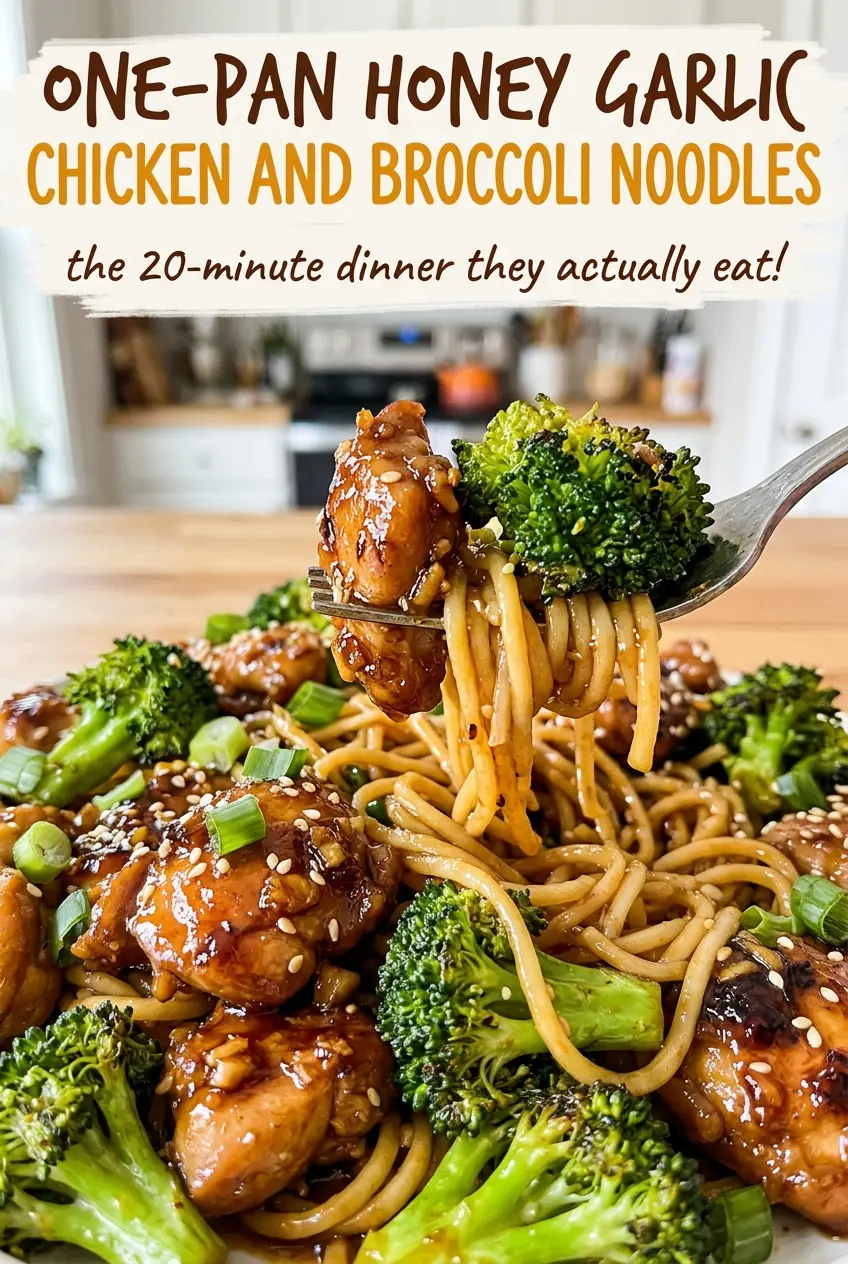
When the garlic turns fragrant in the same skillet where the chicken browned, you know the best part of dinner is already underway. I make One-Pan Honey Garlic Chicken and Broccoli Noodles when I want tender chicken, vegetables, and pasta without a sink full of pans. The linguine cooks right in the seasoned broth, so it picks up the honey-soy flavor as it softens.
Breaking the linguine in half helps it fit into the skillet, and stirring while it simmers keeps the strands from settling into a clump. The broccoli goes in after the pasta has had a head start; that timing gives the noodles room to cook while the florets stay crisp-tender.
The sauce may look thin while the pasta simmers. A quick cornstarch slurry at the end brings it together around the noodles and chicken, making each forkful glossy without cooking the broccoli to mush.
Kitchen Note
Move the browned chicken to a clean plate instead of leaving it in the skillet while the noodles cook. It goes back only for the final simmer, so it doesn’t spend the whole pasta-cooking stretch in hot liquid.
Save One-Pan Honey Garlic Chicken and Broccoli Noodles for a cozy skillet dinner with glossy noodles and crisp-tender broccoli.
Why the Sauce Looks Thin Until the Chicken Goes Back In
During the uncovered pasta simmer, the broth has to do two jobs: cook the linguine and carry the honey-garlic seasoning into every strand. It won’t look like a finished, clingy sauce at that point. That’s intentional. If you keep cooking the noodles just to force the liquid to reduce, they can turn soft before the sauce is ready.
The cornstarch slurry handles the final thickening separately. Whisking the starch with cold water first disperses it smoothly, then the brief uncovered simmer activates it in the hot liquid. Once the chicken returns, stir until the sauce lightly coats the noodles and the chicken is hot. If you prefer a looser coating, stop as soon as the sauce thickens rather than simmering it longer.
That finishing order is useful in a one-pan pasta dish: noodles reach al dente first, broccoli keeps its bite, and the sauce gets its body at the very end. You don’t have to choose between tender pasta and a sauce that clings.
What the Honey, Soy, and Broth Each Bring to the Skillet

- Chicken thighs — Boneless, skinless thighs stay juicy through browning and the last simmer. They don’t need to be an expensive brand; choose pieces with a fresh smell and trim away any large bits of excess fat. Chicken breast cut into the same size pieces works as a leaner swap, but it’s less forgiving if overcooked.
- Garlic — Fresh minced cloves give the broth its warm, savory base, and inexpensive fresh garlic is all you need. Jarred minced garlic can stand in, though its flavor is milder; add it at the same point and watch closely so it doesn’t scorch.
- Chicken broth — Low-sodium broth lets the soy sauce season the dish without making the finished sauce too salty. A basic store-brand carton is fine. Vegetable broth works in the same quantity, with a less chicken-forward flavor.
- Low-sodium soy sauce — It supplies salt and deep savory flavor, so a standard grocery-store bottle is a good choice. Tamari can replace it in the same quantity for a gluten-free version; choose gluten-free tamari if that matters for your meal.
- Honey — It balances the soy sauce and gives the finished coating a rounded sweetness. Ordinary clover honey is great here; maple syrup can replace it in the same quantity, bringing a woodier sweetness and less floral flavor.
- Linguine — The broad strands catch the sauce and cook well in the skillet when broken in half. Spaghetti is the closest easy swap: use the same quantity, break it in half, and judge doneness by texture since brands and thicknesses vary.
- Broccoli — Bite-size fresh florets cook quickly while keeping some firmness. Broccolini cut into small pieces is a workable alternative, though its slimmer stems may soften sooner; add it when the broccoli would go in and check it early.
- Cornstarch — This is what gives the sauce its final glossy body. Arrowroot starch can replace it in the same quantity and should also be mixed with cold water first; it thickens quickly, so keep the final simmer brief.
Building the Skillet in the Right Order
Brown the Chicken Before the Noodles
Heat the vegetable oil in a 12-inch high-sided skillet over medium-high heat. Season the one-inch chicken pieces with kosher salt and black pepper, then cook, stirring occasionally, until browned and they reach 165°F, about 6 to 8 minutes. Transfer the chicken to a clean plate. Don’t leave it in the pan while the pasta cooks.
Let the Garlic Turn Fragrant, Not Brown
Reduce the heat to medium and add the minced garlic to the skillet. Stir for 30 seconds, just until you can smell it. Garlic can go from fragrant to bitter quickly, so don’t step away during this short stretch. Keep the browned bits in the pan; they season the liquid that follows.
Start the Linguine in the Honey-Garlic Broth
Add the chicken broth, water, soy sauce, and honey, then bring the liquid to a boil while stirring to dissolve the honey. Add the broken linguine and simmer uncovered over medium heat for 5 minutes, stirring often. The noodles won’t be tender yet; this first stretch starts cooking them and gives them time to take on the broth’s flavor. If strands stick together, separate them with your spoon as you stir.
Give the Broccoli Its Shorter Cook
Add the bite-size broccoli florets, cover the skillet, and cook for 4 to 6 minutes, stirring once or twice. Look for linguine that’s al dente and broccoli that yields to a fork but still has a little bite. If either needs a moment longer, keep checking rather than letting the pan sit untouched. The pasta should not be limp.
Thicken the Sauce After the Chicken Returns
Whisk the cornstarch with the cold water in a small bowl until smooth. Stir the cooked chicken and slurry into the skillet, then simmer uncovered for 1 to 2 minutes, stirring. The sauce should thicken enough to coat the noodles, and the chicken should be hot. Take the skillet off the heat once it reaches that point so the pasta doesn’t keep softening.
Three Easy Ways to Change Up These Skillet Noodles
Make the skillet gluten-free
Use gluten-free linguine and replace the soy sauce with gluten-free tamari. Gluten-free pasta brands absorb liquid and soften at different rates, so check the package timing and start testing the noodles early; if the skillet gets dry before they’re tender, stir in a small splash of water. The noodles may be less springy than wheat linguine, but the honey-soy sauce still works well.
Bring in a little chili heat
Stir crushed red pepper flakes into the skillet with the garlic. The brief time in the warm oil wakes up their heat, while the honey softens the sharp edge. Start with a pinch for gentle warmth or add more if you like a clearly spicy sauce.
Add fresh ginger for a brighter sauce
Stir finely grated fresh ginger into the skillet along with the garlic. It adds a clean, peppery note that cuts through the honey’s sweetness without changing the one-pan method. Use a light hand if you want the garlic to stay in the foreground.
Storage and Reheating
- Refrigerator: Refrigerate leftovers within 2 hours and keep them covered for 3 to 4 days. The linguine will absorb some sauce and soften as it sits.
- Freezer: Freeze in an airtight container for up to 2 months for best quality. The broccoli and noodles will be softer after thawing overnight in the refrigerator.
- Reheating: Warm leftovers in a skillet over medium-low heat with a splash of water or broth, stirring until hot throughout. High heat can make the noodles stick before the chicken warms evenly.
Questions That Come Up While Making This Chicken and Broccoli Pasta
One-Pan Honey Garlic Chicken and Broccoli Noodles
Ingredients
Equipment
Method
- Heat the vegetable oil in a 12-inch high-sided skillet over medium-high heat.
- Season the chicken with the kosher salt and black pepper.
- Cook the chicken, stirring occasionally, until browned and it reaches 165°F, 6 to 8 minutes.
- Transfer the chicken to a clean plate.
- Reduce the heat to medium, add the garlic to the skillet, and cook for 30 seconds, stirring, until fragrant.
- Add the chicken broth, 1 cup water, soy sauce, and honey, and bring to a boil, stirring to dissolve the honey.
- Add the linguine and simmer uncovered over medium heat for 5 minutes, stirring often.
- Add the broccoli, cover, and cook for 4 to 6 minutes, stirring once or twice, until the noodles are al dente and the broccoli is crisp-tender.
- Whisk the cornstarch with the 2 tbsp cold water in a small bowl.
- Stir the chicken and cornstarch mixture into the skillet, then simmer uncovered for 1 to 2 minutes, stirring, until the sauce thickens and the chicken is hot.