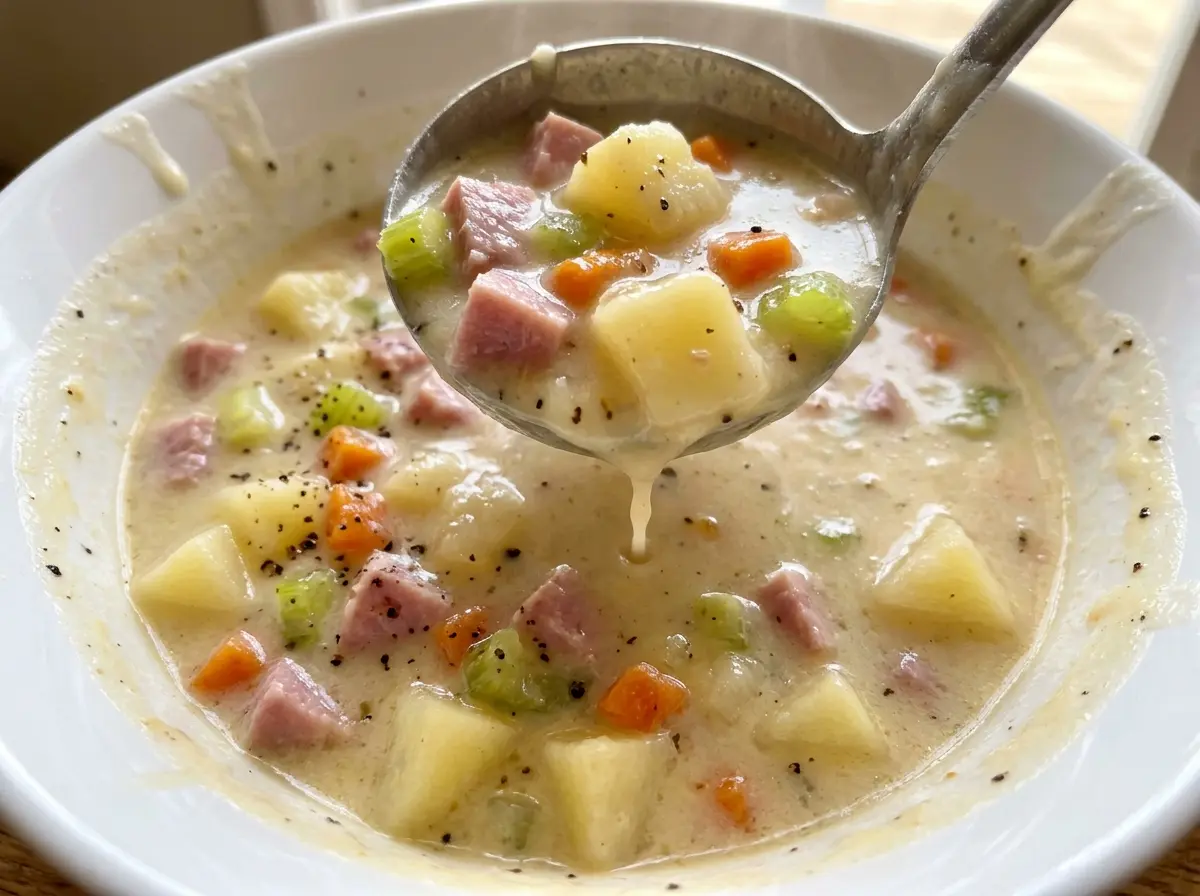
The first spoonful should have tender potato cubes in a broth that feels creamy without turning pasty. That balance is what I look for in One Pot Ham And Potato Soup: soft vegetables, potatoes that still hold their shape, and bits of cooked ham in every bowl.
I build everything in one pot, letting the vegetables soften before the potatoes simmer in broth. The ham and milk go in after the potatoes are tender, so the dairy only needs a gentle finish on the stove. It’s a cozy, satisfying soup with a straightforward rhythm and no extra pan to wash.
Kitchen Note
Give the pot its full five-minute rest off the heat before serving. That short pause lets the soup settle after its final simmer, so it’s easier to ladle without rushing the hot pot to the table.
Save this One Pot Ham And Potato Soup for a cozy bowl with tender potatoes and a creamy, savory broth.
Why the Flour Needs a Minute Before the Broth
The flour isn’t just there to make the soup thick; the way it meets the broth determines whether that texture is smooth or lumpy. Cooking it briefly in the butter-coated vegetables gives it a chance to blend into the base before liquid is added. Keep stirring for the full minute so the flour cooks evenly instead of sitting in dry pockets.
When broth hits flour all at once, the outside of each little clump can turn pasty while the center stays dry. Whisking the broth in gradually gives you more control: each addition can smooth out before the next one goes in. Once the liquid is smooth, the potatoes simmer directly in that lightly thickened base. It’s a small bit of patience up front, and it pays off in a soup that feels cohesive rather than floury.
What the Ham, Potatoes, and Milk Each Bring to the Pot

- Yukon gold potatoes — Their naturally creamy texture suits a soup where you want tender pieces, not a fully mashed base. Peel them and cut the cubes evenly so they soften at about the same pace. If you use another variety, expect the finished texture to change; russets tend to break down more.
- Cooked ham — The ham adds savory depth and is already cooked, so it goes in near the end to warm through. A meaty piece that’s easy to dice works well; cut the pieces small enough to fit comfortably on a spoon.
- Whole milk — Whole milk gives the broth a rounder, creamier finish than a lower-fat option. If you use 2% milk, keep the same volume; the soup will be a little lighter. Avoid bringing the pot to a boil once the milk is in.
- Low-sodium chicken broth — It gives the potatoes a savory cooking liquid while leaving room for the ham’s own saltiness. Regular broth can make the finished soup taste saltier, since the ham contributes seasoning too.
- All-purpose flour — This is the thickener in the pot, and it blends into the butter and softened vegetables before the broth goes in. It’s the ingredient to leave out for a flour-free variation, though the soup will be thinner.
- Unsalted butter and the vegetables — Butter carries the onion, celery, and carrot as they soften into the base. Fresh, firm vegetables are all you need here; careful dicing matters more than buying anything fancy.
- Dried thyme and black pepper — Thyme gives the broth a gentle herbal note, while pepper adds a little warmth. Dried thyme is convenient for this simmered soup, and there’s no need to crush it before adding.
Building the Soup in One Pot, From Soft Vegetables to Creamy Finish
Soften the vegetables before adding garlic
Melt the butter in a 6-quart Dutch oven or heavy pot over medium heat. Add the diced onion, celery, and carrot, then cook for 6 to 8 minutes, stirring occasionally, until softened. They should look relaxed and glossy, not browned or crisp at the edges. Stir in the minced garlic and cook for 30 seconds; garlic can turn bitter if it’s left to brown.
Cook the flour, then whisk in the broth
Stir the flour into the softened vegetables and keep stirring for 1 minute. The mixture will look thick and coat the vegetables; don’t let flour sit in a clump on the bottom of the pot. Whisk in the chicken broth gradually, smoothing the mixture as you go. When the liquid looks even, add the potatoes, thyme, salt, and pepper.
Simmer until a fork slips into the potatoes
Bring the pot to a boil, then lower the heat to maintain a gentle simmer and leave it uncovered. Cook for 15 to 20 minutes, checking the potatoes with a fork near the end of that range. The cubes are ready when a fork pierces them easily; a firm center means they need more time. Keep the simmer gentle so the base cooks steadily without splashing over the pot.
Warm the ham and milk without boiling
Stir in the diced cooked ham and whole milk, then simmer gently for 5 to 8 minutes, stirring occasionally. The soup should be hot throughout and reach 165°F, but don’t let it boil after the milk goes in. A hard boil can spoil the smooth texture of the dairy. Remove the pot from the heat and let it rest before serving.
Three Ways to Adapt the Soup Without Losing Its Cozy, Potato-Forward Feel
A flour-free, thinner bowl
For a gluten-free adaptation, leave out the flour and choose gluten-free-labeled chicken broth and cooked ham. The soup will have a lighter, brothier consistency because there’s no flour thickening the base. Keep the rest of the listed ingredients and method the same.
A more rustic potato texture
Once the potatoes are tender, press a few pieces against the side of the pot with your spoon and stir them back in before adding the ham and milk. The crushed potato thickens the broth a little more and gives the soup a less uniform, homey texture while leaving plenty of intact cubes.
A simpler vegetable base
You can leave out the carrot if that’s what you have on hand. The soup will lose a little of the vegetable base’s sweetness, but the onion, celery, garlic, and ham still give the broth plenty of savory character. Keep the rest of the ingredients and cooking method unchanged.
Storage and Reheating
- Refrigerator: Store in an airtight container for 3 to 4 days. The potatoes will soften a little as they sit.
- Freezer: Freeze airtight for up to 2 months. The potatoes may turn softer after thawing, and the milk-based broth may look separated; stir gently as it warms.
- Reheating: Warm it on the stovetop over low heat, stirring now and then until hot throughout. Don’t let it boil, which can make the dairy broth grainy.
Questions That Come Up While Making Ham and Potato Soup
One Pot Ham And Potato Soup
Ingredients
Equipment
Method
- Melt the butter in a 6-quart Dutch oven or heavy pot over medium heat, then add the onion, celery, and carrot and cook for 6 to 8 minutes, stirring occasionally, until softened.
- Stir in the garlic and cook for 30 seconds.
- Add the flour and cook, stirring constantly, for 1 minute.
- Gradually whisk in the chicken broth until smooth.
- Add the potatoes, thyme, salt, and pepper, then bring the soup to a boil.
- Reduce the heat to maintain a gentle simmer and cook uncovered for 15 to 20 minutes, until the potatoes are tender when pierced with a fork.
- Stir in the ham and milk and simmer gently for 5 to 8 minutes, stirring occasionally, until the soup is hot throughout and reaches 165°F; do not let it boil.
- Remove the pot from the heat and let the soup rest for 5 minutes before serving.