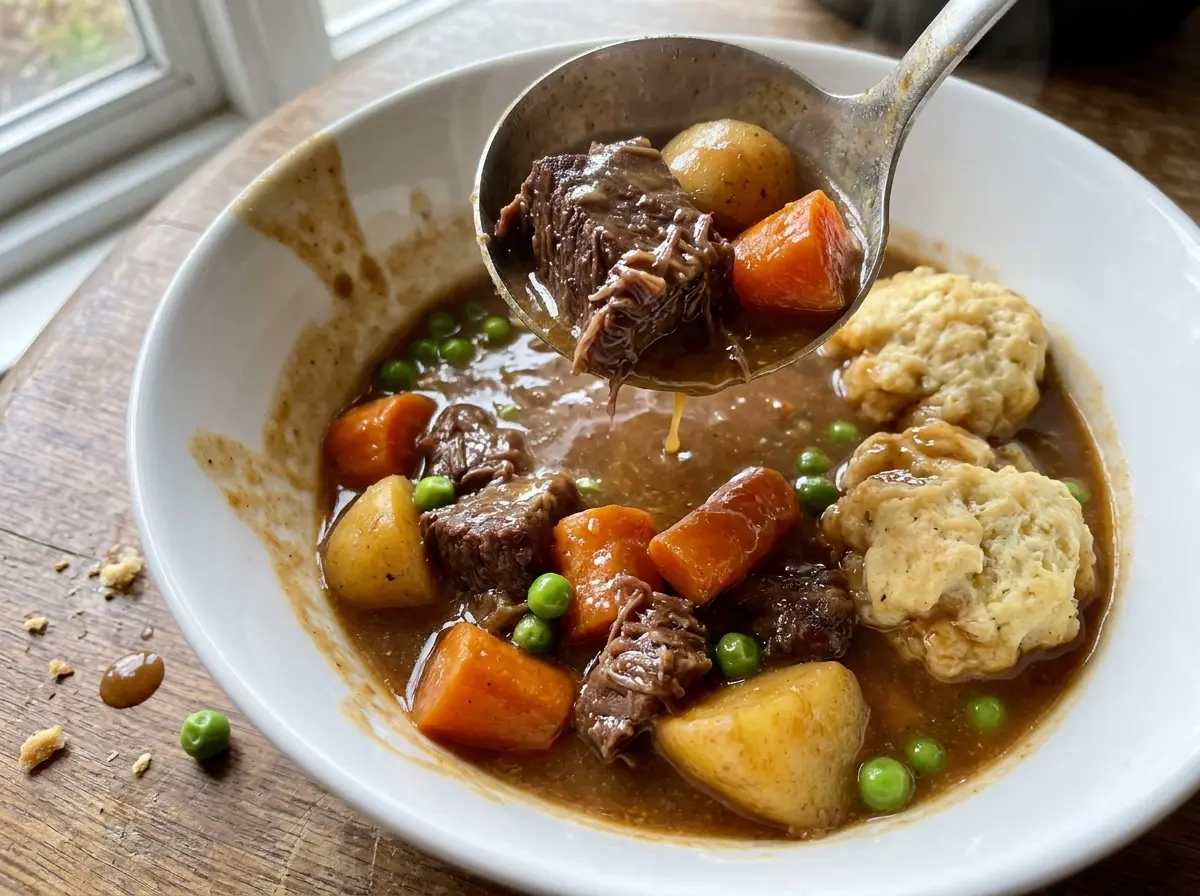
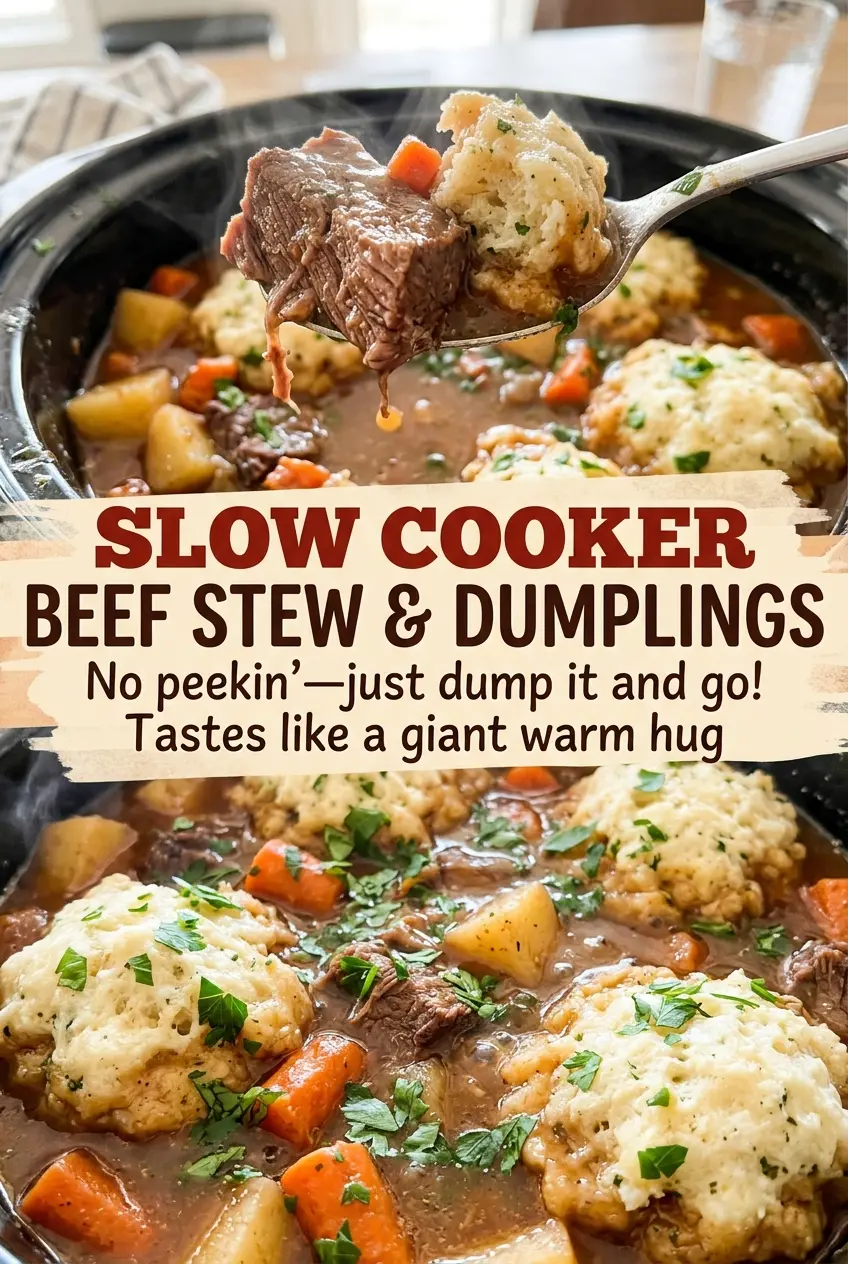
The beef hits the skillet in batches, and the kitchen starts smelling like a proper stew before the slow cooker is even on. I used to think browning was one more pan to wash; with this stew, it’s where the beef gets its deep, savory edges and the broth starts building flavor. Slow Cooker Beef Stew and Dumplings gives you tender chuck, soft potatoes, and a layer of dumplings that cook right on top.
The order matters. Browning the flour-coated beef first gives the stew a fuller base, while the dumplings go in only after the beef and potatoes are tender. I keep the dough soft and stop stirring as soon as the milk comes together with the dry ingredients. That keeps the finished dumplings tender rather than heavy, with a warm, soft center sitting over the rich stew.
Kitchen Note
Cold butter is worth keeping cold here. Work it into the dumpling flour until you see pea-size pieces, then add the milk; those little pieces help the dumplings bake up tender instead of uniformly dense.
Save Slow Cooker Beef Stew and Dumplings for a cozy dinner with fork-tender beef, soft potatoes, and pillowy dumplings cooked on top.
Why Flour-Coated Beef Needs a Skillet Before the Slow Cooker
The slow cooker makes chuck tender, but it can’t create the browned flavor that comes from direct contact with a hot skillet. Coating the beef in seasoned flour before browning also gives the stew a little more body as it cooks. The flour clinging to the meat disperses into the broth, so the finished liquid feels more substantial than plain broth without needing a separate thickening step.
Give the beef room in the skillet. If the pieces are crowded, they release moisture and steam instead of developing browned surfaces; working in batches lets the edges take on color. Turn each piece so more than one side gets a sear, rather than waiting for one dark crust and leaving the rest pale. Those browned surfaces are a small detail that carries through the long cook, especially alongside the onion, garlic, tomato paste, and Worcestershire sauce.
This is also why I don’t treat the skillet as optional cleanup. The beef starts the stew with a savory, roasted note that the vegetables and broth can build on, and the slow cooker takes over only after that first layer is in place.
Why Chuck, Yukon Golds, and Cold Butter Matter in This Pot
- Beef chuck — Its connective tissue softens during the long, moist cook, which is why the beef becomes tender rather than dry. Choose pieces cut to a similar size so they cook at a similar pace; the one-inch cubes also brown more evenly than a mix of tiny and oversized chunks.
- All-purpose flour — It coats the beef and helps give the broth body. Toss until each cube has a light, even coating, not a thick layer of loose flour; clumps on the meat can brown unevenly.
- Yukon Gold potatoes — They hold their shape while turning tender, so the stew has distinct potato pieces instead of a pot of broken-down starch. Cut them into even one-inch pieces, and use low-sodium beef broth so the seasoning stays balanced as the liquid cooks.
- Onion, carrots, celery, garlic, and tomato paste — These build the savory base around the beef. Keep the carrots and celery in half-inch pieces so they soften along with the stew instead of disappearing during the long cook.
- Worcestershire sauce, dried thyme, and bay leaf — They add a deep, savory note and a gentle herbal background to the broth. Remove the bay leaf before the dumplings go in so it doesn’t get lost beneath the dough.
- Cold unsalted butter and milk — The butter gives the dumpling dough tenderness, while milk brings it together into a soft dough. Use cold butter cut into small pieces, and stir in the milk only until the flour is moistened; the dough shouldn’t be kneaded smooth.
From Skillet to Steamy Dumplings: The Stages to Watch
Brown the Beef in Uncrowded Batches
Toss the beef with the flour, kosher salt, and black pepper until it’s evenly coated. Heat the vegetable oil in a 12-inch skillet over medium-high heat, then brown the beef in batches, turning the cubes to color multiple sides; each batch takes about 6 to 8 minutes. If the pieces are packed together, they’ll steam and stay gray, so leave space around them. Transfer each browned batch to the 6-quart slow cooker.
Let the Vegetables and Beef Turn Tender
Add the chopped onion, carrots, celery, garlic, tomato paste, beef broth, Worcestershire sauce, thyme, bay leaf, and potatoes to the slow cooker. Stir everything together so the tomato paste and broth coat the beef and vegetables. Cover and cook on LOW for 7 to 8 hours or HIGH for 4 to 5 hours, until the beef is fork-tender and the potatoes are tender. If the beef still resists a fork, it needs more time rather than a higher expectation from the clock.
Mix a Soft Dumpling Dough
Whisk the flour, baking powder, and kosher salt in a medium bowl. Cut in the butter with a fork or your fingertips, then stir in the milk just until a soft dough forms. Stop once the dry flour has been drawn in; stirring beyond that point can make the dumplings heavier. The dough should be soft enough to drop in portions, not worked into a firm ball.
Steam the Dumplings on Top
Remove and discard the bay leaf, then switch the slow cooker to HIGH if it isn’t already there. Drop the dough over the stew in 8 portions, cover, and cook for 45 to 60 minutes without lifting the lid. The dumplings should look puffed, with no wet dough visible on top, and be cooked through in the middle. Keeping the lid closed gives the trapped heat and steam time to cook the tops as well as the bottoms.
When to Leave Out the Dumplings—or the Starchy Parts
Make it a dumpling-free beef stew
Leave out the dumpling ingredients and finish the stew after the beef and potatoes are tender. You’ll have a brothier bowl without the soft bread-like topping; the browned, flour-coated beef still gives the liquid some body.
Choose a lower-starch version
For a lower-starch bowl, omit the flour coating, potatoes, and dumplings, then brown the beef in the oil and cook it with the remaining stew ingredients until tender. The broth will be thinner and the bowl less filling than the original; this is a reduction in starch, not a claim that the stew is carb-free.
Storage and Reheating
- Refrigerator: Store leftovers in airtight containers for 3 to 4 days. Dumplings soften as they sit in the stew.
- Freezer: Freeze in airtight containers for up to 2 to 3 months. The stew freezes well, though the dumplings may turn softer after thawing; freeze the stew without them when possible for the best texture.
- Reheating: Warm portions gently on the stovetop or in the microwave, stirring the stew carefully so the potatoes and dumplings stay intact. Heat leftovers to 165°F, and avoid a hard boil that can break up the vegetables and toughen the dumplings.
Questions That Come Up Before the Dumplings Are Done
Slow Cooker Beef Stew And Dumplings
Ingredients
Equipment
Method
- Toss the beef with the flour, salt, and pepper until evenly coated.
- Heat the vegetable oil in a 12-inch skillet over medium-high heat and brown the beef in batches, turning to brown the pieces on multiple sides, about 6 to 8 minutes per batch.
- Transfer the beef to a 6-quart slow cooker and add the onion, carrots, celery, garlic, tomato paste, broth, Worcestershire sauce, thyme, bay leaf, and potatoes; stir to combine.
- Cover and cook on LOW for 7 to 8 hours or HIGH for 4 to 5 hours, until the beef is fork-tender and the potatoes are tender.
- In a medium bowl, whisk together the flour, baking powder, and salt.
- Cut in the butter with a fork or your fingertips until the mixture has pea-size pieces.
- Stir in the milk just until a soft dough forms.
- Remove and discard the bay leaf.
- Switch the slow cooker to HIGH if it is not already there.
- Drop the dumpling dough in 8 portions over the stew.
- Cover and cook for 45 to 60 minutes without lifting the lid, until the dumplings are puffed and cooked through.