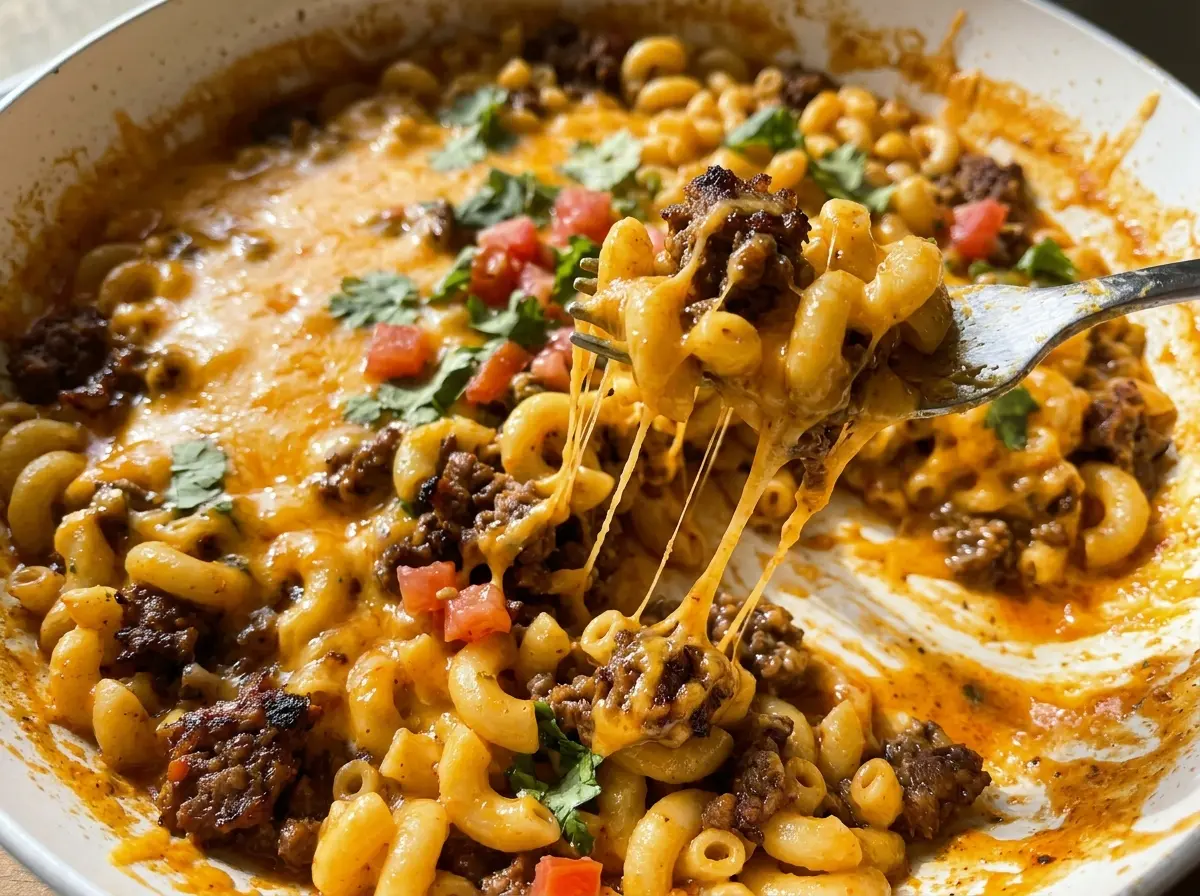
As the broth begins to bubble around the macaroni, it can look like there’s too much liquid for one pot. Keep the lid on and give it a stir every few minutes; the pasta gradually drinks up the broth while releasing starch that helps the cheese cling later. That’s what makes this One Pot Taco Mac and Cheese feel like a full dinner without leaving you with a separate pot of noodles to wash.
I like how the taco seasoning and tomatoes with green chiles flavor the beef and pasta together, rather than sitting in separate layers. The timing does matter, though: elbow macaroni can go from pleasantly firm to soft if it simmers too long, so I start checking for doneness once the shorter end of the cook time has passed. Stir in the milk, take the pot off the heat, and let the cheddar melt into a creamy coating for every bite.
Kitchen Note
Finely chopping the onion matters more here than it might in a skillet supper. It has only the beef-browning window to soften, so small pieces blend into the macaroni instead of staying crisp.
Save this One Pot Taco Mac and Cheese for a night when you want taco-seasoned beef and cheesy macaroni from one pot.
Why the Pasta Needs Stirring Before the Pot Looks Dry
Unlike macaroni boiled in a large pot of water, these elbows cook in a measured amount of broth with tomatoes and beef. The liquid needs to be absorbed gradually, and the pasta at the bottom of the Dutch oven is closest to the heat. A quick stir every three minutes redistributes the noodles and helps them cook at a similar pace.
There’s a useful visual cue here: don’t wait for every drop of liquid to disappear. The macaroni should be al dente, and most of the liquid should be absorbed before the milk goes in. A little moisture left in the pot is welcome; it combines with the milk and melted cheddar instead of leaving the finished dish dry. If the pot looks nearly dry while the pasta is still firm, stir and check it rather than letting the bottom sit undisturbed.
The covered simmer gives the elbows time to soften without asking you to add water and drain it later. Keep the heat at medium-low once the pot comes to a boil. A steady, gentle simmer is what you want—not a hard boil that makes the pasta cook unevenly.
What the Beef, Broth, and Cheese Each Bring to Taco Mac

- Ground beef — The 85% lean grind gives the pot beefy richness without as much excess fat as a fattier grind. Ground turkey can stand in, though it tastes milder and needs to reach 165°F; brown it thoroughly before adding the other ingredients.
- Yellow onion — A small yellow onion softens into the beef as it cooks and adds a savory base without making the dish taste sweet. A sweet onion works in its place, but the finished flavor will be a little softer.
- Taco seasoning — The packet brings the familiar seasoned-taco flavor and salt in one step. Since packet blends vary, low-sodium broth gives you a bit more control over how salty the finished pot tastes.
- Elbow macaroni — Its short shape cooks evenly in the covered pot and catches the sauce. Similar small pasta shapes can work, but their size and starch release can change how quickly they soften.
- Beef broth and tomatoes with green chiles — Low-sodium beef broth gives the pasta a savory cooking liquid, while the undrained tomatoes add both their juices and a mild chile kick. Low-sodium chicken broth is a workable swap, though it makes the beef flavor less pronounced; draining the tomatoes would remove liquid the pasta needs.
- Whole milk and sharp cheddar — Whole milk rounds out the sauce, and sharp cheddar brings a fuller flavor than mild cheddar. Two-percent milk works but makes a slightly lighter sauce; Monterey Jack melts smoothly in place of cheddar but tastes less sharp.
Build the Taco Mac in One Pot, From Browning to the Cheese Finish
Brown the Beef and Soften the Onion
Set a 6-quart Dutch oven over medium-high heat and cook the ground beef with the finely chopped onion for 6 to 8 minutes, breaking up the beef as it browns. Look for no pink beef and tender onion, and cook the beef to 160°F. Drain off excess fat before moving on; too much left in the pot can make the finished sauce feel greasy.
Bring the Seasoned Pasta to a Boil
Stir in the taco seasoning, elbow macaroni, beef broth, and undrained tomatoes with green chiles. Scrape the bottom of the pot as you mix so the seasoning and browned bits loosen into the liquid. Bring the mixture to a boil before lowering the heat; starting the simmer too early can leave the pasta cooking unevenly.
Simmer Until the Elbows Are Al Dente
Reduce the heat to medium-low, cover the Dutch oven, and simmer for 9 to 12 minutes. Stir every 3 minutes, reaching down to the bottom so no noodles sit against the hot surface for too long. Begin checking the macaroni for a tender bite with a little firmness in the center, and look for most of the liquid to be absorbed.
Warm the Milk Without Boiling the Sauce
Stir in the whole milk and cook uncovered over low heat for 1 to 2 minutes, just until warmed through. Keep the heat gentle; the milk needs to warm, not bubble hard. The mixture will look looser at this point than it will after the cheese goes in.
Melt the Cheddar Off the Heat
Remove the Dutch oven from the heat, then stir in the shredded sharp cheddar until it melts into the pasta. Leaving the pot over direct heat can make the cheese oily instead of smooth. Let the mac and cheese stand for 3 minutes before serving so the sauce settles around the elbows.
Easy Ways to Change the Taco Mac Without Losing Its One-Pot Feel
Make It Gluten-Free With Small Pasta
Use gluten-free elbow macaroni and gluten-free taco seasoning. Gluten-free pasta can release starch differently and soften on a different schedule, so use the package’s doneness guidance and stir gently; if the pot dries before the pasta is tender, add broth a little at a time.
Make a Dairy-Free Version
Replace the whole milk with plain, unsweetened oat milk and use dairy-free cheddar shreds. The finished sauce won’t be as rich, and dairy-free shreds may not melt as smoothly as cheddar, so stir them in off the heat and give them time to soften.
Turn Up the Heat
Swap the regular taco seasoning packet for a hot version. It adds more chile warmth throughout the beef and pasta without changing the one-pot method; the tomatoes with green chiles still contribute their own gentle heat.
Storage and Reheating
- Refrigerator: Refrigerate within 2 hours and keep leftovers for 3 to 4 days. The macaroni will continue to soften as it sits.
- Freezer: Freeze in airtight portions for up to 2 months. The pasta will be softer after thawing, and the cheese sauce may lose some of its smooth texture.
- Reheating: Warm leftovers gently in a covered saucepan over low heat with a splash of milk, stirring until hot throughout. Avoid boiling them; high heat can make the cheese sauce oily and the pasta mushy.
Questions That Come Up While Making Taco Mac and Cheese
One Pot Taco Mac and Cheese
Ingredients
Equipment
Method
- In a 6-quart Dutch oven over medium-high heat, cook the ground beef and onion, breaking up the beef, for 6 to 8 minutes, until the beef is browned and reaches 160°F.
- Drain excess fat.
- Stir in the taco seasoning, macaroni, broth, and tomatoes, then bring the mixture to a boil.
- Reduce the heat to medium-low, cover, and simmer for 9 to 12 minutes, stirring every 3 minutes, until the macaroni is al dente and most of the liquid is absorbed.
- Stir in the milk and cook uncovered over low heat for 1 to 2 minutes, until warmed through.
- Remove the pot from the heat and stir in the cheddar until melted.
- Let stand for 3 minutes before serving.