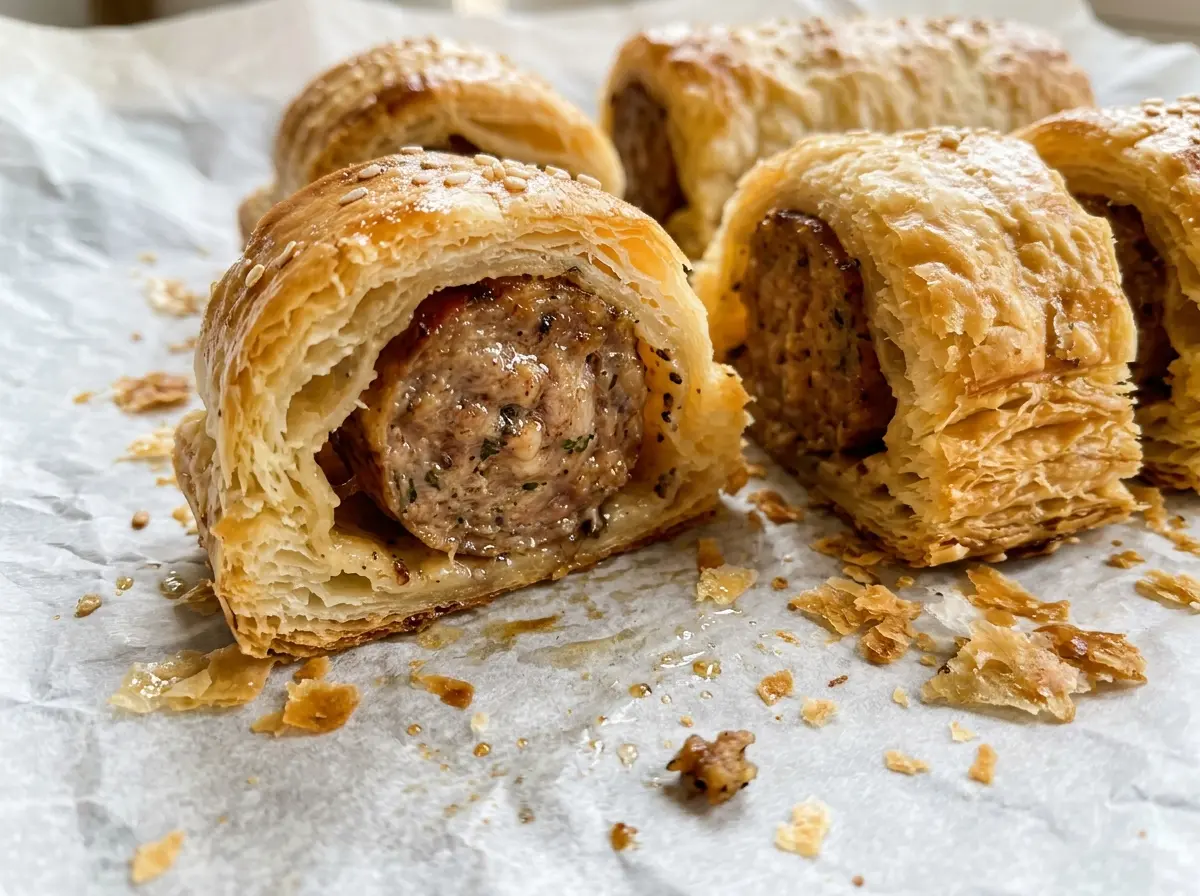
When the baking sheet comes out, the pastry should be puffed and bronzed around a savory center. I like these sausage rolls because the filling has enough seasoning to stand up to the buttery layers without overpowering them. Each piece is easy to pick up, and the twelve rolls make a generous platter for an appetizer or a casual lunch.
The filling stays cohesive inside the pastry, so you get sausage in every bite instead of a loose crumble. Dijon adds a little tang, and dried sage gives the pork a familiar, savory warmth. Serve them while the pastry is crisp and the centers are still hot.
Kitchen Note
Cut the two small vents in each roll before they go into the oven. They give steam a place to escape, which helps keep the pastry from splitting where the filling presses against it.
Save these sausage rolls for a golden, flaky appetizer with a savory pork filling and a little Dijon tang.
Why Cold Puff Pastry Makes These Sausage Rolls Easier to Shape
Puff pastry is forgiving when it’s cold and much harder to handle once it gets warm. Chilled pastry bends around the sausage log while keeping its layers distinct; pastry that has softened too much can feel sticky, stretch unevenly, and drag as you roll it. That makes it harder to seal the edge neatly, and a loose seam is more likely to open in the oven.
Thawed but still cold is the useful middle ground. The sheets should unfold without cracking, but they shouldn’t feel limp or greasy to the touch. Work with one sheet at a time while you portion and roll, and keep the other sheet cool until you need it. The goal isn’t to make the pastry stiff; it’s to preserve enough structure for the layers to puff instead of smearing together. That contrast—crisp pastry outside, tender sausage inside—is what makes a simple sausage roll feel properly finished.
What the Sausage, Breadcrumbs, and Pastry Each Bring

- Bulk pork sausage — Use uncooked bulk sausage with a texture you can shape into a log. The seasoning and fat are already built in, so a lean ground pork substitution won’t give the same seasoned, juicy center without further changes.
- Plain dry breadcrumbs — These help hold the filling together and absorb some of its moisture. Plain panko can replace them in equal volume, though its larger flakes give the filling a slightly less uniform texture.
- Yellow onion — Finely minced pieces spread through the sausage without making the filling lumpy. White onion works in the same amount if that’s what you have; its flavor is a little sharper.
- Dijon mustard — Dijon brings a clean tang that cuts through the rich pastry. Yellow mustard can stand in measure for measure, but the result tastes milder and less complex.
- Dried sage — Sage is the familiar herbal note in this pork filling. Dried thyme can replace it in the same amount for a different, slightly earthier flavor.
- Frozen puff pastry — The layered pastry gives these rolls their lift and crisp shell. There isn’t a close substitute that bakes the same way; pie dough makes a sturdier, less flaky roll. A gluten-free puff pastry is a workable option for the adaptation below.
- Egg — Beaten with water, it helps seal the pastry edge and gives the tops their golden finish. If you need to avoid egg, use a little water on the seam and press it closed; the pastry will seal, but the tops won’t have the same shine.
From Sausage Filling to Golden, Sealed Rolls
Mix a Filling That Holds Together
Combine the pork sausage, breadcrumbs, finely minced onion, Dijon, dried sage, and black pepper in a medium bowl. Mix until the ingredients are evenly distributed and the onion isn’t gathered in one spot. The mixture should feel cohesive enough to shape, not crumbly at the edges. Set it aside while you prepare the pastry and egg wash.
Cut the Pastry and Shape the Logs
Heat the oven to 400°F and line a large rimmed baking sheet with parchment paper. Unfold each thawed but still cold pastry sheet, then cut it lengthwise into two strips about 5 inches wide, for four strips total. Divide the sausage mixture into four portions and shape each portion into a log about 1 inch thick and as long as one pastry strip. Beat the egg with the water in a small bowl.
Roll, Seal, and Portion
Set one sausage log along the long edge of each pastry strip. Brush the opposite edge with egg wash, roll the pastry around the filling, and press the seam to seal it. Cut each long roll into three pieces and arrange them seam-side down on the lined baking sheet. Keeping the seam underneath helps the rolls stay closed as the pastry puffs.
Bake Until the Pastry Is Golden and the Center Is Cooked
Brush the tops with the remaining egg wash and cut two small slits in each roll. Bake for 25 to 30 minutes, until the pastry is puffed and golden and the sausage reaches 160°F on an instant-read thermometer. If the pastry looks done before the center reaches temperature, give the rolls more time in the oven rather than relying on color alone. Let them rest on the baking sheet for 5 minutes before serving.
Three Smart Ways to Adapt These Sausage Rolls
Make Them Gluten-Free
Replace the plain dry breadcrumbs with gluten-free breadcrumbs and use gluten-free puff pastry and gluten-free bulk pork sausage. Keep the filling method the same; gluten-free pastry can be more delicate and may not puff quite as high, so handle it gently while rolling.
Turn Up the Heat
Use hot-seasoned bulk pork sausage in place of a milder bulk sausage. The method stays the same, but the filling will have a more noticeable kick; taste the sausage before mixing if you want to know how spicy the finished rolls will be.
Make a Smaller Batch
Halve the filling ingredients and use one pastry sheet to make six rolls. For the wash, beat the egg first, then use half of it with half the water; reserve the rest for another use. The rolls keep the same size, so the oven timing doesn’t need to change.
Storage and Reheating
- Refrigerator: Refrigerate leftovers within 2 hours and keep them for up to 3 days. The pastry will soften as it sits.
- Freezer: Freeze baked, cooled sausage rolls in an airtight container for up to 2 months. Thaw them in the refrigerator before reheating.
- Reheating: Warm them in a 350°F oven until heated through, reaching 165°F in the center. The oven brings back some crispness; microwaving makes the pastry soft.
Questions I Get Asked About Sausage Rolls
Sausage Rolls
Ingredients
Equipment
Method
- In a medium bowl, mix the pork sausage, breadcrumbs, onion, Dijon mustard, sage, and black pepper until evenly combined.
- Heat the oven to 400°F.
- Line a large rimmed baking sheet with parchment paper.
- Unfold each pastry sheet and cut it lengthwise into two strips about 5 inches wide, making four strips total.
- Divide the sausage mixture into four portions and shape each into a log about 1 inch thick and as long as a pastry strip.
- In a small bowl, beat the egg with the water.
- Place one sausage log along the long edge of each pastry strip.
- Brush the opposite edge with egg wash.
- Roll the pastry around the sausage and press the seam to seal.
- Cut each roll into three pieces and place them seam-side down on the baking sheet.
- Brush the tops with the remaining egg wash and cut two small slits in each roll.
- Bake for 25 to 30 minutes, until the pastry is puffed and golden and the sausage reaches 160°F on an instant-read thermometer.
- Rest the sausage rolls on the baking sheet for 5 minutes before serving.