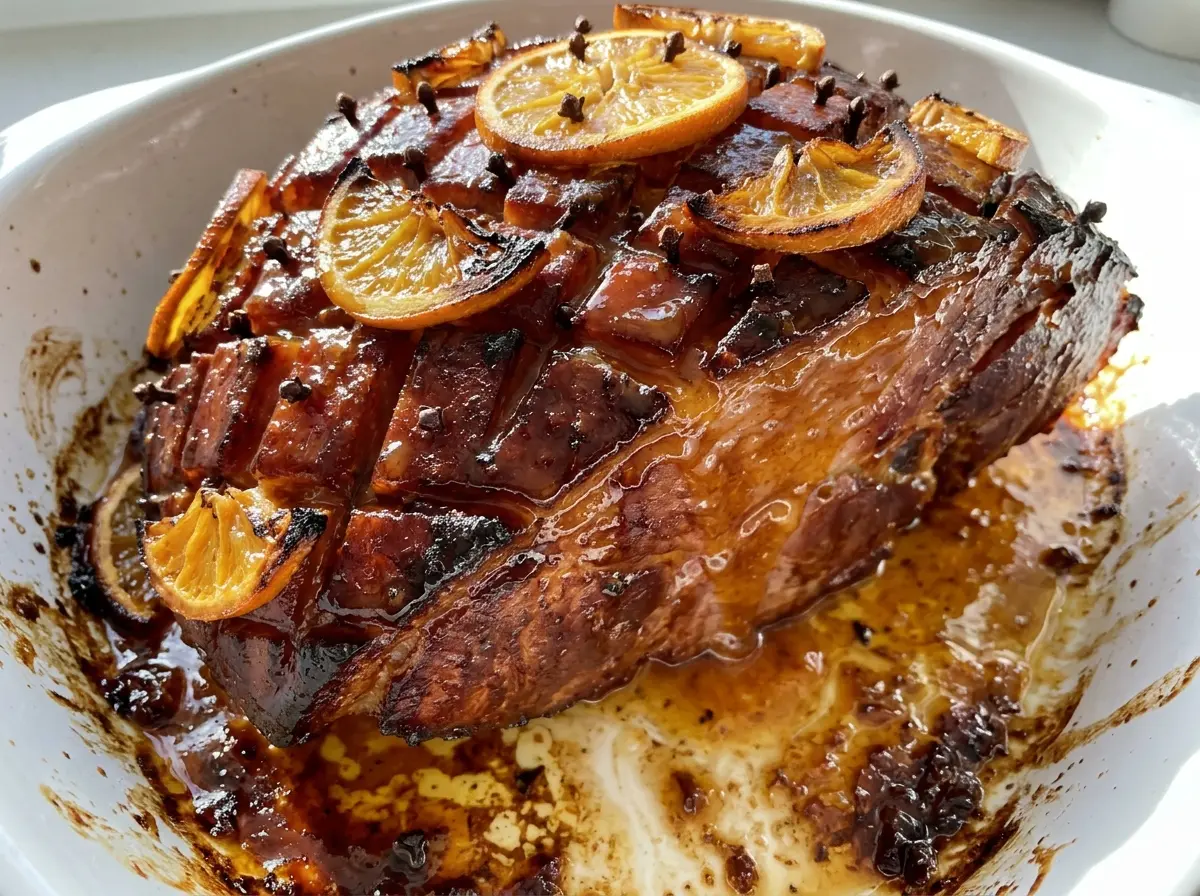
When I peel back the foil, the ham is warm and steamy, but the outside still looks plain. That’s exactly the moment to reach for the orange glaze, not before. I learned that giving the ham time to heat gently first keeps the sugary coating from spending too long in the oven.
This Orange Glazed Christmas Ham starts with a fully cooked, bone-in shank half, so the work is about warming it through without drying it out. Water in the roasting pan and a tight foil cover create a moist environment, while orange juice and zest bring a fresh citrus note to the brown sugar, honey, Dijon, and cloves.
The glaze simmers until glossy, then goes on in layers near the end. Each brush adds a little more shine and tangy sweetness, leaving the ham with a lacquered orange finish and tender slices underneath.
Kitchen Note
I use a whole, unsliced shank half for this ham. The intact outside gives the glaze a broad surface to cling to, instead of letting it run down into pre-cut slices.
Save this Orange Glazed Christmas Ham for a festive centerpiece with a glossy citrus finish and tender slices.
Why the Orange Glaze Goes on After the Ham Is Already Hot
A fully cooked ham doesn’t need hours of cooking to become safe to eat; it needs to be brought up to serving temperature without losing its moisture. The covered roast does that gently. The water in the pan helps keep the oven environment humid, and the foil slows moisture loss from the ham’s surface.
Brown sugar and honey make a glaze that can go from glossy to too dark if it sits in a hot oven for the entire roast. Waiting until the ham has warmed before brushing it gives the glaze a shorter, more controlled time in the heat. Orange juice keeps the mixture loose enough to brush, while the zest holds onto the fruit’s fragrant oils.
That timing also gives you a better finish than pouring glaze over the ham at the beginning. The first layer clings to a hot surface, and the later coats build a shiny coating without masking the ham with a thick, scorched sugar crust.
What the Orange, Honey, and Mustard Each Bring to the Glaze

- Bone-in shank half ham — Choose a fully cooked ham in the specified size range. Its shape and bone affect how quickly the thickest part warms, so a fresh, well-wrapped ham from the grocery store is fine; the thermometer matters more than brand. A raw fresh ham isn’t a direct swap because it needs a different cooking method.
- Orange juice and zest — Juice gives the glaze its citrus base, while finely grated zest adds concentrated orange aroma that juice alone can’t provide. Fresh orange zest is worth the small bit of extra prep; for the juice, bottled 100% orange juice works when squeezing a fresh orange is inconvenient. Grate only the colored outer peel, not the bitter white pith.
- Light brown sugar — This supplies the glaze’s caramel sweetness and helps it turn shiny as it simmers. Dark brown sugar works in the same quantity if that’s what you have, though its deeper molasses note will be more noticeable.
- Honey — Honey adds a softer sweetness and helps the glaze coat the ham. Pure maple syrup can replace it in the same quantity; expect a woodsy note in place of honey’s floral taste.
- Dijon mustard — Dijon brings a sharp, savory edge that keeps the glaze from tasting like candy. Whole-grain mustard can stand in measure for measure, with mustard seeds visible in the finished coating and a slightly textured bite.
- Ground cloves — A small amount gives the orange glaze a warm, familiar holiday spice. Ground allspice can replace the cloves in the same quantity; it reads a little more peppery and less pungent.
How to Warm the Ham Before Building the Glaze
Set Up a Moist, Covered Roast
Heat the oven to 325°F and set a rack in the lower third. Remove the ham’s packaging and plastic bone guard, then place it cut side down in a 16×13-inch roasting pan. Pour the water around the ham, not over it, and seal the pan tightly with foil; a loose cover lets steam escape.
Simmer the Orange Glaze Until It Turns Glossy
Combine the orange juice, zest, brown sugar, honey, Dijon mustard, and cloves in a 2-quart saucepan. Bring the mixture to a gentle simmer over medium heat, stirring as the sugar dissolves. Cook for 8 to 10 minutes, until the glaze looks shiny and lightly syrupy. A hard boil can reduce it too quickly, so keep the heat moderate and stir the bottom of the pan.
Warm the Ham Under Foil
Roast the covered ham for 1 1/2 hours before taking its first temperature reading. Insert an instant-read thermometer into the thickest part without touching the bone; contact with the bone can give a misleading reading. If it hasn’t reached 110–115°F, cover it again and check every 15 minutes. Keep the foil in place while it warms.
Brush on the Glaze in Layers
When the ham reaches 110–115°F, remove the foil and brush the surface with glaze. Return it to the oven uncovered, brushing with the remaining glaze every 10 minutes. Check the thickest part for 140°F; this finishing stage takes about 25 to 40 minutes. Watch the surface as it colors, and keep the thermometer away from the bone.
Rest Before Carving
Move the ham to a carving board and let it rest for 15 minutes. That short pause gives the hot juices time to settle instead of running onto the board as soon as you cut. The glaze will also have a moment to cling to the outside, so slices come away with a little of that orange coating.
Three Ways to Adapt the Orange Glaze Without Losing Its Balance
Make It Gluten-Free
Use a gluten-free fully cooked ham and replace the Dijon with the same amount of certified gluten-free yellow mustard. The glaze will taste a little milder and more straightforward, but the orange, brown sugar, honey, and cloves still make a balanced coating.
Give the Citrus a Tart Edge
Replace half of the orange juice with lemon juice and keep the orange zest. That change adds a brighter, more tart note against the honey and brown sugar, without changing how you simmer or brush the glaze.
Trade the Cloves for Ginger
Use ground ginger in place of the cloves for a cleaner, gently warming spice note. Keep the same quantity so the spice stays in the background rather than taking over the orange.
Storage and Reheating
- Refrigerator: Store leftover ham in an airtight container for 3 to 4 days. The glaze may lose some of its shine as it chills, but the flavor holds up.
- Freezer: Freeze sliced or carved portions in airtight freezer-safe packaging for up to 2 months for best quality. Thaw in the refrigerator before reheating.
- Reheating: Put portions in a covered baking dish with a splash of water and warm at 325°F until the center reaches 165°F. Keep the dish covered; uncovered reheating dries the slices before they’re hot through.
Questions That Come Up When Making This Christmas Ham
Orange Glazed Christmas Ham
Ingredients
Equipment
Method
- Heat the oven to 325°F and position a rack in the lower third.
- Remove the ham’s packaging and any plastic bone guard, then place it cut side down in a 16x13-inch roasting pan and pour the water around it; cover the pan tightly with foil.
- Combine the orange juice, orange zest, brown sugar, honey, Dijon mustard, and cloves in a 2-quart saucepan.
- Bring to a gentle simmer over medium heat, stirring, and cook for 8-10 minutes until glossy and lightly syrupy.
- Roast the ham covered for 1 1/2 hours, then check the temperature in the thickest part without touching the bone; continue roasting, checking every 15 minutes, until it reaches 110-115°F.
- Remove the foil and brush the ham with the glaze; roast uncovered, brushing with the remaining glaze every 10 minutes, until the thickest part reaches 140°F, about 25-40 minutes.
- Transfer the ham to a carving board and let it rest for 15 minutes before carving.