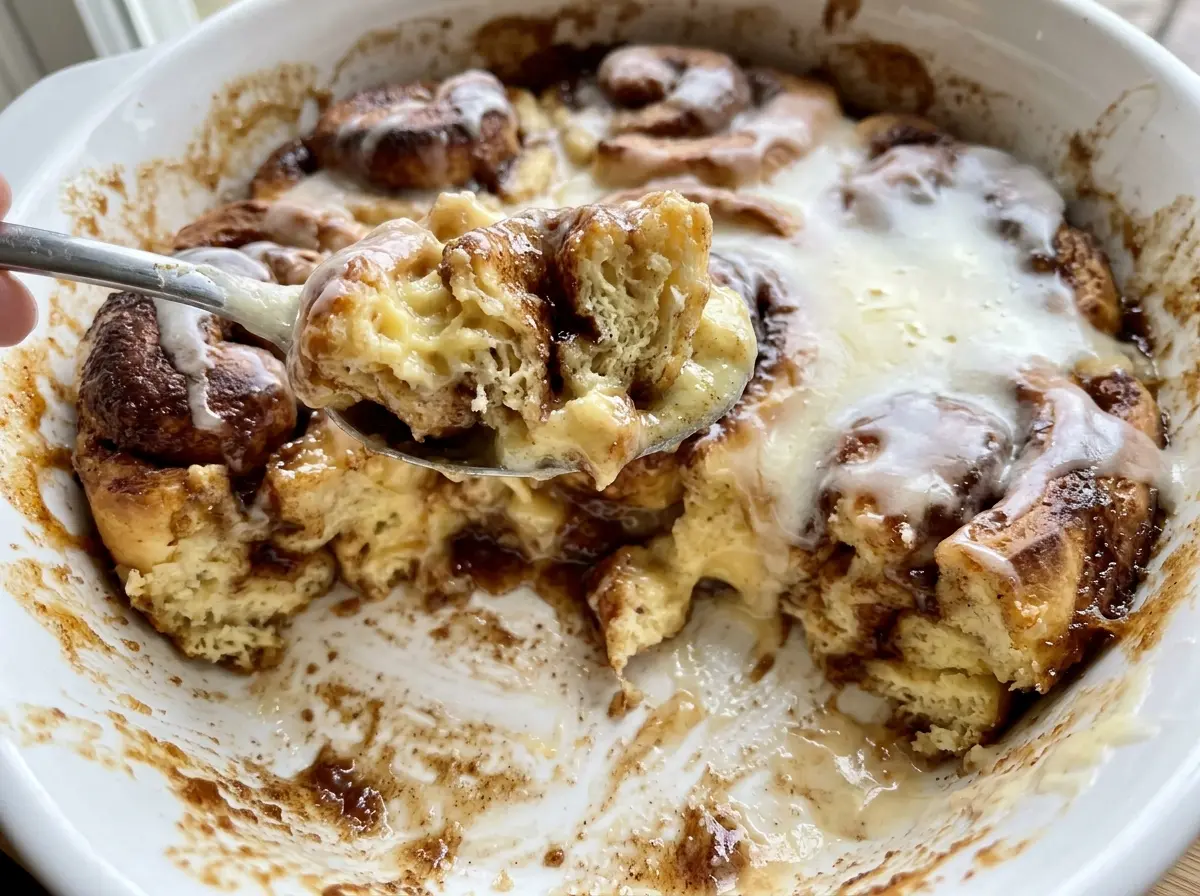
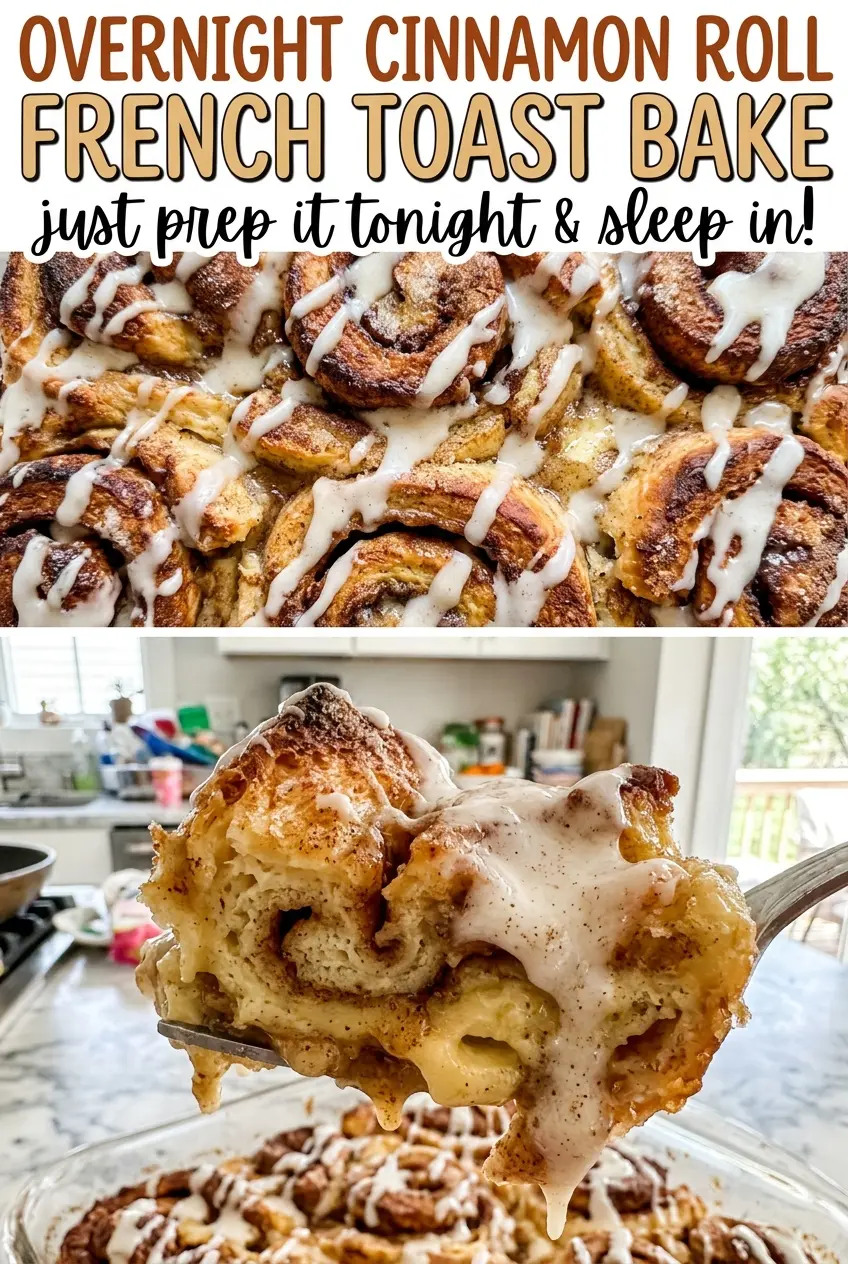
By morning, cinnamon sugar has softened between the challah cubes, and the top turns golden while the center stays custardy. I like this Overnight Cinnamon Roll French Toast Bake because its overnight rest moves most of the work away from breakfast; in the morning, the oven does the baking and there’s only icing to mix.
The cinnamon filling sits between two layers of bread, so the sweet, buttery swirl runs through the bake instead of staying on top. Once the casserole has rested after baking, I drizzle on the cream cheese icing while it’s still warm. Each scoop has tender bread, a little cinnamon sugar, and a smooth finish.
Kitchen Note
Softened cream cheese blends into the icing much more smoothly than cream cheese straight from the refrigerator. If it still feels cool and firm, give it more time to soften before you beat it with the powdered sugar and cream.
Save this Overnight Cinnamon Roll French Toast Bake for a make-ahead breakfast with a buttery cinnamon-sugar middle and cream cheese icing.
Why Drying the Challah Keeps the Bottom From Turning Dense
Challah is soft and tender, which makes it lovely in a custard bake but also means it can turn heavy if it goes into the dish too moist. A short, low-heat bake dries the cubes before they meet the egg-and-milk mixture. They should feel dry and lightly crisp at the edges, not toasted or browned. That gives the bread room to take in the custard during its long chill without starting out saturated.
Spread the cubes in a single layer on the rimmed baking sheet so the oven air can reach them evenly. If they’re piled together, the pieces in the middle won’t dry at the same pace as the ones around the edges. Let them cool completely before assembling; warm bread can soften again as it sits, and it also warms the custard you’re about to chill. This small bit of prep is what helps the finished casserole hold a tender, distinct texture rather than baking into one dense layer.
What the Challah, Cinnamon Filling, and Custard Each Bring
- Challah — Its soft crumb makes a rich, tender bake, while the loaf’s shape is easy to cut into even cubes. Choose a fresh, intact loaf and cut the pieces evenly so they dry at about the same rate. I use challah for this version; a different bread can absorb the custard differently and change the texture.
- Butter, brown sugar, and cinnamon — Melted butter helps the packed brown sugar and ground cinnamon form a spoonable filling that settles through the middle. Fresh, fragrant cinnamon makes a noticeable difference here, while the brown sugar’s moisture helps the filling stay soft as it bakes. Stir until there are no dry cinnamon pockets before spooning it over the first layer.
- Eggs and whole milk — Eggs set the custard so the casserole can be cut and served, and whole milk keeps it tender and rich. Use eggs that are in good condition and whisk until the mixture looks uniform, with no streaks of egg white. I don’t recommend changing the milk or replacing the eggs; both affect how the custard sets.
- Granulated sugar, vanilla, and fine salt — These season the custard itself, balancing the cinnamon filling and giving the bread a gently sweet base. Whisk them in thoroughly so the sugar and salt don’t settle at the bottom of the bowl.
- Cream cheese, powdered sugar, and heavy cream — Cream cheese gives the icing its tang and body, powdered sugar sweetens it while keeping it smooth, and heavy cream loosens it enough to drizzle. Softening the cream cheese matters more than buying a premium brand; use fresh powdered sugar without hard lumps for the smoothest finish.
Build the Bake in Layers, Then Let the Oven Set the Custard
Dry the Challah Without Toasting It
Heat the oven to 300°F and spread the bread cubes on a rimmed baking sheet. Bake for 15 to 20 minutes, until the cubes are dry and lightly crisp; check a few from the middle of the pan as well as the edges. They shouldn’t take on deep color. Let the cubes cool completely before moving on.
Mix the Cinnamon Filling and Custard
Stir the melted butter, packed light brown sugar, and ground cinnamon together in a small bowl until evenly combined. In a large bowl, whisk the eggs, whole milk, granulated sugar, vanilla, and fine salt until smooth. Take a moment to scrape the bottom and sides of the bowl with the whisk so no streaks of egg or settled sugar remain. Keep the two mixtures separate for layering.
Layer, Moisten, and Chill
Coat a 9×13-inch metal baking dish with nonstick cooking spray. Arrange half the cooled bread in the dish, spoon the cinnamon filling evenly over it, then add the remaining bread. Pour the custard across the whole surface and press gently so the cubes are moistened without crushing them. Cover the dish and refrigerate for 8 to 12 hours.
Bake Covered, Then Uncover to Brown
While the casserole stays covered in the refrigerator, heat the oven to 350°F. Cover the dish with foil and bake for 30 minutes, then remove the foil and bake for another 25 to 35 minutes. The top should look golden, and the center should reach 160°F. If the middle hasn’t reached that temperature, it needs more oven time even if the edges look set. Let the casserole rest for 10 minutes before adding the icing.
Beat and Drizzle the Icing
Beat the softened cream cheese, powdered sugar, and heavy cream until the mixture is smooth. If the icing seems too thick to drizzle, keep beating until the cream is fully incorporated rather than adding anything else. Drizzle it over the warm casserole and serve while the icing is soft against the browned top.
Two Easy Ways to Change the Cinnamon Roll Bake
Leave Off the Cream Cheese Icing
Skip the icing if you want the cinnamon-sugar filling to be the main sweet note. The casserole will still bake and slice as usual, with a less rich finish and no extra topping to mix.
Make It a Plain Custard French Toast Bake
Leave out the cinnamon-sugar filling for a simpler, gently sweet casserole that lets the challah and vanilla custard stand out. The center won’t have the distinct cinnamon swirl, but the bread still bakes in the same custard base.
Storage and Reheating
- Refrigerator: Refrigerate leftovers within 2 hours and use them within 3 to 4 days. The bread will soften more as it sits, and the icing will firm up when cold.
- Freezer: For the best texture, freeze portions before icing in airtight freezer-safe packaging for up to 2 months. Thaw overnight in the refrigerator, then add freshly made icing after reheating.
- Reheating: Cover a portion with foil and warm it in a 325°F oven until heated through to 165°F. Keep it covered so the top doesn’t dry out; reheating uncovered can make the bread edges tough before the center is warm.
Questions That Come Up With This Overnight French Toast Bake
Overnight Cinnamon Roll French Toast Bake
Ingredients
Equipment
Method
- Heat the oven to 300°F.
- Spread the challah cubes on a rimmed baking sheet and bake for 15 to 20 minutes, until dry and lightly crisp.
- Let the challah cubes cool completely.
- Coat a 9x13-inch metal baking dish with nonstick cooking spray.
- Stir the melted butter, brown sugar, and cinnamon together in a small bowl.
- Whisk the eggs, milk, granulated sugar, vanilla, and salt in a large bowl until combined.
- Arrange half the bread in the prepared dish.
- Spoon the filling evenly over the bread.
- Top with the remaining bread.
- Pour the custard evenly over the bread.
- Press gently so the cubes are moistened.
- Cover the dish and refrigerate for 8 to 12 hours.
- Heat the oven to 350°F while the casserole remains covered in the refrigerator.
- Cover the dish with foil.
- Bake for 30 minutes.
- Uncover and bake for 25 to 35 minutes, until golden and the center reaches 160°F.
- Let the casserole rest for 10 minutes.
- Beat the cream cheese, powdered sugar, and heavy cream until smooth.
- Drizzle the icing over the warm casserole.