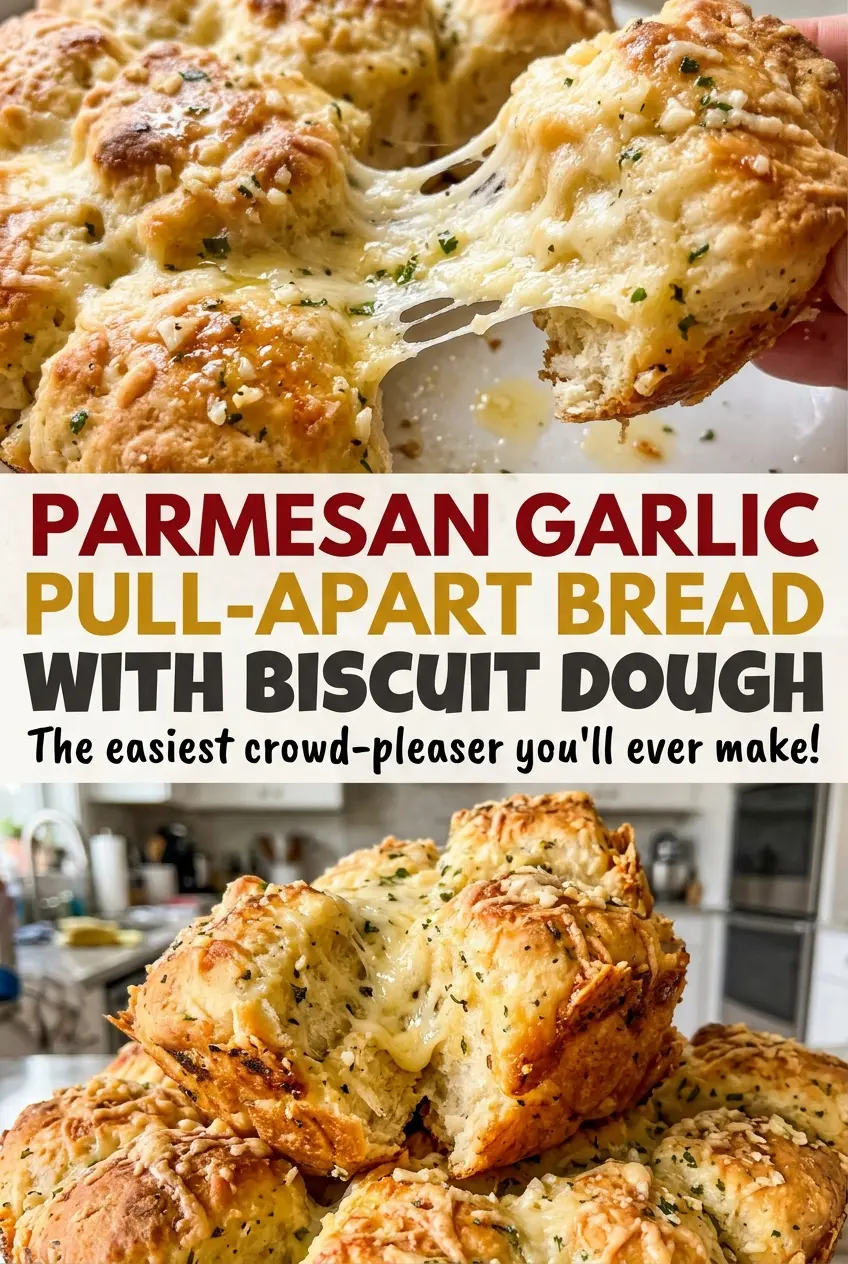
The edges of a Bundt pan brown before the middle, so a golden top alone doesn’t tell me this pull-apart bread is ready. I check the center pieces for raw dough before I take the pan out. That little check is especially useful with Parmesan garlic pull-apart bread made from biscuit dough, where the pieces bake close together in a ring.
I like this version because refrigerated biscuits make the bread easy to portion, and each piece gets its own buttery Parmesan coating. The cheese and parsley stay in a separate bowl from the melted butter, which makes it easier to coat the dough without turning the Parmesan into a paste. Once baked, the pieces pull apart warm, with a savory coating clinging to their edges.
Give the pan a generous spray and arrange the coated pieces evenly. The finished bread should be golden on top, cooked through in the center, and easy to share one piece at a time.
Kitchen Note
The center pieces are the best doneness check. Even if the top is golden, look for fully cooked dough in the middle before serving; the color on the outside can get there first.
Save this Parmesan garlic pull-apart bread for a warm, savory shareable bake with buttery biscuit pieces and a crisp Parmesan coating.
Why the Parmesan Belongs in Its Own Bowl
It might seem quicker to stir the garlic, salt, and Parmesan into the melted butter, but that changes how the coating behaves. Parmesan absorbs moisture, and mixing it directly into the butter can leave you with a thick, clumpy mixture that’s harder to spread evenly over the biscuit pieces. Keeping the butter seasoning separate from the dry cheese and parsley gives each part a clear job: the butter coats the dough, and the Parmesan mixture clings to that buttery surface.
The two-bowl setup also makes the coating easier to manage while you work through all the pieces. Dip one piece in butter, then roll it through the cheese mixture, rather than trying to stir a crowded pile of dough in a single bowl. If the cheese mixture starts to collect in damp clumps, a biscuit piece may have carried too much butter into it; a light, even dip helps the dry coating stay loose enough to cover the rest. That little bit of organization is what gives the finished bread its distinct Parmesan coating instead of a few heavy patches.
What Each Ingredient Brings to the Parmesan Coating

- Refrigerated biscuit dough — This dough gives the bread its tender, pull-apart structure without mixing or proofing a separate dough. Use the two cans specified for the 10-cup Bundt pan; changing the amount of dough changes how the pieces fill the pan and bake together.
- Unsalted butter — Melted butter carries the garlic powder and salt over the biscuit pieces and helps the Parmesan mixture adhere. Unsalted butter keeps the salt level in your control. If salted butter is what you have, leave out the kosher salt so the coating doesn’t become too salty.
- Garlic powder — Its fine texture distributes through the melted butter without leaving wet pieces of fresh garlic on the dough. The powder gives the coating an even garlic taste; fresh garlic won’t spread or bake in quite the same way here.
- Finely grated Parmesan — Fine shreds cling more readily than thick pieces, so the texture matters more than choosing an expensive wedge. A packaged finely grated Parmesan works; if you grate it yourself, aim for small, even shreds so the pieces coat consistently.
- Dried parsley — Dried parsley mixes evenly through the Parmesan and adds a mild herbal note without adding moisture. You can leave it out for a simpler garlic-Parmesan coating, but fresh parsley isn’t a direct one-for-one replacement in this dry mixture.
Coating and Baking the Biscuit Pieces Evenly
Prepare the Bundt Pan and Cut the Biscuits
Heat the oven to 350°F and coat a 10-cup Bundt pan generously with nonstick cooking spray. Pay attention to the curves and center tube, since the biscuit pieces sit against those surfaces as they bake. Separate the biscuits and cut each one into 4 pieces. Keeping the pieces close in size helps them cook at a similar pace.
Season the Butter and Mix the Dry Coating
Melt the butter in a microwave-safe bowl, then stir in the garlic powder and kosher salt until they’re distributed through the butter. In a separate bowl, mix the finely grated Parmesan with the dried parsley. Set the bowls close together before coating the dough; having both within reach keeps the assembly moving and makes it less likely that you’ll miss a piece.
Dip, Coat, and Fill the Pan
Dip each biscuit piece in the butter mixture, then coat it in the Parmesan mixture. Let excess butter drip back into its bowl rather than carrying a puddle into the cheese. Arrange the coated pieces evenly in the prepared pan instead of pressing them into a tight mass. An even arrangement leaves the pieces room to bake together while still pulling apart easily.
Bake Until Golden, Then Rest Before Serving
Bake for 35 to 40 minutes, until the bread is golden brown and the pieces in the center are cooked through with no raw dough. If the top is golden but the center still looks doughy, use the center as your doneness cue rather than relying on color alone. Cool the bread in the pan for 5 minutes, then invert it onto a serving plate and let it stand for 5 minutes before serving warm. That brief rest gives the pieces a chance to settle after they come out of the pan.
Small Changes for a Different Garlic-Parmesan Bite
Make the Garlic More Pronounced
Increase the garlic powder in the butter mixture for a stronger savory bite, while keeping the Parmesan and parsley mixture unchanged. The coating will taste more distinctly garlicky without changing the biscuit bread’s soft, pull-apart texture.
Lean Into the Parmesan
For a more cheese-forward coating, add more finely grated Parmesan to the dry mixture. Keep it finely grated so it still clings to the buttered biscuit pieces; larger shreds are more likely to fall off and collect at the bottom of the pan.
Leave Out the Parsley
Omit the dried parsley for a simpler garlic-and-Parmesan version. The coating loses its mild herbal note, but the butter, garlic powder, and cheese still make a complete savory finish.
Storage and Reheating
- Refrigerator: Store cooled leftovers in an airtight container for up to 3 days. The biscuit pieces will firm up as they chill.
- Freezer: Freeze portions in a tightly sealed freezer-safe container for up to 2 months. Thaw in the refrigerator before reheating for a more even warm-up.
- Reheating: Warm the bread in a 350°F oven, loosely covered with foil, until heated through. Leaving it uncovered too long can dry the biscuit pieces; uncover briefly at the end if you’d like the outside less soft.
Questions That Come Up Before Baking
Parmesan Garlic Pull-Apart Bread with Biscuit Dough
Ingredients
Equipment
Method
- Heat the oven to 350°F.
- Generously coat a 10-cup Bundt pan with nonstick cooking spray.
- Separate the biscuits and cut each into 4 pieces.
- Melt the butter in a microwave-safe bowl.
- Stir the garlic powder and kosher salt into the melted butter.
- In a separate bowl, mix the Parmesan and dried parsley.
- Dip each biscuit piece in the butter mixture.
- Coat each piece in the Parmesan mixture.
- Arrange the pieces evenly in the prepared pan.
- Bake for 35 to 40 minutes, until golden brown and the pieces in the center are cooked through with no raw dough.
- Cool in the pan for 5 minutes.
- Invert onto a serving plate.
- Let stand for 5 minutes before serving warm.