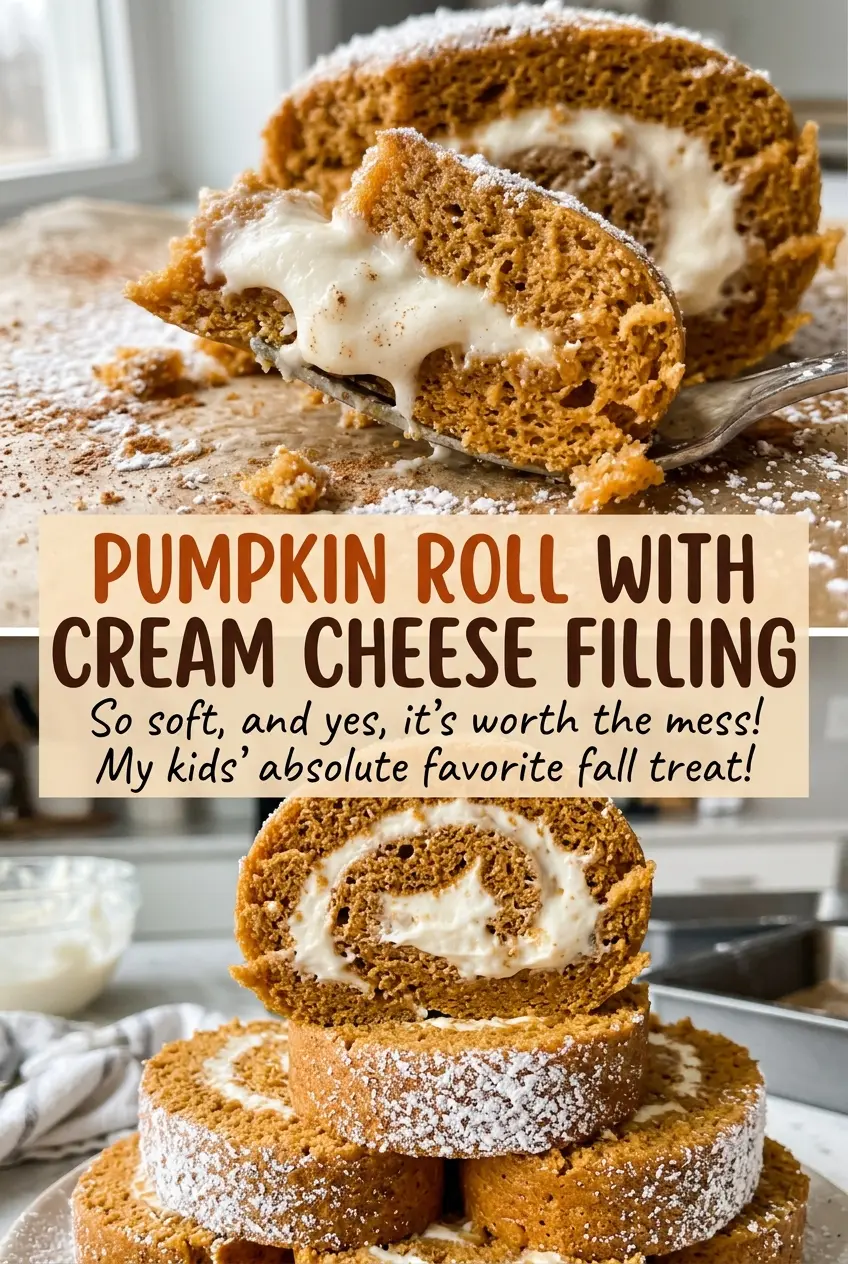
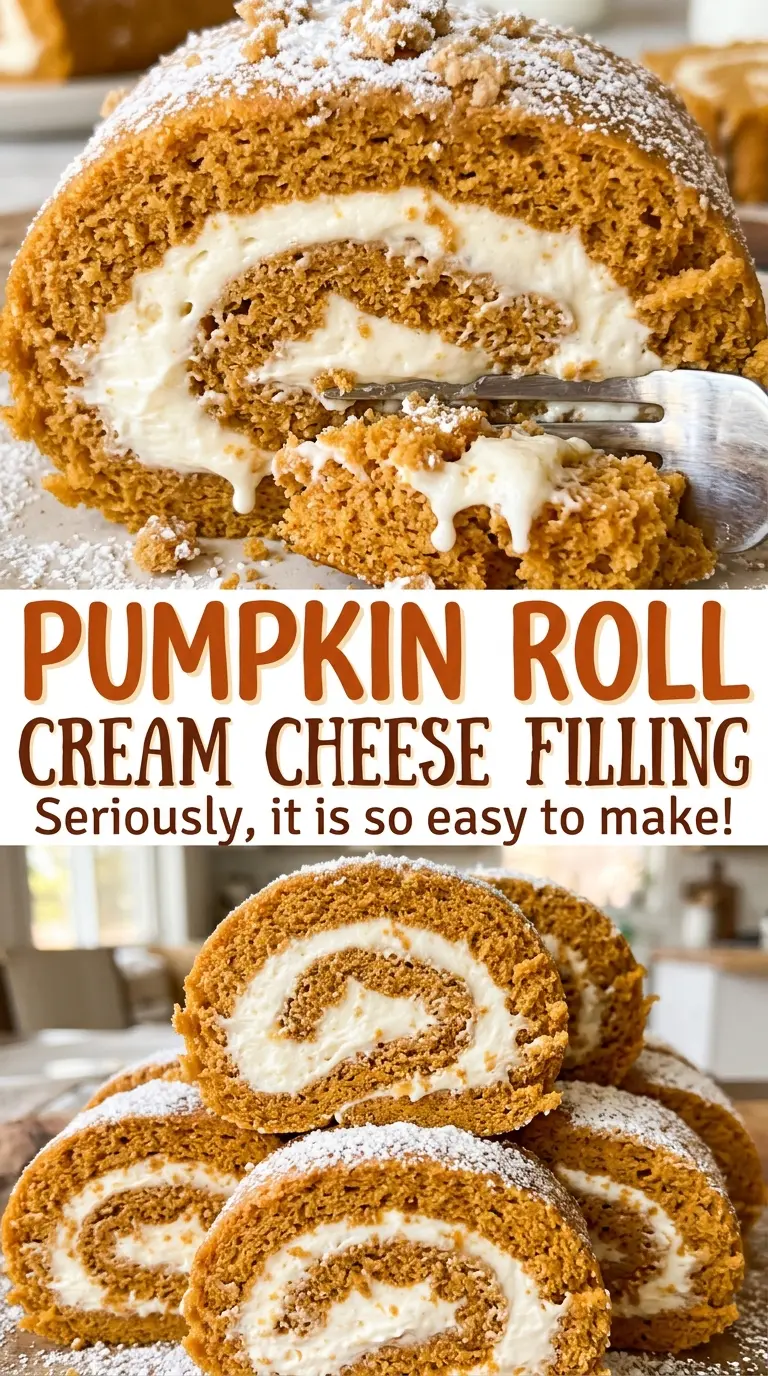
The cake comes out of the oven thin and springy, and it only stays easy to roll for a short window. Let it cool flat and it can split when you try to shape it; roll it while it’s hot with a sugar-dusted towel, and it cools already curved. That’s the move behind this Pumpkin Roll with Cream Cheese Filling: a soft pumpkin sponge wrapped around a smooth, tangy center, with a neat spiral when you slice it.
The cake is lightly spiced, while the cream cheese filling brings a cool, buttery contrast. I keep the filling simple with softened cream cheese, butter, powdered sugar, and vanilla, then chill the finished roll before slicing. The first slice shows off the spiral; the cake stays tender around a creamy stripe that isn’t too sweet.
Kitchen Note
Let the cake cool completely before spreading on the filling. If it’s still warm, the butter and cream cheese soften further and the filling won’t stay as easy to spread.
Save this Pumpkin Roll with Cream Cheese Filling for its tender pumpkin cake and smooth, tangy spiral—then chill it ahead for tidy slices.
Why Beating the Eggs Makes This Pumpkin Roll Flexible
This cake doesn’t rely on a heavy batter to hold its shape. Beating the eggs until thick and pale works air into them, giving the sponge lift and a fine, flexible texture. That matters in a roll cake: a dense or fragile sheet is harder to bend around the filling without cracking. The baking soda helps the batter rise, but it can’t replace the air you build into the eggs.
Once the pumpkin goes in, fold the dry ingredients into the mixture just until the last streaks of flour disappear. Stirring hard or continuing after the batter looks uniform knocks out some of that air and can leave the cake tighter. Spread the batter evenly in the pan, too. A thin area bakes ahead of a thicker one, so an uneven layer makes it harder to get a consistent cake that rolls smoothly from end to end.
Think of the batter as something to keep light rather than something to beat smooth at every stage. The eggs do their best work before the flour is added; after that, a gentle fold is enough.
What Gives the Pumpkin Sponge Its Lift and the Filling Its Creamy Center
- Eggs — They provide the structure and air that help the thin cake rise and bend. Large eggs are the size this batter is balanced for; no special brand is needed.
- Canned pumpkin puree — Plain puree adds pumpkin flavor and moisture without making the batter runny. Check the can carefully: pumpkin pie filling is already sweetened and spiced, so it won’t behave the same way here.
- All-purpose flour and baking soda — All-purpose flour gives the sponge enough structure to hold a spiral, and baking soda supplies lift. Spoon the flour into the measuring cup and level it rather than packing it down; too much flour can make a roll cake dry and more likely to crack.
- Ground cinnamon — Cinnamon gives the cake its warm spice without masking the pumpkin. A fresh jar smells more fragrant, but ordinary ground cinnamon works well in this batter.
- Cream cheese and unsalted butter — Together, they make a smooth filling that firms up when chilled. Softening them before beating helps prevent small lumps; regular cream cheese is a better fit than whipped cream cheese, which has a looser texture.
- Powdered sugar and vanilla extract — Powdered sugar sweetens the filling and is also used on the towel to help keep the cake from sticking as you roll it. Vanilla rounds out the cream cheese; a standard extract is all you need.
From a Thin Pumpkin Sponge to a Clean Cream Cheese Spiral
Beat the eggs, then fold in the dry ingredients
Heat the oven to 375°F, then grease a 10×15-inch jelly-roll pan, line it with parchment, and grease the parchment. Beat the eggs on high speed for 5 minutes, until thick and pale, then gradually beat in the granulated sugar and mix in the pumpkin puree. Whisk together the flour, baking soda, cinnamon, and salt in a separate bowl. Fold that mixture into the pumpkin batter only until no dry streaks remain; a few extra turns can make the finished sponge less tender.
Spread the batter evenly and bake until springy
Scrape the batter into the prepared pan and spread it into an even layer, reaching the corners without pressing it down. Bake for 13–15 minutes, checking for a cake that springs back when lightly touched. If the center stays indented, give it a little more time within that window rather than relying on color alone. The cake should be set but still soft enough to roll.
Roll the cake while it’s hot
While the cake bakes, lay out a clean kitchen towel and dust it with 1/4 cup powdered sugar. Invert the hot cake onto the towel and peel away the parchment. Starting at a short end, roll the cake and towel together, then set the roll seam-side down. Work while the cake is hot and pliable; waiting until it cools makes it much more prone to cracking.
Fill, reroll, and chill before slicing
Beat the softened cream cheese and butter in a medium bowl until smooth. Add the remaining 1 cup powdered sugar and the vanilla, then beat until creamy. Carefully unroll the completely cooled cake, spread the filling evenly over it, and roll it back up without the towel. Wrap the roll tightly in plastic wrap and refrigerate for at least 1 hour before slicing and serving.
Three Small Changes for a Pumpkin Roll That Fits Your Table
Make the sponge gluten-free
Replace the all-purpose flour with the same amount of a cup-for-cup gluten-free baking blend that contains xanthan gum. The cake may have a slightly different crumb, but the blend gives it structure without changing the pumpkin-and-cinnamon flavor.
Turn up the cinnamon
Use 1 1/2 teaspoons ground cinnamon in the cake instead of 1 teaspoon. It gives the sponge a more pronounced spice note while keeping the cream cheese filling’s flavor clear.
Make the filling less sweet
Use 3/4 cup powdered sugar in the filling rather than 1 cup, keeping the separate 1/4 cup for dusting the towel. The cream cheese flavor comes through more clearly, and the filling will be a little softer, so give the finished roll its full chill before slicing.
Storage and Reheating
- Refrigerator: Keep the tightly wrapped roll refrigerated for up to 4 days. The cake gradually dries out, so it’s at its best sooner.
- Freezer: It freezes well. Wrap the whole roll tightly in plastic wrap, add a layer of foil, and freeze for up to 1 month for best texture. Thaw it overnight in the refrigerator before slicing.
- Reheating: Don’t reheat this cream cheese-filled cake; serve it chilled. Warming it softens the filling and makes the spiral harder to cut neatly.
Questions That Come Up When Rolling Pumpkin Cake
Pumpkin Roll with Cream Cheese Filling
Ingredients
Equipment
Method
- Preheat the oven to 375°F.
- Grease a 10x15-inch jelly-roll pan.
- Line the pan with parchment paper and grease the parchment.
- In a large bowl, beat the eggs with an electric mixer on high speed for 5 minutes, until thick and pale.
- Gradually beat in the granulated sugar.
- Mix in the pumpkin puree.
- In a medium bowl, whisk together the flour, baking soda, cinnamon, and salt.
- Fold the dry ingredients into the pumpkin mixture just until no dry streaks remain.
- Spread the batter evenly in the prepared pan.
- Bake for 13–15 minutes, until the cake springs back when lightly touched.
- While the cake bakes, lay a clean kitchen towel on the counter and dust it with 1/4 cup powdered sugar.
- Invert the hot cake onto the towel and peel off the parchment.
- Roll the cake and towel together from a short end.
- Set it seam-side down and cool completely.
- Beat the cream cheese and butter in a medium bowl until smooth.
- Beat in the remaining 1 cup powdered sugar and the vanilla until creamy.
- Carefully unroll the cooled cake.
- Spread the filling evenly over the cake.
- Reroll the cake without the towel.
- Wrap the roll tightly in plastic wrap.
- Refrigerate for at least 1 hour before slicing and serving.