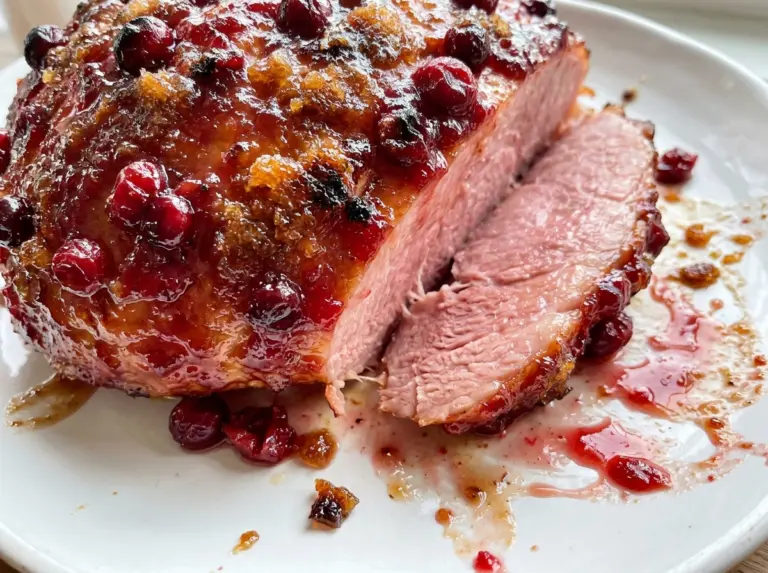
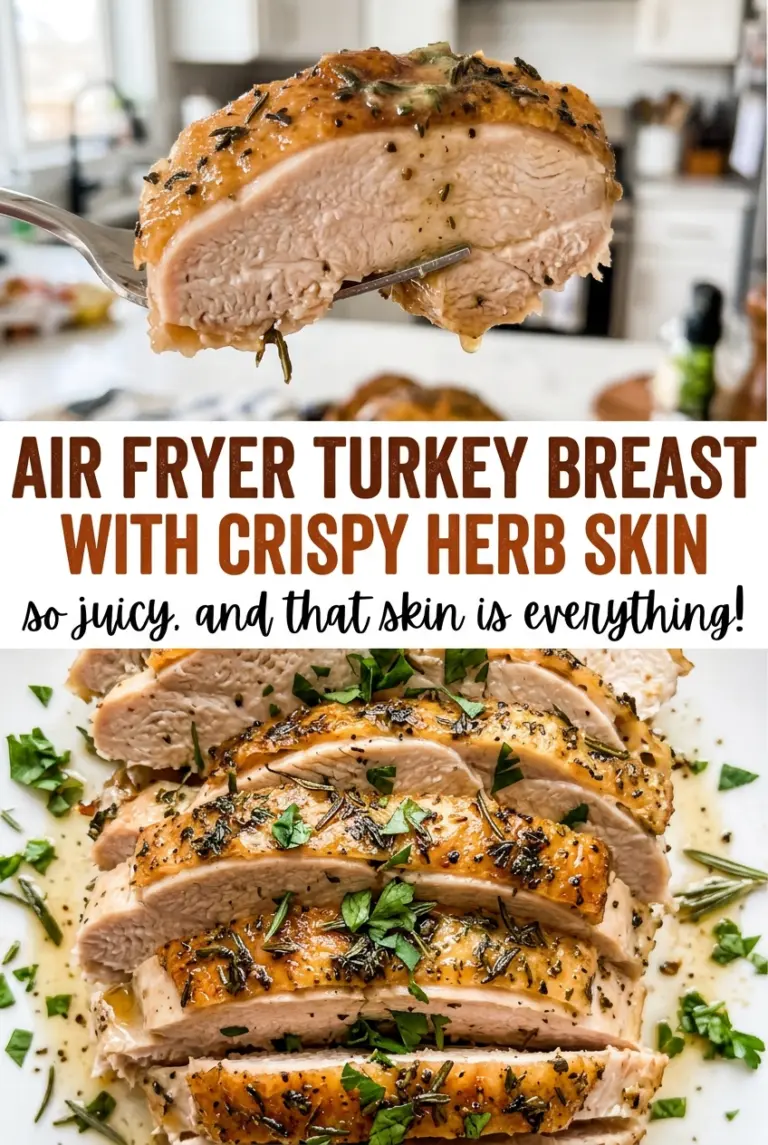
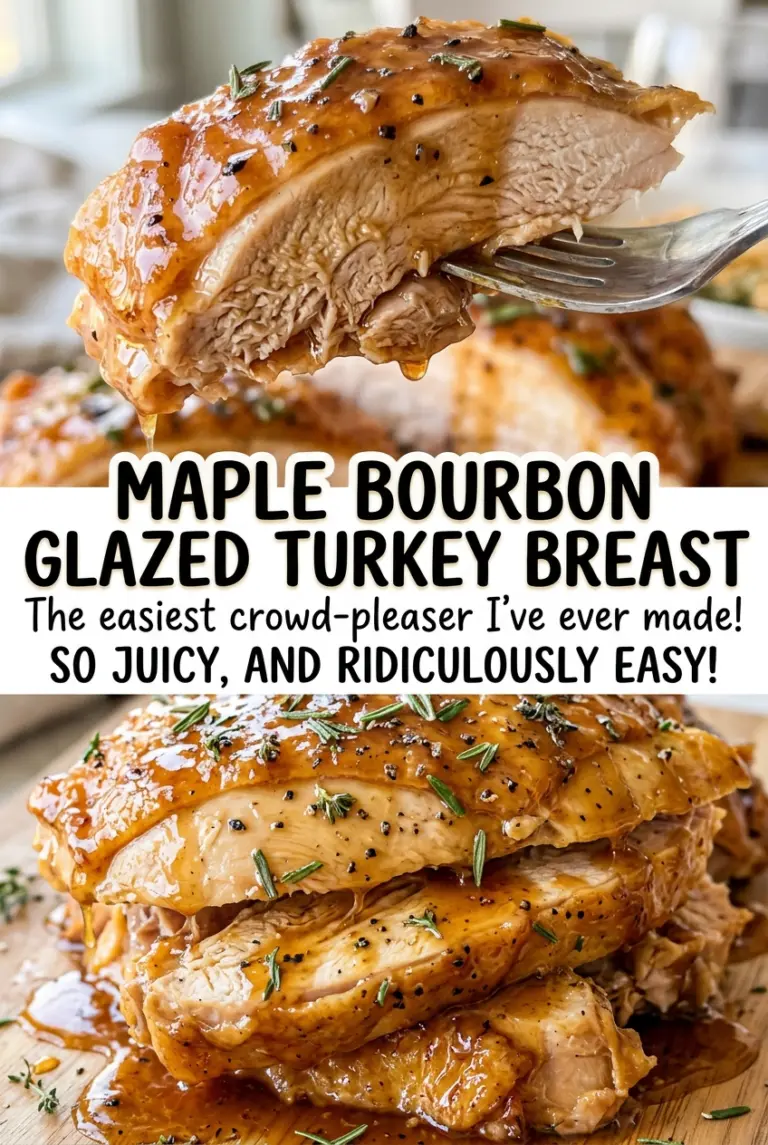
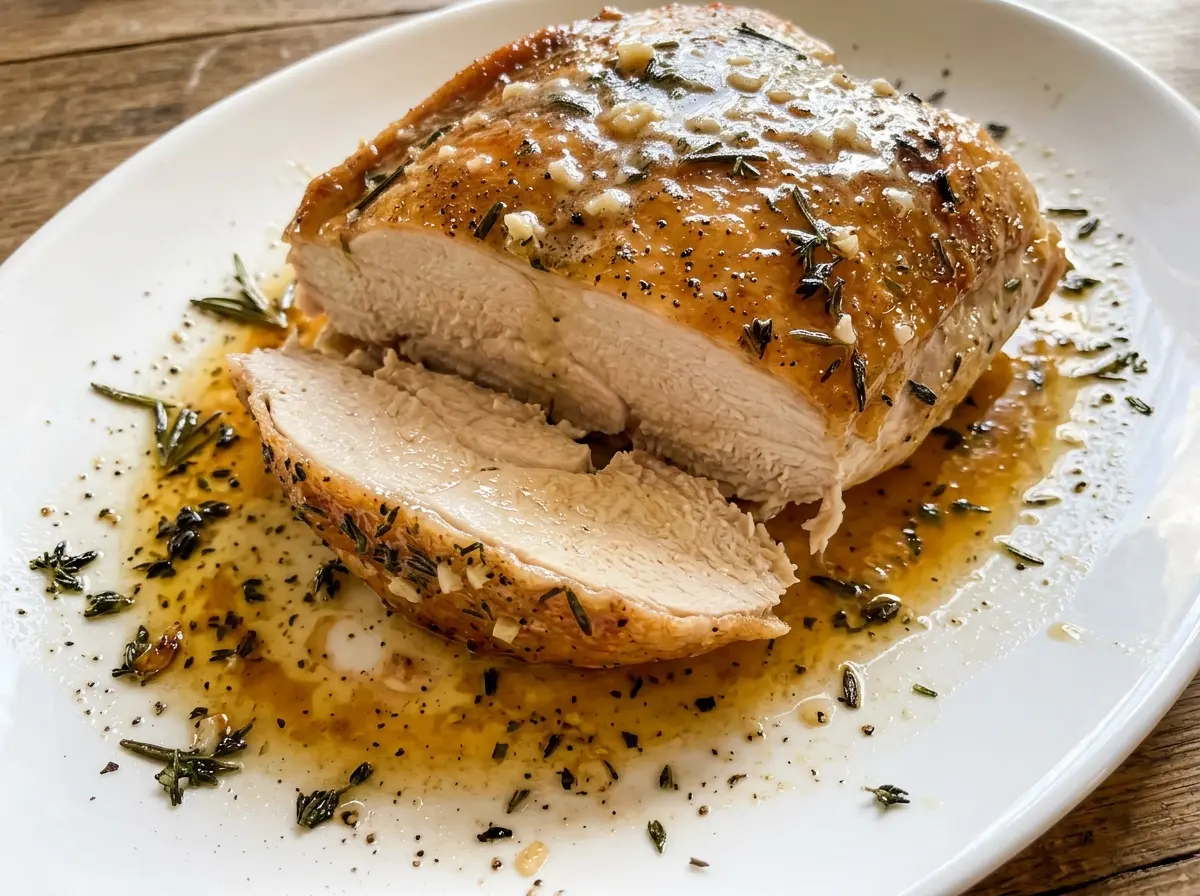
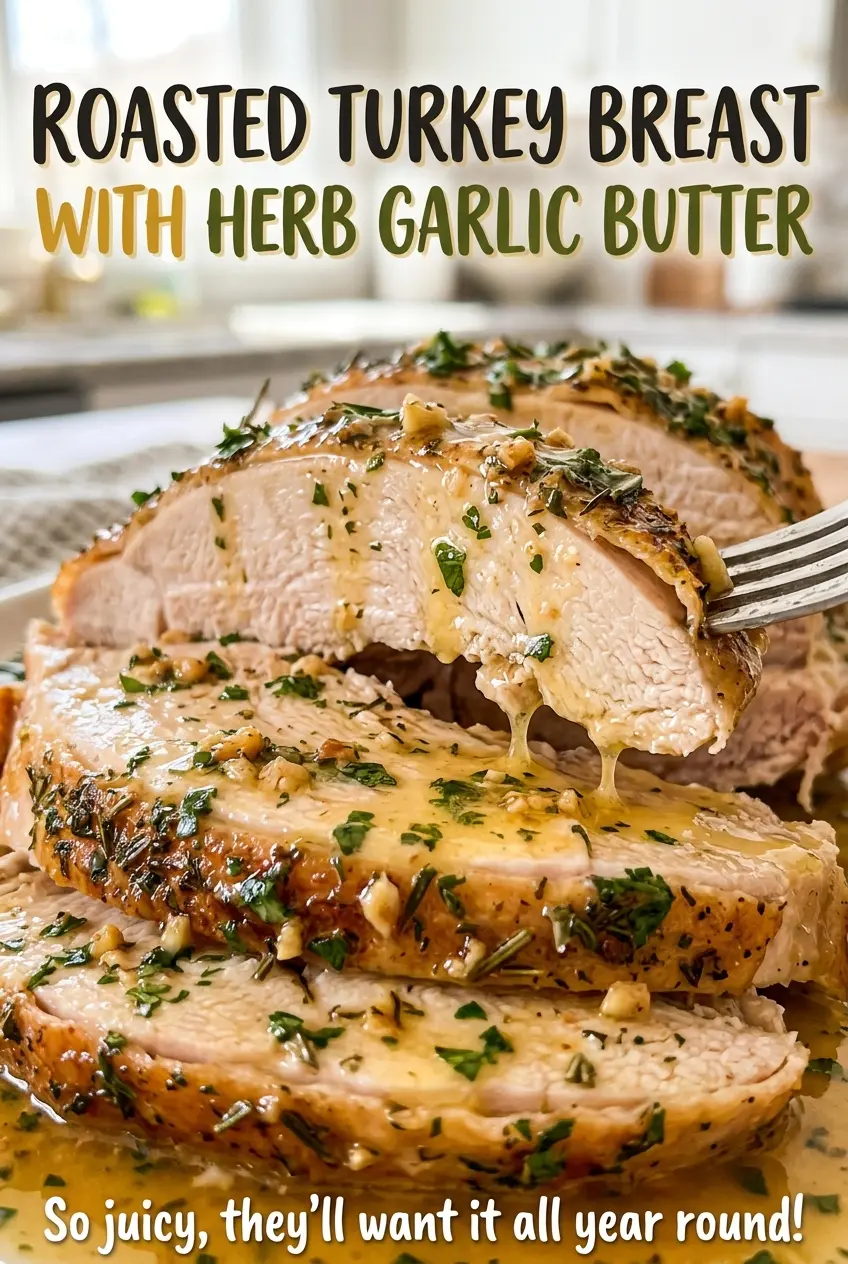
The skin is the part I watch first: it should turn golden as the turkey roasts, while the garlic and herbs tucked underneath scent the meat rather than just the surface. I used to spread all the butter on top, and the slices tasted less seasoned than I wanted. Splitting it between the skin and the meat fixed that. This roasted turkey breast with herb garlic butter gives you a centerpiece for six without the footprint of a whole bird.
Bone-in, skin-on turkey breast brings plenty of flavor, but it needs a thermometer rather than guesswork. The breast can vary in size, and the roasting window is wide for a reason. I keep the oven at 350°F and start checking the thickest part before the end of that window; the reading, not the clock, tells me when to pull it. After a 20-minute rest, the slices are easier to carve and the garlic-herb butter has had time to settle into the meat. The result is tender turkey with fragrant herbs in every slice.
Kitchen Note
Loosen the skin slowly with your fingers; if you pull hard, it can tear before the butter gets underneath. Work a little at a time, and stop if you meet resistance rather than forcing it.
Save this herb garlic turkey breast for a smaller holiday table or a Sunday roast, with the fresh herbs tucked right under the skin.
The Herb Butter Needs to Reach the Meat, Not Just the Skin
A thick layer of flavored butter on the outside sounds like enough, but the skin separates that butter from the breast meat. Spreading half underneath gives the garlic, parsley, thyme, and rosemary direct contact with the turkey. The remaining butter stays on top, where it coats the skin as the breast roasts. Each portion has a job, and neither half is wasted.
The bone-in, skin-on cut helps this method make sense. The skin gives you a surface for the outside butter, and the bone stays in place during roasting; this isn’t a boneless breast with a different shape and timing. Patting the turkey dry before seasoning also matters because a wet surface makes it harder to spread butter evenly. The butter should be distributed over the breast rather than sitting in one thick clump. Take a moment to cover the surface, and the finished slices will have a more even mix of savory turkey and herbs.
That’s also why I don’t skip the thermometer. A golden exterior can’t tell you whether the thickest part is ready. Checking the meat itself gives you a reliable endpoint without asking you to roast past it just to be sure.
Fresh Herbs and Softened Butter Make the Rub Easy to Spread
- Bone-in, skin-on turkey breast — This cut is central to the method: the skin holds the outside butter, while the bone-in breast needs its own thermometer check. Buy it fully thawed so the roasting time and temperature check are meaningful.
- Unsalted butter — Softened butter blends with the minced garlic and herbs and spreads without running off. Choose butter you enjoy the taste of; there’s no need for a premium brand. For a dairy-free version, see the variation below.
- Fresh parsley, thyme, and rosemary — Fresh herbs give the butter a bright, leafy aroma and mix into it easily. Parsley brings a mild green note, while thyme and rosemary are more assertive. Use fresh leaves as listed; dried herbs have a different texture and intensity, so they aren’t a direct swap here.
- Garlic, kosher salt, and black pepper — Minced garlic disperses through the butter, while salt and pepper season the turkey itself. Mince the garlic finely so you don’t end up with large pieces in a thin patch of butter.
How to Get the Herb Butter Under the Skin and Roast the Breast Evenly
Dry the turkey and season it all over
Heat the oven to 350°F and set a rack in a 9×13-inch roasting pan. Pat the fully thawed turkey breast dry with paper towels, then season it all over with kosher salt and black pepper. Take care to cover the outside rather than leaving an unseasoned side against the pan. A dry surface also makes the next step less slippery.
Stir together the garlic and herbs
In a small bowl, stir the softened butter with the minced garlic, chopped parsley, thyme leaves, and finely chopped rosemary. Keep stirring until the herbs and garlic are spread throughout instead of gathered in one spot. If the mixture has a streaky appearance, scrape the sides and bottom of the bowl and stir again. You want a consistent herb butter that can be divided between the meat and the skin.
Divide the butter between skin and surface
Gently loosen the skin over the breast without tearing it. Spread half the herb garlic butter under the skin, then spread the remaining half over the skin. Use your fingers to guide the butter across the breast rather than pushing it all toward one end. A few small smears are easier to distribute than one large lump.
Roast to temperature, then let the meat rest
Set the breast on the rack skin-side up and roast for 1 1/2 to 2 1/4 hours. The exact point within that window depends on the size of the breast, so check the thickest part with a thermometer and keep the probe from touching bone. When it reads 165°F, transfer the turkey to a cutting board and loosely tent it with foil. Rest it for 20 minutes before carving; cutting sooner sends more of the juices onto the board.
Two Ways to Adapt the Herb Butter
Dairy-Free Herb Garlic Butter
Replace the unsalted butter with an equal amount of unsalted, stick-style dairy-free butter. It will still carry the garlic and herbs under and over the skin, though the turkey may have a slightly different buttery taste and browning. Pick a product that softens enough to spread rather than a soft tub spread.
A Milder Herb Butter Without Rosemary
Leave out the rosemary and keep the parsley and thyme. The butter will taste gentler and less piney, while still carrying the garlic and fresh herbs through the turkey. This is a useful adjustment if rosemary tends to overpower the other flavors for you.
Storage and Reheating
- Refrigerator: Store carved turkey in an airtight container for 3 to 4 days. The skin softens in the refrigerator, and the meat may feel firmer when cold.
- Freezer: Freeze carved slices in an airtight freezer container for up to 2 to 3 months for best quality. Thaw them in the refrigerator before reheating.
- Reheating: Place slices in a covered baking dish and warm in a 325°F oven until hot throughout. Keep the dish covered; uncovered slices dry out before the middle warms.
Questions That Come Up When Roasting a Turkey Breast
Roasted Turkey Breast with Herb Garlic Butter
Ingredients
Equipment
Method
- Heat the oven to 350°F.
- Set a rack in a 9x13-inch roasting pan.
- Pat the turkey breast dry with paper towels.
- Season the turkey breast all over with the kosher salt and black pepper.
- Stir together the softened unsalted butter, minced garlic, chopped fresh parsley, fresh thyme leaves, and finely chopped fresh rosemary in a small bowl.
- Gently loosen the skin over the breast without tearing it.
- Spread half the herb garlic butter under the skin and the remaining butter over the skin.
- Set the turkey breast on the rack skin-side up and roast for 1 1/2 to 2 1/4 hours, until a thermometer inserted in the thickest part without touching bone reads 165°F.
- Transfer the turkey to a cutting board and loosely tent it with foil.
- Rest for 20 minutes before carving.