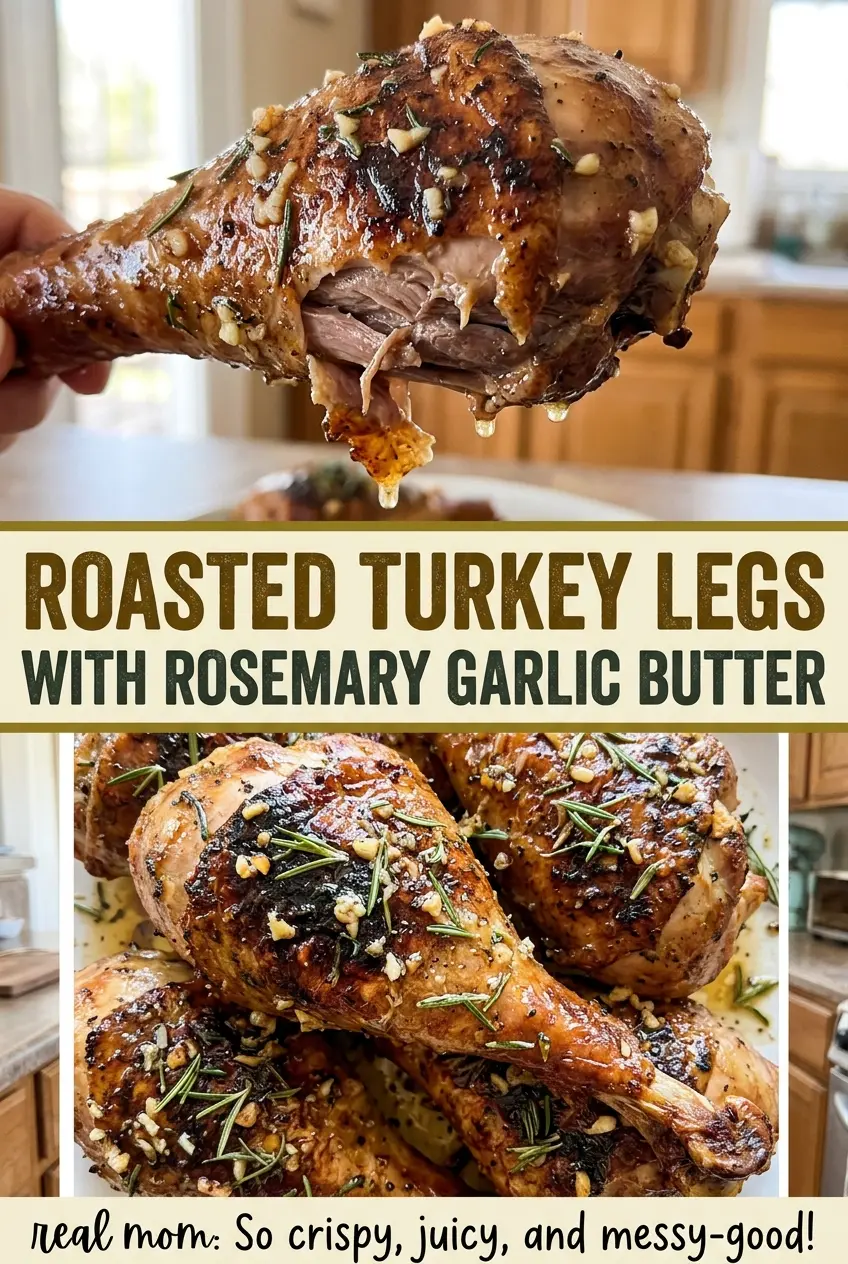
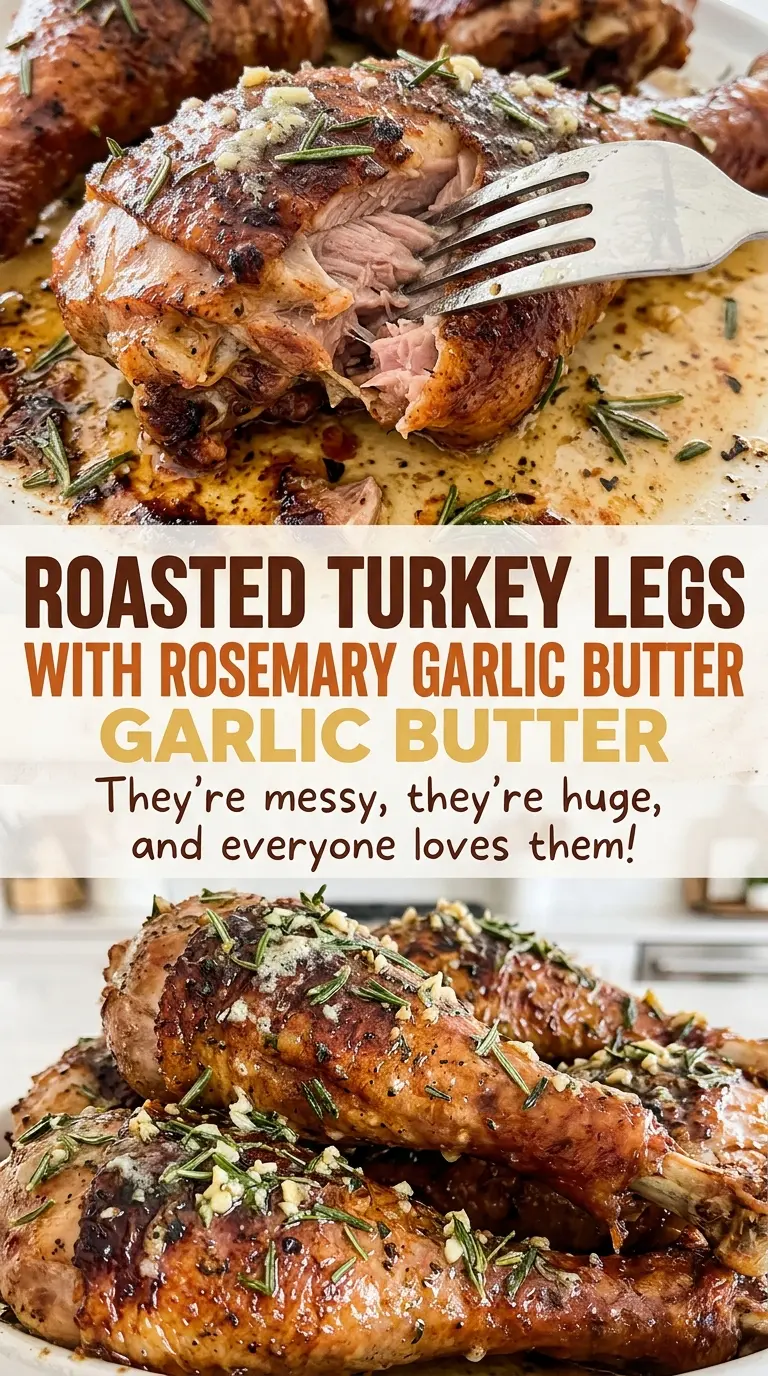
The butter can look a little awkward on cold turkey legs: it catches on the skin instead of flowing like oil. Once I spread the rosemary garlic mixture over the surface, these roasted turkey legs go into the pan with a coating that stays put through the long roast. The garlic and fresh rosemary scent the butter as the skin turns golden, and the legs come out with plenty of savory flavor.
Softened butter makes this a hands-on rub, not a pour-over sauce. I mix it with the seasonings, work it over the legs, and roast them in a single layer so the heat can circulate around each one. The legs are substantial enough to make a satisfying centerpiece, but the method itself is straightforward: coat, roast, check the thickest part, and give them a short rest before serving.
Kitchen Note
Finely chop the rosemary until there aren’t long needles left in the bowl. Smaller pieces spread through the butter more evenly, so you get rosemary in each bite instead of a clump in one spot.
Save these rosemary garlic butter turkey legs for a roast dinner with golden skin and plenty of savory herb flavor.
Why Golden Skin Doesn’t Mean the Turkey Legs Are Done
Turkey legs don’t cook like a thin cutlet. They’re thick around the joint, and the bone makes the thickest section harder to judge by eye. Meanwhile, the skin is exposed to the oven’s heat and can turn golden before the meat at the center has reached its target temperature. That difference is normal, not a sign that you’ve done something wrong.
Use the skin as a color cue, not a doneness test. When the skin is browning faster than you want, tent the pan loosely with foil and let the meat keep roasting. Then check the thickest part of each leg with a thermometer, angling the probe into the meat without touching bone. Bone can give you a misleading reading, and checking only the most accessible spot may miss the slowest-cooking section.
The legs can vary a bit in shape even when they’re close in size, so check more than one if you’re unsure. The target reading gives you a dependable finish point; golden skin alone doesn’t. That small distinction is what keeps you from pulling the pan early just because it looks ready.
What the Rosemary Garlic Butter Is Doing for the Turkey
- Turkey legs — Choose legs in the same general size range so they cook at a similar pace. The skin helps hold the butter mixture in place as the legs roast; there’s no need to trim it away.
- Unsalted butter — Softened butter is easy to rub over the surface and gives the seasonings something to cling to. A standard grocery-store butter works well here; unsalted butter also lets you control the salt. If salted butter is what you have, leave out the kosher salt rather than stacking both sources of salt.
- Fresh rosemary — Its piney, savory aroma is the defining herb in this rub. Fresh leaves chop and disperse through the butter more pleasantly than tough, dried needles, so I stick with fresh for this version.
- Garlic — Freshly minced cloves give the butter a direct, savory garlic flavor. Mince them finely enough that they’re spread through the rub, rather than leaving large pieces that can collect on one area of skin.
- Kosher salt and black pepper — The salt seasons the thick meat as it roasts, while pepper adds a gentle bite around the herb and garlic. Kosher salt is easy to distribute through the butter; if your salt has unusually large crystals, mix thoroughly so they don’t stay at the bottom of the bowl.
From Herb Butter to Tender Roasted Legs
Mix the Butter Until the Seasonings Are Evenly Dispersed
Put the softened butter in a small bowl with the minced garlic, finely chopped rosemary, kosher salt, and black pepper. Mix until the garlic and herbs are spread throughout, scraping the sides and bottom of the bowl as you go. If the mixture looks streaky, keep stirring until each spoonful has visible flecks of rosemary and garlic. The butter should be soft enough to spread, not melted.
Coat the Legs and Arrange Them in One Layer
Rub the butter mixture evenly over the turkey legs, covering the skin rather than leaving thick patches in the bowl. Set the legs in a single layer in a 16×12-inch roasting pan. Give each leg a little room instead of piling or overlapping them; a crowded pan makes it harder for the heat to reach the surface evenly. If butter sticks to your fingers as you work, press it onto the skin rather than trying to wipe it off.
Roast Until the Thickest Meat Reaches 175°F
Roast at 375°F for 1 1/2 to 2 hours. Look for golden skin, but use a thermometer in the thickest part of the meat without touching bone to check the finish. If the skin gets too dark before the meat is ready, tent the pan loosely with foil and continue roasting. Once the legs reach 175°F, take the pan out and let them rest for 15 minutes before serving; the rest gives the juices time to settle.
Small Changes That Keep the Turkey Legs in Your Style
A Lower-Sodium Herb Butter
For a lower-sodium version, leave the kosher salt out of the butter and keep the other ingredients. The rosemary, garlic, and pepper still season the skin, though the meat will taste less fully seasoned than the original.
A More Pronounced Rosemary Bite
For bigger herb flecks, chop the fresh rosemary more coarsely before mixing it into the butter. The rosemary stands out more against the turkey, though the coating won’t look as evenly speckled as it does with finely chopped leaves.
A Garlic-Free Roast
Leave out the garlic if you want the rosemary to lead. Mix the butter with the rosemary, salt, and pepper as usual; the finished legs will have a cleaner herb flavor and less of the savory edge that garlic brings.
Storage and Reheating
- Refrigerator: Refrigerate leftovers within 2 hours and use them within 3 to 4 days. The skin will soften after chilling, but the meat stays flavorful.
- Freezer: Freeze the cooked legs, wrapped tightly or sealed in an airtight container, for 2 to 6 months for best quality. Thaw them in the refrigerator before reheating.
- Reheating: Warm covered in the oven until the meat reaches 165°F, uncovering briefly at the end if you want to dry the skin a little. Don’t reheat uncovered for the whole time; the meat can dry out before it warms through.
Questions That Come Up Before the Pan Goes in the Oven
Roasted Turkey Legs with Rosemary Garlic Butter
Ingredients
Equipment
Method
- Preheat the oven to 375°F.
- In a small bowl, mix the softened unsalted butter, minced garlic, finely chopped fresh rosemary, kosher salt, and black pepper.
- Rub the butter mixture evenly over the turkey legs.
- Arrange the legs in a single layer in a 16x12-inch roasting pan.
- Roast for 1 1/2 to 2 hours, until the skin is golden and a thermometer inserted into the thickest part without touching bone reads 175°F.
- Tent loosely with foil if the skin browns too quickly.
- Rest the turkey legs for 15 minutes before serving.