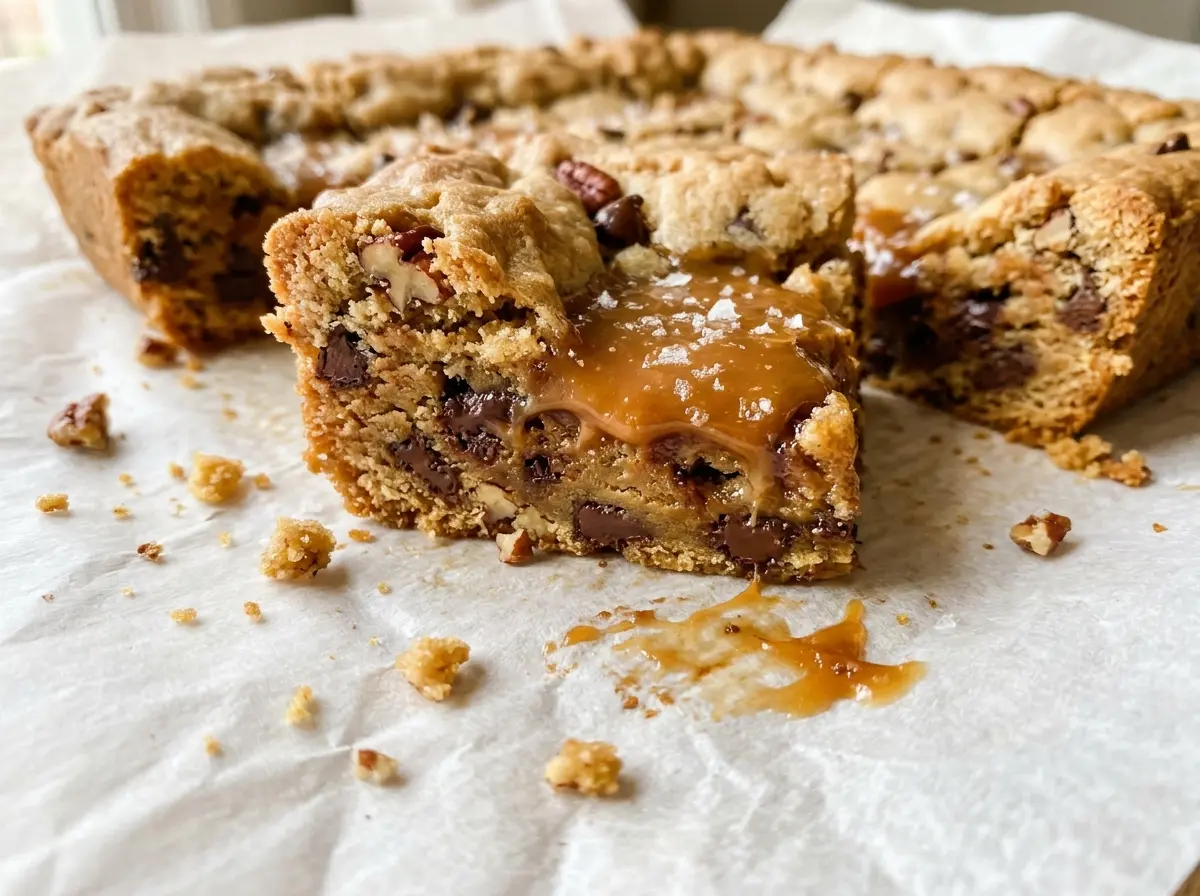
The caramel is the part that can make a cookie bar feel either neatly layered or impossible to cut. I learned to let the cookie base bake until its edges are just set before adding anything on top; it gives the soft caramel a sturdy place to land. These salted caramel pecan chocolate chip cookie bars have a chewy cookie bottom, a generous middle layer, and a second blanket of chocolate-chip dough that turns golden in the oven.
I keep the dough simple and let the layers do the work. Soft caramels melt with a little heavy cream, then chopped pecans go right over the warm caramel so they stay tucked into each slice. Flaky sea salt goes on after baking, while the bars are still hot, so you get little salty sparks against the sweet caramel and semisweet chocolate. Once they’ve cooled, the parchment overhang makes it easy to lift out the whole slab and cut tidy bars.
Kitchen Note
Keep the caramels and cream over low heat, stirring often, until the mixture is completely smooth. Turning up the heat to hurry it can scorch the caramel before the last pieces have melted.
Save these salted caramel pecan chocolate chip cookie bars for a bake sale or a make-ahead treat, with chewy cookie layers and a salty caramel center.
Why the Cookie Base Needs a Head Start Before the Caramel Goes On
Putting all the dough in the pan at once seems simpler, but the caramel needs a baked surface beneath it. The first short bake sets the bottom layer enough to support the caramel and pecans, while the cookie edges remain tender rather than fully browned. Then the remaining dough bakes on top and finishes at the same time as the whole bar.
That order also helps keep the layers distinct. The dough on the bottom is pressed into an even layer, not left in thick patches, so the caramel doesn’t pool into low spots. On top, small spoonfuls of dough leave some caramel and pecans visible as the bars bake. Don’t spread that last portion into a continuous sheet; the little gaps are part of how the layers come together without hiding the center.
Think of the first bake as setting the foundation, not cooking the cookie all the way through. The edges should just be set when the pan comes out. The second bake gives the topping time to turn golden and lets the center finish baking around the caramel layer.
What the Cookie Dough, Caramel, and Two Salts Each Bring

- All-purpose flour and baking soda — Flour gives the dough enough structure to hold the caramel, while baking soda helps the cookie layers bake up with a tender, lightly browned edge. Spoon the flour into your measuring cup and level it rather than packing it down; too much flour can make the base dry and harder to press evenly.
- Softened unsalted butter and the sugars — Softened butter beats smoothly with the packed light brown sugar and granulated sugar, and the brown sugar contributes a moist, chewy texture. The butter should give slightly when pressed but shouldn’t look melted or greasy. Unsalted butter keeps the salt level under your control, especially with flaky salt going on at the end.
- Semisweet chocolate chips — Their bittersweet edge keeps the cookie layers from tasting as sweet as the caramel center. Fold them in after the flour mixture is combined so they stay distributed through the dough instead of gathering at the bottom of the bowl.
- Soft caramels and heavy cream — The soft caramels melt into a thick, smooth layer, and the cream helps them loosen enough to spread over the cookie base. A pourable caramel sauce isn’t a direct replacement here; this layer needs the body of melted soft caramels to sit between the cookie layers.
- Chopped pecans and the two salts — Chopped pecans scatter evenly over the caramel and are easier to cut through than whole nuts. Kosher salt seasons the dough, while flaky sea salt stays on the surface and gives each bite a crisp, distinct salty finish. Keep those two salts in their separate roles.
Building the Layers Without Overbaking the Cookie Base
Mix a Soft, Evenly Studded Dough
Heat the oven to 350°F, grease a 9×13-inch baking pan, then line it with parchment, leaving an overhang on the two long sides. Whisk the flour, baking soda, and kosher salt in a medium bowl. In a large bowl, beat the softened butter with both sugars until creamy, then beat in the eggs and vanilla. Mix in the flour mixture just until combined and fold in the chocolate chips; stop once you no longer see dry flour.
Give the Bottom Layer Its Short Bake
Press about two-thirds of the dough evenly into the prepared pan. An even layer matters more than a perfectly smooth surface; check the corners so you don’t leave a thick mound of dough in one spot. Bake for 12 to 14 minutes, until the edges are just set. The center won’t look like a fully baked cookie yet, and that’s right at this point.
Spread the Caramel While the Base Is Warm
While the base bakes, heat the unwrapped soft caramels and heavy cream in a 2-quart saucepan over low heat, stirring often until smooth. Pour the caramel over the warm cookie base and spread it evenly. Scatter the chopped pecans over the caramel, aiming for coverage across the pan rather than a pile in the middle. Drop the remaining dough in small spoonfuls evenly over the top instead of pressing it into a solid layer.
Bake Until Golden, Then Let the Center Set
Bake for 20 to 24 minutes, until the cookie topping is golden brown and set. The topping should look baked rather than wet where the spoonfuls meet, though caramel will remain soft underneath. Sprinkle the flaky sea salt over the hot bars. Cool completely in the pan, about 2 hours, then use the parchment overhang to lift the slab out before cutting.
Two Ways to Cut These Bars for the Occasion
Petite squares for a dessert tray
Cut the cooled slab into smaller squares when you want a little piece with coffee or a mix of desserts. You’ll get more portions from the same pan, with the caramel and pecans still showing in each cut. The tradeoff is that the smaller pieces are a little more delicate to pick up.
Longer bars for a bakery-style look
Cut the slab into longer rectangles for a more substantial cookie-bar shape. The larger pieces show off the cookie layers, pecans, and caramel in a single cross-section, but they’re richer to serve. Either cut works best after the bars have cooled fully so the center has time to settle.
Storage and Reheating
- Refrigerator: Store the bars in an airtight container for up to 5 days. Chilling firms the caramel and cookie layers, so let a portion sit at room temperature briefly before serving if you prefer a softer bite.
- Freezer: Freeze the cooled, cut bars in a sealed container with parchment between layers for up to 2 months. Thaw them in the refrigerator or at room temperature while still covered to limit condensation.
- Reheating: For a warm bar, microwave one piece briefly, in short 5-second bursts. Stop as soon as it’s warm; heating too long can make the caramel scorching hot before the cookie has warmed through.
Questions That Come Up When Making These Cookie Bars
Salted Caramel Pecan Chocolate Chip Cookie Bars
Ingredients
Equipment
Method
- Heat the oven to 350°F.
- Grease a 9x13-inch baking pan, then line it with parchment paper, leaving an overhang on the two long sides.
- Whisk the flour, baking soda, and kosher salt together in a medium bowl.
- Beat the butter, brown sugar, and granulated sugar in a large bowl until creamy.
- Beat in the eggs and vanilla.
- Mix in the flour mixture just until combined.
- Fold in the chocolate chips.
- Press about two-thirds of the dough evenly into the prepared pan.
- Bake for 12 to 14 minutes, until the edges are just set.
- While the base bakes, heat the caramels and heavy cream in a 2-quart saucepan over low heat, stirring often, until smooth.
- Pour the caramel over the warm cookie base and spread it evenly.
- Scatter the pecans over the caramel.
- Drop the remaining cookie dough in small spoonfuls evenly over the top.
- Bake for 20 to 24 minutes, until the cookie topping is golden brown and set.
- Sprinkle the flaky sea salt over the hot bars.
- Cool completely in the pan, about 2 hours.
- Lift the bars out with the parchment and cut into bars.