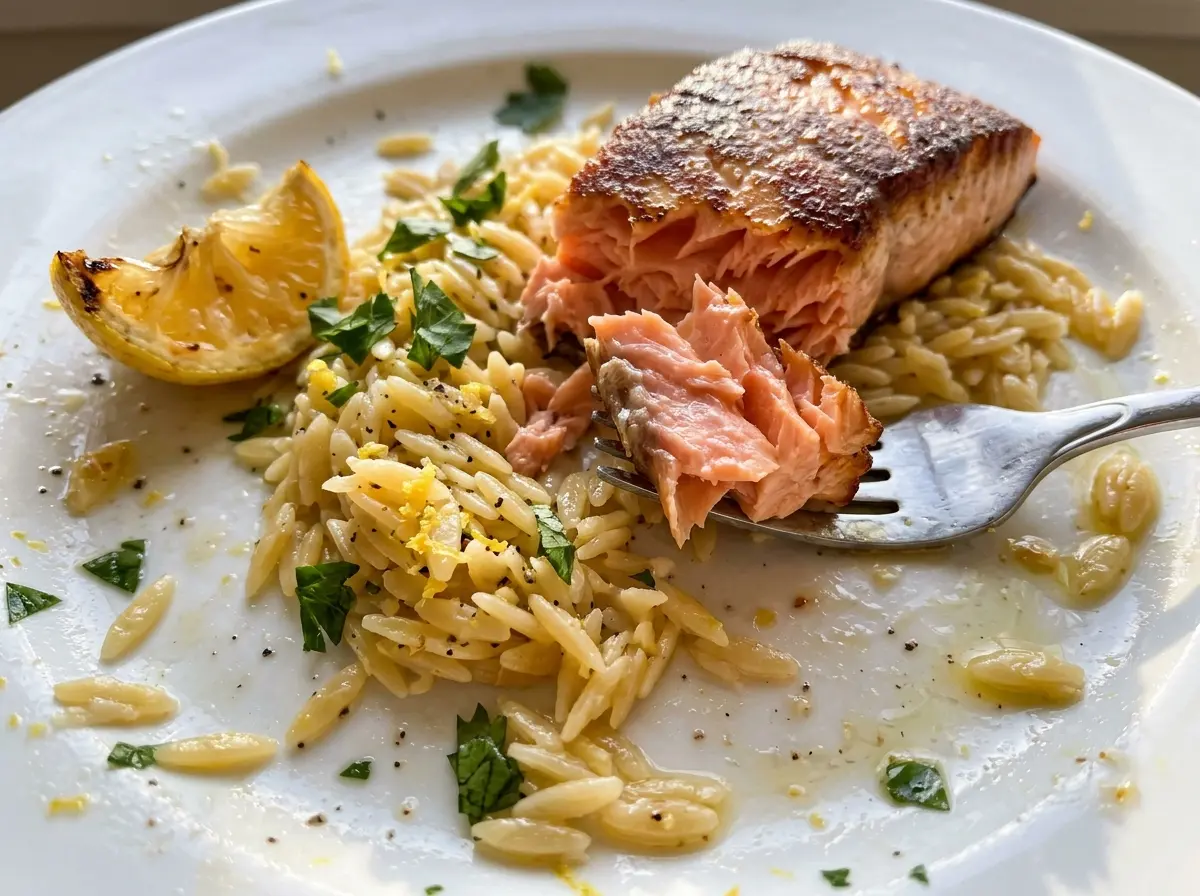
The salmon gives a quick hiss when it meets the hot skillet, and that sound is your cue to leave it alone. Moving it too soon can tear the skin before it has time to crisp. I cook the orzo first, then sear the fish while the pasta stays covered and warm; the two come together as Seared Salmon with Lemon Orzo, a bright, satisfying dinner that doesn’t need a separate sauce.
The orzo gets its flavor after it’s drained: butter, lemon zest and juice, parsley, and finely grated Parmesan coat the little pasta pieces without making them heavy. Meanwhile, the salmon’s skin gets a full stretch of uninterrupted heat before the fillets are flipped. That contrast is what I want on the plate—crisp-edged fish beside tender, lemony orzo.
Kitchen Note
Finely grated Parmesan blends through the hot orzo much more evenly than coarse shreds. Stir it in with the butter and lemon while the pasta is still warm, so you get a light coating rather than little clumps of cheese.
Save Seared Salmon with Lemon Orzo for a dinner with crisp-skinned fish and bright, buttery pasta.
Why This Lemon Orzo Is Coated, Not Saucy
This orzo isn’t cooked like risotto, where the cooking liquid stays in the pan and gets stirred into a creamy finish. Here, the pasta cooks uncovered in salted water, then gets drained before the butter, lemon, parsley, and Parmesan go in. That gives the finished dish a distinct texture: each piece is tender and lightly coated, rather than swimming in a pool of liquid.
Draining well matters because extra water thins out the butter and lemon and makes the Parmesan less able to cling to the pasta. The finished orzo should look glossy, not soupy. It’s also why I don’t add the cheese while the pasta is still sitting in its cooking water. Once the orzo is drained, the warm pasta helps the butter melt and carries the lemon and cheese through every bite.
There’s a useful balance in the seasoning, too. The water is salted before the orzo goes in, while the salmon gets its own measured seasoning on both sides. That keeps the pasta and fish flavorful on their own, so neither has to do all the work for the plate.
What Lemon, Parsley, and Parmesan Bring to the Orzo

- Dry orzo — Use regular dry orzo rather than a fresh pasta; the short boil in salted water is designed for it. The brand doesn’t need to be fancy, but check it as it cooks so it stays al dente. There isn’t a direct rice substitute for this same timing and draining method.
- Fresh lemon — The zest contributes fragrant lemon oils, while the juice brings the sharper acidity that cuts through butter and cheese. A fresh lemon matters here because juice alone can’t replace the aroma of its zest. For a milder citrus finish, leave out the zest and use the juice.
- Fresh parsley — Chopped parsley adds a clean, green note that keeps the buttery orzo from feeling heavy. Fresh leaves make a noticeable difference in the final texture and flavor. If you don’t have fresh parsley, leaving it out is better than adding dried herbs that won’t give the same fresh finish.
- Finely grated Parmesan — Fine shreds disperse through the warm pasta and add a salty, savory finish. A block grated finely at home melts smoothly; the cheese’s texture matters more here than choosing an expensive brand. For a dairy-free plate, leave it out along with the butter.
- Skin-on salmon — The skin is what gives the skillet a surface that can turn crisp, while the thick, six-ounce fillets make a substantial serving alongside the orzo. Choose fillets of similar thickness so they cook at roughly the same pace. Skinless fish won’t give you the same seared finish with this method.
- Butter and olive oil — Butter coats the finished pasta, while olive oil heats in the skillet for searing the fish. The olive oil should be shimmering before the salmon goes in. There’s no need for a premium bottle of oil; use one you’re comfortable heating in a skillet.
Cook the Orzo First, Then Give the Salmon the Pan
Boil the Orzo Until It Still Has a Little Bite
Bring the water and two teaspoons of kosher salt to a boil in a four-quart saucepan over high heat. Add the orzo and cook it uncovered for seven to nine minutes, stirring occasionally. Start checking near the shorter end of that range; the pasta should be tender but still have a slight bite in the center. Drain it well, return it to the saucepan, and stir in the butter, lemon zest and juice, parsley, and Parmesan.
Season the Fish and Let the Skin Sear
Pat the salmon dry, then season both sides with the remaining kosher salt and the black pepper. Heat the olive oil in a 12-inch skillet over medium-high heat until it shimmers. Set the fillets in skin-side down and leave them in place for five to seven minutes. The skin should turn crisp, and the flesh should look opaque about halfway up the sides before you flip.
Flip, Finish, and Plate
Turn each fillet carefully and cook the second side for two to four minutes. Check the thickest part of each piece and take the salmon to 145°F. While it finishes, cover the saucepan of orzo to keep it warm. Divide the pasta among four plates and serve with the salmon.
Small Changes for a Different Lemon-Orzo Plate
Make the Orzo Dairy-Free
Leave out both the butter and Parmesan, keeping the lemon and parsley in the orzo. The pasta will be less rich and won’t have the same cheesy coating, but the lemon and herbs still give it a bright finish. The salmon preparation stays the same.
Keep the Lemon Flavor Milder
Use the lemon juice in the orzo and leave out the zest if you prefer a gentler citrus aroma. The juice still adds acidity, while skipping the zest makes the lemon taste less fragrant and forward. It’s a small adjustment that keeps the same ingredients and method.
Storage and Reheating
- Refrigerator: Store the salmon and orzo in airtight containers for up to 3 days. The orzo firms as it chills, and the salmon skin won’t stay crisp.
- Freezer: Freezing isn’t my pick for this dish. The orzo can turn soft and grainy after thawing, and the salmon is more likely to dry out.
- Reheating: Reheat covered in the microwave at medium power in short bursts, stopping when the leftovers reach 165°F. Long, high-power reheating can leave the salmon dry and make the orzo gummy.
Questions That Come Up With Salmon and Lemon Orzo
Seared Salmon with Lemon Orzo
Ingredients
Equipment
Method
- Bring the water and 2 teaspoons of the kosher salt to a boil in a 4-quart saucepan over high heat.
- Add the orzo and cook uncovered for 7-9 minutes, stirring occasionally, until al dente.
- Drain the orzo well.
- Return the orzo to the saucepan and stir in the butter, lemon zest and juice, parsley, and Parmesan.
- Cover to keep warm.
- Pat the salmon dry.
- Season both sides with the remaining 3/4 teaspoon kosher salt and the black pepper.
- Heat the olive oil in a 12-inch skillet over medium-high heat until shimmering.
- Place the salmon skin-side down in the skillet and cook for 5-7 minutes without moving it, until the skin is crisp and the flesh is opaque about halfway up the sides.
- Flip the fillets and cook for 2-4 minutes, until the thickest part of each reaches 145°F.
- Divide the lemon orzo among four plates.
- Serve with the salmon.