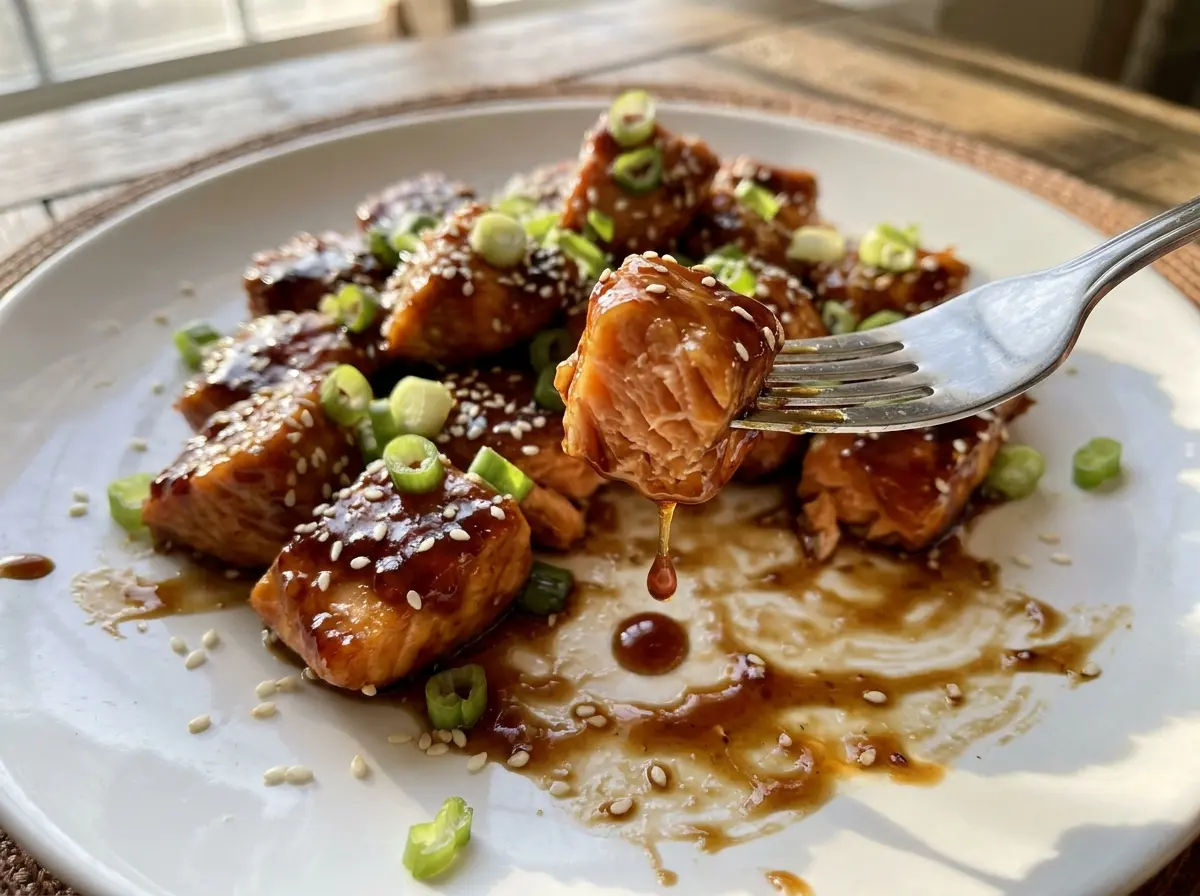
When salmon hits a hot skillet, the edges should sizzle almost at once. If the pan is crowded or the fish is wet, those little cubes steam instead of browning, and a sweet glaze can’t give them that same savory edge.
For these teriyaki glazed salmon bites, I cook the fish in two batches, then coat it with a glaze I’ve thickened separately. That keeps the salmon from sitting in sauce while it cooks and gives the glaze a chance to cling instead of pooling at the bottom of the skillet.
The ginger and garlic make the sauce smell bright and savory as it simmers, while brown sugar and honey round out the soy and mirin. Finished with scallions and sesame seeds, the bites are glossy, tender, and ready to serve in about the time it takes to set the table.
Kitchen Note
I sprinkle the scallions and sesame seeds on after the salmon is in the serving dish. They stay distinct and fresh-looking instead of disappearing into the glaze.
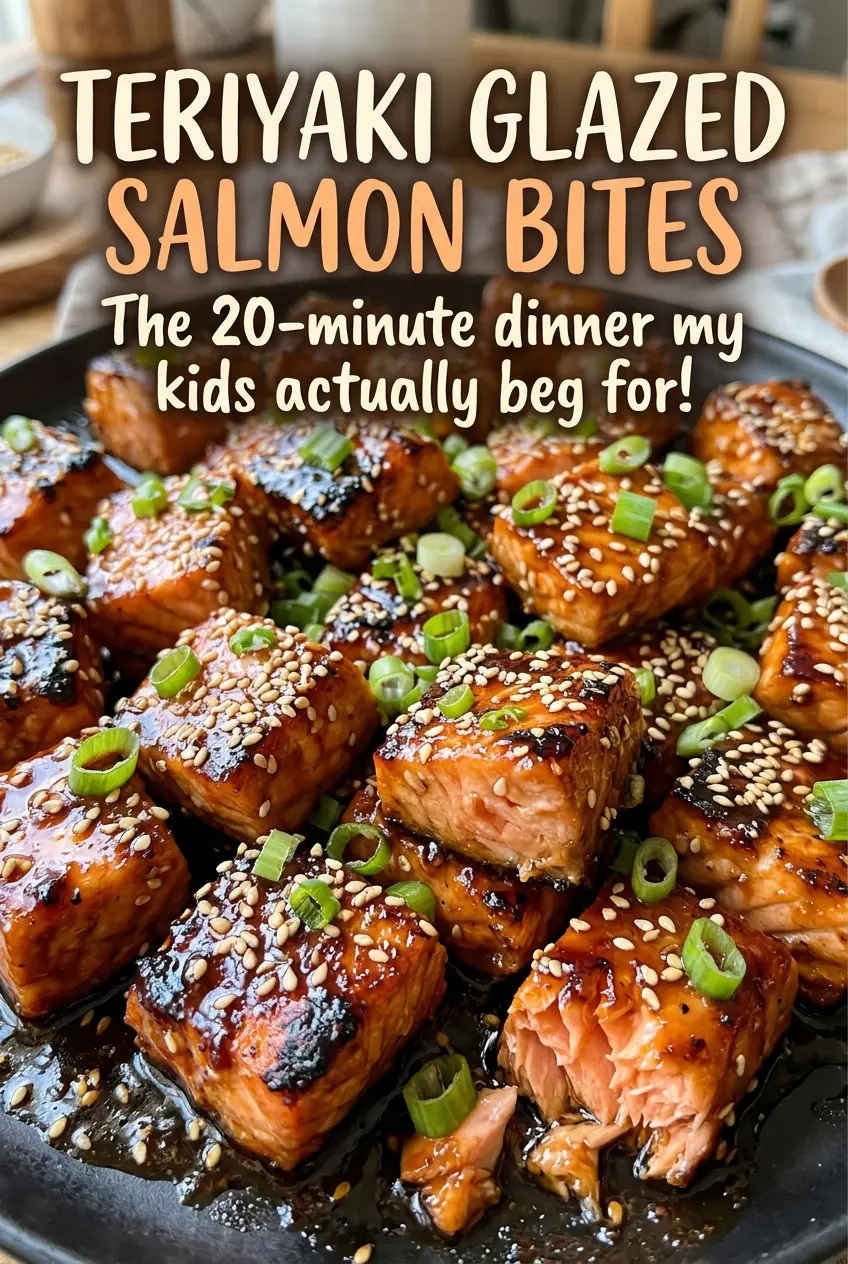
Save these teriyaki glazed salmon bites for a quick dinner with glossy ginger-soy glaze and tender browned salmon.
Why the Teriyaki Glaze Thickens Before It Ever Touches the Salmon
Salmon cooks quickly, and a thick teriyaki sauce needs a little time to develop. If the fish and the uncooked glaze go into the pan together, the salmon has to keep cooking while the sauce reduces. That can leave you with dry edges before the sauce is glossy enough to coat each bite.
I simmer the soy sauce, mirin, sugar, honey, ginger, and garlic first, then thicken that mixture with a cornstarch slurry. The glaze is ready before the salmon goes near it, so the fish only needs a brief toss over low heat at the end. It’s a useful distinction: the skillet browns the salmon, while the saucepan builds the sauce. Keeping those jobs separate gives you browned fish and a coating that stays on it.
What Gives This Teriyaki Glaze Its Savory-Sweet Balance
- Low-sodium soy sauce — It brings the deep savory base without making the finished glaze as salty as regular soy sauce might after simmering. Certified gluten-free tamari works in the same amount if you need a gluten-free alternative; it can taste a little more robust.
- Mirin — This sweet rice seasoning adds gentle sweetness and a rounded, savory note that plain vinegar won’t replicate. Choose a bottle you enjoy using, but there’s no need for a premium brand here; its flavor is balanced by the other glaze ingredients.
- Brown sugar and honey — Brown sugar gives the sauce a fuller sweetness, while honey helps the glaze look shiny. They have different jobs, so replacing one with the other changes the balance and texture rather than making a direct swap.
- Fresh ginger and garlic — Freshly grated ginger disperses through the sauce, and minced garlic gives it a savory bite. Use ginger that feels firm and garlic that hasn’t dried out; pre-minced versions won’t have the same lively aroma.
- Salmon fillets — Skinless fillets are easy to cut into even cubes and coat all over. If you start with a larger piece of salmon, remove any skin before cutting; the pieces cook and glaze more evenly without it.
- Cornstarch — It’s what turns the liquid glaze into a coating that clings to the salmon. Whisk it with cold water first; sprinkling dry cornstarch straight into the warm sauce is likely to leave lumps.
Build the Glaze First, Then Sear the Salmon in Batches
Simmer the Ginger-Garlic Base
Whisk the soy sauce with 3 tablespoons of the water, mirin, brown sugar, honey, ginger, and garlic in a small saucepan. Bring it to a simmer over medium heat and stir for 2 minutes, until the sugar dissolves. Keep the mixture at a steady simmer rather than a hard boil so it doesn’t reduce too quickly before the thickener goes in.
Thicken Until Glossy
In a small bowl, whisk the cornstarch with the remaining 1 tablespoon of water until smooth. Whisk that slurry into the saucepan and let the glaze simmer for 30 to 60 seconds. It’s ready when it looks glossy and has thickened; remove it from the heat then, rather than continuing to cook it down.
Brown the Salmon Without Crowding
Pat the salmon dry, then season it evenly with the kosher salt. Heat 1 tablespoon of the oil in a 12-inch skillet over medium-high heat for about 1 minute, until it shimmers. Add half the salmon in a single layer and cook for 2 to 3 minutes, turning occasionally, until browned and cooked to 145°F. Transfer those pieces to a plate, then repeat with the remaining oil and salmon; fitting everything into one crowded layer would trap moisture and limit browning.
Coat Briefly and Finish
Return all the salmon to the skillet and pour in the prepared glaze. Toss gently over low heat for about 30 seconds, just long enough to coat the pieces without breaking them up. Transfer the bites to a serving dish and finish with the sliced scallions and sesame seeds. The glaze should look shiny on the salmon, not pooled as a thin layer underneath.
Two Easy Ways to Adapt the Bites
Make the Glaze Gluten-Free
Replace the soy sauce with the same amount of certified gluten-free tamari. The sauce keeps its savory depth, though tamari can taste a little bolder; choose gluten-free versions of the mirin and other packaged ingredients too if you’re cooking for someone who must avoid gluten.
Leave Off the Sesame
For a sesame-free finish, omit the sesame seeds and use the sliced scallions on their own. You’ll lose the little nutty crunch, but the fresh onion flavor still gives the glazed salmon a bright finish.
Storage and Reheating
- Refrigerator: Store the cooked salmon in a covered container for 3 to 4 days. The glaze will thicken as it chills, and the salmon will be less tender after reheating.
- Freezer: Freeze cooled bites in an airtight container for up to 2 to 3 months for best quality. Thaw them in the refrigerator before reheating; the texture may be softer than when freshly cooked.
- Reheating: Warm gently in a covered skillet over low heat with a small splash of water, stirring carefully, until the leftovers reach 165°F. High heat can toughen the fish, so avoid reheating it until the glaze boils hard.
Questions That Come Up When Cooking Salmon Bites
Teriyaki Glazed Salmon Bites
Ingredients
Equipment
Method
- In a small saucepan, whisk together the soy sauce, 3 tablespoons of the water, mirin, brown sugar, honey, ginger, and garlic.
- Bring the mixture to a simmer over medium heat and cook for 2 minutes, stirring until the sugar dissolves.
- In a small bowl, whisk the cornstarch with the remaining 1 tablespoon water, then whisk the slurry into the saucepan and simmer for 30 to 60 seconds, until glossy and thickened; remove from the heat.
- Pat the salmon dry and season it evenly with the salt.
- Heat 1 tablespoon of the oil in a 12-inch skillet over medium-high heat until shimmering, about 1 minute.
- Cook half the salmon in a single layer for 2 to 3 minutes, turning occasionally, until browned and cooked to 145°F; transfer to a plate and repeat with the remaining oil and salmon.
- Return all the salmon to the skillet, pour in the teriyaki glaze, and gently toss over low heat for about 30 seconds to coat.
- Transfer to a serving dish and sprinkle with the scallions and sesame seeds.