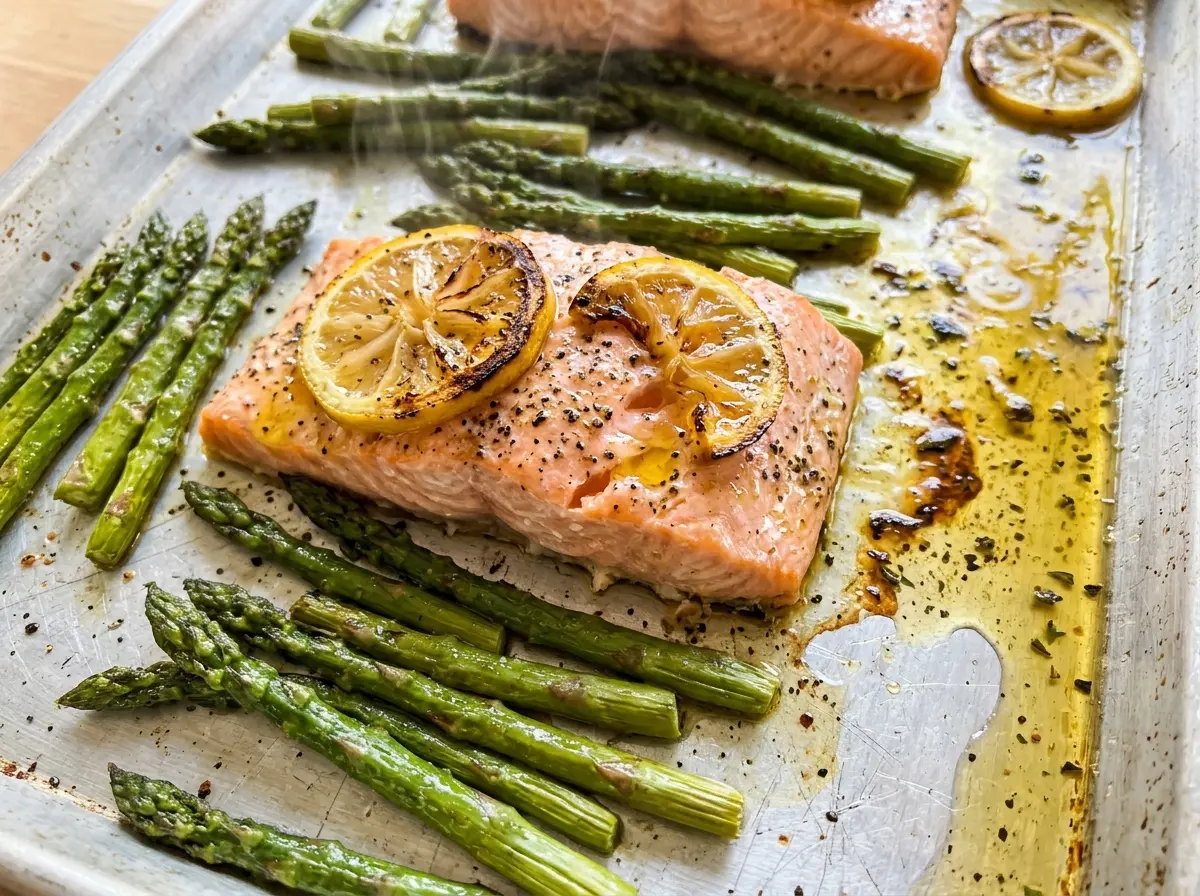
When the sheet pan comes out of the oven, the salmon should be tender and the asparagus should still have a little bite. That balance is what I want from Sheet Pan Salmon and Asparagus: a satisfying dinner for four without a pile of dishes or a sauce to babysit. Lemon wedges bring a bright finish right at the table, and the garlic-seasoned salmon has enough flavor to stand on its own.
I keep the seasoning simple so the salmon, asparagus, and lemon each come through. Olive oil helps the seasonings cling and gives the asparagus a chance to roast instead of dry out. The salmon goes on the same pan once the vegetables have had a short head start, so everything finishes together. It’s a straightforward dinner, but the order matters: the asparagus gets enough oven time, and the salmon stays moist instead of waiting around while the vegetables catch up.
Kitchen Note
Salmon fillets can taper at the ends, so don’t judge doneness by the thin tail. Check the thickest part of each fillet and take the pan out when it reaches 145°F.
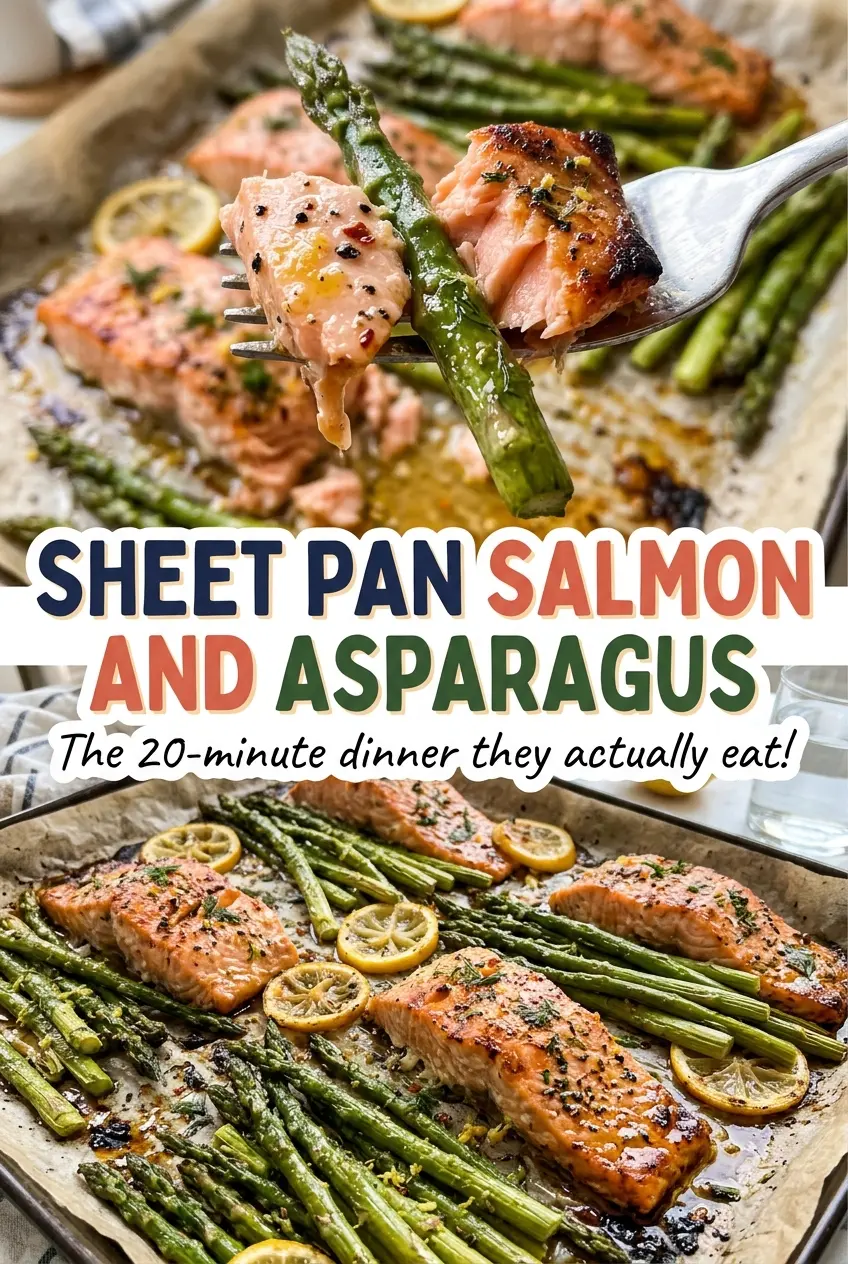
Save this sheet pan salmon and asparagus for an easy dinner with tender fish, roasted vegetables, and lemon wedges on the side.
Why the asparagus gets five minutes alone before the salmon joins the pan
Salmon and asparagus don’t need the same amount of time in the oven. A fillet that’s about an inch thick cooks quickly, while asparagus needs enough exposure to the hot pan to soften without turning limp. Giving the vegetables a head start solves that mismatch instead of asking one ingredient to wait for the other.
Pan space matters, too. Asparagus spread in one layer gets direct heat; a pile of stalks holds onto moisture and can turn soft before it browns. Once the fish goes on, keeping the fillets in the center and the asparagus around the edges leaves room for the hot air to circulate. Use a rimmed sheet pan large enough for that arrangement rather than crowding everything together. The parchment makes cleanup easier, but it’s the single-layer layout that helps the vegetables roast evenly.
What the salmon, asparagus, and simple seasoning each bring
- Salmon — Fillets close to an inch thick cook on a similar schedule, and the thickest part gives you the most reliable doneness check. Freshness matters more than choosing farmed or wild; either works here. Steelhead trout is a close stand-in if you can find portions with a similar thickness, though its texture and richness won’t be exactly the same.
- Asparagus — Look for firm spears with compact tips; thinner or thicker stalks can finish at different rates. Trimming away the woody ends is worth doing, since those parts stay tough. There isn’t a timing-neutral vegetable swap for asparagus, so changing to a different vegetable may require a different roasting plan.
- Olive oil — A basic olive oil is fine because it’s there to coat the vegetables and fish, not dominate the dish. Avocado oil works as a one-for-one substitute if that’s what you keep on hand; it has a more neutral taste.
- Garlic powder and lemon — Garlic powder spreads evenly over the fillets, while fresh garlic can brown quickly at this oven temperature. Granulated garlic can replace it in the same amount, with a slightly coarser coating. Fresh lemon wedges give you bright juice and aroma at the table; bottled lemon juice can add acidity, but won’t bring the same fresh citrus scent.
The five-minute asparagus head start and the salmon finish
Heat the pan and start the asparagus
Heat the oven to 425°F and line an 18×13-inch rimmed baking sheet with parchment paper. Toss the trimmed asparagus right on the pan with half of the olive oil, salt, and pepper, then spread it into an even layer. Roast it for 5 minutes before adding the salmon. Don’t leave the stalks piled in the middle; an even layer gives them better contact with the hot pan.
Season the fillets evenly
Brush the salmon with the remaining olive oil so the seasoning has a light coating to cling to. Add the rest of the salt and pepper along with the garlic powder, spreading it across the tops rather than leaving a concentrated patch in the center. The fillets should be about 1 inch thick for the timing to line up as intended. If one piece is much thinner than the others, keep an eye on it as the pan finishes.
Give the salmon the center of the pan
Move the asparagus to the sides of the baking sheet and set the salmon in the open center. Place the fillets skin-side down if they have skin, and leave a little space between them rather than overlapping. Roast for 10 to 15 minutes, checking the thickest part of each piece for doneness. The thinner ends may look ready first, so don’t use them as your only guide.
Finish with lemon at the table
Serve the salmon and asparagus with lemon wedges. Squeezing the lemon over the fish just before eating adds a fresh, tart contrast to the olive oil and garlic seasoning. If you prefer a lighter touch, let everyone add lemon to their own portion. The wedges are best served alongside the finished food, rather than roasted on the pan.
Two seasoning changes that keep this sheet-pan dinner simple
Swap the garlic for dried dill
Replace the garlic powder with the same amount of dried dill for a softer, herb-forward flavor that pairs naturally with the lemon wedges. The fish will taste less savory and garlicky, but the seasoning still coats the fillets easily without changing the pan setup.
Make it lower in sodium
Leave out the kosher salt and lean on the black pepper, garlic powder, and lemon wedges for a brighter, less salty result. The salmon and asparagus will taste less seasoned overall, so squeeze lemon over each portion just before eating to bring the other flavors forward.
Storage and Reheating
- Refrigerator: Store leftovers in an airtight container for 3 to 4 days. The asparagus will soften as it sits, and the salmon will be less delicate after chilling.
- Freezer: Freeze the salmon and asparagus in a tightly sealed container for up to 2 to 3 months. The salmon holds up better than the asparagus, which will be softer after thawing; thaw overnight in the refrigerator.
- Reheating: Reheat in the microwave at half power in short bursts until the leftovers reach 165°F. High heat can dry out the salmon before the asparagus warms through, so avoid reheating the whole portion at full power for a long stretch.
Questions that come up before the salmon goes in the oven
Sheet Pan Salmon and Asparagus
Ingredients
Equipment
Method
- Heat the oven to 425°F.
- Line an 18x13-inch rimmed baking sheet with parchment paper.
- Toss the asparagus on the baking sheet with 1 tablespoon of the olive oil and half of the salt and pepper.
- Spread the asparagus in an even layer and roast for 5 minutes.
- Brush the salmon fillets with the remaining olive oil.
- Season the salmon with the remaining salt and pepper and the garlic powder.
- Move the asparagus to the sides of the pan and place the salmon in the center, skin-side down if the fillets have skin.
- Roast for 10 to 15 minutes, until the thickest part of each fillet reaches 145°F.
- Serve the salmon and asparagus with the lemon wedges.