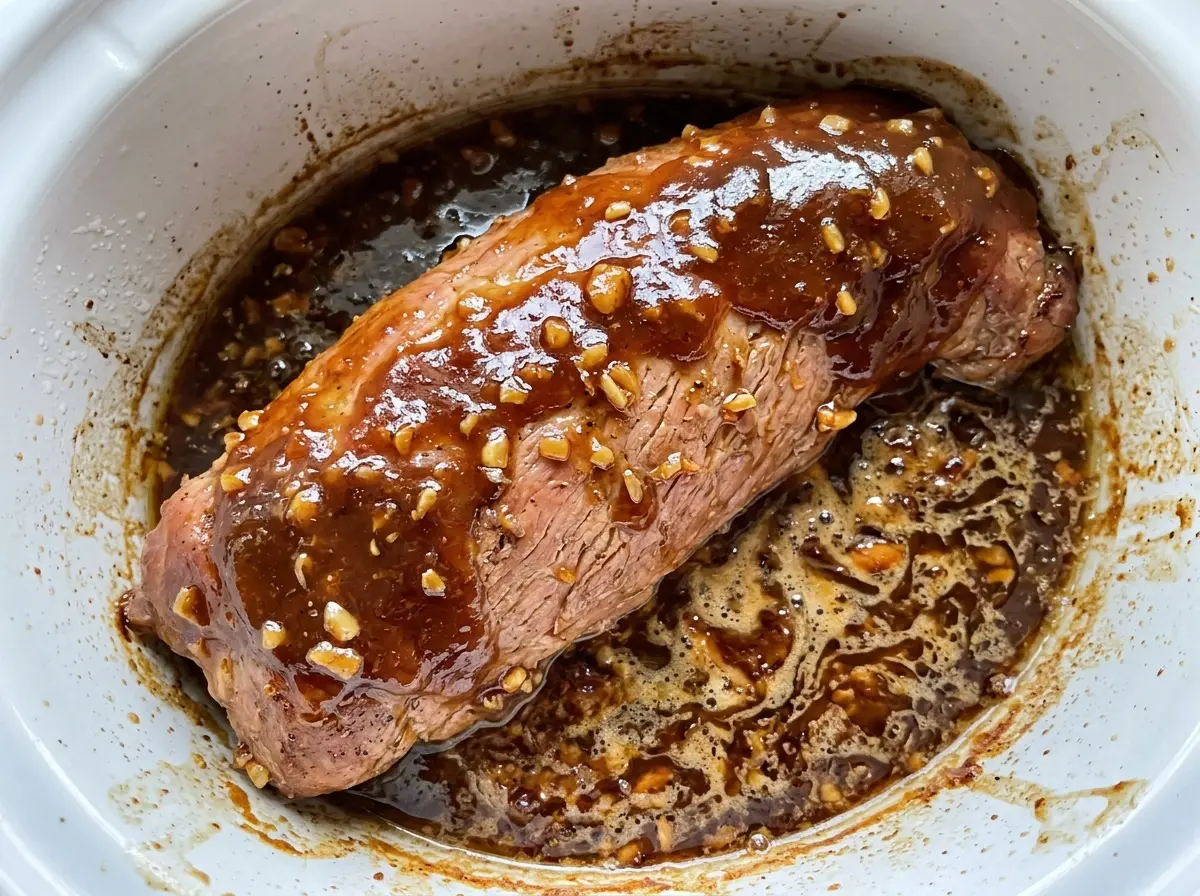
When the lid comes off, the pork is nestled over soft onions in a light cider sauce—not coated in a sticky, browned glaze. That’s exactly what I want from this slow cooker apple butter glazed pork tenderloin: tender slices with a sweet-tart sauce I can spoon over every bite. The slow cooker keeps the cooking hands-off, and the finished sauce gets its glossy texture on the stove.
I whisk apple butter with apple cider, Dijon, cider vinegar, and garlic, then pour it over the seasoned tenderloin. Apple butter brings concentrated apple flavor, while the cider gives the glaze enough liquid to cook around the pork. Since tenderloin is lean, I use an instant-read thermometer rather than guessing from the clock. A short rest before slicing keeps the meat from losing its juices across the cutting board.
Kitchen Note
Give the pork its full three-minute rest before slicing. I tent it loosely with foil while I finish the sauce; cutting right away lets more of the juices spill onto the board.
Save this apple butter glazed pork tenderloin for a cozy dinner with tender slices and a glossy cider-Dijon sauce.
Why This Slow-Cooker Glaze Stays Saucy Instead of Turning Sticky
Apple butter is thick and concentrated, but the slow cooker is a moist cooking environment. The glaze won’t reduce around the pork into a dry, lacquered coating the way a sauce might in a hot oven or skillet. Instead, the cider and juices collect with the onions in the bottom of the cooker, and the pork cooks gently above that flavorful liquid.
That’s a useful distinction if you’re expecting the pork to come out glazed like a roast with a browned crust. This version is meant to be sliced and served with sauce. I thicken the cooking liquid after the pork comes out, which lets the sauce turn glossy without keeping the tenderloin in the cooker longer than it needs. The Dijon and cider vinegar also keep the apple butter from tasting one-note sweet. You get apple up front, then a little tang and savory depth in the finish.
What the Apple Butter, Cider, and Vinegar Each Bring

- Pork tenderloin — This lean, narrow cut cooks much faster than a larger pork roast, so it’s important not to treat the two as interchangeable. Trimming away the silver skin gives you cleaner slices and avoids a tough strip in the finished dish.
- Apple butter — Its concentrated apple flavor and thick texture give the glaze body. Applesauce isn’t a like-for-like replacement; it’s looser and less concentrated, so the sauce won’t have the same richness. A good everyday apple butter works well here; there’s no need for a special variety.
- Apple cider and apple cider vinegar — They have different jobs. Cider loosens the apple butter into a pourable glaze, while vinegar adds acidity. Don’t swap one for the other; cider vinegar in place of the cider would make the sauce sharply sour and leave it short on cooking liquid.
- Dijon mustard — Dijon adds a gentle mustard bite that balances the apple. A standard smooth Dijon is all you need; a premium jar won’t change the slow-cooker method.
- Cornstarch — Mixed with cold water, it thickens the cooking liquid quickly and gives it a clear, glossy finish. Whisk the slurry until smooth before it goes into the hot sauce so little dry pockets don’t turn into lumps.
- Yellow onion and garlic — The onion makes a soft bed under the pork and adds savory flavor to the sauce. Minced garlic disperses through the glaze rather than leaving large pieces in each slice.
The Four Stages That Keep the Pork Tender and the Sauce Smooth
Set Up an Onion Bed
Spread the thinly sliced yellow onion across the bottom of a 3- to 4-quart slow cooker. Season the pork tenderloin all over with kosher salt and black pepper, then set it on the onion. Keeping the pork above the onion gives it a steady base as the juices collect underneath. If the tenderloin is touching the cooker in a few spots, that’s fine; just don’t pile the onions on top of it.
Whisk a Pourable Apple Butter Glaze
In a bowl, whisk the apple butter, apple cider, Dijon mustard, apple cider vinegar, and minced garlic until the mixture looks even. The apple butter can start out thick, so scrape the sides of the bowl as you whisk. Pour the glaze over the pork, letting it run down the sides and into the onion layer. There’s no need to brown the pork first.
Cook to Temperature, Not Just by the Clock
Cover the slow cooker and cook on LOW for 2 to 3 hours or HIGH for 1 to 2 hours. Insert an instant-read thermometer into the thickest part of the pork; it should register 145°F. Tenderloins vary a little in thickness, so the thermometer gives you a more dependable answer than choosing a time at the end of the range. If it hasn’t reached that temperature, cover the cooker again and continue cooking before checking once more.
Rest the Meat, Then Finish the Sauce
Transfer the pork to a cutting board, tent it loosely with foil, and let it rest for 3 minutes. Pour the cooking liquid and onions into a 1-quart saucepan and bring them to a boil over medium-high heat. Whisk the cornstarch with cold water, stir that slurry into the sauce, and boil for 1 minute. The finished sauce should look glossy and lightly thickened, not pasty; slice the pork and serve it with the sauce.
Three Simple Ways to Change the Sauce and Seasoning
A Lower-Added-Salt Version
Leave out the kosher salt on the pork and keep the rest of the ingredients the same. The apple butter, mustard, and garlic still give the sauce plenty of character, though this adjustment reduces only the salt you add yourself, not the sodium naturally present in packaged ingredients.
A Thinner, Spoonable Sauce
Skip the cornstarch slurry and serve the cooking liquid after bringing it to a boil. The sauce will stay loose rather than glossy and lightly thickened, which works if you prefer more of a cider broth around the pork and onions.
A Smooth Sauce Without Onion Pieces
Before thickening, pour the cooking liquid through a fine-mesh strainer into the saucepan and leave the onions behind. Continue with the slurry and boil the sauce until glossy; you’ll keep the apple-cider flavor but lose the soft onion pieces.
Storage and Reheating
- Refrigerator: Store leftover pork and sauce in a covered container for 3 to 4 days. The sauce will thicken as it chills.
- Freezer: Freeze the sliced pork with sauce in an airtight container for up to 2 to 3 months for best quality. Thaw it in the refrigerator before reheating.
- Reheating: Warm the pork gently in a covered saucepan with some sauce, or use the microwave in short intervals, stirring the sauce between intervals. Heat leftovers to 165°F; high heat can dry out the lean pork.
Questions I Get Asked About This Apple Butter Pork
Slow Cooker Apple Butter Glazed Pork Tenderloin
Ingredients
Equipment
Method
- Arrange the sliced onion in the bottom of a 3- to 4-quart slow cooker.
- Season the pork tenderloin all over with the salt and pepper.
- Place the pork tenderloin on the onion.
- Whisk the apple butter, apple cider, Dijon mustard, vinegar, and garlic in a bowl.
- Pour the glaze over the pork.
- Cover and cook on LOW for 2 to 3 hours or HIGH for 1 to 2 hours, until an instant-read thermometer inserted in the thickest part of the pork registers 145°F.
- Transfer the pork to a cutting board.
- Tent the pork loosely with foil and let it rest for 3 minutes.
- Pour the cooking liquid and onions into a 1-quart saucepan.
- Bring the liquid to a boil over medium-high heat.
- Whisk the cornstarch and cold water together.
- Stir the cornstarch mixture into the sauce.
- Boil for 1 minute, until glossy and lightly thickened.
- Slice the pork and serve with the sauce.