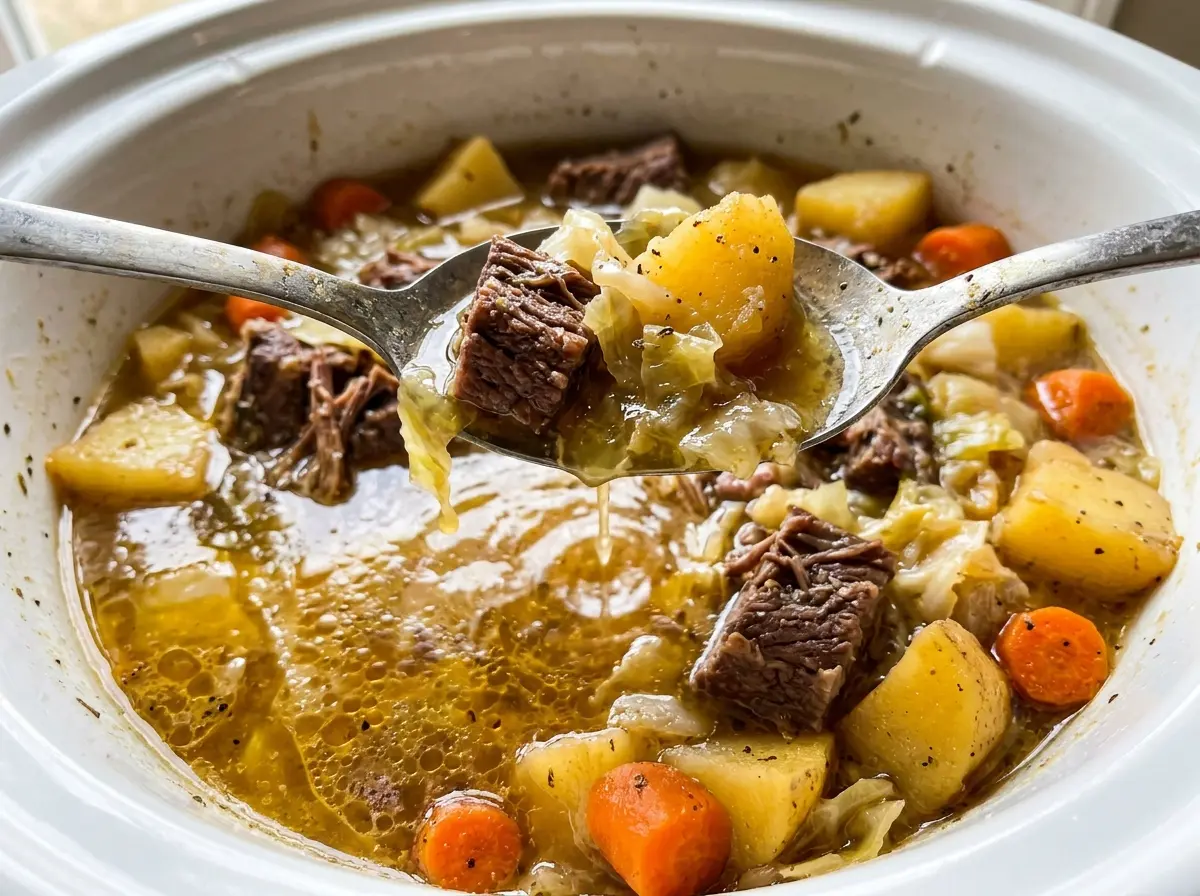
When I lift the slow cooker lid, the broth smells rich and savory, and the beef should be soft enough to yield to a fork. This slow cooker beef and cabbage stew with potatoes is the kind of meal that takes its time: chuck turns tender while the potatoes and carrots cook in the same beefy broth. The vegetables go in first, so everything has room to settle into the slow cooker without needing a separate pot.
Coating the beef with flour before browning gives the stew a little body, and the skillet adds another layer of flavor before anything goes into the slow cooker. After the beef is browned, I use the broth to scrape up those browned bits from the pan and pour them in, too. The result is a full, savory gravy around tender chunks of beef and potatoes, with cabbage that stays recognizable in every spoonful.
Kitchen Note
When the browned beef goes into the slow cooker, bring along any loose flour left in the skillet. It’s easy to leave behind, but that flour helps give the cooking liquid a stew-like body.
Save this slow cooker beef and cabbage stew with potatoes for tender chuck, hearty vegetables, and cabbage added near the end.
Why the Cabbage Goes In After the Beef Is Nearly Tender
Beef chuck and potatoes need a long, steady cook to become tender. Cabbage doesn’t need that same stretch of time. If it went into the slow cooker at the beginning, it would spend hours softening in the broth and lose the distinct, tender pieces that make this stew feel like beef and cabbage rather than one blended pot of vegetables.
Waiting until the beef is nearly fork-tender gives the cabbage a shorter finish in the slow cooker. It has time to soften and take on some of the savory broth, but it doesn’t have to endure the whole cooking window. Cutting it into pieces about an inch across helps those pieces cook evenly alongside the potatoes. The timing also gives you a useful check-in point: when the beef is close to tender, stir in the cabbage, cover the cooker again, and let the last stage finish together.
Why Chuck, Yukon Golds, and Flour Make This Stew Work
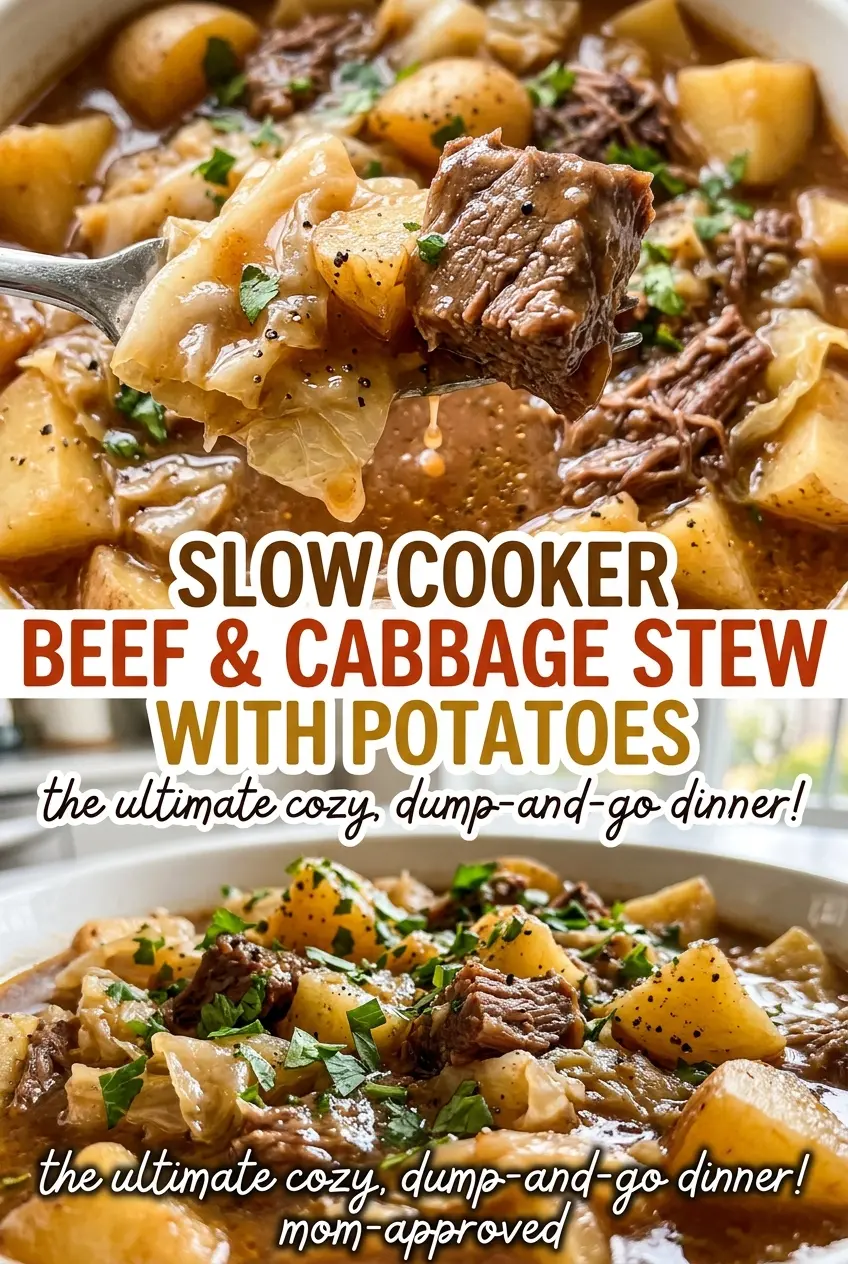
- Beef chuck — Its connective tissue softens during the long cook, giving you tender beef and a fuller-tasting broth. Choose evenly sized pieces; a pre-cut package is convenient when it’s chuck and the pieces are close in size. Leaner beef won’t give quite the same tender, rich result.
- Yukon Gold potatoes — Their creamy texture holds up well in stew without turning as fluffy as russets. Red potatoes are a good stand-in; cut them to the same size. Russets work in a pinch, but they’re more likely to soften and break apart.
- All-purpose flour — It coats the beef and gives the broth more body as the stew cooks. For a gluten-free version, use a gluten-free all-purpose blend labeled for a one-to-one replacement; the finished gravy may be a little less predictable depending on the blend.
- Tomato paste and beef broth — Tomato paste brings concentrated savory depth, while broth carries it through the whole pot. Regular grocery-store tomato paste and broth are fine here; if you use gluten-free flour, choose broth that’s labeled gluten-free as well.
- Green cabbage — Its mild flavor becomes sweet and tender in the broth. Savoy cabbage can replace it, though its leaves are more delicate and may soften more during the final cook.
- Worcestershire, thyme, and bay leaf — Together they build a savory, gently herbal base without making the broth taste strongly of any one seasoning. Dried rosemary can replace the thyme in the same amount for a more piney, pronounced herbal note.
Building the Stew in Stages, Without Losing the Good Bits
Layer the vegetables and brown the floured beef
Put the potato chunks and carrot pieces in a 6-quart slow cooker. Season the beef with kosher salt and black pepper, then toss it with flour until coated. Brown it in batches in vegetable oil in a 12-inch skillet over medium-high heat, about 5 to 7 minutes per batch; working in batches gives the pieces contact with the pan instead of crowding them together. Transfer the beef and any loose flour to the slow cooker.
Turn the skillet into the stew base
Add the chopped onion to the same skillet and cook for 3 to 4 minutes, until softened. Stir in the minced garlic and tomato paste, and cook for 30 seconds. Pour in the beef broth and Worcestershire sauce, then add the dried thyme and bay leaf. Scrape the browned bits from the bottom of the skillet as the liquid goes in, and pour the mixture over the beef and vegetables.
Cook until the beef is nearly fork-tender
Cover the slow cooker and cook on LOW for 6 to 7 hours or HIGH for 3 to 4 hours. At this point, the beef should be nearly fork-tender, not quite at the finish line. If it still feels firm when tested with a fork, give it more time within the cooking range rather than adding the cabbage early. This stage is what lets the chuck soften before the quicker-cooking cabbage joins the pot.
Let the cabbage finish with the potatoes
Stir in the cabbage, cover, and continue cooking on LOW for 1 to 1 1/2 hours or HIGH for 45 to 60 minutes. The stew is ready when the beef and potatoes are fork-tender and the cabbage is tender. Check more than one piece if the chunks vary slightly in size; a tender potato doesn’t necessarily mean every piece of beef is ready. Remove the bay leaf before serving.
Three Practical Ways to Adapt the Pot
Make It Gluten-Free
Replace the all-purpose flour with a gluten-free one-to-one flour blend, and use beef broth and Worcestershire sauce labeled gluten-free. The beef still gets coated and browned, though the gravy may thicken differently depending on the blend.
Use Sweet Potatoes for a Sweeter, Softer Stew
Swap the Yukon Gold potatoes for sweet potatoes cut into similar-sized chunks. They bring a mellow sweetness, but they soften more readily, so expect a less firm potato texture by the end of the cook.
Trade Thyme for Rosemary
Use dried rosemary in place of the dried thyme in the same amount. It shifts the broth toward a stronger, piney herb flavor, so this is a good change when you want the seasoning to stand out more.
Storage and Reheating
- Refrigerator: Keep leftovers in an airtight container for 3 to 4 days. The potatoes will absorb some broth and the cabbage will soften further.
- Freezer: Freeze in airtight portions for up to 2 to 3 months. The stew is safe to freeze, but potatoes may turn grainy and cabbage softer after thawing; thaw in the refrigerator.
- Reheating: Warm gently on the stovetop, stirring occasionally, until the stew reaches 165°F throughout. Avoid a hard boil, which can break up the potatoes.
Questions That Come Up With Slow Cooker Beef and Cabbage Stew
Slow Cooker Beef and Cabbage Stew with Potatoes
Ingredients
Equipment
Method
- Put the potatoes and carrots in a 6-quart slow cooker.
- Season the beef with the salt and pepper.
- Toss the beef with the flour to coat.
- Heat the oil in a 12-inch skillet over medium-high heat.
- Brown the beef in batches, about 5 to 7 minutes per batch.
- Transfer the beef and any loose flour to the slow cooker.
- Add the onion to the skillet and cook for 3 to 4 minutes, until softened.
- Stir in the garlic and tomato paste and cook for 30 seconds.
- Pour in the broth and Worcestershire sauce.
- Add the thyme and bay leaf, then scrape up the browned bits.
- Pour the mixture into the slow cooker.
- Cover and cook on LOW for 6 to 7 hours or HIGH for 3 to 4 hours, until the beef is nearly fork-tender.
- Stir in the cabbage.
- Cover and cook on LOW for 1 to 1 1/2 hours or HIGH for 45 to 60 minutes, until the beef and potatoes are fork-tender and the cabbage is tender.
- Remove the bay leaf before serving.