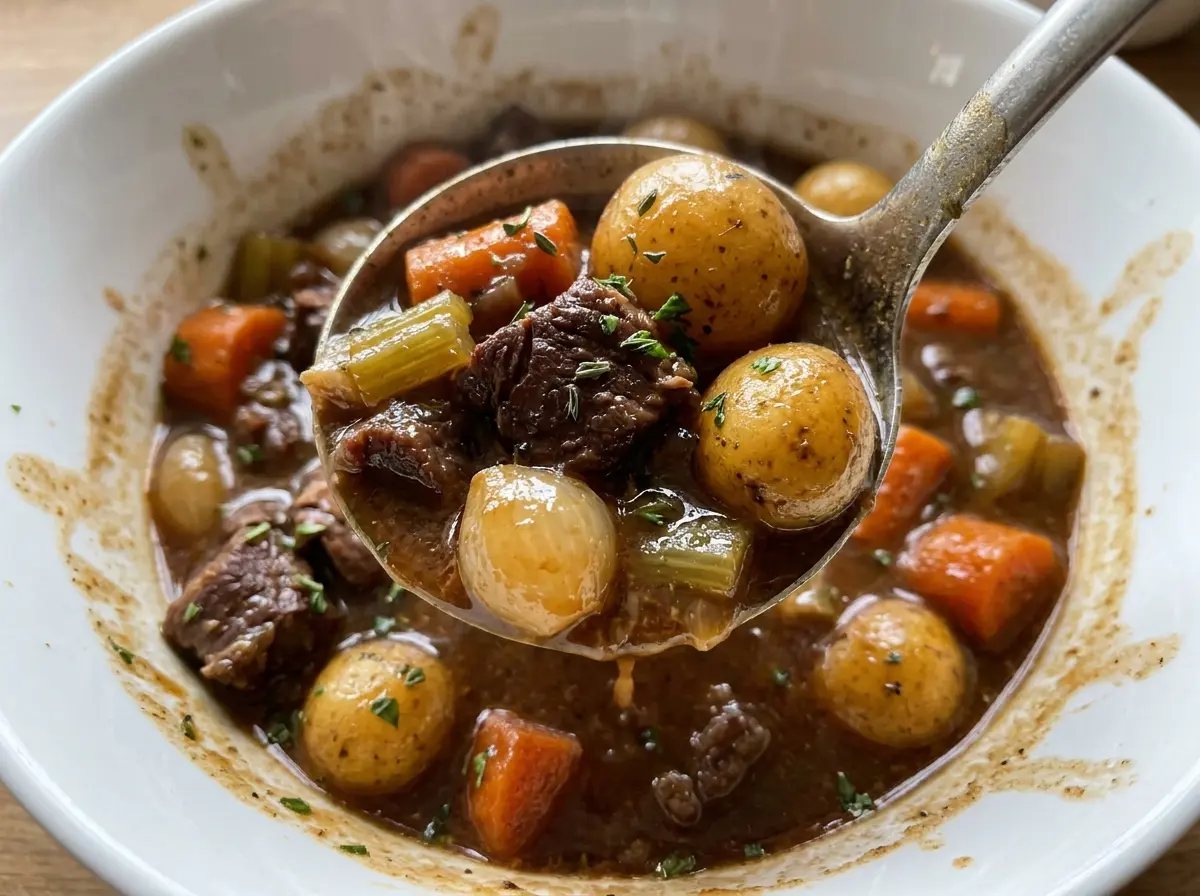
The first thing I notice when the beef hits the skillet is how quickly the flour-coated edges turn brown. That color is worth taking the time for: it gives this slow cooker Irish beef stew with pearl onions a deeper, more savory base than you get by putting everything in the crock at once. I brown the chuck in batches, then use the same skillet to build the stout-and-beef-broth mixture.
Once it’s in the slow cooker, the work is mostly waiting. Yukon Gold potatoes and carrots soften alongside the beef, while frozen pearl onions tuck into the gravy without needing to be peeled or thawed. The stout adds a roasted, malty note, not a sharp beer taste, and the beef should be tender enough to pull apart easily with a fork. It’s a full, hearty stew with a gravy that clings to the vegetables.
Kitchen Note
Give the finished stew the full 10-minute rest before serving. The liquid settles and the beef and vegetables are easier to portion without rushing them out of the slow cooker.
Save this slow cooker Irish beef stew with pearl onions for a cozy supper: fork-tender chuck, soft potatoes, and a stout-rich gravy.
Why the Beef Needs a Hard Sear Before It Goes Into the Slow Cooker
A slow cooker makes beef tender, but it can’t create the deep browned flavor you get from a hot skillet. Patting the chuck dry helps the surface brown instead of steaming, and the flour coating gives the meat an even layer that picks up color as it cooks. Working in two or three batches gives the cubes room in the pan. If you pile them together, moisture collects and the beef turns gray before it has a chance to brown.
Those browned bits left behind are part of the stew’s flavor, too. The chopped onion softens in the same skillet, and the stout and broth loosen the fond when you scrape the bottom. That sequence carries the skillet flavor into the slow cooker rather than leaving it behind. The flour on the beef also helps give the cooking liquid body, so the finished stew feels more like a gravy than a thin broth.
Keep the heat at medium-high while browning and turn each piece to color several sides. The goal isn’t to cook the beef through in the skillet; that happens slowly later. You’re building a browned surface and a flavorful base before the long, gentle cook begins.
How Chuck, Stout, and Pearl Onions Shape This Stew
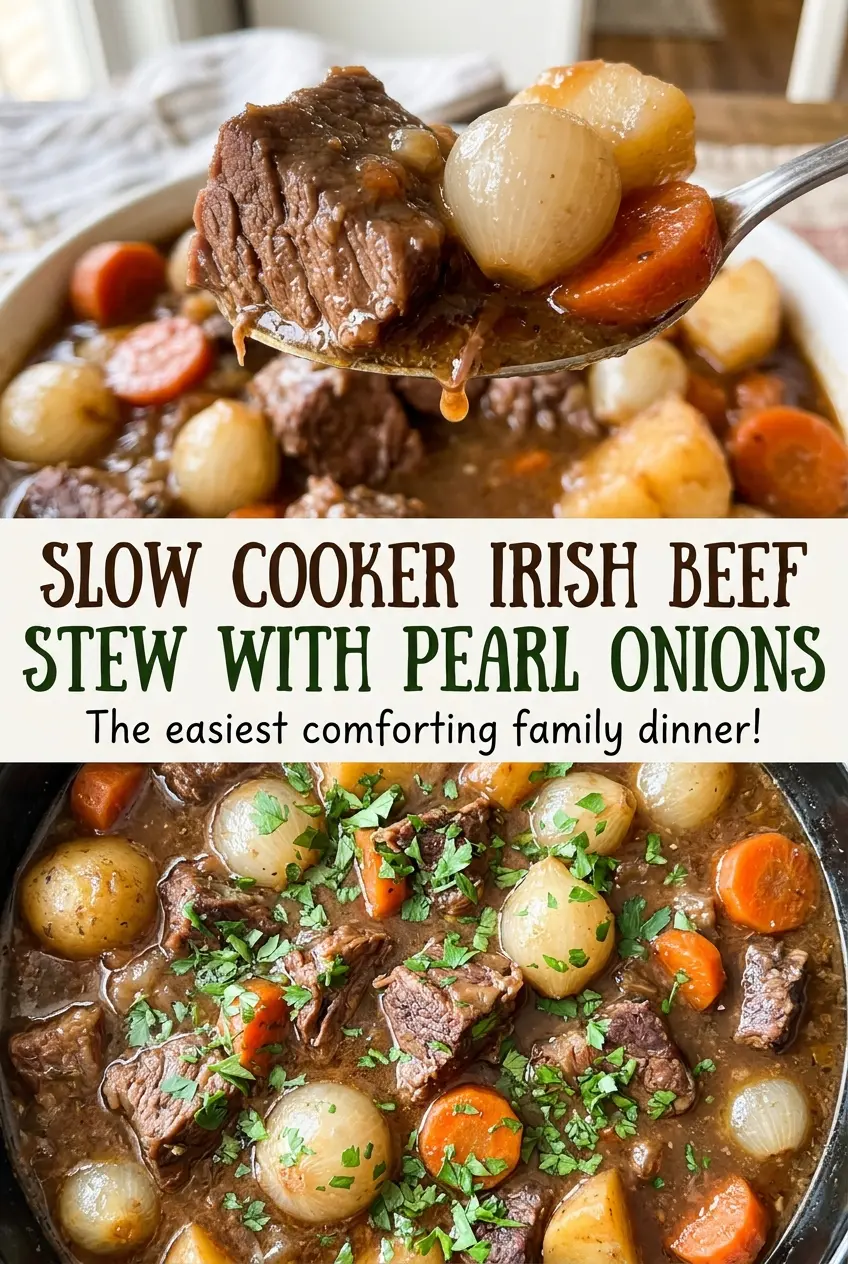
- Beef chuck — Chuck has connective tissue that softens during the long slow cook, which is what gives the cubes their fork-tender texture. Cut the pieces evenly so they cook at a similar pace, and pat them dry before adding the flour. Lean steak doesn’t make the same tender, rich stew.
- Stout — Stout brings a roasted, malty depth that balances the beef and Worcestershire sauce. Guinness is one option; another stout works in the same role. Choose a stout you enjoy drinking, since its flavor concentrates in the cooking liquid.
- All-purpose flour — The flour coats the beef before browning and contributes body to the gravy. Work it evenly over the dry cubes so it doesn’t gather in clumps. It’s not a good place to skip the coating if you want the stew’s intended texture.
- Yukon Gold potatoes — These hold their shape while becoming tender, so you get soft chunks rather than potatoes that dissolve into the gravy. Cut them into even pieces; much smaller pieces are more likely to break down during the long cook.
- Frozen pearl onions — They add small, sweet onion bites throughout the stew and go straight into the slow cooker from frozen. There’s no need to thaw them first. Their size makes them a different experience from the chopped yellow onion, which melts into the cooking base.
The Skillet-to-Slow-Cooker Sequence That Builds the Gravy
Dry and Coat the Chuck
Pat the beef dry before tossing it with the salt, pepper, and flour. A dry surface browns more readily, while an even flour coating helps each cube pick up color without leaving bare patches. Separate pieces that stick together so the flour reaches all sides. Set the coated beef aside while the skillet heats.
Brown in Uncrowded Batches
Heat the vegetable oil in a 12-inch skillet over medium-high heat. Brown the beef in two or three batches, turning the cubes to brown several sides; each batch takes about 3 to 4 minutes. Transfer each browned batch to a plate. If the skillet looks crowded, pull out some pieces rather than letting them steam against one another.
Turn the Skillet Fond Into a Stout Base
Add the chopped onion to the skillet and cook it for about 4 minutes, until softened. Stir in the garlic and tomato paste and cook for 1 minute, keeping them moving so the garlic doesn’t scorch. Pour in the stout and beef broth, then stir in the Worcestershire sauce, thyme, and bay leaves. Scrape up the browned bits and bring the mixture to a simmer.
Slow-Cook Until the Chuck Gives Easily
Transfer the beef and skillet mixture to a 6-quart slow cooker, then add the potatoes, carrots, and frozen pearl onions and stir to coat. Cover and cook on LOW for 8 to 9 hours or HIGH for 4 to 5 hours. The beef should be fork-tender and the vegetables tender; a cube that still resists the fork needs more time within the cooking window. Remove and discard the bay leaves when the stew is finished.
Simple Ways to Adapt the Stout and Onion Balance
An Alcohol-Free, Broth-Forward Version
Replace the stout with 14.9 ounces of beef broth. The stew will still have the savory base from the browned beef, tomato paste, and Worcestershire, but it will lose the stout’s roasted, malty note and taste more like a classic beef gravy.
A Less Onion-Forward Pot
Leave out the frozen pearl onions if you prefer the chopped yellow onion to stay in the background without extra whole onion bites. The stew will have fewer sweet, distinct onion pieces, while the softened chopped onion still flavors the gravy.
Storage and Reheating
- Refrigerator: Store in a covered airtight container and eat within 3 to 4 days. The potatoes may soften more as they sit.
- Freezer: Freeze in airtight portions for up to 3 months for best quality. The potatoes can become a little softer after thawing, but the beef and gravy freeze well.
- Reheating: Warm gently on the stovetop or in the microwave, stirring occasionally, until the stew reaches 165°F. Avoid boiling it hard, which can break up the tender potatoes and beef.
Questions That Come Up While the Stew Cooks
Slow Cooker Irish Beef Stew with Pearl Onions
Ingredients
Equipment
Method
- Pat the beef dry.
- Toss the beef with the salt, pepper, and flour until evenly coated.
- Heat the oil in a 12-inch skillet over medium-high heat.
- Brown the beef in 2 or 3 batches, turning to brown several sides, about 3 to 4 minutes per batch; transfer each batch to a plate.
- Add the chopped onion to the skillet and cook for about 4 minutes until softened.
- Stir in the garlic and tomato paste and cook for 1 minute.
- Pour in the stout and beef broth.
- Stir in the Worcestershire sauce, thyme, and bay leaves, scraping up the browned bits.
- Bring the mixture to a simmer.
- Transfer the beef and skillet mixture to a 6-quart slow cooker, add the potatoes, carrots, and frozen pearl onions, and stir to coat.
- Cover and cook on LOW for 8 to 9 hours or HIGH for 4 to 5 hours, until the beef is fork-tender and the vegetables are tender.
- Remove and discard the bay leaves.
- Let the stew stand for 10 minutes before serving.