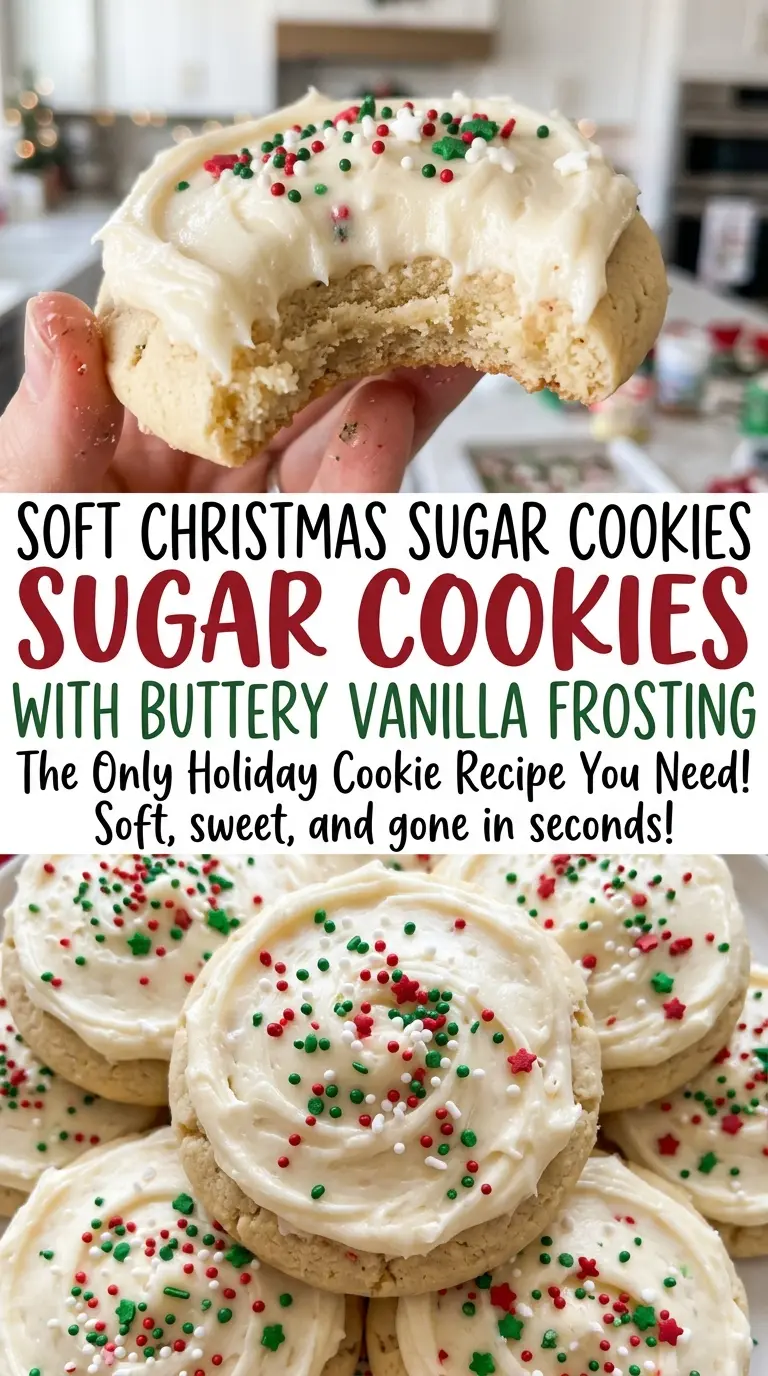
The edges of these cookies just begin to turn golden while the centers still look soft, and that’s the moment I pull the pan from the oven. They finish setting as they cool, which keeps them tender instead of crisp. These soft Christmas sugar cookies with buttery vanilla frosting hold their cutout shapes and have a mild sweetness that doesn’t compete with the frosting.
Sour cream and an extra egg yolk give the dough a softer, richer texture than a basic sugar-cookie dough. Chilling it before rolling makes it easier to cut into neat shapes, and the vanilla buttercream spreads smoothly over the cooled cookies. Once the sprinkles settle into the frosting, you have soft cookies with a buttery vanilla finish and a cheerful crunch on top.

Kitchen Note
As soon as the flour disappears, stop mixing. The dough doesn’t need to form a ball in the bowl, and working it longer can make the cutouts tougher than they should be.
Save these soft Christmas sugar cookies with buttery vanilla frosting for a holiday bake: tender cutouts, smooth frosting, and sprinkles on top.
The Extra Yolk and Sour Cream Are What Keep These Christmas Cutouts Soft
Many cutout cookies are designed to bake up crisp enough to snap. This dough takes a softer route: sour cream brings moisture and a gentle tang, while the extra yolk adds richness without the extra white that would make the dough looser. Together, they give the cookies a tender bite beneath the frosting rather than a dry, crunchy one.
That balance also makes the bake cues worth watching. The cookies don’t need to brown all over to be ready; the edges only need to start taking on color while the tops look set. Leaving them in until the centers turn deeply golden pushes them toward a firmer texture. For soft cookies, trust the light golden edge rather than waiting for a browned top.
The Ingredient Choices Behind a Soft Cookie and Spreadable Frosting
- All-purpose flour and baking powder — All-purpose flour gives the cutouts enough structure to keep their shape, while baking powder gives them a little lift. For a gluten-free version, use a cup-for-cup gluten-free baking blend that contains xanthan gum; the cookies may be a little more delicate to handle.
- Unsalted butter — Butter carries much of the flavor in both the cookies and frosting. Use butter softened enough to cream smoothly, not melted; a butter substitute with a different water content can change the dough’s texture and the frosting’s consistency.
- Granulated sugar — Its fine crystals help the butter turn pale and creamy as you beat them together. Brown sugar isn’t a direct swap here; its extra moisture and molasses flavor would make a softer, darker cookie.
- Egg and egg yolk — Room-temperature eggs blend into the creamed butter more evenly than cold ones. The yolk contributes richness; replacing the egg and yolk with one whole egg changes the dough’s balance and won’t give the same result.
- Sour cream — Full-fat sour cream adds moisture and a slight tang. Plain full-fat Greek yogurt is the closest easy substitute in the same volume; expect a slightly tangier, somewhat less rich cookie.
- Vanilla extract — Vanilla shows up in both the cookie and frosting, so use one you like the taste of. Pure vanilla gives a rounded aroma, while imitation vanilla works if that’s what you keep on hand.
- Powdered sugar and whole milk — Powdered sugar makes the frosting smooth, and milk loosens it until it spreads easily. Whole milk gives a creamy finish; lower-fat milk also works, though the frosting may taste a little less rich.
- Christmas sprinkles — Choose sprinkles that hold their color and crunch on frosting. Jimmies or small shaped sprinkles are easy to scatter; very fine nonpareils can bleed color into damp frosting.
From Chilled Dough to Clean 3-Inch Christmas Shapes
Creaming the Butter and Building the Dough
Whisk the flour, baking powder, and salt in a medium bowl. In a large bowl, beat the cookie portion of the softened butter with the granulated sugar on medium until pale and creamy, about 2 minutes. Beat in the egg and yolk, then the sour cream and cookie vanilla, scraping down the bowl as needed. Add the flour mixture on low and stop when no dry flour remains.
Chilling the Dough in Two Disks
Divide the dough in half and pat each portion into a disk about 1 inch thick. Wrap the disks and refrigerate them for at least 1 hour. This gives the dough time to firm up for rolling and cutting, so work with one disk at a time and keep the other chilled. If the dough feels sticky and difficult to handle, it needs more time to firm before you roll it.
Rolling and Cutting Even Shapes
Heat the oven to 350°F and line two baking sheets with parchment paper. Roll one disk between sheets of parchment until it’s 1/4 inch thick, then cut 3-inch shapes and arrange them 1 inch apart on a prepared sheet. Reroll the scraps once; repeated rerolling works the dough more and can make those last cookies less tender. Repeat with the remaining disk.
Baking Until the Edges Just Turn Golden
Bake one sheet at a time for 8–10 minutes, watching for set-looking cookies and edges that are just beginning to turn golden. If the tops are still pale, that’s fine; wait for the edge cue rather than baking until the whole cookie is brown. Cool the cookies on the baking sheets for 5 minutes, then move them to a wire rack and let them cool completely before frosting.
Spreading the Frosting and Adding Sprinkles
Beat the remaining softened butter with the frosting vanilla until creamy. Beat in the powdered sugar and milk until the frosting is smooth and spreadable, then spread it over the cooled cookies. Add the Christmas sprinkles while the frosting is still soft so they stay in place. Let the decorated cookies stand for about 20 minutes, until the frosting sets.
Three Ways to Change the Flavor or Make These Cutouts Gluten-Free
Make a gluten-free batch
Replace the all-purpose flour with the same volume of a cup-for-cup gluten-free baking blend that includes xanthan gum. The dough may feel a little more fragile as you roll and lift the shapes, so keep it between parchment and handle the cutouts gently.
Give the frosting an orange note
Beat a little finely grated orange zest into the finished frosting. The citrus brightens the buttery vanilla without changing the cookie dough, and the frosting will have tiny flecks of zest throughout.
Swap vanilla for almond
Use almond extract in place of the vanilla in the frosting for a more pronounced, bakery-style almond aroma. Almond extract is potent, so start with half as much as the vanilla amount and taste before adding more; the frosting will taste less purely vanilla.
Storage and Reheating
- Refrigerator: Store frosted cookies in an airtight container for up to 5 days. The frosting firms up when cold, and the cookies are best allowed to soften slightly before serving.
- Freezer: Freeze unfrosted cookies in an airtight container, with parchment between layers, for up to 2 months. Thaw them before adding frosting and sprinkles.
- Reheating: These cookies don’t need reheating. Let refrigerated cookies sit at room temperature for about 20 minutes before serving; heating them can melt the buttercream.
Questions That Come Up When Baking These Frosted Cutouts
Soft Christmas Sugar Cookies with Buttery Vanilla Frosting
Ingredients
Equipment
Method
- Whisk the flour, baking powder, and salt together in a medium bowl.
- In a large bowl, beat 1 cup of the softened butter and the granulated sugar with an electric mixer on medium speed until pale and creamy, about 2 minutes.
- Beat in the egg and egg yolk, then beat in the sour cream and 2 teaspoons of the vanilla until combined, scraping down the bowl as needed.
- Mix in the flour mixture on low speed just until no dry flour remains.
- Divide the dough in half and pat each half into a 1-inch-thick disk.
- Wrap the dough disks and refrigerate for at least 1 hour.
- Heat the oven to 350°F and line two baking sheets with parchment paper.
- Roll one dough disk between sheets of parchment to 1/4-inch thickness.
- Cut out 3-inch shapes and place them 1 inch apart on a prepared baking sheet.
- Reroll the scraps once and repeat with the remaining dough.
- Bake one sheet at a time for 8–10 minutes, until the cookies look set and their edges are just beginning to turn golden.
- Cool the cookies on the baking sheets for 5 minutes, then transfer them to a wire rack and cool completely.
- Beat the remaining 1/2 cup softened butter and the remaining 1 teaspoon vanilla in a large bowl until creamy.
- Beat in the powdered sugar and milk until smooth and spreadable.
- Spread frosting over the cooled cookies and top with the Christmas sprinkles.
- Let stand for about 20 minutes until the frosting sets.