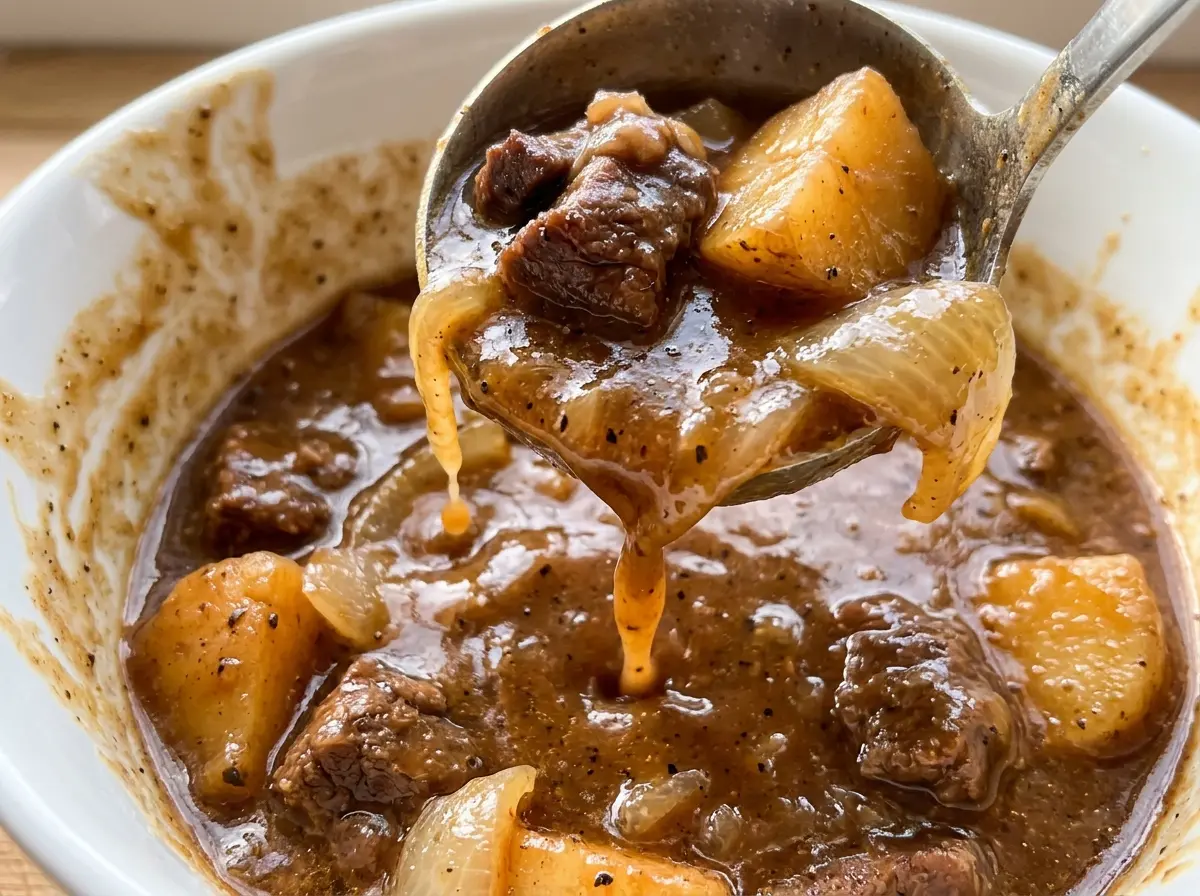
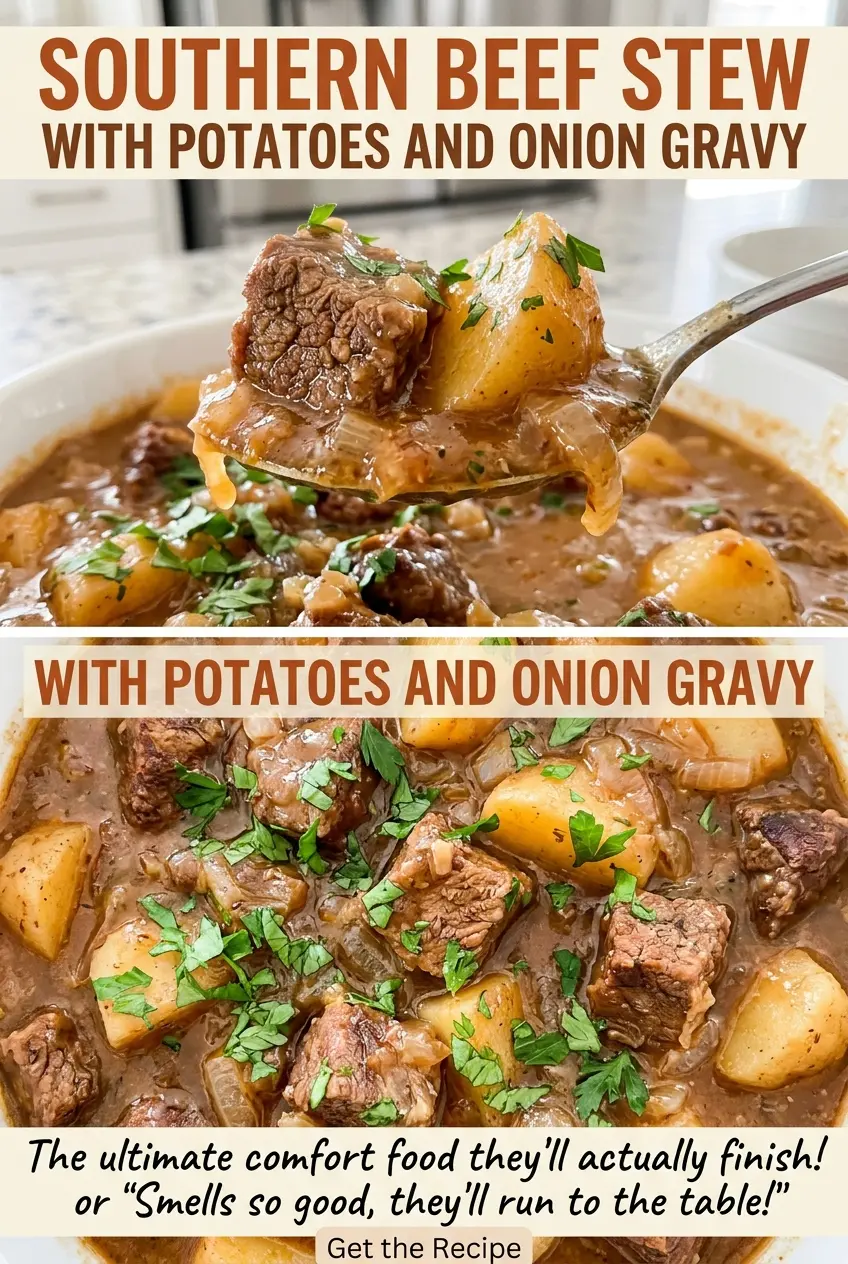
When the lid comes off a pot of beef stew, the onions should have melted into the gravy while the potatoes still hold their edges. That balance is what I aim for in this Southern beef stew with potatoes and onion gravy: tender chunks of chuck, a rich broth, and enough onion to give every spoonful a little sweetness.
I learned not to treat the beef and potatoes as if they need the same amount of cooking time. Chuck needs a long, gentle simmer to become fork-tender, while potatoes need much less time. Letting the beef get nearly tender first keeps the potatoes from turning to mush while the meat finishes. The gravy gets its body from flour cooked with the onions, then a slow pour of broth that picks up all the browned bits from the pot. It’s a hearty, savory stew with a soft onion gravy and potatoes that stay in generous pieces.
Kitchen Note
I let the finished stew rest off the heat for the full 10 minutes before serving. That pause gives the gravy a moment to settle around the beef and potatoes, instead of running thin across the bowl.
Save this Southern beef stew with potatoes and onion gravy for a slow-simmered dinner with tender chuck and a rich, onion-thickened gravy.
Why the Onion Gravy Starts Before the Broth
The gravy’s depth comes from giving the onions time in the pot after the beef is browned. They soften first, then begin to take on color. That little bit of browning adds a rounded, savory sweetness; pale, barely softened onions won’t give the gravy the same foundation. Stir them now and then so they cook evenly without scorching against the bottom.
Flour goes into the onions before any broth does. It coats the softened slices and cooks briefly, which helps the gravy thicken smoothly instead of leaving a raw flour taste. The browned bits from the beef are part of the seasoning, too, so scrape them up as you add the broth gradually. The result isn’t a separate sauce poured over the stew; it’s an onion gravy built right in the Dutch oven, carrying the beef’s browned flavor through the whole pot.
What the Chuck, Flour, and Yukon Golds Each Bring
- Beef chuck — Chuck suits a long braise: its texture changes as it simmers, turning tender rather than staying firm. Cut it into even 1 1/2-inch cubes so the pieces cook at a similar pace. I wouldn’t swap in a very lean cut and expect the same result.
- All-purpose flour — Flour does two jobs here: it coats the beef for browning and helps thicken the onion gravy. Keep the flour that clings to the meat and the extra from dredging; both go into the pot. There isn’t a direct substitute in the ingredient list that gives the same gravy.
- Yellow onions — These soften into the base of the gravy and bring gentle sweetness as they brown. Slice them thinly so they have time to soften during their short cook in the pot. Standard yellow onions work well; there’s no need for a specialty variety.
- Low-sodium beef broth — Beef broth carries the browned flavor into the gravy, while the low-sodium choice leaves room for the kosher salt already in the stew. A basic carton works; choose beef broth rather than a different broth to keep the stew’s savory base intact.
- Yukon Gold potatoes — Yukon Golds become tender while holding their shape in the stew. Cut them into pieces about the same size so they finish together. Their creamy texture suits the gravy without requiring a separate mash or garnish.
- Worcestershire, thyme, and bay leaves — Worcestershire adds savory depth, dried thyme gives the broth an herbal note, and bay leaves quietly season the long simmer. Keep the bay leaves whole so they’re easy to remove before serving. The dried thyme is convenient here; fresh herbs aren’t needed.
Build the Stew in Stages, Then Give the Potatoes Their Turn
Dry and Brown the Chuck
Pat the beef dry with paper towels, then coat it in batches with the flour, salt, and pepper. Shake excess flour back into the bowl; a thick, loose coating can burn against the pot rather than brown. Heat 2 tablespoons of oil in a 6-quart Dutch oven over medium-high heat and brown the beef for 3 to 4 minutes per batch. Add the remaining tablespoon of oil after the first batch, and transfer each batch to a plate once it has browned.
Soften the Onions and Cook the Flour
Add the sliced onions to the same pot and cook over medium heat for 8 to 10 minutes, stirring occasionally, until they’re softened and beginning to brown. If the pot looks dry, keep stirring and let the onions soften in the oil and browned residue rather than letting the bottom scorch. Stir in the remaining flour and any flour left in the dredging bowl, then cook it for 1 minute. Add the minced garlic and stir for 30 seconds; garlic burns quickly, so don’t leave it sitting on the hot pot bottom.
Pour the Broth Gradually and Simmer the Beef
Gradually stir in the beef broth, Worcestershire sauce, and dried thyme, scraping the browned bits from the bottom as the liquid loosens them. Add the bay leaves, browned beef, and any juices on the plate, then bring everything to a gentle simmer. Cover and simmer over low heat for 1 1/2 to 2 hours, stirring occasionally. The beef should be nearly fork-tender; if it’s still firm, keep simmering in 15-minute increments before adding the potatoes.
Add the Potatoes and Finish the Gravy
Stir in the Yukon Gold potatoes, cover, and simmer for 30 to 40 minutes, until the potatoes are tender and the beef is fork-tender. Check a potato with a fork: it should yield without breaking apart as you stir. Remove the bay leaves, then simmer uncovered for 5 to 10 minutes to thicken the gravy. Take the pot off the heat and let it rest for 10 minutes before serving.
Simple Changes That Keep the Stew’s Onion-Gravy Character
A Lower-Sodium Pot
For less added sodium, leave out the kosher salt and keep the low-sodium beef broth. The stew will taste less seasoned and the beef won’t have the same pepper-and-salt crust, but the onions and browned beef still build a savory gravy.
A Garlic-Free Version
Leave out the minced garlic and continue with the broth after the flour has cooked. The onion gravy will taste milder and sweeter, with less of the sharp, savory note garlic brings.
A Thyme-Free Gravy
Omit the dried thyme if you prefer the beef and onion flavors without an herbal note. Keep the bay leaves in for the simmer, then remove them before the final uncovered thickening.
Storage and Reheating
- Refrigerator: Store in a covered container for 3 to 4 days. The potatoes will soften a little as they sit in the gravy.
- Freezer: Freeze in airtight containers for up to 2 to 3 months. The beef freezes well, though the potatoes may be softer or slightly grainy after thawing.
- Reheating: Warm the stew covered on the stovetop over low heat, stirring now and then, until it reaches 165°F throughout. Avoid a hard boil, which can break up the potatoes.
Questions That Come Up While the Stew Simmeres
Southern Beef Stew with Potatoes and Onion Gravy
Ingredients
Equipment
Method
- Pat the beef dry with paper towels.
- In a bowl, mix 4 tablespoons flour with the salt and pepper; coat the beef in batches, shaking excess flour back into the bowl.
- Heat 2 tablespoons oil in a 6-quart Dutch oven over medium-high heat.
- Brown the beef in batches for 3 to 4 minutes per batch, adding the remaining 1 tablespoon oil after the first batch, then transfer the beef to a plate.
- Add the onions to the pot and cook over medium heat for 8 to 10 minutes, stirring occasionally, until softened and beginning to brown.
- Stir in the remaining 1 tablespoon flour and any flour left in the dredging bowl; cook for 1 minute.
- Stir in the garlic for 30 seconds.
- Gradually stir in the broth, Worcestershire sauce, and thyme, scraping up the browned bits.
- Add the bay leaves, beef, and any juices from the plate; bring to a gentle simmer.
- Cover and simmer over low heat for 1 1/2 to 2 hours, stirring occasionally, until the beef is nearly fork-tender; if it is still firm, continue simmering in 15-minute increments before adding the potatoes.
- Stir in the potatoes, cover, and simmer for 30 to 40 minutes, until the potatoes are tender and the beef is fork-tender.
- Remove the bay leaves and simmer uncovered for 5 to 10 minutes to thicken the gravy.
- Take the pot off the heat and let the stew rest for 10 minutes before serving.