The potatoes are tender, the butter is melting, and then the mash turns sticky instead of soft. Russets can go from fluffy to gluey quickly if they’re worked too hard, so I keep the mashing gentle and add the warm milk a little at a time. That’s the difference I look for when I make these Southern mashed potatoes.
There’s also a small pause after draining that’s easy to skip: the potatoes go back into the warm pot over low heat for about a minute. Shaking the pot gently lets extra moisture evaporate before the butter and milk go in, so the finished mash tastes rich instead of watery. With russets, butter, whole milk, and black pepper, the result is simple, soft, and ready to serve warm.
Kitchen Note
I divide the salt on purpose: most seasons the potatoes while they cook, and the final portion lets me season the mash after the butter and milk are in. Don’t put all of it in the cooking water; that last adjustment is easier to judge at the end.
Save these Southern mashed potatoes for a comfort-food dinner—the creamy, fluffy mash starts with russets and gets its texture from a quick dry-out in the pot.
Why Russet Potatoes Turn Gluey When You Mash Them Too Long
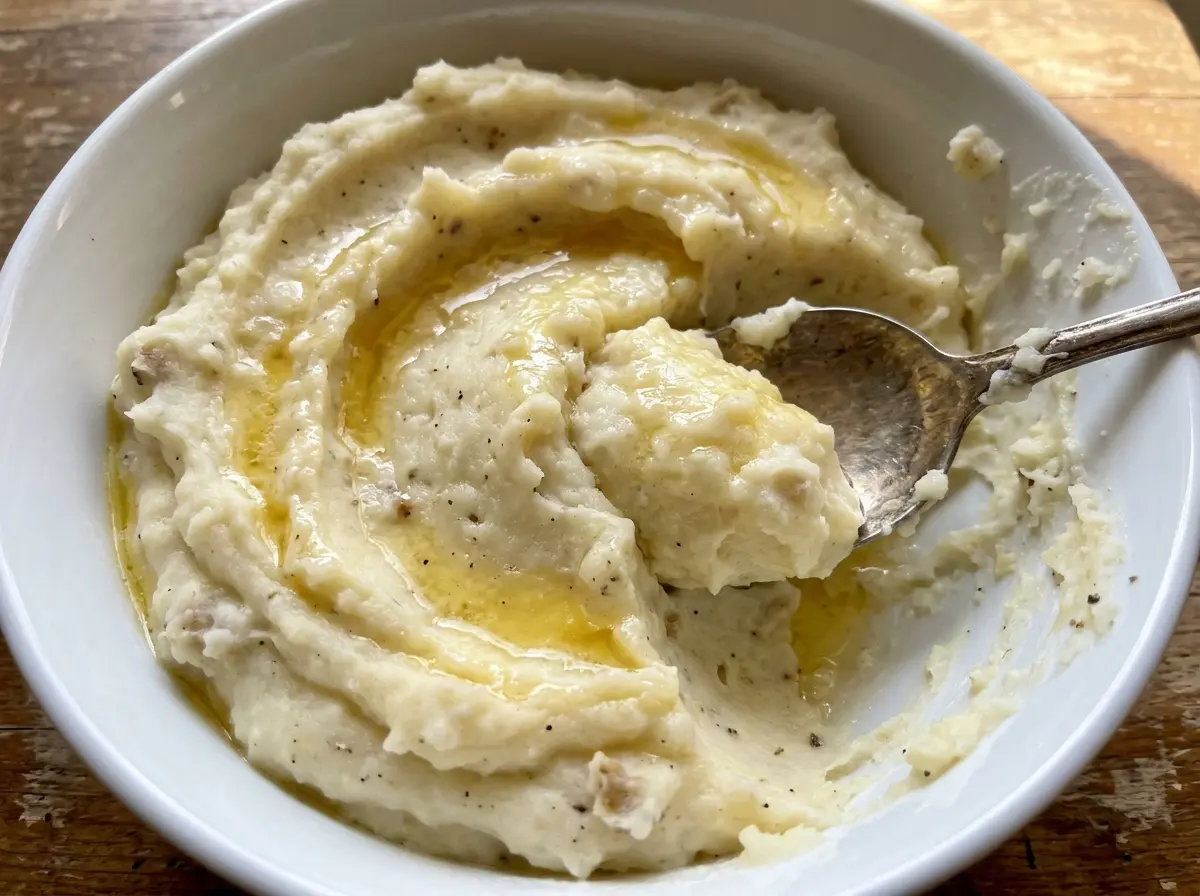
Russets have a dry, starchy texture that’s excellent for a light mash, but that same starch makes them easy to overwork. Once the cooked potatoes are mashed, repeated or vigorous mixing releases more starch and can leave the mixture stretchy and pasty. I stop when the potatoes are mostly smooth, before trying to chase every tiny lump away.
Two small choices help keep the texture on track. First, cut the peeled potatoes into similar-sized chunks so they soften at about the same rate; a mix of very small and very large pieces can leave you mashing some while others are still firm. Then work in the warm milk gradually. You’re looking for a creamy mash that settles softly on the spoon, not a loose mixture that pours or a stiff one that needs forceful stirring.
That restraint matters more with russets than with a waxier potato. They don’t need extra mixing to become tender—the simmer takes care of that. Once they’re easily pierced with a fork, the job is to mash and combine, not to keep beating them until perfectly uniform.
What Russets, Butter, and Whole Milk Each Bring to the Pot
- Russet potatoes — Their starchy flesh breaks down readily and gives the mash a soft, fluffy feel. Choose firm potatoes without soft or discolored spots. Yukon Golds can stand in, but their naturally waxier texture makes the finished mash denser and less fluffy; keep the chunks evenly sized and judge tenderness with a fork.
- Unsalted butter — Butter brings richness and helps the mash feel smooth without needing extra seasoning to carry it. A standard grocery-store butter works well here; there’s no need to seek out a specialty brand. Keeping it unsalted also makes the final seasoning easier to control.
- Whole milk — Whole milk loosens the potatoes while adding a gentle creaminess. Warm it before it goes in so it blends smoothly into the hot potatoes. For a dairy-free version, use some of the potato cooking water instead, though the mash will be less rich.
- Kosher salt and black pepper — The divided salt seasons the potatoes during cooking and then lets you fine-tune the finished mash. Freshly ground pepper has a brighter bite, but ordinary preground black pepper is perfectly good for an everyday pot of potatoes.
Boil, Dry, Then Mash: The Order That Keeps the Texture Light
Simmer the chunks until a fork slips in easily
Put the peeled, 1 1/2-inch potato chunks in a 5-quart pot, cover them with cold water by 1 inch, and add 2 teaspoons of kosher salt. Bring the water to a boil over high heat, then lower the heat and simmer for 15–20 minutes. Check a few pieces with a fork; they should give easily rather than feel firm in the center. If the fork catches, keep simmering and check again instead of mashing undercooked potatoes.
Let the drained potatoes steam off excess moisture
Drain the potatoes, return them to the pot, and set the pot over low heat for about 1 minute. Shake the pot gently as they warm so the potatoes don’t catch on the bottom. The goal is to let excess moisture evaporate, not to brown or cook them further. Keep the heat low; if you hear sizzling or see the bottom beginning to stick, lift the pot off the burner.
Warm the milk while the potatoes are hot
Heat the milk in a microwave-safe cup for 30–45 seconds, until it’s warm but not boiling. This is a short step, but it helps the milk blend into the hot potatoes without cooling the pot down. Don’t let it bubble over or get scalding hot; warm is all you need.
Mash in the butter, then add milk gradually
Add the butter pieces and mash until the potatoes are mostly smooth. Gradually mash in the warm milk, stopping when the texture is creamy; adding it all at once makes it harder to judge how much the potatoes need. Stir in the remaining 1/2 teaspoon kosher salt and the black pepper, then serve the potatoes warm.
Three Ways to Change the Texture or Make Them Dairy-Free
Make a dairy-free batch with potato cooking water
Before draining, set aside some of the cooking water. Omit the butter and milk, then mash in the hot cooking water a little at a time until the potatoes are creamy enough to serve. The result is lighter and less rich, but the starchy water helps bind the mash without adding another ingredient.
Leave a little more texture in the mash
For a more rustic bowl, stop mashing while a few small, soft pieces remain. Keep the same potato chunks and cooking method, but don’t work the potatoes until completely smooth. You’ll get a heartier texture without changing the buttery flavor.
Give the pepper a stronger presence
If you like a more noticeable pepper bite, add black pepper in small increments after the butter and milk are mixed in, tasting as you go. The potatoes will keep their creamy texture, but the pepper comes through more clearly. Add it at the end so you can judge the seasoning in the finished mash.
Storage and Reheating
- Refrigerator: Cool and refrigerate within 2 hours. Store covered for 3–4 days; the mash will firm up as it chills.
- Freezer: Mashed potatoes freeze well for about 1 month. Pack them in an airtight freezer-safe container, thaw overnight in the refrigerator, and expect the texture to be slightly less smooth after thawing.
- Reheating: Warm gently in a covered pot over low heat, stirring often, or microwave in short intervals and stir between each one. If the potatoes seem stiff, mix in a little warm milk; high heat can scorch the bottom before the center is hot.
Questions That Come Up While Making Southern Mashed Potatoes
Southern Mashed Potatoes
Ingredients
Method
- Put the potatoes in a 5-quart pot and cover with cold water by 1 inch; add 2 teaspoons of the salt.
- Bring to a boil over high heat, then reduce the heat and simmer for 15–20 minutes, until the potatoes are easily pierced with a fork.
- Drain the potatoes and return them to the pot.
- Set the pot over low heat for about 1 minute, shaking gently, to let excess moisture evaporate.
- Warm the milk in a microwave-safe cup for 30–45 seconds, until warm but not boiling.
- Add the butter to the potatoes and mash until mostly smooth.
- Gradually mash in the warm milk until creamy.
- Stir in the remaining 1/2 teaspoon salt and the pepper, and serve warm.