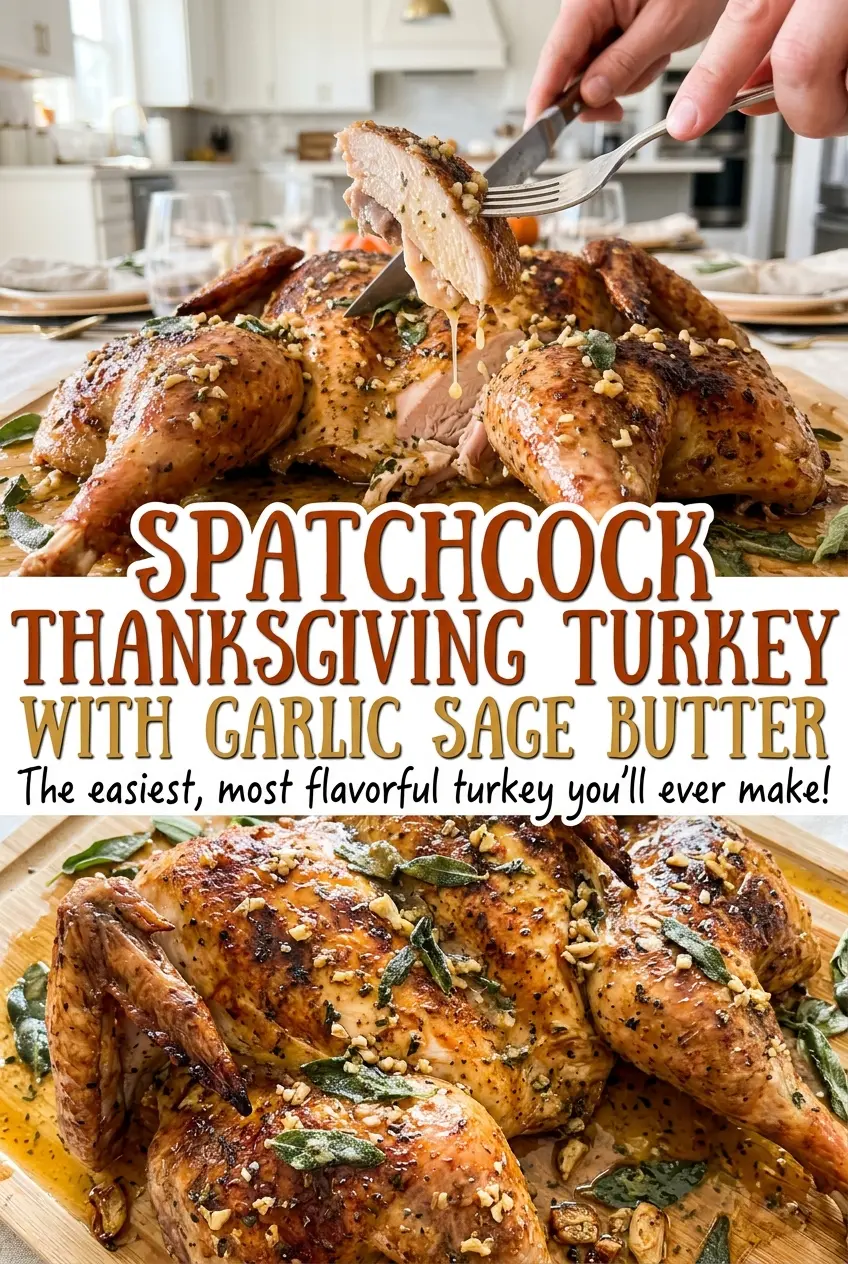
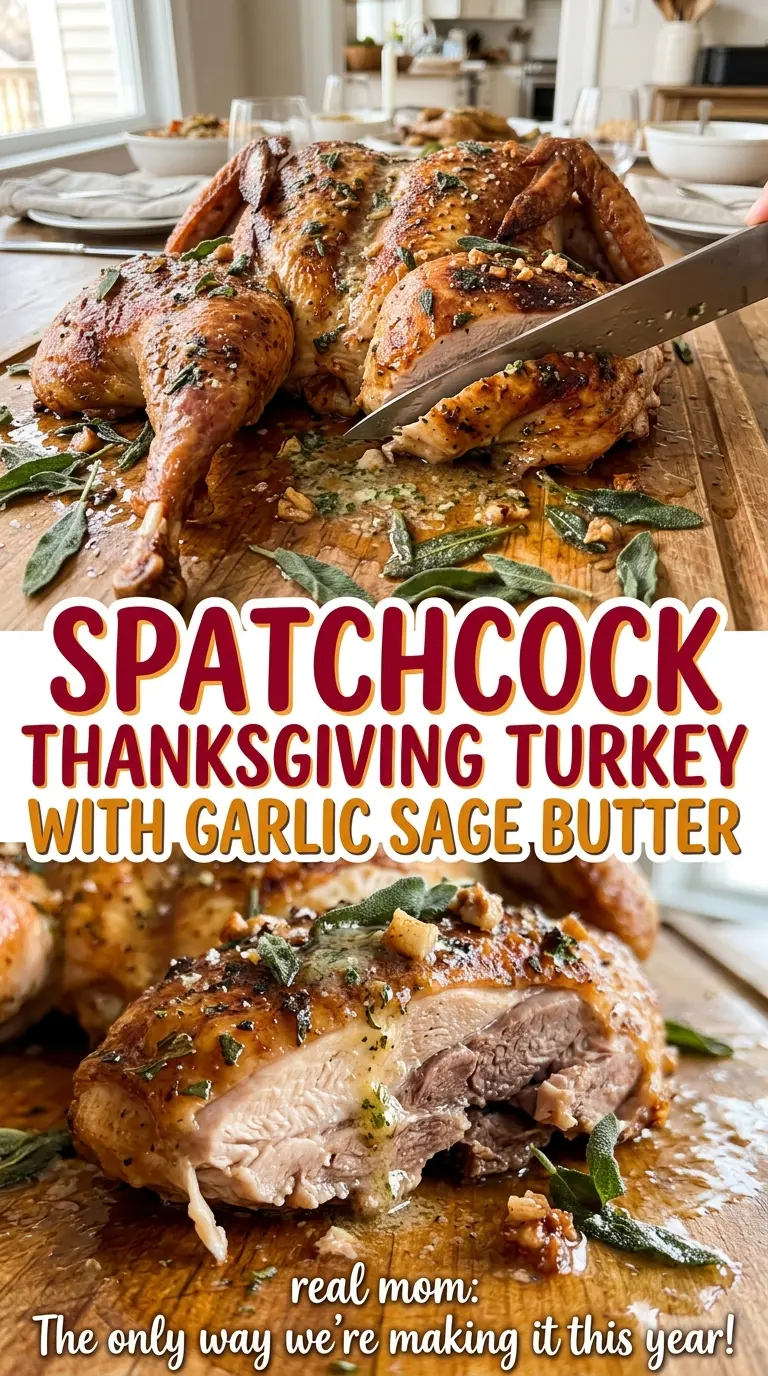
When the backbone is out and the turkey is pressed flat, the whole bird sits in a much more even layer on the pan. That changes the roast from a long wait for the breast and thighs to catch up into a quicker, more manageable cook. I make this spatchcock Thanksgiving turkey with garlic sage butter when I want golden skin and a clear temperature check at both the breast and thigh.
The part that takes patience happens before the oven: salt the turkey all over, including under the loosened skin, then leave it uncovered on a rack in the refrigerator. The salt has time to season the meat, while the uncovered surface dries instead of staying damp. After that, softened butter with garlic, sage, and black pepper slips beneath the skin and coats the outside. The result is a beautifully bronzed bird with fragrant garlic and sage in every slice.
Kitchen Note
Once the backbone is removed, press firmly on the breastbone until the turkey lies flat. If it still arches up in the middle, give it another firm press before seasoning; a flatter bird sits more steadily on the rack.
Save this spatchcock Thanksgiving turkey with garlic sage butter for a golden-skinned holiday centerpiece that roasts in a fraction of the time a whole bird needs.
Why the Uncovered Dry Brine Matters More Than Extra Butter
The garlic sage butter adds richness and a savory top note, but it isn’t what seasons the meat all the way through. That work starts earlier, when the salt goes over the skin, into the cavity, and under the loosened skin. Giving it time in the refrigerator means the seasoning isn’t limited to the outside of the bird.
Leaving the turkey uncovered on a wire rack also matters. A covered bird can hold moisture against its skin; uncovered, the surface has room to dry while the rack lifts it off the pan. Drier skin browns more readily in the hot oven, so don’t wrap the bird during this refrigerator rest. The rack and the open air do useful work before you even turn on the oven.
This is also why I don’t try to shorten the resting time in the refrigerator by adding extra butter. Butter contributes flavor and helps the skin brown, but it can’t replace the salt’s contact time. Plan the dry brine first, then finish the bird with the butter just before roasting.
What the Turkey, Salt, and Sage Butter Each Bring
- Turkey — Choose a fully thawed bird in the 10- to 12-pound range so it fits the pan and the roasting window is appropriate. There isn’t a direct swap for the whole bird that keeps this timing and method; turkey parts cook differently.
- Diamond Crystal kosher salt — The salt is the only seasoning applied during the long refrigerator rest, so use the specified brand rather than measuring another salt one-for-one. Other kosher salts and table salt have different crystal sizes and saltiness by volume, and a direct volume swap can over-season the turkey.
- Unsalted butter — Softened butter spreads beneath the skin without needing to melt it first, and unsalted butter keeps the seasoning in your control. If you need a dairy-free option, use an unsalted plant-based butter stick in the variation below; tub spreads are often softer and harder to work under the skin.
- Fresh garlic — Finely minced garlic distributes through the butter instead of leaving large pieces in one spot. Jarred minced garlic can stand in if that’s what you have, though its flavor is less bright; keep the pieces small so they spread evenly.
- Fresh sage and black pepper — Fresh sage gives the butter its woodsy, savory aroma, and black pepper adds a little warmth without taking over. Dried sage is a practical substitute: use one-third as much dried sage as fresh. Freshly ground pepper has a livelier aroma, but pre-ground black pepper works just fine here.
From a Flat Bird to Golden, Evenly Roasted Turkey
Cut Out the Backbone and Flatten the Bird
Remove the neck and giblets, then pat the turkey dry so it’s easier to handle. With sturdy poultry shears, cut down both sides of the backbone and remove it. Turn the bird breast-side up and press firmly on the breastbone until the turkey lies flat. Take a moment to check that it rests evenly rather than rocking on the pan.
Salt Under the Skin and Let the Surface Dry
Sprinkle the Diamond Crystal kosher salt evenly over the turkey, including inside the cavity and beneath the loosened skin. Set it breast-side up on a wire rack in an 18-by-13-inch rimmed baking sheet. Refrigerate it uncovered for 12 to 24 hours; the exposed skin should feel drier than when it went into the refrigerator. Don’t skip the rack, which keeps the bird lifted above the baking sheet.
Spread the Garlic Sage Butter Beneath the Skin
Stir the softened butter with the finely minced garlic, chopped fresh sage, and black pepper until evenly combined. Take the turkey out of the refrigerator while the oven heats to 425°F. Loosen the skin over the breast and thighs, then work about half the butter underneath it and spread the rest over the outside. If the butter is cold and stiff, it won’t spread as smoothly, so start with softened—not melted—butter.
Roast Until Both Checks Read 165°F, Then Rest
Roast the turkey for 75 to 95 minutes, rotating the pan halfway through. Look for golden-brown skin, but use an instant-read thermometer rather than color alone to judge doneness. Check the thickest part of the breast and the innermost thigh, keeping the thermometer away from bone; both should read 165°F. Transfer the turkey to a cutting board and let it rest for 20 to 30 minutes before carving so the juices settle.
Two Useful Ways to Adapt the Garlic Sage Butter
Make the Butter Dairy-Free
Replace the unsalted butter with the same amount of unsalted plant-based butter from a stick. It carries the garlic, sage, and pepper beneath the skin in the same way, though the turkey’s surface may brown a little differently depending on the brand. Avoid soft tub-style spreads, which can be too loose to spread neatly under the skin.
Trade the Sage for Rosemary
Use the same amount of finely chopped fresh rosemary in place of the fresh sage in the butter. Rosemary makes the seasoning more piney and assertive, so mince it finely to keep the pieces evenly distributed. Leave the garlic and black pepper in place for a familiar savory base.
Storage and Reheating
- Refrigerator: Refrigerate carved leftovers within 2 hours in covered containers. They’ll keep for 3 to 4 days; the skin softens once chilled.
- Freezer: Freeze carved turkey in airtight, freezer-safe packaging for 2 to 6 months for best quality. Thaw frozen portions in the refrigerator before reheating.
- Reheating: Cover the turkey in an oven-safe dish and warm it in a 325°F oven until it reaches 165°F throughout. Keep it covered to limit drying, and avoid reheating uncovered for a long stretch.
Questions That Come Up While Roasting This Turkey
Spatchcock Thanksgiving Turkey with Garlic Sage Butter
Ingredients
Equipment
Method
- Remove the neck and giblets from the turkey cavity.
- Pat the turkey dry.
- Using sturdy poultry shears, cut along both sides of the backbone and remove it.
- Turn the turkey breast-side up and press firmly on the breastbone until the bird lies flat.
- Sprinkle the salt evenly over the turkey, including the cavity and under the loosened skin.
- Set the turkey breast-side up on a wire rack in an 18x13-inch rimmed baking sheet and refrigerate uncovered for 12 to 24 hours.
- Stir the softened butter, garlic, sage, and black pepper together in a small bowl.
- Heat the oven to 425°F.
- Take the turkey out of the refrigerator while the oven heats.
- Loosen the skin over the breast and thighs.
- Spread about half the butter under the skin and the rest over the outside.
- Roast for 75 to 95 minutes, rotating the pan halfway through, until the skin is golden brown and an instant-read thermometer inserted into the thickest breast and innermost thigh, away from bone, reads 165°F.
- Transfer the turkey to a cutting board.
- Rest for 20 to 30 minutes before carving.