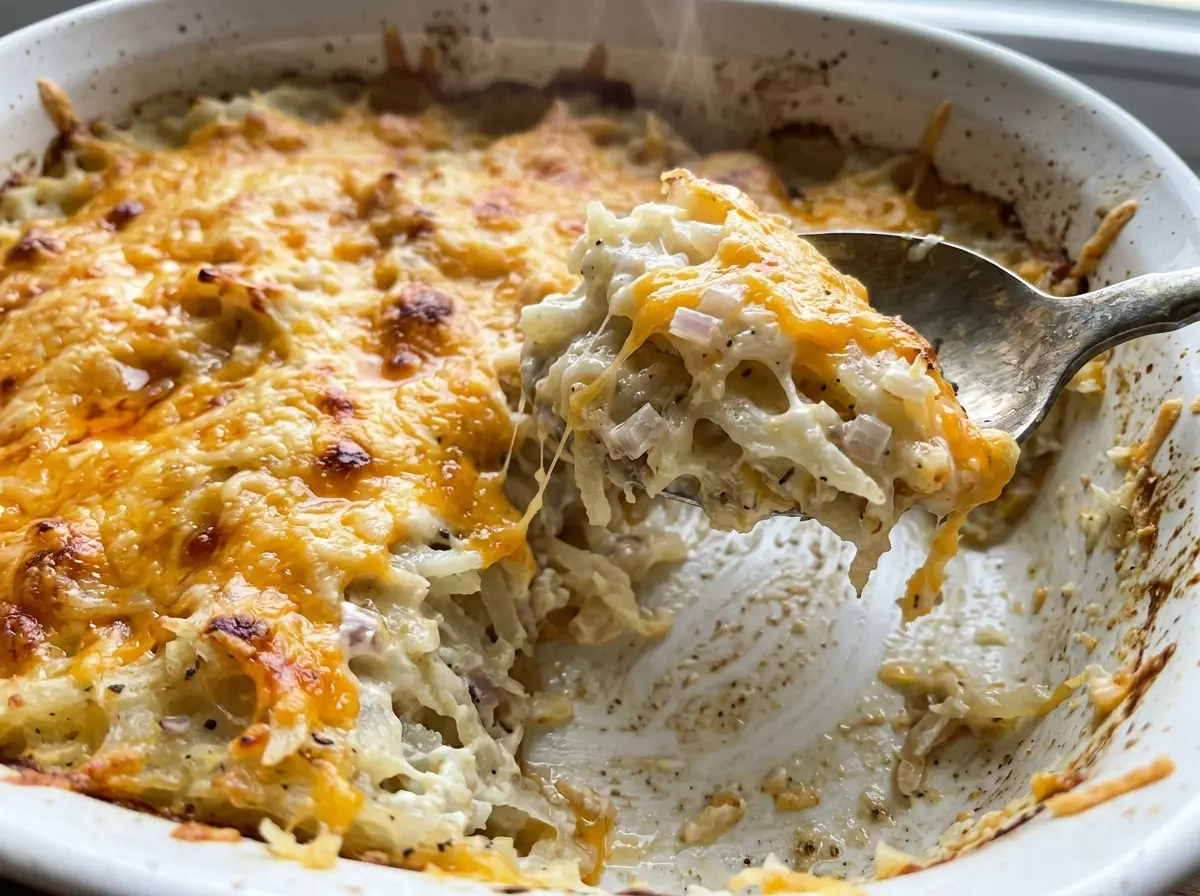
The potatoes come out of the oven with dry, papery skins and a soft center that gives easily to a knife. They need a little patience after that: once chilled, russets grate into long, separate pieces instead of collapsing into a mash. That texture is what makes Steakhouse Potatoes Romanoff feel rich and comforting without turning dense.
I bake the potatoes ahead, then fold them gently with sour cream, finely grated onion, sharp cheddar, salt, and pepper. The mixture goes into a buttered 9×13-inch dish with another layer of cheddar on top. As it bakes, the edges bubble and the top turns lightly golden while the middle stays tender. It’s a satisfying casserole to bring to the table, and the hands-on work is simple once the potatoes are cold.
Kitchen Note
Give the potatoes enough time to chill; four hours is the minimum, and overnight works beautifully. I plan that pause before I start, rather than trying to grate potatoes that are still warm.
Save Steakhouse Potatoes Romanoff for a cheesy, tender potato casserole with bubbling edges and a golden cheddar top.
Why Gentle Mixing Keeps Romanoff Tender Instead of Dense
These potatoes aren’t mashed, and that difference matters. Coarsely grated russets give the casserole little strands and flakes that hold their shape. Sour cream and cheddar coat those pieces, adding richness while leaving enough structure for a spoonful to feel soft rather than pasty.
If the mixture is stirred hard or worked for too long, the grated potato breaks down and releases starch. The result can bake up heavy, especially in the center. Fold the ingredients together just until the sour cream and cheese are distributed. A few uneven pockets are less of a problem than turning the whole bowl into a smooth paste.
The onion is finely grated rather than chopped, so it blends into the creamy mixture without leaving crunchy pieces. That also means it’s worth grating it finely: large shreds can stand out against the delicate potato texture. Once the casserole is spread in the dish, the separate cheddar topping browns on its own and gives the surface a little contrast.
Russets, Sour Cream, and Cheddar: What Each Brings to the Casserole

- Russet potatoes — Their starchy, fluffy interior bakes up tender and grates cleanly once cold. Choose firm potatoes without soft spots. I wouldn’t swap in a waxy potato here; it won’t give the same light, fluffy texture.
- Sour cream — It brings both moisture and a gentle tang that balances the cheddar. Use regular sour cream for the creamy consistency this casserole needs. A lower-fat or dairy-free replacement changes the richness and texture, so I don’t recommend a direct swap.
- Finely grated yellow onion — Fine grating spreads the onion’s savory sweetness through the casserole without leaving noticeable chunks. A sharp grater makes quick work of it; don’t substitute chopped onion if you want the same even texture.
- Sharp cheddar — Its pronounced cheese flavor stands up to the potatoes and sour cream, and it melts into the filling while also browning on top. Freshly shredded cheddar melts smoothly; pre-shredded cheese is convenient, though its coating can make the finished casserole a little less silky. Keep the same cheddar divided between the filling and topping for the intended balance.
From Oven-Baked Russets to a Bubbling Cheddar Top
Bake the Potatoes Until a Knife Slides In Easily
Heat the oven to 400°F and set the russets directly on the oven rack. Bake them for 55 to 70 minutes, until a knife slides easily into the center of a potato. The skins should look dry, and the centers should feel soft rather than firm. Don’t stop while the middle resists the knife; underbaked potatoes are difficult to grate into tender flakes.
Cool, Chill, Then Grate
Let the potatoes cool completely, then refrigerate them for at least 4 hours or overnight. When they’re cold, peel them and coarsely grate them into a large bowl. Use the large holes of a box grater so you get distinct shreds instead of a fine, damp pile. If the potatoes are still warm, pause here and chill them longer rather than forcing the grating.
Fold the Filling Together Without Mashing It
Heat the oven to 350°F and grease a 9×13-inch baking dish with the softened butter. Gently mix the grated potatoes with the sour cream, finely grated onion, 1 1/2 cups cheddar, kosher salt, and black pepper. Stop when the ingredients are just combined and the potato is coated; vigorous stirring can crush the shreds. Spread the mixture into the dish, then sprinkle the remaining 1/2 cup cheddar evenly over the surface.
Bake Until the Edges Bubble
Bake for 30 to 40 minutes, until the casserole is hot throughout, the edges are bubbling, and the top is lightly browned. The center should look creamy, not dry or crusted over. If the edges are bubbling but the top is still pale, give it a little more time and watch for the color to develop. Let it rest for 10 minutes before serving so the hot filling settles and scoops more neatly.
Two Simple Ways to Change the Cheese or Onion Balance
Put More Cheddar on Top
For a more pronounced cheesy crust, use 1 cup cheddar in the potato mixture and reserve 1 cup for the top. The total cheddar stays the same, but the larger topping layer gives you more browned cheese in each serving and a slightly less cheesy interior.
Leave Out the Onion
Skip the grated onion if you prefer a cleaner potato-and-cheddar flavor. The casserole will lose that gentle savory sweetness, but the sour cream and sharp cheddar still make a cohesive filling. Keep the rest of the ingredients and method the same.
Storage and Reheating
- Refrigerator: Store leftovers covered for 3 to 4 days. The potatoes will firm up as they chill, then soften again when warmed.
- Freezer: This casserole can be frozen, though sour cream-based dishes may lose some smoothness after thawing. Freeze airtight for up to 2 months, then thaw in the refrigerator before reheating.
- Reheating: Warm covered in a 350°F oven until hot throughout, or heat individual portions in the microwave. Don’t leave it uncovered for the whole reheating time; the top can dry before the center is warm.
Questions That Come Up When Making Potatoes Romanoff
Steakhouse Potatoes Romanoff
Ingredients
Equipment
Method
- Heat the oven to 400°F.
- Bake the potatoes directly on the oven rack for 55 to 70 minutes, until a knife slides easily into the center.
- Cool the potatoes completely.
- Refrigerate them for at least 4 hours or overnight.
- Heat the oven to 350°F.
- Grease a 9x13-inch baking dish with the butter.
- Peel and coarsely grate the chilled potatoes into a large bowl.
- Gently mix the potatoes with the sour cream, onion, 1 1/2 cups cheddar, salt, and pepper.
- Spread the mixture in the prepared dish.
- Sprinkle the remaining 1/2 cup cheddar over the top.
- Bake for 30 to 40 minutes, until hot throughout with bubbling edges and a lightly browned top.
- Let the casserole rest for 10 minutes before serving.