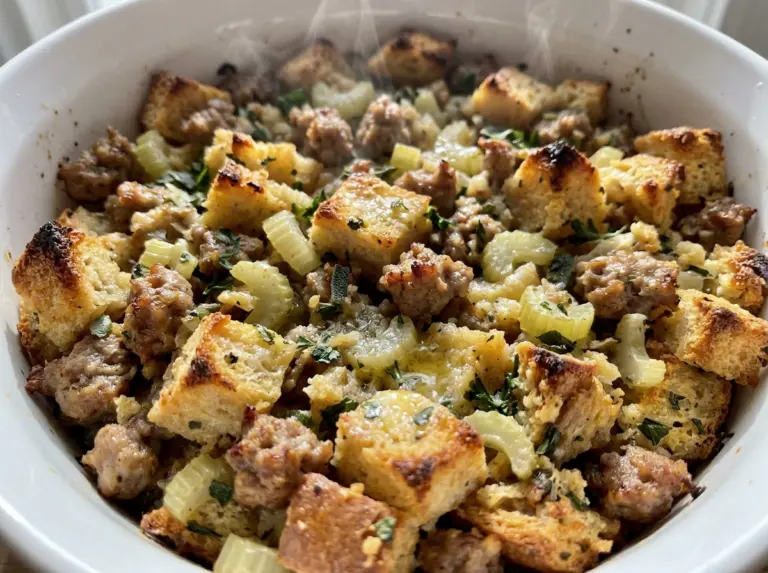
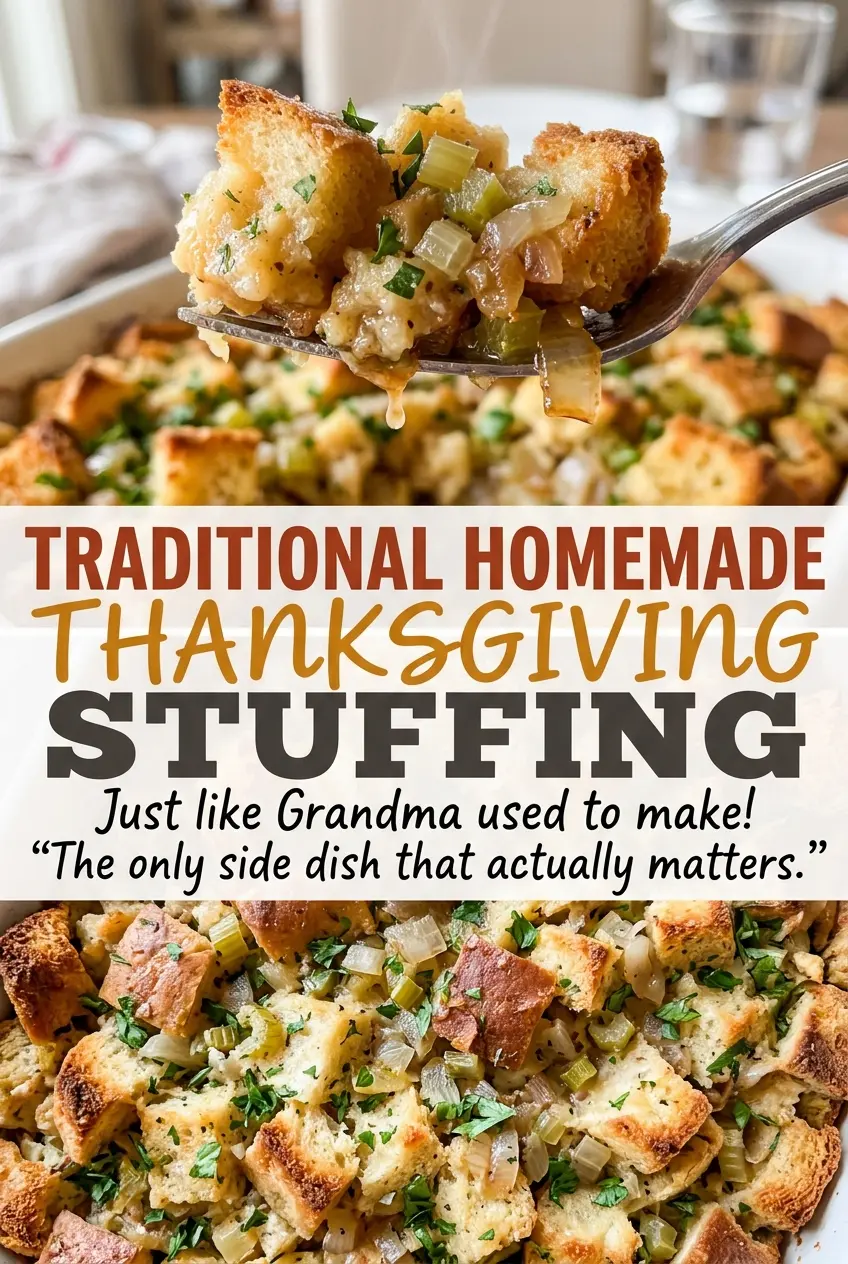
When bread cubes hit the broth, dry ones drink it up; soft bread starts collapsing before the stuffing even reaches the oven. That’s why I take the time to dry the bread first for this traditional homemade Thanksgiving stuffing. It gives the finished dish a tender center that holds together, instead of a heavy, wet layer at the bottom.
The other detail I pay attention to is how the stuffing bakes. It spends the first part covered, so the center can heat through without the top drying out. Then the foil comes off and the surface turns golden. Onion and celery cooked in butter bring a mellow savory base, while sage and thyme give each bite that familiar Thanksgiving character.
With a little chopping and a two-stage bake, you get crisp edges, a soft middle, and plenty of herb-scented flavor in every serving.
Kitchen Note
Take the skillet off the heat before stirring in the parsley. The residual warmth softens it without cooking away its fresh, green flavor.
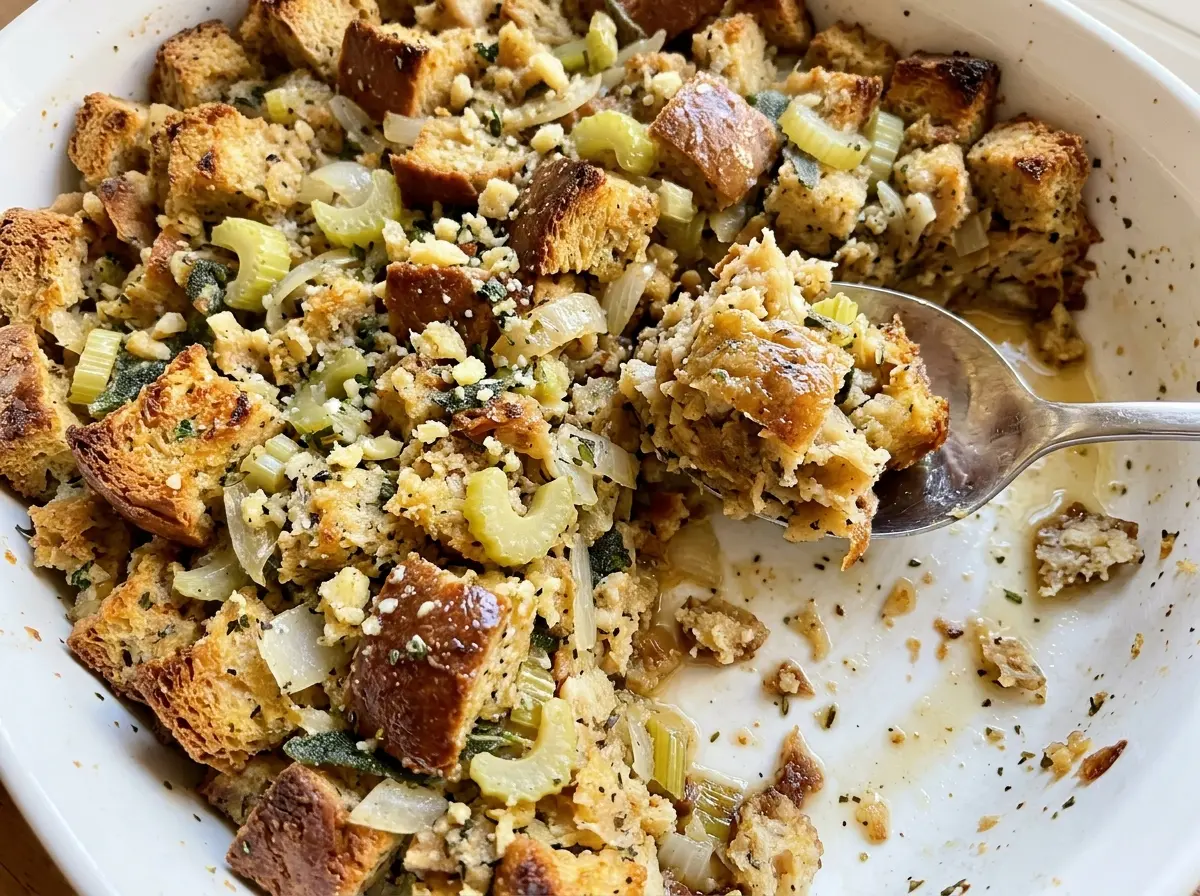
Save this traditional Thanksgiving stuffing for its buttery vegetables, classic herbs, and crisp golden top.
Why This Stuffing Bakes Covered First and Golden Later
A stuffing casserole has two different jobs to do in the oven: the middle needs enough time to heat and set, while the top needs a chance to dry into a lightly crisp layer. Leaving it uncovered for the entire bake can brown the surface before the center is hot. Keeping it covered the whole time protects the center, but leaves the bread on top soft.
That’s why I split the bake. The foil holds in heat and moisture during the first stretch, giving the broth-soaked bread and eggs time to come together. Uncovering for the final 15 to 20 minutes lets the surface brown without asking the center to do all its cooking at the same time.
This balance also makes the dish easier to serve. The center stays tender rather than dry, and the browned top gives each portion a little contrast. Use a tight foil cover for the first bake; loose foil lets steam escape and can leave the surface drier than you want before it has finished heating through.
The Bread, Broth, and Eggs Each Have a Job
- Day-old white bread — White bread gives the stuffing a soft, familiar interior without competing with the herbs. A basic loaf works well; there’s no need for an artisan loaf. Cut the cubes evenly so they dry at roughly the same rate, and dry them until crisp rather than relying on a few hours on the counter.
- Unsalted butter — Butter carries the flavor of the onion, celery, and dried herbs and helps the vegetables soften evenly. Unsalted butter gives you control over the seasoning because the broth and bread can vary in saltiness. Divide it carefully: a little greases the baking dish, and the rest cooks with the vegetables.
- Yellow onion and celery — These make the aromatic base and add moisture and gentle sweetness to the stuffing. Finely chopping both helps them soften in the skillet and spread through the bread instead of leaving big crunchy pieces. They don’t need to brown; aim for tender vegetables.
- Dried sage and thyme — Dried herbs hold their savory flavor through the long bake and are easy to distribute through the vegetables. Stirring them into the hot butter for a minute wakes up their aroma. Fresh parsley goes in later; it brings a brighter note that balances the dried herbs.
- Low-sodium chicken broth and eggs — The broth moistens the bread, while the eggs help the casserole set as it bakes. Low-sodium broth leaves room for the measured salt and pepper to season the dish without making the result taste overly salty. Whisk the eggs thoroughly into the broth so they’re spread evenly before you pour it over the bread.
Dry the Bread Before Building the Casserole
Dry the Cubes Until Crisp
Spread the bread cubes in one layer across two rimmed baking sheets, then bake them at 300°F for 30 to 40 minutes. Stir once halfway through so cubes around the edges don’t dry faster than the ones in the middle. They should feel dry and crisp, not merely warm or lightly toasted. If the cubes still feel soft, give them more time within the stated range before moving on.
Soften the Vegetables in Butter
Raise the oven to 350°F and grease a 9-by-13-inch baking dish with 1 tablespoon of butter. In a 12-inch skillet, melt the remaining butter over medium heat, then add the onion and celery. Cook for 8 to 10 minutes, stirring occasionally, until both are softened; keep the heat moderate so the butter doesn’t brown before the vegetables are tender. Stir in the sage, thyme, salt, and pepper, cook for 1 minute, then take the skillet off the heat and add the parsley.
Moisten the Bread Evenly
Whisk the broth and eggs together in a large bowl. Add the dried bread cubes and the vegetable mixture, tossing gently to distribute the butter and herbs. Pour in the broth mixture and toss again until the cubes are evenly moistened; avoid crushing them as you mix. A few careful turns are better than vigorous stirring, which can break the bread down before it reaches the baking dish.
Bake Until the Top Is Golden
Transfer the mixture to the greased dish and cover it tightly with foil. Bake at 350°F for 35 minutes, then remove the foil and bake for another 15 to 20 minutes, until the top is golden and the center reaches 165°F. If the surface is still pale at the end of that window, judge by the color and center temperature rather than removing it early. Let the dish rest for 10 minutes before serving so portions hold together more neatly.
Two Practical Ways to Adapt This Thanksgiving Stuffing
Make It Vegetarian With Vegetable Broth
Replace the chicken broth with the same amount of low-sodium vegetable broth. The bread and eggs still set the casserole, while the broth swap keeps the savory, herby character and makes the stuffing suitable for a vegetarian table.
Use Gluten-Free White Bread
For a gluten-free version, use a 16-ounce loaf of gluten-free white bread and cut it into cubes. Dry the cubes thoroughly before adding the broth mixture; gluten-free loaves vary in texture, and a well-dried cube is less likely to turn gummy. The final texture may be a little more delicate than stuffing made with standard white bread.
Storage and Reheating
- Refrigerator: Refrigerate leftovers within 2 hours in a covered container and use them within 3 to 4 days. The crisp top will soften as it sits.
- Freezer: Freeze cooled portions in an airtight container for up to 3 months for best quality. The texture may be softer after thawing.
- Reheating: Reheat covered in a 350°F oven until hot throughout, uncovering near the end if you’d like to refresh the top. Avoid reheating uncovered the entire time, which can dry out the bread before the middle is hot.
Questions That Come Up When Making Thanksgiving Stuffing
Traditional Homemade Thanksgiving Stuffing
Ingredients
Equipment
Method
- Preheat the oven to 300°F and position a rack in the center.
- Spread the bread cubes in a single layer across 2 rimmed baking sheets and bake for 30–40 minutes, stirring once halfway through, until dry and crisp.
- Increase the oven temperature to 350°F and grease a 9x13-inch baking dish with 1 tablespoon of the butter.
- Melt the remaining 7 tablespoons butter in a 12-inch skillet over medium heat, add the onion and celery, and cook for 8–10 minutes, stirring occasionally, until softened.
- Stir in the sage, thyme, salt, and pepper and cook for 1 minute, then remove the skillet from the heat and stir in the parsley.
- Whisk the broth and eggs together in a large bowl.
- Add the bread cubes and vegetable mixture to the bowl and toss gently, then pour in the broth mixture and toss until evenly moistened.
- Transfer the stuffing to the prepared baking dish, cover tightly with foil, and bake for 35 minutes; uncover and bake for 15–20 minutes more, until the top is golden and the center reaches 165°F.
- Let the stuffing rest for 10 minutes before serving.