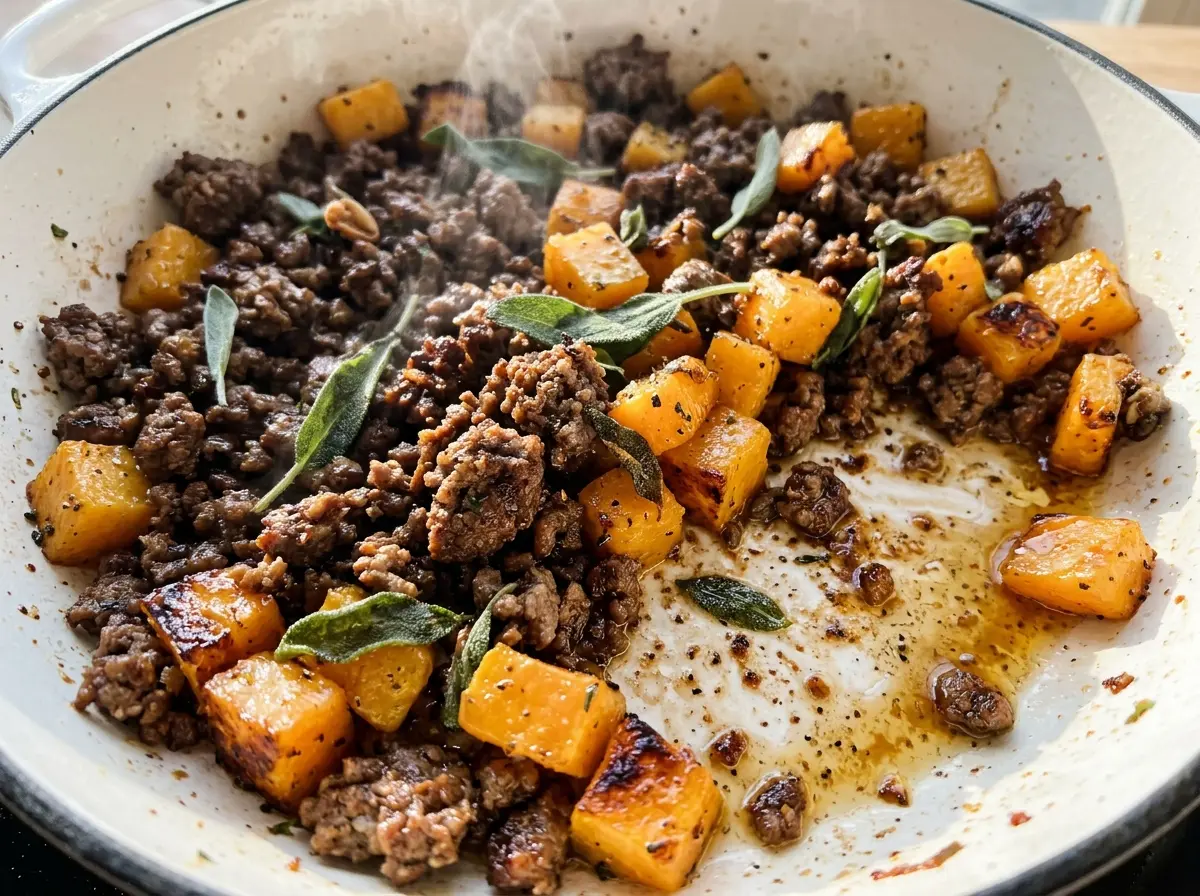
The beef gets its browned edges first, then steps out of the skillet while the squash softens in a little broth. That order keeps the ground beef savory instead of letting it simmer away alongside the vegetables. In this ground beef and butternut squash skillet with sage, the squash turns tender and sweet while the beef gives every bite a hearty base.
I like how a few minutes of fresh sage and garlic in the hot pan make the whole kitchen smell warm and woodsy. The broth doesn’t need to cover the squash; with the lid on, it creates enough steam to cook the cubes through without turning the skillet into soup. At the end, the beef and its juices go back in, and the finished skillet is cozy, savory, and full of tender squash.
It’s a useful one-pan dinner when you want something more substantial than roasted squash but don’t want a complicated sauce. Serve it straight from the skillet, with the beef, onion, and sage tucked through every golden cube.
Kitchen Note
Cut the squash into even 1/2-inch cubes. They soften at about the same pace, so you won’t be left waiting on a few stubborn chunks while smaller pieces lose their shape.
Save this ground beef and butternut squash skillet with sage for a savory, one-pan dinner with tender squash and fresh herbs.
Why the Beef Comes Out Before the Squash Goes In
Cooking the beef and squash in separate stages isn’t just a way to fit the steps into one skillet. Ground beef browns best while it has direct contact with the hot pan. If the squash and broth are already in there, the extra moisture works against that browning and the beef is more likely to steam than develop those browned bits.
Taking the beef out also gives the onion a chance to soften in the same pan without having to push around a pile of meat. Then the squash cooks under the lid, where the broth can turn to steam and tenderize the cubes. The beef returns only at the end, along with its juices, so it warms through without spending the whole squash-cooking time in the liquid. You get distinct bites of beef and squash, with the sage and garlic connecting them.
There’s no need to scrub the skillet between stages. After you drain off the excess fat, the browned traces left in the pan become part of the savory base. The broth joins that base as the squash simmers, rather than diluting the beef before it has a chance to brown.
What the Beef, Squash, and Sage Each Bring to the Skillet

- Ground beef — The 85% lean beef has enough fat to brown well, while draining the excess keeps the finished skillet from feeling greasy. Ground bison works in the same quantity if you want a deeper, leaner-tasting skillet; expect fewer drippings to drain.
- Butternut squash — Choose a firm squash without soft spots. Peeling and cutting it yourself gives you control over the cube size; peeled sweet potato is a workable swap, cut into similarly sized pieces, though it tastes sweeter and can become softer.
- Fresh sage — Fresh leaves have a bright, woodsy aroma that stands up to the squash’s sweetness. If dried sage is what you have, use one-third as much as the fresh amount; its flavor is more concentrated.
- Beef broth — Low-sodium broth adds savory depth without making it hard to control the salt. Unsalted beef stock can stand in at the same amount, but its flavor may be more pronounced.
- Onion and garlic — A small yellow onion softens into the base, while fresh minced garlic brings a sharper aroma than jarred garlic. Dice the onion evenly so it softens in the short sauté, and mince the garlic before it goes into the pan.
- Olive oil — It helps the onion soften after the beef fat has been drained. A neutral cooking oil can replace it in the same amount, though you’ll lose the faint olive-fruit note.
Build the Skillet in Stages, Then Let the Covered Pan Do the Work
Brown the Beef Before Adding Moisture
Heat a 12-inch skillet over medium-high heat, then add the ground beef with 1/2 teaspoon of the salt and the black pepper. Break the meat into crumbles as it cooks for 6–8 minutes. Look for browned pieces and no pink in the center, and cook until it reaches 160°F. Transfer it to a plate and drain the excess fat from the skillet.
Soften the Onion in the Same Pan
Lower the heat to medium and add the olive oil and diced onion. Stir occasionally for 3–4 minutes, until the onion looks softened and turns translucent around the edges. If it starts taking on color too quickly, lower the heat rather than letting it brown before it softens. The onion should be tender, not crisp.
Give the Sage and Garlic a Brief Sizzle
Stir in the squash, chopped sage, minced garlic, and the remaining 1/4 teaspoon of salt. Cook for 1 minute, stirring so the garlic and sage meet the warm pan without sitting in one spot. The aroma should be fragrant and herbal. Don’t leave the garlic unattended; it can turn bitter if it scorches.
Cover and Simmer Until the Squash Yields
Pour in the beef broth, cover the skillet, and bring the mixture to a simmer over medium-low heat. Cook for 12–16 minutes, until a fork slides into the squash easily. Keep the lid in place so the trapped steam can cook the cubes through. The skillet should simmer gently rather than boil hard.
Return the Beef for a Short Finish
Add the beef and any juices on the plate back to the skillet, then stir to distribute it through the squash. Cook uncovered for 2–3 minutes, until everything is heated through. The beef should be warm and the squash should hold together when stirred. If you keep cooking well past that point, the squash is more likely to break down.
Two Simple Ways to Change the Skillet Without Losing Its Shape
Make It Vegetarian with Plant-Based Crumbles
Use vegetarian plant-based ground crumbles instead of the beef, and vegetable broth instead of beef broth. Brown the crumbles following their package’s skillet guidance, set them aside, and return them when the squash is tender. The result is less beefy, but sage and squash still make a savory, substantial combination.
Add a Little Heat
Stir crushed red pepper flakes into the skillet with the sage and garlic. The gentle heat cuts through the squash’s sweetness without hiding the fresh sage. Start with a small pinch if you want the beef and herbs to stay in the foreground.
Storage and Reheating
- Refrigerator: Store leftovers in an airtight container for 3–4 days. The squash will soften more after chilling.
- Freezer: Freeze in airtight, freezer-safe portions for up to 2–3 months. The squash may be softer after thawing, but the skillet is still suitable for reheating.
- Reheating: Microwave a covered portion, stirring halfway through so the beef and squash heat evenly. Reheat leftovers to 165°F; repeated heating can make the squash mushy.
Questions That Come Up While Making This Squash Skillet
Ground Beef and Butternut Squash Skillet with Sage
Ingredients
Equipment
Method
- Heat a 12-inch skillet over medium-high heat, add the ground beef, 1/2 teaspoon of the salt, and the black pepper, and cook for 6–8 minutes, breaking it up, until browned and it reaches 160°F.
- Transfer the beef to a plate and drain excess fat from the skillet.
- Reduce the heat to medium, add the olive oil and onion, and cook for 3–4 minutes, stirring occasionally, until softened.
- Stir in the squash, sage, garlic, and remaining 1/4 teaspoon salt, and cook for 1 minute, until fragrant.
- Pour in the beef broth, cover the skillet, and simmer over medium-low heat for 12–16 minutes, until the squash is fork-tender.
- Return the beef and any accumulated juices to the skillet, stir, and cook uncovered for 2–3 minutes, until heated through.