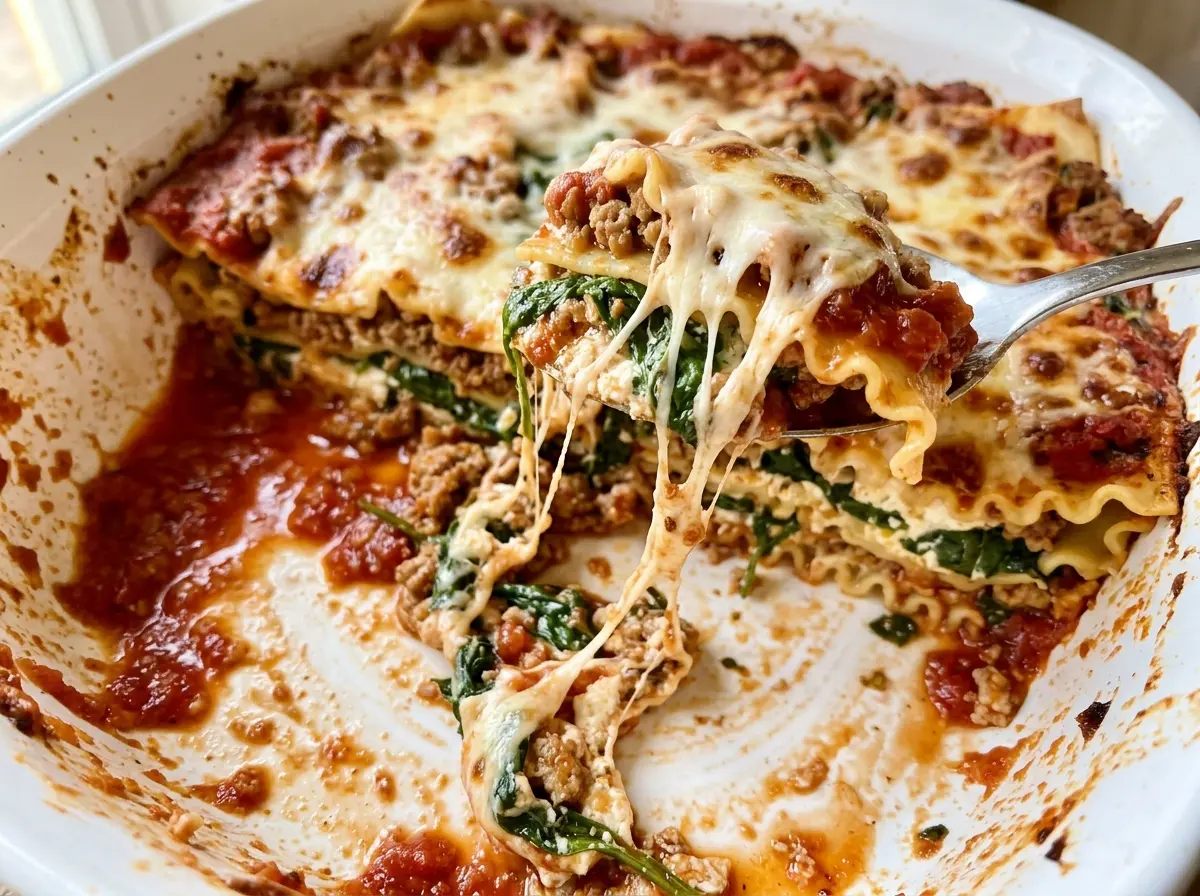
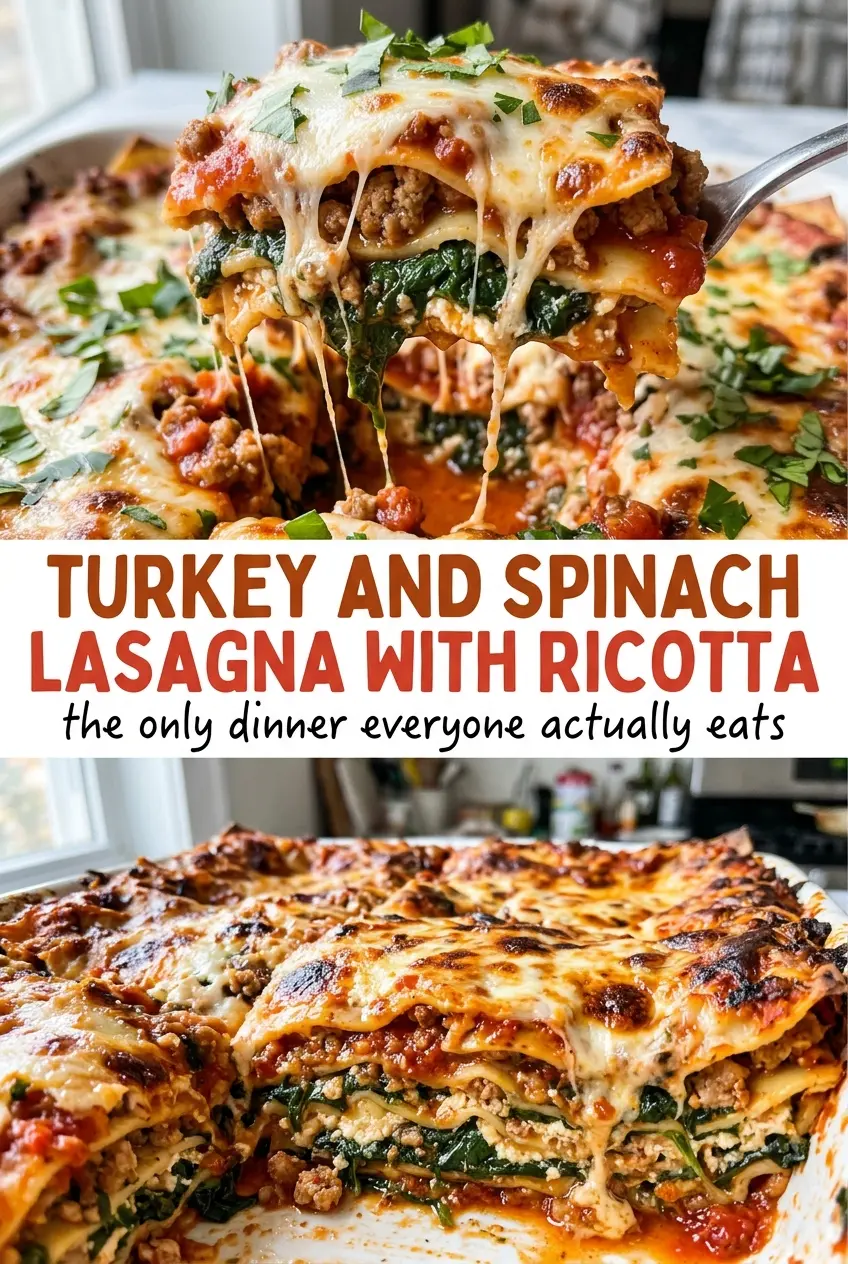
The first thing I notice when this lasagna comes out of the oven is the sauce bubbling at the edges beneath a golden layer of mozzarella. I used to rush the slicing, and the first piece would slump before it made it to the plate. Giving the pan a proper rest fixes that, and it lets the turkey sauce and creamy ricotta layers settle into neat slices.
I make the sauce with both crushed tomatoes and jarred marinara, so it has a little texture without needing a long simmer. The spinach goes right into the ricotta mixture, while the turkey cooks with onion, garlic, and oregano. Once the noodles are layered with the filling, sauce, and mozzarella, the oven takes care of the rest. Each slice comes out hearty, cheesy, and full of tender noodles.
Kitchen Note
Squeeze the thawed spinach until it feels nearly dry before it goes into the ricotta. If water drips out as you press it, keep going; excess moisture can make the filling loose.
Save this turkey and spinach lasagna with ricotta for a cozy dinner, with bubbling tomato sauce and golden mozzarella in every slice.
Why Lean Turkey Needs a Sauce With Some Body
Ground turkey is leaner than many meats used in lasagna, so it doesn’t bring much fat of its own to the pan. A thin or skimpy sauce can leave the finished layers tasting dry, especially around the edges. Here, crushed tomatoes add a little texture, while marinara brings a seasoned tomato base that coats the turkey and noodles.
That balance matters more than making the sauce thick like a paste. It should still spread easily over the noodles and around the ricotta, with enough moisture to bubble as the lasagna bakes. Simmering the turkey in both tomato components gives their flavors time to come together without asking the meat to carry the whole dish. Keep the sauce in the pan when you assemble; spreading it in the layers helps the noodles bake tender and keeps the center from turning into a dry stack.
The finished lasagna should be saucy, not soupy. Layering the sauce in measured portions gives the ricotta room to show up in each slice and keeps the top noodles from being buried under one heavy layer of filling.
What the Ricotta, Spinach, and Two Cheeses Bring to Each Layer
- Ground turkey — The 93% lean grind browns without leaving a greasy layer in the sauce. If ground chicken is what you have, use an equal amount with a similar lean-to-fat ratio and cook it to the same safe temperature.
- Ricotta — Whole-milk ricotta makes the filling creamy and mild. Part-skim ricotta works, but the filling will be less rich; cottage cheese is another option if you drain it well and mash or blend it for a smoother texture.
- Frozen chopped spinach — Frozen spinach is already chopped and mixes evenly through the filling. Fresh spinach can work, but cook it until wilted, cool it, chop it, and press out the moisture before mixing.
- Parmesan — Parmesan adds a salty, savory edge that keeps the ricotta from tasting flat. A wedge grated at home has a fuller aroma, though pre-grated Parmesan is convenient and works in the filling.
- Low-moisture mozzarella — This cheese melts into a stretchy layer and browns on top without releasing as much water as fresh mozzarella. Shredding it yourself gives the most even melt, but packaged shredded mozzarella is handy here.
- Crushed tomatoes and marinara — The crushed tomatoes add texture, and the jarred sauce supplies seasoning. A marinara you already enjoy is a good choice; there’s no need to buy a specialty brand.
- Lasagna noodles — Regular dried noodles give the layers structure once cooked al dente. Gluten-free lasagna noodles can stand in, but follow their package directions closely because brands vary in cooking time and texture.
Build the Layers Before the Mozzarella Goes Golden
Soften the Onion, Then Brown the Turkey
Heat the oven to 375°F and warm the olive oil in a 12-inch skillet over medium heat. Cook the finely chopped onion for 4 to 5 minutes, stirring, until it softens; browning it hard isn’t the goal. Add the turkey, garlic, oregano, salt, and pepper, breaking the meat into small pieces as it cooks for 8 to 10 minutes. The turkey should reach 165°F before the tomatoes go in.
Let the Tomato Sauce Simmer Together
Stir in the crushed tomatoes and marinara, scraping the bottom of the skillet as you combine them with the turkey. Let the sauce simmer for 10 minutes so it’s hot and cohesive rather than a separate layer of meat and liquid. It should still be loose enough to spread across the noodles. If it looks too thick to spoon easily, stir it well before assembling rather than adding extra ingredients.
Mix the Filling and Cook the Noodles Al Dente
Stir the ricotta, egg, squeezed-dry spinach, and Parmesan together in a medium bowl until the filling looks evenly speckled with spinach. Cook the noodles according to the package directions, stopping at al dente, then drain them. Soft, overcooked noodles are harder to lift and can turn fragile under the filling. Keep the noodles drained and ready while you assemble the layers.
Layer, Bake, and Give the Pan Time to Set
Spread 1 cup of sauce in a 9×13-inch baking dish, then layer 4 noodles, half the ricotta filling, 1 cup of sauce, and 1 cup of mozzarella. Repeat with 4 noodles and the remaining filling, sauce, and mozzarella; finish with the last 4 noodles, the remaining sauce, and mozzarella. Cover loosely with foil and bake for 30 minutes, then uncover and bake for 15 to 20 minutes, until the edges bubble and the top is golden. Let it rest for 15 minutes before slicing so the layers settle instead of sliding apart.
Easy Swaps That Keep the Lasagna’s Layers Intact
Use Gluten-Free Lasagna Noodles
Replace the regular noodles with gluten-free lasagna noodles and cook them according to their package directions until tender but still sturdy. Their texture can be more delicate, so drain them carefully and handle them gently as you build the layers.
Give the Cheese Layer a Tangier Edge
Swap the mozzarella for shredded provolone in the same amount. It melts well but has a sharper, more savory taste, so the top will be less mild than the original mozzarella layer.
Make It Vegetarian With Plant-Based Crumbles
Use plant-based ground crumbles in place of the turkey, browning them according to their package directions with the onion, garlic, and seasonings. Then stir in the tomatoes and continue with the sauce. The result keeps the familiar layered structure, though the sauce will have a different savory character.
Storage and Reheating
- Refrigerator: Keep leftovers covered for 3 to 4 days. The noodles soften a little as they sit, but the slices stay satisfying.
- Freezer: Freeze cooled portions in airtight containers or wrap the cooled dish tightly. For the best texture, use within 2 to 3 months and thaw overnight in the refrigerator.
- Reheating: Warm individual slices in the microwave, or cover a larger portion and heat it in a 350°F oven until hot throughout. Leaving it uncovered the whole time can dry out the cheese and exposed noodles.
Questions That Come Up When Making Turkey and Spinach Lasagna
Turkey and Spinach Lasagna with Ricotta
Ingredients
Equipment
Method
- Heat the oven to 375°F.
- Heat the olive oil in a 12-inch skillet over medium heat.
- Cook the onion for 4 to 5 minutes, stirring, until softened.
- Add the ground turkey, garlic, oregano, salt, and pepper; cook for 8 to 10 minutes, breaking up the meat, until the turkey reaches 165°F.
- Stir in the crushed tomatoes and marinara sauce and simmer for 10 minutes.
- In a medium bowl, stir together the ricotta, egg, spinach, and Parmesan until evenly combined.
- Cook the lasagna noodles according to the package directions until al dente, then drain.
- Spread 1 cup of sauce in a 9x13-inch baking dish.
- Layer 4 noodles, half the ricotta filling, 1 cup of sauce, and 1 cup of mozzarella; repeat with 4 noodles, the remaining ricotta filling, 1 cup of sauce, and 1 cup of mozzarella.
- Top with the remaining 4 noodles, sauce, and mozzarella.
- Cover loosely with foil and bake for 30 minutes.
- Uncover and bake for 15 to 20 minutes, until bubbling around the edges and golden on top.
- Let the lasagna rest for 15 minutes before slicing and serving.