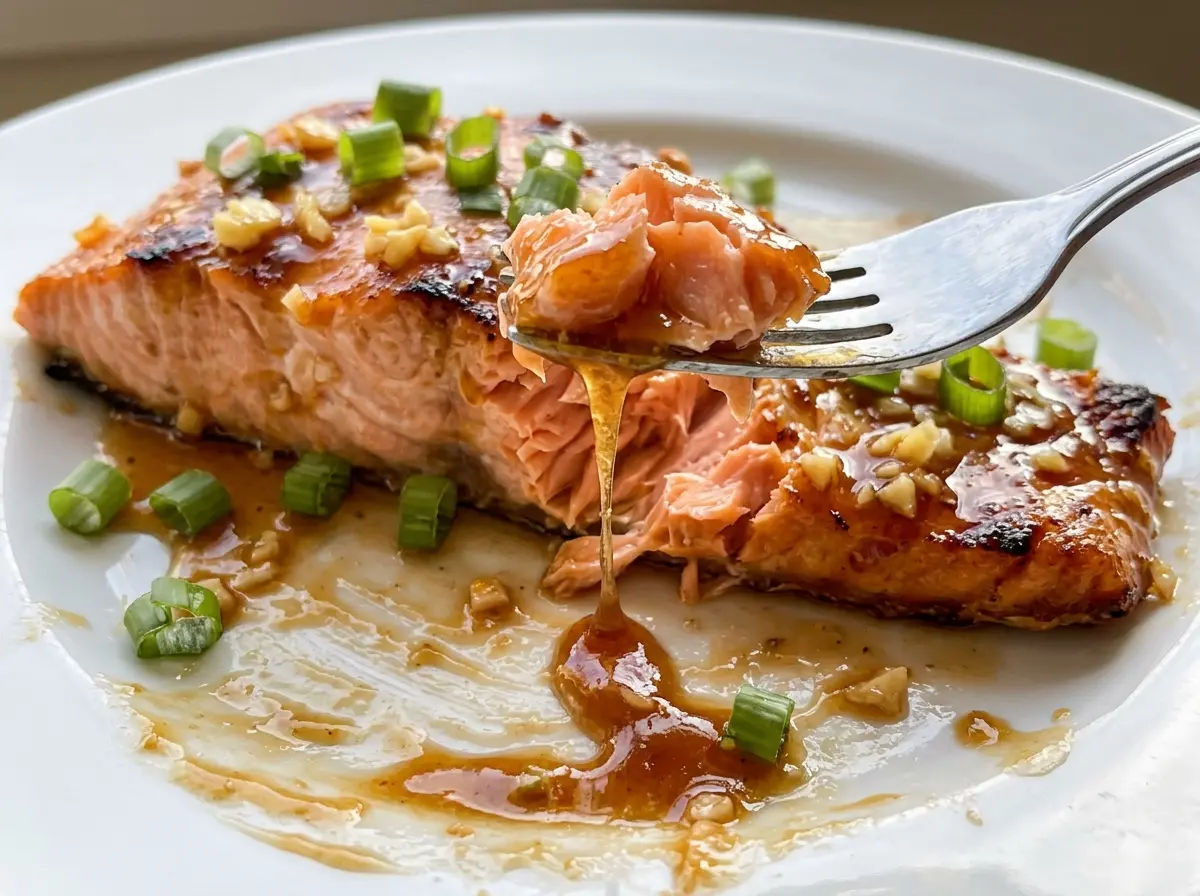
Honey garlic glaze can go from glossy to dark and sticky fast, especially in the hot, circulating air of an air fryer. I brush it on near the end instead of letting it cook on the salmon for the full 7 minutes. That small timing choice keeps the sweetness bright and gives these air fryer honey garlic salmon fillets a shiny finish without losing the clean, tender flavor of the fish.
I cook the glaze separately, so I can thicken it until it clings to a spoon before it ever touches the salmon. Then the skin-on fillets go into the basket skin-side down, and the glaze gets just a minute of heat at the finish. The result is savory, buttery, and sweet, with salmon that stays moist beneath its lacquered top.
Kitchen Note
Move the serving glaze to a clean bowl before you brush any glaze onto the salmon. It’s a quick bit of prep, but it keeps the sauce you serve at the table separate from the brush and fish.
Save this air fryer honey garlic salmon for a quick dinner with tender fish and a glossy, sweet-savory finish.
Why the Honey Glaze Goes on After the Salmon Starts Cooking
Honey brings the glaze its sweetness and shine, but it also browns quickly under strong heat. If it sits on the fish for the entire air-fry, the exposed glaze can darken before the thickest part of the salmon is ready. Cooking the fillets first gives them a head start; brushing on the glaze for the final minute is enough to warm it onto the surface without turning the coating bitter or scorched.
Thickening the glaze on the stovetop matters for the same reason. A watery sauce runs off the curved top of the salmon and collects in the basket, while a glossy, thickened one stays where you brush it. The cornstarch slurry gives the honey, soy sauce, butter, and garlic a cohesive texture, so you get an even coating rather than a thin puddle. Keep the serving portion separate before you start brushing, and each fillet gets that sweet-savory finish with extra glaze ready on the side.
What Each Part of the Honey Garlic Glaze Does
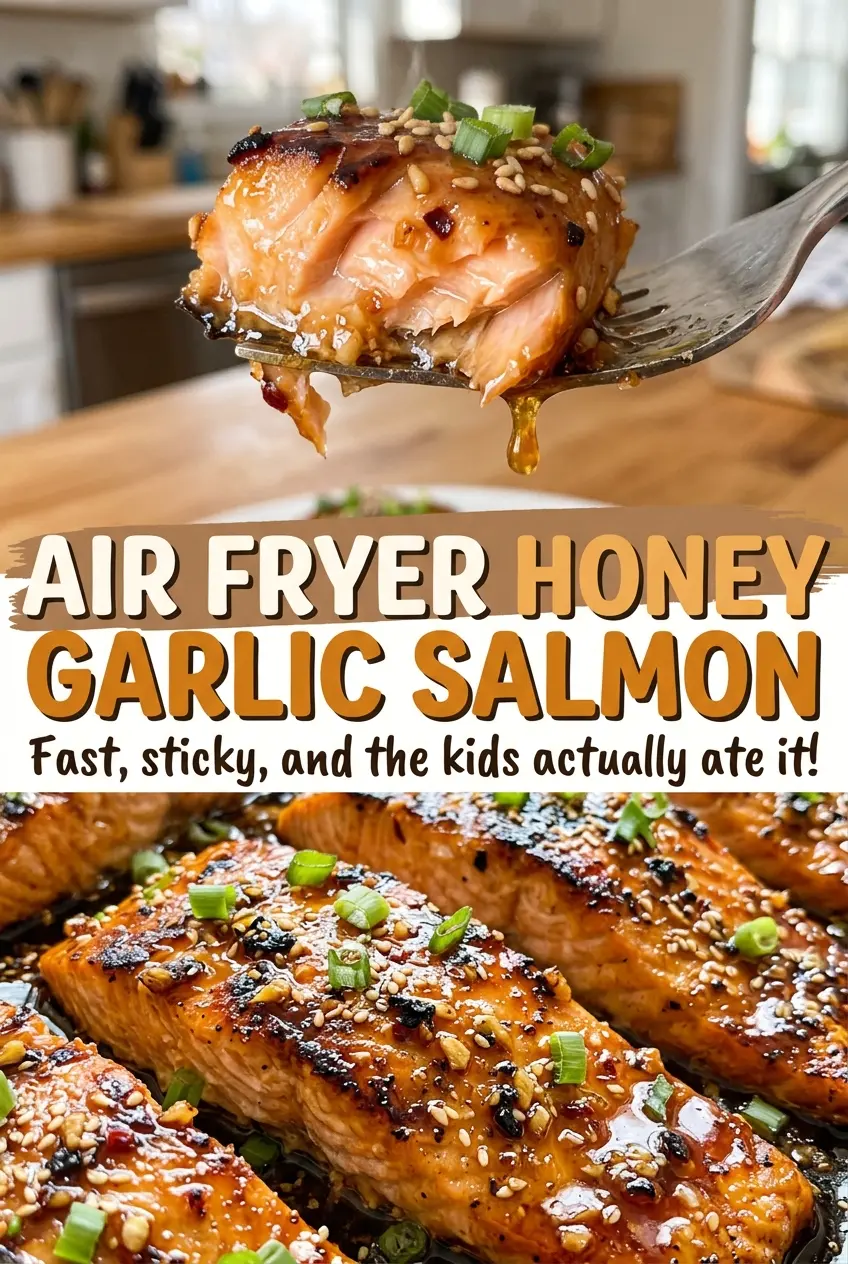
- Salmon fillets — Skin-on fillets hold together well in the basket, and the skin gives you a sturdy side to set against the air-fryer basket. Choose fillets that are similar in thickness so they cook at a similar pace; a fresh, clean smell matters more than paying extra for a particular label. Pat the surface dry before seasoning so the oil and glaze sit on the fish instead of mixing with surface moisture.
- Honey — Honey supplies both sweetness and the sticky body that helps the finished glaze cling. A standard mild honey works well here; a strongly flavored honey will be more noticeable against the salmon and garlic. There isn’t a direct swap that keeps the same sweetness and glossy texture, so stick with honey for the intended result.
- Low-sodium soy sauce — This adds savory depth and helps balance the honey without making the sauce too salty. Low-sodium matters because the salmon is seasoned separately. For a gluten-free version, use an equal amount of gluten-free tamari; the sauce will stay savory, though the exact saltiness varies by brand.
- Garlic — Fresh minced garlic brings a fragrant, savory bite to the glaze. Mince it finely so the pieces disperse through the sauce instead of landing in a few strong bites. Garlic powder won’t give the glaze the same fresh aroma or little flecks.
- Butter — Butter rounds out the honey and soy sauce and gives the glaze a richer finish. Unsalted butter lets the soy sauce provide the main savory seasoning. For a dairy-free version, use olive oil in its place; the glaze will be less buttery but still coats the salmon.
- Cornstarch and water — Stirring these together first makes a smooth slurry that thickens the glaze without lumps. Cornstarch is doing real work here: leaving it out gives you a thinner sauce that won’t cling as well. Mix the two together just before adding them to the simmering glaze.
- Olive oil, kosher salt, and black pepper — The oil lightly coats the dry salmon, while salt and pepper season the fish underneath the sweet glaze. The oil doesn’t need to be an expensive finishing oil; a basic olive oil is fine. Season evenly over the fillets so the glaze isn’t covering an unseasoned patch of fish.
The Three Stages That Keep the Salmon Tender and the Glaze Glossy
Simmer and Thicken the Honey Garlic Glaze
Melt the butter in a 1-quart saucepan over medium heat, then stir in the honey, low-sodium soy sauce, and minced garlic. Bring the mixture to a simmer, stirring so the garlic is distributed through the sauce. In a small bowl, stir the cornstarch and water together until smooth, then whisk the slurry into the saucepan. Simmer for 30 seconds, stirring, until the glaze looks glossy and thickened; transfer 2 tablespoons to a clean bowl for serving.
Dry and Season the Salmon
Preheat a 6-quart air fryer to 400°F. Pat the skin-on salmon fillets dry, then brush them with olive oil and season with kosher salt and black pepper. Arrange the fillets skin-side down in the basket in a single layer, leaving enough room for the air to move around them. If the pieces are crowded or stacked, they won’t cook evenly, so keep the fish in one layer.
Brush on the Glaze at the Finish
Air-fry the salmon for 7 minutes before brushing the tops with the remaining glaze. Cook for 1 minute, then check the thickest part of a fillet with an instant-read thermometer; continue in 1-minute increments until it reaches 145°F. Fillets can vary in thickness, so use the thermometer reading rather than judging every piece by its color. The glaze should look shiny on top, not like a thick, dark crust.
Rest Briefly and Serve
Let the salmon rest for 2 minutes after it comes out of the air fryer. This gives the fish a moment to settle before you move it from the basket, which helps keep the fillets intact. Serve with the reserved glaze so everyone can add a little more at the table. Lift the fillets gently from beneath; the skin helps hold them together but can stick if you tug from the top.
Two Easy Swaps for Different Dietary Needs
Make the Glaze Gluten-Free with Tamari
Replace the low-sodium soy sauce with the same amount of gluten-free tamari. It keeps the glaze’s savory, umami depth, though the finished sauce may taste a little saltier depending on the brand. Keep the other glaze ingredients and method unchanged.
Make the Glaze Dairy-Free
Use olive oil instead of the butter in the glaze. It will still turn glossy when thickened, with a cleaner finish and less buttery richness. The olive oil brushed over the salmon remains unchanged.
Storage and Reheating
- Refrigerator: Store leftover salmon in a covered container for 3 to 4 days. The glaze will lose some of its shine as it chills, and the fish will be firmer after refrigeration.
- Freezer: Freeze cooled portions in an airtight container for up to 2 to 3 months. Thaw in the refrigerator before reheating; the salmon may be a little softer after freezing.
- Reheating: Warm covered in a 275°F oven until heated through, or microwave at 50% power in short bursts to limit drying. Reheat leftovers to 165°F, and avoid high heat, which can make salmon dry and the honey glaze overly sticky.
Questions I Get Asked About Air Fryer Honey Garlic Salmon
Air Fryer Honey Garlic Salmon
Ingredients
Equipment
Method
- Melt the butter in a 1-quart saucepan over medium heat.
- Stir in the honey, soy sauce, and garlic, then bring to a simmer.
- Stir the cornstarch and water together in a small bowl.
- Whisk the mixture into the saucepan and simmer for 30 seconds, stirring, until glossy and thickened.
- Transfer 2 tablespoons of glaze to a clean bowl for serving.
- Preheat a 6-quart air fryer to 400°F.
- Pat the salmon dry.
- Brush the fillets with the olive oil.
- Season the fillets with the salt and pepper.
- Arrange the fillets skin-side down in the basket in a single layer.
- Air-fry for 7 minutes.
- Brush the tops with the remaining glaze, then cook for 1 minute.
- Check the thickest part of a fillet with an instant-read thermometer and continue cooking in 1-minute increments until it reaches 145°F.
- Rest the salmon for 2 minutes.
- Serve with the reserved glaze.