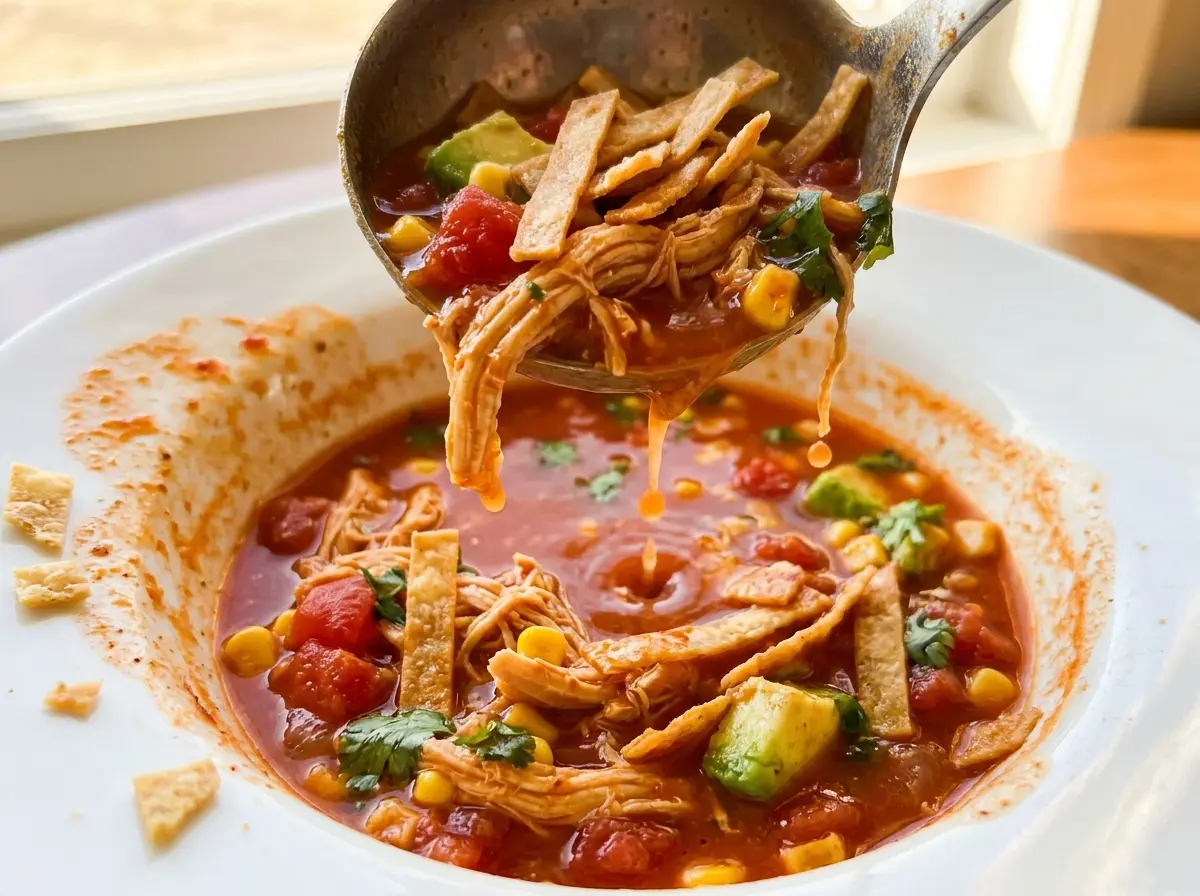
When the chile-tomato puree hits the pot, it starts out bright and loose, then slowly turns darker and thicker as it cooks. That change is worth waiting for. In this chicken tortilla soup, toasted pasilla chiles give the broth a deep, warm flavor, while chicken breasts simmer right in the pot and become tender enough to pull apart with two forks.
I blend the tomatoes, onion, garlic, and softened chiles before cooking them down in olive oil. Giving that mixture time to thicken before adding the broth keeps the soup from tasting like thin tomato water. The tortilla strips fry quickly in batches, and the cool avocado, queso fresco, cilantro, crema, and lime bring contrast to each bowl. The finished soup is savory and gently chile-forward, with a bright squeeze of lime and crisp corn tortilla strips on top.
Kitchen Note
Fry the tortilla strips in batches instead of crowding the skillet. They crisp and color more evenly that way, and you can lift each batch out as soon as it turns golden.
Save this authentic chicken tortilla soup for a cozy dinner with toasted pasilla broth and crisp homemade tortilla strips.
Why the Chile-Tomato Base Needs Its Own Time in the Pot
The puree is carrying most of the soup’s flavor, so I don’t rush straight from the blender to the broth. Tomatoes, onion, garlic, and rehydrated pasillas bring plenty of moisture with them. Cooking that mixture in olive oil for 8 to 10 minutes lets some of that water cook off and gives the base time to thicken and darken.
That step changes the character of the finished broth. Add all the liquid before the puree has cooked down, and the chile and tomato flavors stay diluted; the soup can taste flat even when the chicken is tender. Stir often as the mixture cooks, scraping the bottom so it doesn’t catch, and look for a thicker consistency and a deeper color before you pour in the remaining broth.
The chicken then simmers in that concentrated base, picking up its flavor while it cooks. The broth stays clear enough to show off the shredded chicken and toppings, but it has more depth than a pot where everything is added at once.
What Gives This Soup Its Toasted Chile Depth and Fresh Finish

- Dried pasilla chiles — These create the earthy, gently chile-forward foundation. Toasting wakes up their aroma, and the dried chiles blend smoothly after soaking. If pasillas are hard to find, dried ancho chiles work in their place but make the broth taste a little deeper and sweeter.
- Roma tomatoes, onion, and garlic — Roma tomatoes give the blended base body without making it overly watery. Standard ripe grocery-store tomatoes are fine; they don’t need to be specialty or heirloom varieties. Roughly chopping the onion and peeling the garlic is all the prep they need before blending.
- Chicken breasts and low-sodium broth — Boneless, skinless breasts cook directly in the broth and shred easily once tender. Low-sodium broth gives you more control over the finished seasoning, and a basic store-brand broth works well here. Keep the breasts whole for simmering rather than cutting them into small pieces.
- Corn tortillas and vegetable oil — Corn tortillas bring the toasted corn flavor and crisp texture that make the strips feel at home with the chile broth. Regular grocery-store tortillas are fine; cut them into even strips so they cook at a similar pace. Vegetable oil is neutral and inexpensive, which is exactly what you want for frying.
- Crema, queso fresco, avocado, cilantro, and lime — These toppings balance the warm broth with cool creaminess, fresh herbs, and acidity. Mexican crema is thinner and tangier than sour cream; sour cream can stand in, though it makes a thicker topping. Cotija can replace queso fresco if needed, but it’s saltier, so taste the bowl before adding more salt.
From Toasted Pasillas to Crisp Strips: Building the Soup in Stages
Toast, Soak, and Blend the Chiles
Heat a dry skillet over medium heat and toast the stemmed, seeded pasillas for about 20 seconds per side, just until fragrant. Transfer them to a heatproof bowl, cover with boiling water, and let them soak for 15 minutes. Drain the chiles, then blend them with the quartered tomatoes, chopped onion, garlic, and 1/2 cup of the chicken broth until smooth. If the blender mixture still has visible chile pieces, keep blending before moving on.
Cook the Puree Until It Thickens
Warm the olive oil in a 5- to 6-quart pot over medium heat, then add the blended mixture. Cook for 8 to 10 minutes, stirring often, until it’s thicker and darker in color. The puree should look less watery than it did when it first went into the pot. Keep stirring around the bottom and edges so the concentrated mixture doesn’t stick.
Simmer the Chicken and Shred It
Stir in the remaining 5 1/2 cups of chicken broth, the chicken breasts, kosher salt, dried Mexican oregano, and bay leaf. Bring everything to a gentle simmer, cover the pot, and cook for 20 to 25 minutes, until the thickest part of the chicken reaches 165°F. A gentle simmer is what you want, not a hard boil. Move the chicken to a plate, discard the bay leaf, shred the meat with two forks, and return it to the pot.
Fry the Strips and Finish Each Bowl
Heat the vegetable oil in the skillet over medium heat. Fry the tortilla strips in batches for 1 to 2 minutes, turning them occasionally, until they’re crisp and golden; drain them on paper towels. Ladle the soup into bowls, then add tortilla strips, diced avocado, crumbled queso fresco, chopped cilantro, and Mexican crema. Serve lime wedges alongside so each person can squeeze fresh lime into their bowl.
Three Practical Ways to Adapt the Bowl
Make the toppings dairy-free
Leave off the queso fresco and Mexican crema, and use the diced avocado as the creamy topping. The bowl loses the salty, tangy dairy notes, but avocado and a squeeze of lime keep it rounded and fresh.
Make the broth gentler
Use one dried pasilla chile instead of two for a milder, less chile-forward broth. You’ll still get the toasted chile aroma, but the tomato and chicken will come through more prominently.
Use ready-made corn tortilla strips
Plain packaged corn tortilla strips save you the skillet-frying step and still add crunch. Their texture is usually more uniform, though freshly fried strips have a warmer corn aroma and a lighter bite.
Storage and Reheating
- Refrigerator: Keep leftover soup covered in the refrigerator for 3 to 4 days. Store the tortilla strips and fresh toppings separately so they don’t soften.
- Freezer: The soup freezes well without the toppings or tortilla strips. Freeze it in airtight containers for up to 3 months, then thaw it in the refrigerator before reheating.
- Reheating: Warm the soup gently on the stovetop over medium-low heat until steaming throughout. Avoid a hard boil, which can make the chicken less tender, and add the toppings after ladling.
Questions That Come Up While Making Chicken Tortilla Soup
Authentic Chicken Tortilla Soup – Cozy Dinner Recipe
Ingredients
Equipment
Method
- Heat a dry skillet over medium heat.
- Toast the pasilla chiles for about 20 seconds per side, until fragrant.
- Transfer the chiles to a heatproof bowl.
- Cover the chiles with the boiling water and soak for 15 minutes.
- Drain the chiles and blend them with the tomatoes, onion, garlic, and 1/2 cup of the chicken broth until smooth.
- Heat the olive oil in a 5- to 6-quart pot over medium heat.
- Add the blended mixture and cook for 8 to 10 minutes, stirring often, until thickened and darker in color.
- Stir in the remaining 5 1/2 cups chicken broth, chicken breasts, salt, oregano, and bay leaf.
- Bring the soup to a gentle simmer, cover, and cook for 20 to 25 minutes, until the chicken reaches 165°F in the thickest part.
- Transfer the chicken to a plate and discard the bay leaf.
- Shred the chicken with two forks and return it to the pot.
- Heat the vegetable oil in the skillet over medium heat.
- Fry the tortilla strips in batches for 1 to 2 minutes, turning occasionally, until crisp and golden.
- Drain the tortilla strips on paper towels.
- Ladle the soup into bowls and top with tortilla strips, avocado, queso fresco, cilantro, and Mexican crema.
- Serve with lime wedges.