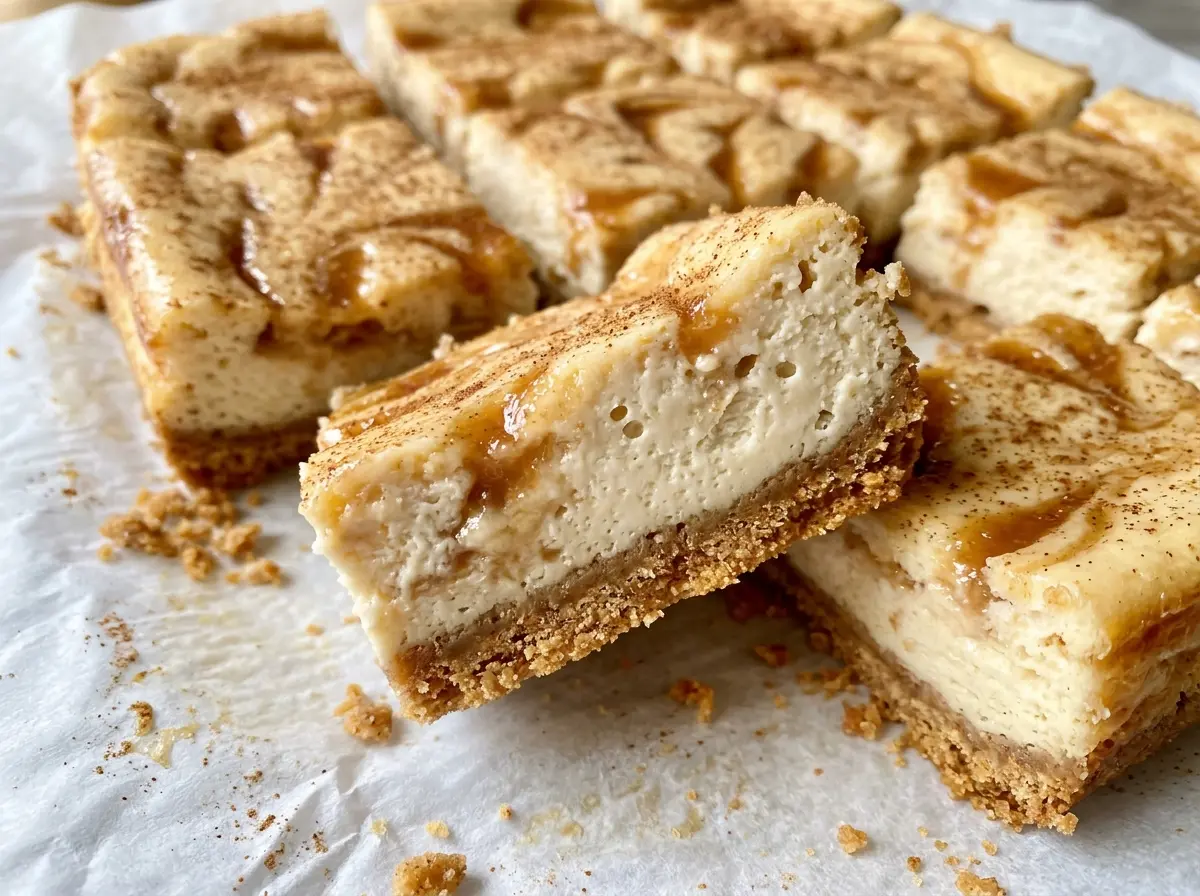
The crumb mixture looks sandy before the melted butter coats it, then suddenly it presses into a compact layer that holds together under a spoon. That cinnamon-sugar base gives these apple cider cheesecake bars a little crunch beneath the smooth filling, and baking it briefly before adding the cheesecake keeps the crust from tasting damp.
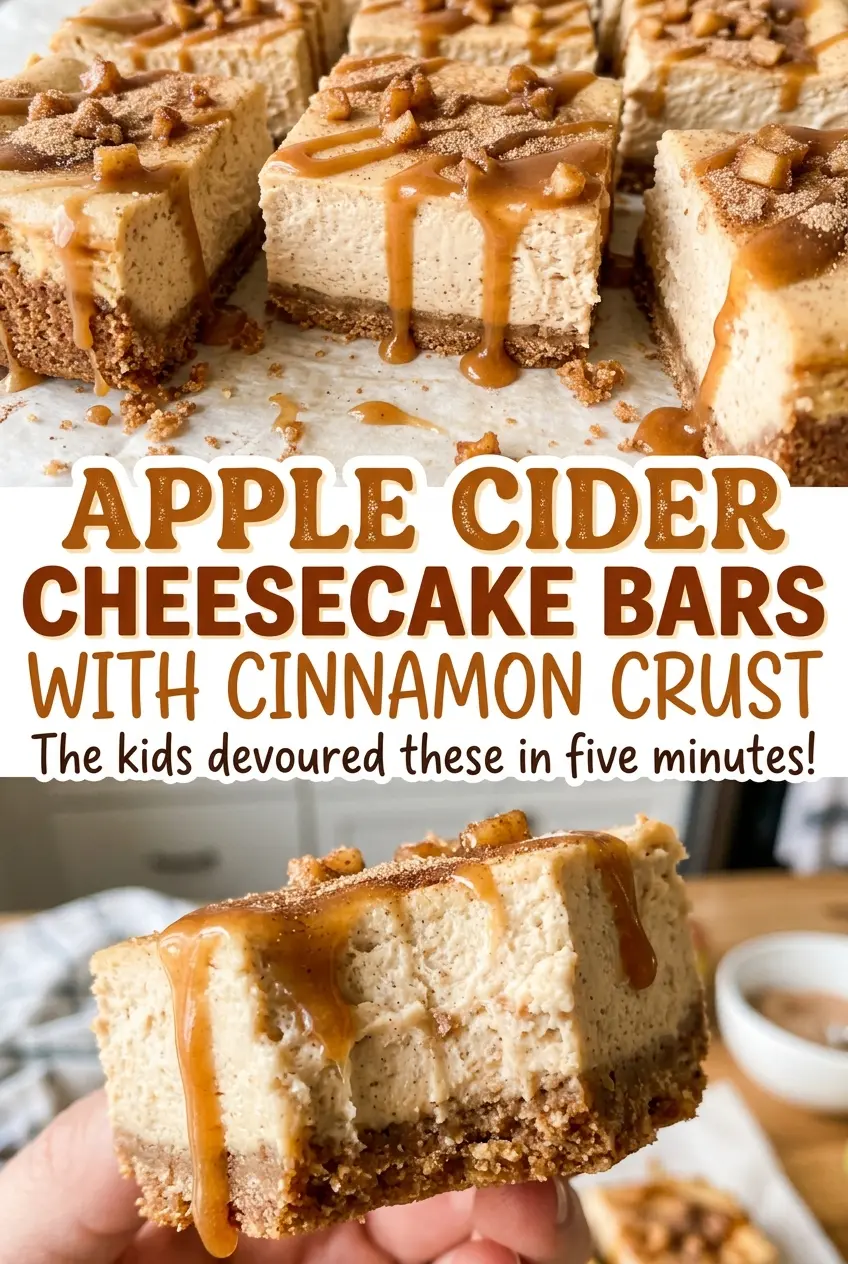
I keep the filling simple and let the cider carry the apple flavor. Softened cream cheese blends smoothly with the sugar, while adding the eggs one at a time on low speed helps keep the texture dense and creamy rather than airy. Once the bars are fully chilled, they cut into neat squares with a clear cinnamon crust under each creamy bite.
Kitchen Note
Let the cider reduction cool completely before mixing it into the filling. Even after simmering down, warm cider can loosen the softened cream cheese mixture, so give it time to cool in the heatproof measuring cup.
Save these Apple Cider Cheesecake Bars with Cinnamon Crust for a make-ahead dessert with a creamy apple filling and a firm cinnamon-crumb base.
Why Reducing the Apple Cider Matters More Than Adding More of It
A full cup of cider would bring plenty of apple flavor, but it would also add more liquid to a filling that needs to set like cheesecake. Simmering the cider down concentrates its flavor while reducing the amount of moisture that goes into the cream cheese mixture. That balance matters in bars: the filling needs to hold a clean square instead of spreading or turning soft when you lift it from the pan.
The reduction also lets the apple taste come through without changing the filling into a loose, cider-heavy batter. Once it’s reduced, you have a smaller, more concentrated amount to blend with the dairy. Keep the heat at medium and let the simmer do the work; rushing it with high heat can make the liquid reduce unevenly. Measuring the finished reduction gives you a dependable stopping point, rather than guessing by color or waiting for it to look syrupy.
What Builds the Cinnamon Crust and Gives the Filling Its Structure
- Apple cider — Choose cider with a clear apple aroma, since reducing it concentrates whatever flavor is already there. The reduced cider is the only apple element in the filling, so it’s worth using cider you enjoy drinking.
- Graham cracker crumbs — Evenly crushed crumbs make a compact base instead of leaving large pieces that break away when you slice. Store-bought crumbs work well; if crushing crackers yourself, aim for fine, even crumbs.
- Light brown sugar and cinnamon — Brown sugar brings a gentle molasses note to the crust, and cinnamon gives it the warm spice that ties it to the apple filling. Packed brown sugar helps the crust mixture hold together consistently.
- Unsalted butter — Melted butter coats the dry crumbs and binds them when pressed into the pan. Unsalted butter lets the kosher salt in the crust stay in balance.
- Cream cheese — This is the foundation of the filling, so softened blocks blend more smoothly than cold cream cheese. Let them soften before mixing; cold pieces can leave small lumps that are hard to work out later.
- Granulated sugar and all-purpose flour — Sugar sweetens the filling, while flour helps it set into sliceable bars. The flour is a small but useful stabilizer in a cheesecake baked in a rectangular pan.
- Eggs — Room-temperature eggs incorporate more evenly into the cream cheese mixture. Adding them one at a time gives you more control over mixing and helps avoid a loose, foamy batter.
- Sour cream and vanilla — Sour cream adds a gentle tang and a softer, creamier quality to the filling; vanilla rounds out the apple and cinnamon notes. Room-temperature sour cream blends in without chilling the batter.
From Concentrated Cider to Clean-Cut Cheesecake Squares
Reduce the cider to a measured amount
Simmer the apple cider in a small saucepan over medium heat for 15 to 20 minutes, until it has reduced to 1/4 cup. Pour it into a heatproof measuring cup and let it cool completely. Keep an eye on the volume near the end, since the reduction happens faster as less liquid remains. Don’t add it to the filling while it’s warm.
Press and pre-bake the cinnamon crust
Heat the oven to 325°F and grease a 9×13-inch baking pan with nonstick cooking spray. Line the pan with parchment, leaving an overhang on two sides so the chilled bars can be lifted out later. Stir the graham cracker crumbs, packed light brown sugar, cinnamon, and kosher salt together, then mix in the melted butter until evenly moistened. Press the crumbs firmly into the pan’s bottom and bake for 10 minutes; set the pan on a rack while you make the filling.
Mix the filling without whipping in extra air
Beat the softened cream cheese in a large bowl with an electric mixer on medium speed until smooth, then beat in the granulated sugar and flour. Add the eggs one at a time on low speed, mixing just until each egg is incorporated before adding the next. If you continue beating after the eggs disappear, you’ll work more air into the filling than you need. Mix in the sour cream, vanilla, and cooled cider reduction until combined.
Bake to a slight wobble, then chill fully
Pour the filling over the crust and bake at 325°F for 35 to 45 minutes. The edges should look set while the center still has a slight wobble; don’t wait for the middle to look completely firm in the oven. Cool the pan on a rack for 1 hour, then cover and refrigerate for at least 4 hours, until the bars are fully chilled and firm. Lift them out by the parchment overhang and cut into 16 squares with a sharp knife.
Two Simple Ways to Adapt the Crust
Make the crust gluten-free
Use gluten-free graham cracker crumbs in place of the regular graham cracker crumbs, keeping the same amount and method. The crust may have a slightly different crunch depending on the crumbs, but it still bakes into a buttery base beneath the cheesecake filling.
Let the apple take the lead
Leave the ground cinnamon out of the crust for a milder, less spiced finish. The graham crumbs and brown sugar still make a sweet, buttery base, while the apple cider becomes more noticeable beside the creamy filling.
Make-Ahead and Storage
- Refrigerator: Keep the bars covered and chilled for up to 4 days. The crust gradually softens as it sits, but the bars remain easy to serve cold.
- Freezer: Freeze the fully chilled bars in a single layer until firm, then wrap each square and store them in an airtight freezer container for up to 2 months. Thaw overnight in the refrigerator.
- Serving: These bars are best served cold, straight from the refrigerator. They don’t need reheating; return any leftovers to the refrigerator after serving.
Questions That Come Up When Baking These Cheesecake Bars
Apple Cider Cheesecake Bars with Cinnamon Crust
Ingredients
Equipment
Method
- Simmer the apple cider in a small saucepan over medium heat for 15 to 20 minutes, until reduced to 1/4 cup.
- Pour the reduction into a heatproof measuring cup and cool completely.
- Heat the oven to 325°F.
- Grease a 9x13-inch baking pan with nonstick cooking spray.
- Line the pan with parchment paper, leaving an overhang on two sides.
- Stir the graham cracker crumbs, brown sugar, cinnamon, and salt together in a medium bowl.
- Mix in the melted butter until evenly moistened.
- Press the crumb mixture firmly into the bottom of the pan.
- Bake for 10 minutes, then set the pan on a rack while you make the filling.
- Beat the cream cheese in a large bowl with an electric mixer on medium speed until smooth.
- Beat in the granulated sugar and flour.
- Add the eggs one at a time, beating on low speed just until incorporated after each addition.
- Mix in the sour cream, vanilla, and cooled cider reduction.
- Pour the filling over the crust.
- Bake at 325°F for 35 to 45 minutes, until the edges are set and the center still has a slight wobble.
- Cool the bars in the pan on a rack for 1 hour.
- Cover and refrigerate for at least 4 hours, until fully chilled and firm.
- Lift the bars out using the parchment overhang.
- Cut into 16 squares with a sharp knife.