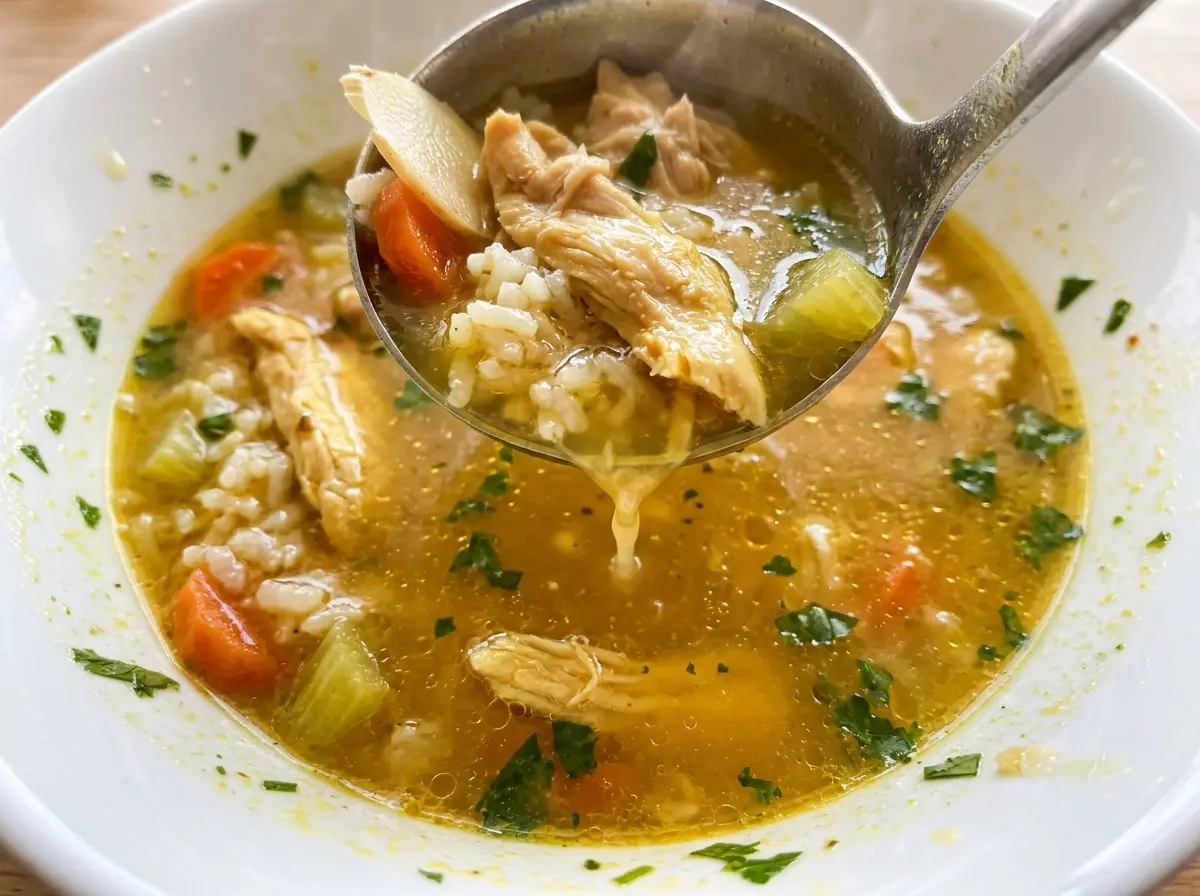
When the onion, carrots, and celery start to soften in the Dutch oven, the kitchen smells like the beginning of a proper chicken soup. Ginger and turmeric join them a little later, bringing a warm, savory aroma without making the broth taste heavy. I make this chicken and rice soup when I want a full meal from one pot, with tender chicken and a bright finish of lemon and parsley.
The order matters more than it might seem. The chicken cooks in the broth first, then comes out while the rice simmers; that gives each ingredient the time it needs instead of asking the rice to wait around in hot liquid. The long-grain rice thickens the broth just enough, while the ginger and lemon keep each spoonful lively.
Keep the heat gentle once the pot comes to a boil, and the chicken stays tender while the vegetables and broth build a rounded, warming base. The finished soup is golden, savory, and bright at the edges.
Kitchen Note
I add the lemon juice and parsley right at the end, after the chicken goes back in. A brief final simmer warms everything through while keeping the lemon’s fresh lift in the broth.
Save this chicken and rice soup with turmeric and ginger for its cozy golden broth and fresh lemon finish.
Why the Rice Goes In After the Chicken Comes Out
Rice keeps absorbing liquid as it cooks, and it doesn’t pause just because the chicken is ready. Cooking the chicken in the broth first lets you lift it out at the right moment, then give the rice its own simmer until tender. That small bit of sequencing is what keeps the chicken from sitting in the pot while the rice catches up.
It also makes the texture easier to manage. Long-grain white rice releases some starch as it cooks, giving the broth a little body, but it can turn soft if it stays simmering after it’s tender. Check the rice near the end of its cooking time and stop when the grains are tender, not broken apart. Once the shredded chicken returns, a short simmer brings the soup together without leaving the rice to cook for another long stretch.
The soup will continue to thicken as it stands, especially once the rice has had more time in the broth. That’s normal, not a sign that anything went wrong. Think of the first serving as the loosest version; the leftovers will be more spoon-coating.
What the Ginger, Turmeric, and Rice Each Bring to the Pot

- Fresh ginger — Finely grated ginger distributes through the broth instead of leaving chewy pieces behind. Fresh ginger has a clean, sharp warmth that’s different from a dried seasoning, so it’s worth using fresh here.
- Ground turmeric — Turmeric gives the broth its golden color and earthy warmth. Keep it moving with the aromatics so it perfumes the oil and vegetables evenly; a jar from the regular spice aisle works well.
- Long-grain white rice — Rinsing and draining the rice before it goes into the pot helps wash away loose surface starch. Long-grain grains also stay more distinct than short-grain rice, which is useful in a soup that thickens as it sits.
- Low-sodium chicken broth — A lower-sodium broth leaves room for the measured kosher salt without making the finished soup taste too salty. A dependable store brand is fine; choose a broth you like the taste of because it makes up most of the liquid.
- Chicken breasts — Boneless, skinless breasts are lean and easy to shred once cooked. Keeping them whole while they simmer means you can remove them cleanly before the rice goes in.
- Lemon juice and parsley — These finishing ingredients lift the rich, savory broth. Fresh lemon juice has a clearer, brighter taste here than bottled juice, and fresh parsley brings a gentle herbal note.
Building the Broth Before the Rice Takes Over
Soften the vegetables in the Dutch oven
Heat the olive oil in a 6-quart Dutch oven over medium heat, then add the diced onion, carrots, and celery. Cook for 6–8 minutes, stirring occasionally, until the vegetables have softened. They should look less crisp and smell sweet and savory, but they don’t need to brown. If they’re catching on the bottom, lower the heat rather than rushing them.
Give the aromatics a quick bloom
Stir in the finely grated ginger, minced garlic, turmeric, and black pepper. Cook for 1 minute, stirring, until fragrant; the ginger and garlic should smell warm and aromatic, not toasted. Keep the mixture moving so the garlic doesn’t scorch. This short time is enough to release the spices into the oil before the broth goes in.
Simmer the chicken gently
Add the chicken broth, whole chicken breasts, and kosher salt, then bring the pot to a boil over high heat. Reduce the heat to maintain a gentle simmer; a few small bubbles are right, while a hard boil can make the chicken tougher. Cook for 15–20 minutes, until the thickest part of each breast reaches 165°F. Lift the chicken onto a cutting board once it’s ready.
Cook the rice, then finish the soup
Stir the rinsed and drained rice into the broth, cover the pot, and simmer gently for 15–18 minutes, until the rice is tender. If the rice still has a firm center, keep the covered pot at a gentle simmer until the grains are tender rather than raising the heat. Shred the chicken with two forks and return it to the pot. Stir in the lemon juice and chopped parsley, then simmer for 1–2 minutes, until the chicken is heated through.
Simple Changes That Still Let the Broth Shine
Make it gluten-free
Use 8 cups of low-sodium chicken broth labeled gluten-free. The chicken, vegetables, rice, and seasonings already suit a gluten-free version, and the soup keeps its familiar savory flavor.
Leave out the rice for a lower-carb bowl
Omit the rice and cook the chicken in the broth with the vegetables as usual, then shred it and finish with lemon and parsley. The result is a lighter, brothier chicken soup rather than a thick chicken-and-rice soup.
Skip the celery if you’re out
Leave it out and continue with the onion and carrots. You’ll lose some of the savory background celery brings, but the ginger, garlic, turmeric, and chicken broth still make a balanced base.
Storage and Reheating
- Refrigerator: Store in a covered container and use within 3–4 days. The rice will continue absorbing broth, so the soup will be thicker after chilling.
- Freezer: Freeze in airtight containers for up to 2–3 months. The rice may soften after thawing, but the soup freezes well for convenient meals.
- Reheating: Warm gently on the stovetop, stirring now and then, or microwave in a covered bowl and stir partway through. Avoid a hard boil, which can break up the rice and toughen the chicken.
Questions That Come Up While Making This Soup
Chicken and Rice Soup with Turmeric and Ginger
Ingredients
Equipment
Method
- Heat the olive oil in a 6-quart Dutch oven over medium heat.
- Add the onion, carrots, and celery and cook for 6–8 minutes, stirring occasionally, until softened.
- Stir in the ginger, garlic, turmeric, and black pepper and cook for 1 minute, until fragrant.
- Add the broth, chicken breasts, and salt, then bring to a boil over high heat.
- Reduce the heat to maintain a gentle simmer and cook for 15–20 minutes, until the chicken reaches 165°F in the thickest part.
- Transfer the chicken to a cutting board.
- Stir the rice into the pot, cover, and simmer gently for 15–18 minutes, until the rice is tender.
- Shred the chicken with two forks and return it to the pot.
- Stir in the lemon juice and parsley.
- Simmer for 1–2 minutes, until the chicken is heated through.