The beef should give a steady sizzle when it hits the Dutch oven, not sit quietly in a crowded pile. I brown it in batches so the pieces get color on several sides before they go back into the stew. That first layer of browned flavor gives this classic Hungarian beef goulash a deep, savory base without needing a complicated sauce.
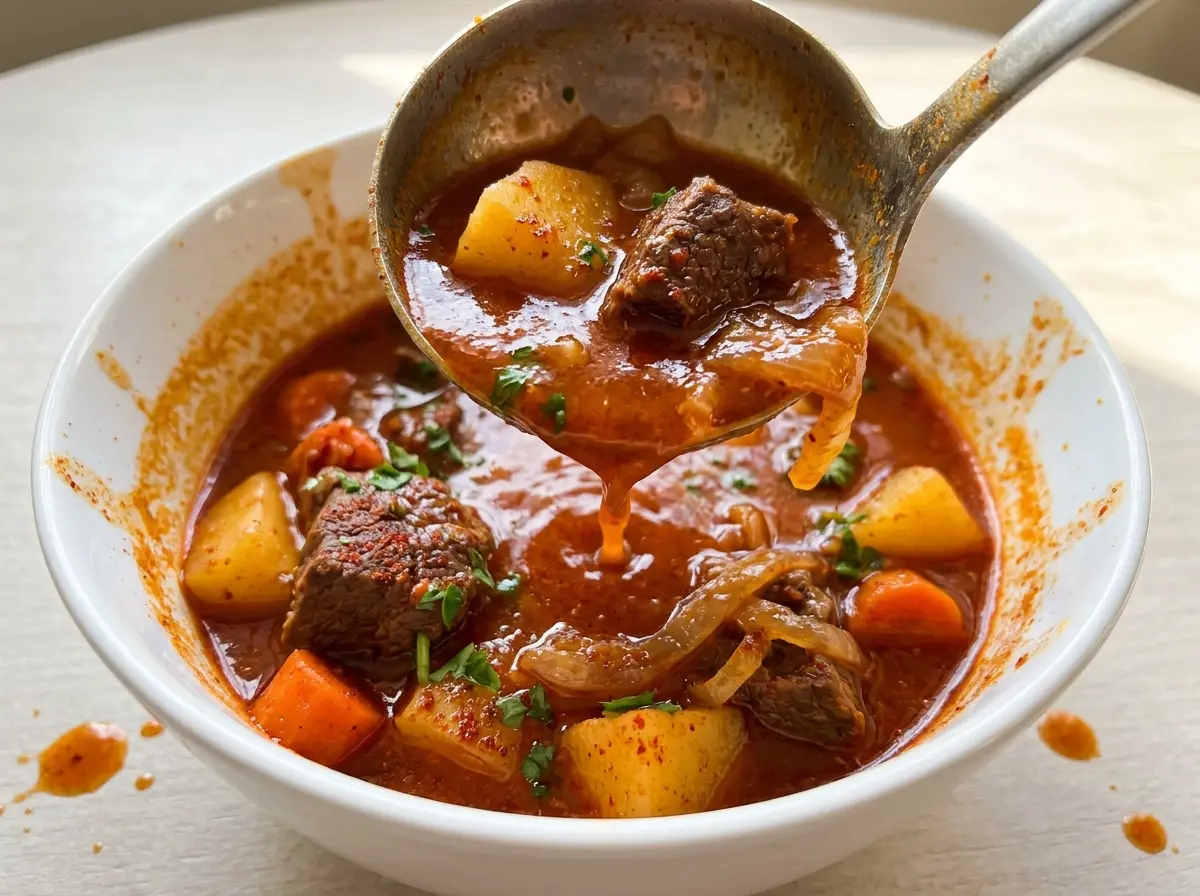
Sweet Hungarian paprika and lightly crushed caraway bring the familiar warmth, while potatoes and carrots turn the long-simmered beef into a full, one-pot meal. I keep the heat low once the broth goes in, then wait to add the vegetables until the beef is nearly tender. They finish in the same pot without dissolving into the broth, and each spoonful has tender beef, soft vegetables, and a paprika-rich liquid.
Kitchen Note
Take the pot off the heat before stirring in the paprika and caraway, and keep stirring for the full 30 seconds. Paprika can turn harsh if it scorches; the warmth left in the onions is enough to release its aroma without burning it.
Save this classic Hungarian beef goulash for a pot of tender chuck, potatoes, and carrots simmered in warm paprika broth.
Why This Goulash Gets Its Body Without a Flour Thickener
This stew isn’t meant to eat like a smooth, flour-thickened gravy. Its body comes from the ingredients and the slow cook: onions soften into the broth, tomatoes add substance, and the potatoes release a little starch as they simmer. The result is a spoonable, savory liquid that coats the beef and vegetables without turning pasty.
That texture depends on giving the beef time before the potatoes go in. Chuck has connective tissue that needs a patient simmer to soften; potatoes added too early would spend that same long stretch cooking and could break down before the beef is ready. Once the beef is nearly fork-tender, the vegetables need only their shorter finish in the broth. You’ll get distinct pieces in the bowl, with enough body in the liquid to make the stew feel hearty rather than thin.
What the Beef, Paprika, and Caraway Each Bring to the Pot

- Beef chuck — Its marbling and connective tissue suit a long, gentle braise, becoming tender while enriching the broth. Cut the pieces evenly so they cook at a similar pace, and pat the surface dry before seasoning; moisture makes browning harder.
- Sweet Hungarian paprika — This is the defining warm, sweet pepper flavor, not just a red color. Use paprika that smells fragrant when you open the container; an old, flat jar won’t give the stew the same aroma. I wouldn’t replace it with hot or smoked paprika here, because either would shift the stew away from its classic flavor.
- Caraway seeds — Lightly crushing the seeds releases their aroma while keeping their earthy, distinctive note in balance. A quick press with the bottom of a small pan or a mortar is enough; grinding them to powder would make their flavor more intense throughout the broth.
- Yukon Gold potatoes — Their creamy centers soften without falling apart as readily as a more floury potato. Cut the pieces to a similar size so they turn tender together; smaller pieces are more likely to lose their shape during the simmer.
- Yellow onions and diced tomatoes — The onions give the broth a savory base, and the tomatoes contribute acidity and a little texture. Use the tomatoes with their canning liquid, which becomes part of the stew rather than something to drain away.
Build the Paprika Broth, Then Let the Chuck Turn Tender
Brown the Beef in Uncrowded Batches
Pat the beef dry, season it all over with kosher salt and black pepper, then heat the vegetable oil in a 6-quart Dutch oven over medium-high heat. Brown the beef in batches, turning each piece until several sides are deeply colored, about 6 to 8 minutes per batch. Transfer the browned pieces to a plate as they finish. If the pot is packed tight, the beef will steam against itself instead of developing those browned surfaces.
Soften the Onions and Bloom the Spices
Add the chopped onions and cook over medium heat, stirring often, until they’re softened and lightly golden, 8 to 10 minutes. Take the pot off the heat and stir in the paprika and lightly crushed caraway for 30 seconds. Return it to medium heat, stir in the garlic and green bell pepper, and cook for 2 minutes. Add the undrained tomatoes and cook for 2 more minutes, stirring so the mixture doesn’t catch on the bottom.
Simmer the Beef Until Nearly Fork-Tender
Stir in the beef broth and bay leaf, then return the beef and any juices from the plate to the pot. Bring everything to a gentle simmer, cover, and lower the heat so the liquid bubbles softly rather than boiling hard. Cook for 1 3/4 to 2 1/4 hours, until the beef is nearly fork-tender. A hard boil can make the meat tighten and the broth reduce too quickly, so adjust the burner if the surface is actively rolling.
Finish with the Potatoes and Carrots
Stir in the potatoes and carrots, cover the pot again, and simmer for 30 to 40 minutes. The beef should be fork-tender, and a knife should slide into the vegetables without resistance. Remove the bay leaf before serving. Take the pot off the heat and let the stew rest for 10 minutes so the simmer settles before you ladle it out.
Easy Changes for a Different Pot of Goulash
A Lower-Starch Pot Without Potatoes
Leave out the Yukon Gold potatoes and keep the beef, carrots, and remaining ingredients unchanged. The broth will have less body and the stew won’t be as filling, but the paprika-and-beef flavor still comes through. It’s lower in starch, though it isn’t a zero-carb dish because the carrots, onions, and tomatoes remain.
A Thicker, More Potato-Forward Broth
For a thicker finish without adding anything, press a few tender potato pieces against the side of the pot and stir them into the broth near the end. The potatoes will break down and give the liquid a softer, more substantial texture, though you’ll lose some of the neat, distinct potato pieces.
A Pot Without Green Bell Pepper
You can omit the green bell pepper if you prefer a more direct beef-and-paprika flavor. The finished broth will have less of the pepper’s mild vegetal sweetness, but the onions, tomatoes, garlic, and spices still give it a rounded base.
Storage and Reheating
- Refrigerator: Store in a covered container for 3 to 4 days. The potatoes will soften as they sit, and the broth may thicken slightly.
- Freezer: Freeze in airtight containers for up to 2 to 3 months. The beef freezes well, though the potatoes may be softer or a little grainy after thawing.
- Reheating: Warm gently in a covered saucepan over low heat, stirring occasionally, until the stew reaches 165°F. Avoid a hard boil, which can make the beef firmer and break up the vegetables.
Questions That Come Up While the Stew Simmeres
Classic Hungarian Beef Goulash Stew with Paprika
Ingredients
Equipment
Method
- Pat the beef dry and season it all over with the salt and pepper.
- Heat the oil in a 6-quart Dutch oven over medium-high heat.
- Brown the beef in batches, turning until browned on several sides, about 6 to 8 minutes per batch.
- Transfer the browned beef to a plate.
- Add the onions to the pot and cook over medium heat, stirring often, until softened and lightly golden, 8 to 10 minutes.
- Remove the pot from the heat and stir in the paprika and caraway seeds for 30 seconds.
- Return the pot to medium heat, stir in the garlic and bell pepper, and cook for 2 minutes.
- Add the tomatoes and cook for 2 more minutes.
- Stir in the beef broth and bay leaf.
- Return the beef and any accumulated juices to the pot.
- Bring the stew to a gentle simmer.
- Cover and cook over low heat at a gentle simmer until the beef is nearly fork-tender, 1 3/4 to 2 1/4 hours.
- Stir in the potatoes and carrots, cover, and simmer until the beef is fork-tender and the vegetables are tender, 30 to 40 minutes.
- Remove the bay leaf.
- Let the stew rest off the heat for 10 minutes before serving.