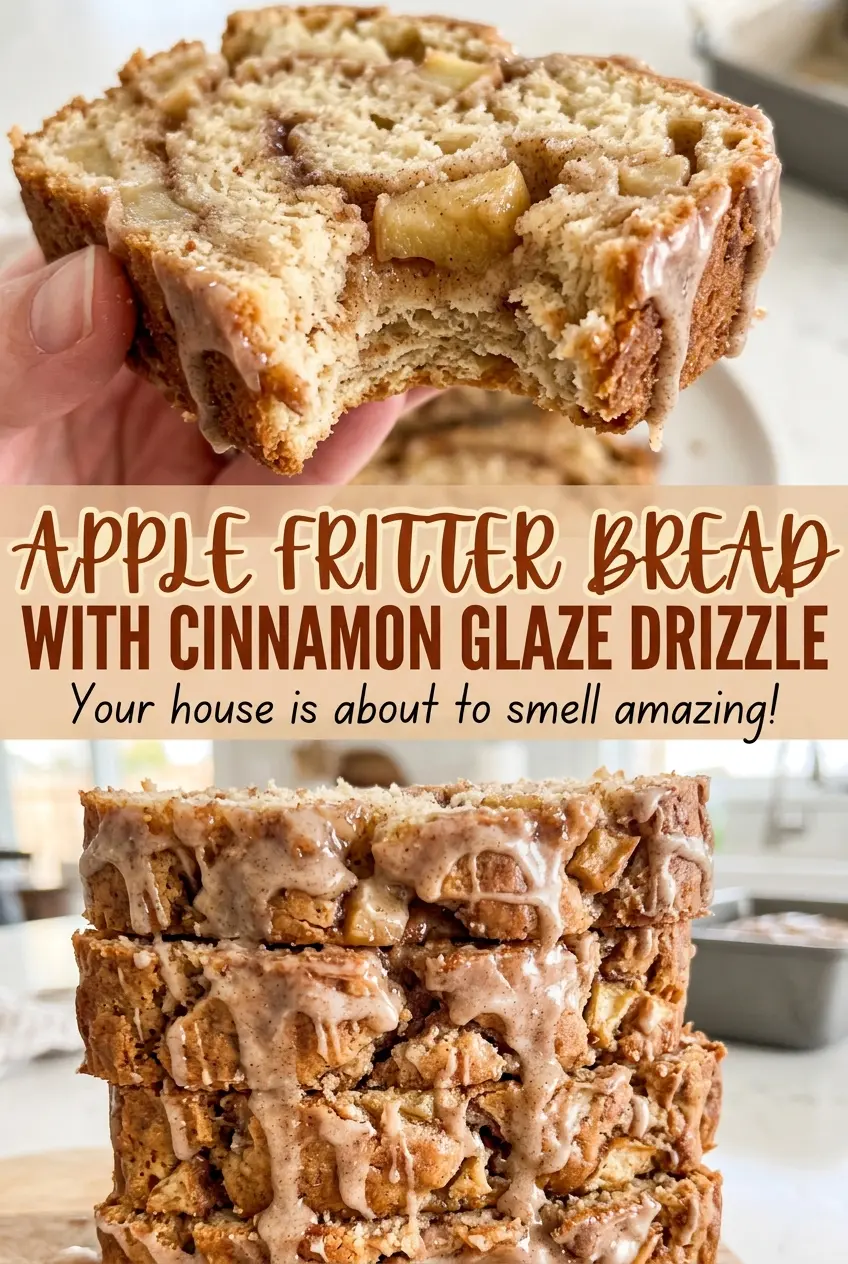
The edges of this loaf turn golden before the apples in the center have finished softening, so I check the middle carefully instead of judging by color alone. That little pause is worth it: Apple Fritter Bread with Cinnamon Glaze Drizzle has tender apple pieces tucked through a soft, buttery crumb, with cinnamon-sugar pockets inside and a simple glaze on top.
I layer the apples between two portions of batter rather than stirring them through. That gives you fruit in the middle and across the top without overworking the batter, and the brown sugar and cinnamon settle around the apple pieces as the loaf bakes. Use apples meant for baking and cut them into small, even dice so they soften at the same pace. Once the loaf has cooled completely, the cinnamon glaze adds a neat finish without melting into the bread.
Kitchen Note
If the toothpick lands in an apple piece, it can look wet even when the batter is baked. Check another spot in the center, away from the fruit, before deciding the loaf needs more time.
Save this Apple Fritter Bread with Cinnamon Glaze Drizzle for its soft apple-filled crumb and cinnamon finish.
Why the Apples Belong Between Layers, Not Mixed Into the Batter
Apple chunks bring moisture as well as sweetness. If you fold them through the whole bowl, you have to keep mixing until the fruit is distributed, and that extra stirring can make a quick-bread crumb heavier. Layering solves both problems: the apples stay concentrated in defined pockets, and the batter only needs mixing until the dry streaks disappear.
There’s a small visual payoff, too. The first layer of fruit sits inside the loaf, while the second layer peeks through the top after baking. Brown sugar and cinnamon cling to the diced apples, so you get a little spiced sweetness alongside the plain buttery crumb instead of a uniformly cinnamon-colored bread. Spread the batter gently to cover the first layer; a few apple pieces showing at the top are just right.
This is a loaf, not a cake that needs a perfectly smooth surface. Keep the batter in distinct layers, and avoid pressing hard enough to bury the upper apples. That balance gives the fruit room to soften while the top browns.
What the Apples, Butter, and Milk Each Bring to This Loaf
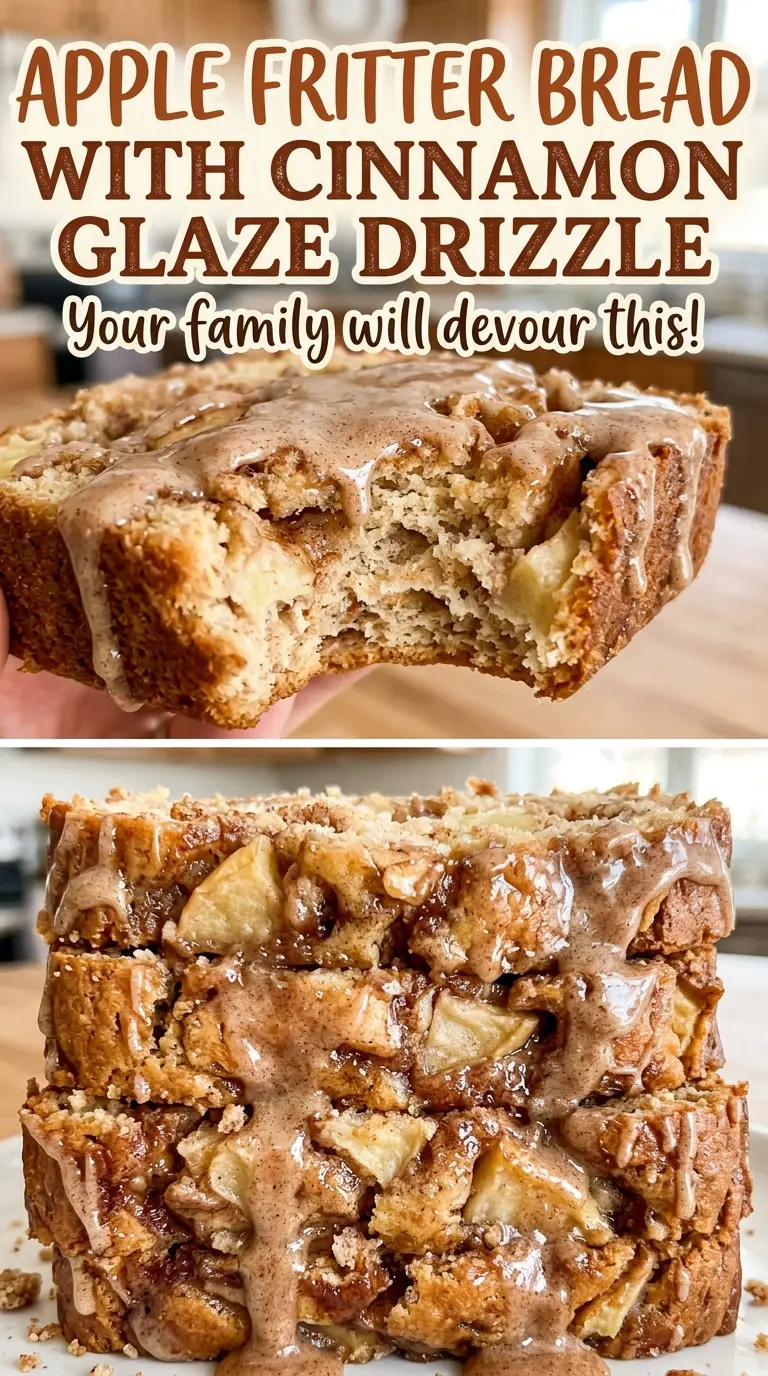
- Baking apples — Choose firm apples that hold their shape in the oven rather than turning quickly to sauce. A tart baking apple gives the loaf a sharper contrast against the brown sugar; a sweeter baking apple makes the filling taste rounder. Peeling and cutting the fruit into even dice helps it soften evenly. Another firm baking apple is the useful swap here; soft eating apples are more likely to lose their shape.
- Unsalted butter and granulated sugar — Creaming these together gives the loaf a light starting texture, so use softened butter that yields when pressed but isn’t shiny or melted. A standard grocery-store butter works well; there’s no need for a specialty brand. The recipe uses unsalted butter so the measured salt stays controlled.
- Eggs and whole milk — Room-temperature ingredients blend into the creamed butter more smoothly than cold ones. Whole milk contributes richness and moisture to the crumb. I keep the milk and eggs at room temperature for an even batter rather than changing the dairy or egg ingredients.
- All-purpose flour and baking powder — All-purpose flour gives this loaf enough structure to hold the apple layers, while baking powder supplies its lift. Whisk them together before they meet the wet ingredients so the leavener is spread through the flour. Fresh baking powder matters more than choosing a premium flour.
- Brown sugar, cinnamon, and glaze ingredients — Light brown sugar adds a little moisture and a deeper sweetness to the apple filling; cinnamon warms both the fruit and the top drizzle. Powdered sugar makes a smooth glaze, and water loosens it without adding another flavor. Use cinnamon that still smells fragrant when you open the jar.
Mixing and Layering the Batter Without Making It Tough
Cream the Butter Until It Looks Lighter
Beat the softened butter and granulated sugar on medium speed until pale and fluffy, about 2 minutes. The mixture should look lighter and hold a soft, airy texture rather than sitting in dense clumps. If the butter is still firm, it won’t cream evenly; if it’s melted, it can’t hold the same air. Scrape the bowl if butter is collecting along the sides.
Add the Eggs, Then Alternate Flour and Milk
Beat in the eggs one at a time, mixing well after each, then mix in the vanilla. Whisk the flour, baking powder, and salt together separately, and add that mixture in three additions, alternating with the milk in two additions. Start and finish with flour, mixing on low just until no dry streaks remain. Stop there: a few extra turns can make the loaf tighter than it needs to be.
Build Two Batter-and-Apple Layers
Toss the peeled, cored apple dice with the brown sugar and cinnamon in a separate bowl. Spread half the batter in the prepared 9×5-inch loaf pan, then scatter half the apples over it; repeat with the remaining batter and apples. Use a light hand when spreading so the fruit underneath doesn’t get pushed into one dense band. Gently press the apples on top so they make contact with the batter.
Bake, Cool, and Add the Drizzle
Bake at 350°F for 55 to 65 minutes, until the loaf is golden and a toothpick inserted in the center away from apple pieces comes out without wet batter. Cool it in the pan for 15 minutes, then lift it onto a wire rack using the parchment overhang and let it cool completely. Whisk the powdered sugar, water, and reserved cinnamon until smooth. Drizzle over the cooled loaf; a warm loaf will soften the glaze before it has a chance to sit on top.
Two Easy Ways to Change the Apple Fritter Loaf
Choose a tarter baking apple
Use a firm, tart baking apple instead of a sweeter baking variety. The filling will taste brighter against the brown sugar and cinnamon, while the layering and bake stay the same.
Leave the glaze off
Skip the cinnamon glaze for a less-sweet loaf with the apple and brown-sugar filling in the foreground. The bread is still easy to slice once cool, and you can keep the glaze ingredients out of the preparation entirely.
Storage and Reheating
- Refrigerator: Store the cooled loaf in an airtight container for up to 5 days. The crumb will feel firmer when chilled; let a slice sit briefly at room temperature if you prefer it softer.
- Freezer: Freeze the fully cooled loaf, preferably without glaze, tightly wrapped for up to 2 months. Thaw it in the refrigerator or at room temperature, then add the glaze after thawing.
- Reheating: Warm an individual slice in the microwave for about 10 seconds, then add a few seconds if needed. Long heating can dry the crumb and make the apple pieces too hot before the center is pleasant to eat.
Questions That Come Up When Baking Apple Fritter Bread
Apple Fritter Bread with Cinnamon Glaze Drizzle
Ingredients
Equipment
Method
- Heat the oven to 350°F.
- Grease a 9x5-inch loaf pan with the cooking spray and line it with parchment, leaving overhang on the long sides.
- In a medium bowl, whisk together the flour, baking powder, and salt.
- In a large bowl, beat the butter and granulated sugar with a mixer on medium speed until pale and fluffy, about 2 minutes.
- Beat in the eggs one at a time, mixing well after each.
- Mix in the vanilla.
- Add the flour mixture in three additions, alternating with the milk in two additions and beginning and ending with the flour mixture; mix on low just until no dry streaks remain.
- In a separate bowl, toss the apples with the brown sugar and 1 teaspoon of the cinnamon.
- Spread half the batter in the prepared pan and scatter half the apple mixture over it.
- Repeat with the remaining batter and apples, gently pressing the apples into the top.
- Bake for 55 to 65 minutes, until golden and a toothpick inserted into the center away from apple pieces comes out without wet batter.
- Cool in the pan for 15 minutes.
- Use the parchment overhang to lift the loaf onto a wire rack and cool completely.
- Whisk the powdered sugar, water, and reserved 1/2 teaspoon cinnamon until smooth.
- Drizzle the glaze over the cooled loaf.